
Tiny Bullets



Buy
Could be interesting

Roll Away is a 3D platform puzzle video game which places the player in control of a Kula beachball. The main objective of the game is to collect keys which unlock the level exits, as well as coins and jewels along the way. The game makes use of alternative physics, changing the direction of gravity as the ball moves.
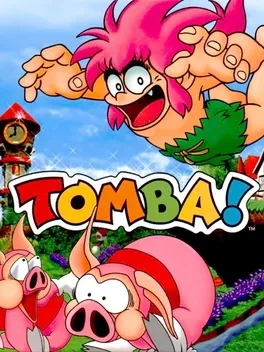
Tomba! is a side-scrolling platformer in which players control Tomba, a wild boy on the search for his grandfather's bangle that was stolen by some evil pigs. Although Tomba is normally restricted to a two-dimensional plane, there are certain points where he can jump or climb onto a new plane. Tomba's main method of attack is to jump on top of enemies to grab them, allowing him to hop around on them before throwing them away. This can also be used to open other objects such as eggs or treasure chests. Tomba is also able to use various projectile weapons such as maces and boomerangs and can swing on branches and poles. The game is based around a mission system, where the main character's (Tomba's) skills are employed to complete various tasks. Completion of a mission gives a certain amount of adventure points (AP) which are required for AP boxes which contain food (which gives you AP and restores 1 space of vitality) or items, and you may for example need 50,000 AP to open one. AP is also used to gain access to special places or information later in the game. Not all missions are necessary to progress in the game, however, they are required to achieve full completion. There are 130 events (missions) in the game, many of them rely on other events to be completed.

Suikoden is a Japanese-style role-playing game with several unusual additions. There are three kinds of combat in the game, the most common one being the traditional turn-based party combat (players can have up to six people in their active party). Magic runes can be equipped on the player's characters which allow limited usage of offensive and healing spells. There are also a few army battles, where the player must control whole units of fighters, archers, magicians, etc., and one-on-one fights (duels).

Klonoa: Door to Phantomile is a side-scrolling platform game viewed from a "2.5D" perspective. The player moves the protagonist, Klonoa, along a path in a two-dimensional fashion, but the game is rendered in three dimensions. This allows the path followed to curve and for the player to interact with objects outside of the path.
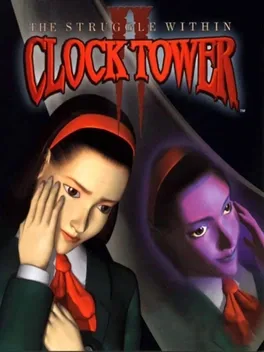
Clock Tower II: The Struggle Within, known as Clock Tower: Ghost Head in Japan, is a PlayStation point-and-click survival horror game and the third installment in the Clock Tower series. It was developed and published by Human Entertainment on March 12, 1998 in Japan and later published by Agetec on October 31, 1999 in North America. It was released as a PlayStation Classic on the Japanese PlayStation Network for PlayStation 3 on May 9, 2012. The game is a spin-off story with little to no connection to the story of the Barrows/Burroughs family or Scissorman, nor was Hifumi Kono involved with it. It does not take place in Europe as many of the others do; it takes place in Osaka, Japan. In the North American version, the setting was changed to Salinas, California, and the characters were given Westernized names. However, untranslated Japanese can be seen in the hospital entrance and even in the intro, there are Japanese-styled buildings, including a Shinto shrine. The game also contains various Japanese-styled rooms and samurai armor.
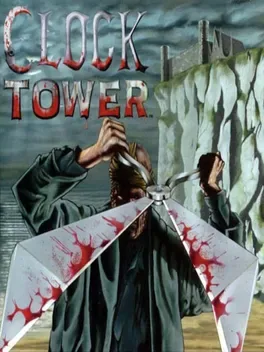
Clock Tower, known as Clock Tower 2 in Japan, is a PlayStation point-and-click survival horror game and a sequel to Clock Tower: The First Fear. One year after the events of Clock Tower: The First Fear, in late 1996, Jennifer Simpson has been adopted by Helen Maxwell, the assistant of a renowned psychiatrist, Samuel Barton, and is currently undergoing treatment at a university research building in Oslo, Norway, to help her cope with her traumatic experiences in the Clock Tower case and possibly shed some light on the mystery that was the Scissorman.
Should you enter Tecmo's Deception you should be warned! You must decide who lives and who dies. As in life, Tecmo's Deception will hold you responsible for your actions. Everything you do, everywhere you go, everyone you meet has a reason. Are you seeking revenge, resurrection, or redemption? It's your decision.

The object of interest in this game is the mysterious Valkiry Stone. Two treasure hunters, Axel and Ruka, set out to find the stone, but the evil gang known as the Pumpkin Heads wants to find the stone first. As either Axel or Ruka, blast your way through six side-scrolling levels against hordes of enemies, facing off against several bosses in each level. You can select from four different weapon effects (normal, bouncing, homing and flamethrower), use smartbombs and a grappling hook.
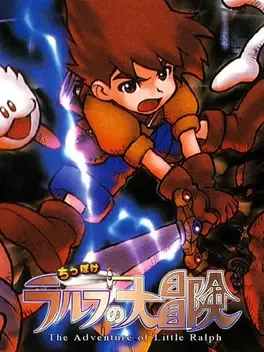
The Adventure of Little Ralph is a 2D platformer. In this game the player controls Ralph, who has been turned back into a child by the evil demons who have invaded his homeland. In order to stop them and return to his former self, he must get through each area filled with enemies, traps, and many hidden routes. Ralph is armed with swords and various magic powers and also has the assistance of a small furry companion. The game's levels are interconnected, unlike the "stages" of most other platform games.
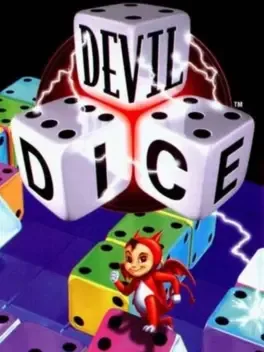
Devil Dice is a unique puzzle game, where the player controls a small devil that runs around a grid covered in large dice. The player can both stand atop dice, and stand on the ground (with the dice towering above). When standing on the dice, the player can move from die to die, or can roll a die in the direction he or she runs, revealing a different face as the die rotates. Creating a group of adjacent dice with identical pips—the size of which must be at least the number of pips—causes those dice to slowly sink into the field before disappearing. Chain reactions are possible by adding additional dice to a sinking set. Different types of dice are available in some modes, with different properties to make the game more challenging. It was originally created by developer Shift on the "homebrew" Yaroze platform, and later turned into a commercial game. Released in 1998, it is one of only a handful of games to make the leap from the Yaroze to commercial release. The game is a million-seller and a demo version was released as a PlayStation Classic game for the PlayStation 3 and PlayStation Portable on November 7, 2007.