
Vortex


Buy
Could be interesting

The sequel to Zone of the Enders is based around mecha combat with the player once again controlling the "Orbital Frame" Jehuty. Unlike its prequel, the game is now centered on action elements with the player not needing to protect civilians in need and instead Jehuty contains more weaponry than in the previous game. The plot is set two years after the events from Zone of the Enders and focuses on Dingo Egret, a former member from Mars' military organization BAHRAM whose leader Ridley "Nohman" Hardiman wants back with him. Nohman shoots Dingo following his rejection but the agent Ken Marinaris saves Dingo by connecting his body to Jehuty and forces to work in order to defeat BAHRAM. The game had a new director, Shuyo Murata, who producer Hideo Kojima appointed in order to provide a different experience. The team worked to cover the criticism the original Zone of the Enders received resulted in The 2nd Runner having more action elements. The game received generally favorable critical response due to the improvements it has in comparison to the previous game. Critics praised the game's graphics and gameplay elements but criticized its short length and presentation. Despite the positive critical reaction, the game suffered mediocre sales. North American & Japan got regular ZOE2, but the regular edition of ZOE2 was never released in Europe. Europe directly got the ZOE2 Special Edition.
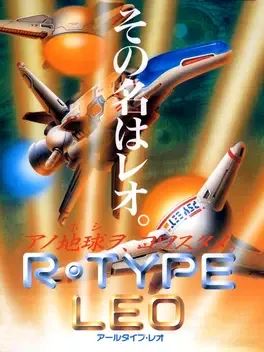
R-Type Leo is a horizontally scrolling shooter arcade game. It is a spin-off of the R-Type series and the last entry to be released in Arcades. R-Type Leo was initially an original shoot 'em up game in development by Nanao before Irem retooled it into an R-Type project instead. It is also the first R-Type game to feature simultaneous two player gameplay.

G-Police: Weapons of Justice is a combat flight simulation video game and sequel to G-Police, developed by Psygnosis exclusively for PlayStation.
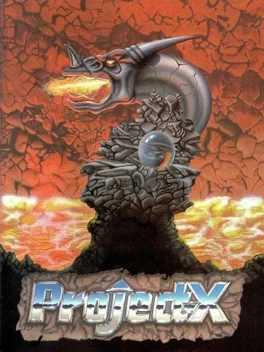
Project-X is a scrolling shooter game for the Amiga computer released in 1992. It was also ported to DOS. Developed and published by Team17, it was regarded as one of the best shooter games for that platform at the time, both for its technical excellence in graphics and sounds, and for its difficult and interesting gameplay. The game resembles Konami's side-scrolling shooter games such as Gradius, Salamander and Parodius.
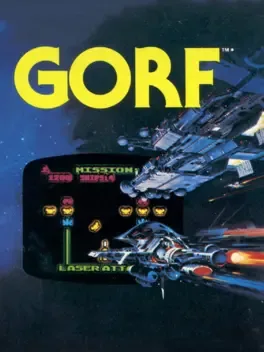
Gorf actually consists in the Arcade version of five different types of space shooters. The first one ist basically is a Space Invaders clone. In the second one a formation of space ships is hovering at the top of the screen while single space ships will disengage from the formation and dive down at you. The third variant is a Glaxian clone and only available in the Arcade version. In the fourth mini-game the enemy will come out of a circular hyperspace field and attack you. After having destroyed four of your attackers the game proceeds to the fifth game stage. Here a huge mothership is dropping bombs at you from the top of the screen. You defeat the mothership with a well placed projectile hitting it between its two major sections. After that the game starts from the gebinning on a higher difficulty level.
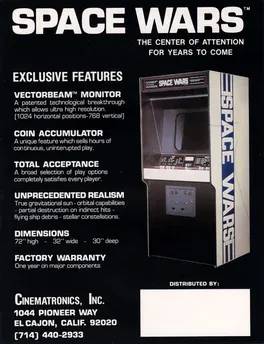
Space Wars is an early vector graphics arcade game. It is based on Spacewar!, a PDP-1 program. It was ported to the Vectrex in 1982. Space Wars was the brainchild of Larry Rosenthal, an MIT graduate who was fascinated with the original Spacewar! and developed his own custom hardware and software so that he could play the game. Cinematronics worked with Rosenthal to produce the Space Wars system. Two players controlled different ships. One button rotated the ship left, another rotated the ship right, one engaged thrust, one fired a shell, and one entered hyperspace (which causes the ship to disappear and reappear elsewhere on the playfield at random). The game offered a number of gameplay options, including the presence or absence of a star in the middle of the playfield (which exerted a positive or negative gravitational pull), whether the edges of the playfield "wrapped around" to their opposite sides, and whether shells bounced. Three other fascinating features were unique to this game. First, the game could not be played in "one player" mode; a human opponent was required. Second, the player's ship could take a glancing hit without dying, but would suffer damage; a cloud of loose ship fragments would break off and float away, after which the ship would be visibly damaged on screen and would turn and accelerate more slowly. Third and most memorable was that the duration of play for any contest was solely governed by the amount of money deposited; each quarter bought a minute and a half of play. A dollar bought six minutes, and for a ten dollar roll of quarters two players could play non-stop for an hour.

In the distant future, a plague of parasitic monsters is sweeping across the known universe; devouring all the resources in its path -- including the distant outposts humanity calls home. The only chance for mankind's survival is a top-secret starship class known as Silpheed and the hyper-skilled pilots at the controls. And so begins the premise of Silpheed: The Lost Planet, a co-development shooting project between Game Arts and Treasure that remakes the early '90s PC shooter of the same name. Features include a large variety of enemy types, multiple weapon upgrades, and polygonal graphics. As an added bonus, Working Designs has removed the slowdown and added analog control for the American version of the game.

You are Frald Rancer and control a space ship which must journey from your home planet to outer space to defeat enemy invaders. Once all the enemies are defeated then return home. The game moves in a forward direction where the screen objects move towards and down to the player. Approaching enemy ships are small, in the distance, and become larger and move faster as they approach the player. The player controls a fighter at the bottom of the screen, which can only move from side to side. Shots can be fired at a diagonal, as well as straight, by twisting the joystick from side to side. At certain stages, ground targets will appear and can be destroyed by using the "Burn" button. The laser disc generated backgrounds are largely non-interactive during game play. They form the backgrounds on which the game is played on. Scenes do work in with the backgrounds, however that is the extent. Some backgrounds appear as they should have elements of interactively, however, were not used in the release of the game. These include scenes where the player is going through an asteroid field and asteroids fly towards the player. Another scene is in the crystal caverns, where there are many obstacles which could have been made to be avoided. These are only two of many scenes which could have had interactive elements. The game may have been decided to have been too hard to play with these background obstacles and computer fighters to play. Hence removing the background interactively to make the game more playable. The game starts with the player in Frald Rancer's home city, then taking off into outer space via a fly-by of the city. The backgrounds are very Sci-Fi and are fantasy themed. They are very interesting, more so than the game. The music from the laser disc also complements the laser disc video very well and makes up for the sometimes annoying, computer generated sounds.

A vertical-scrolling shoot ’em up spinoff of Earth Defense Force 4.1.

Xenic places you in a ZX-G Firefly Type F fighter. Viewed from slightly above and behind the spaceship, the camera scrolls into a 3-D environment in all directions. There are seven levels to negotiate situated above huge crowded cities on earth, earth's oceans, space and on the futuristic world of Morzique. A striking feature is the fighter cannot collide with the backgrounds. This is a good thing, though, as from the word go Morzique spaceships fly into the screen from all directions and fire at you at an alarming rate. Luckily, you have three types of weapon at your disposal: standard fire, three smart bombs, and by holding down the fire- and smart bomb-keys simultaneously, a laser beam. Certain destroyed ships leave behind three types of power-ups: mint-coloured orbs add 10% energy to your energy bar, green orbs gain 100 points and red orbs gain 200 points. Finally, at the end of a level a huge end-of-level boss awaits and needs to be put to rest.