
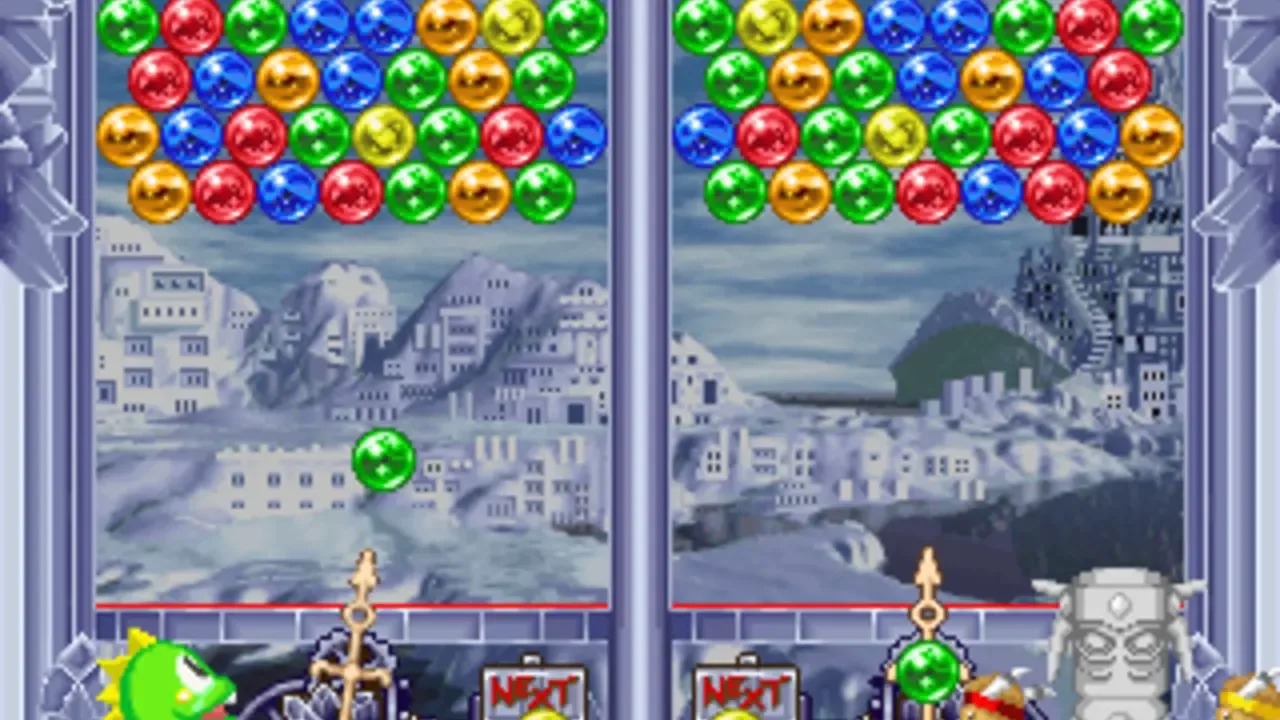
Bust-a-Move 4





Buy
Part of collection:
Puzzle Bobble
(last 3 games)
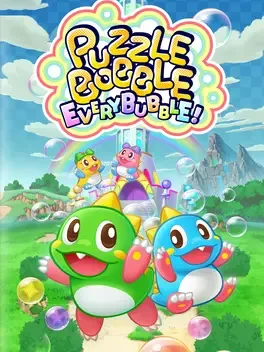
A new title in the Puzzle Bobble series featuring a four player co-op story mode.
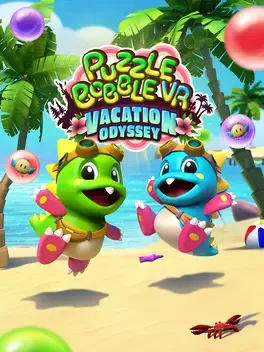
Bursting with the same cheerful energy, adorable characters, and timeless gameplay as its predecessors, Puzzle Bobble 3D: Vacation Odyssey is the next evolution of the classic Japanese action puzzle game franchise—with the immersive fun of 3D!
Bursting with the same cheerful design, adorable characters, and timeless gameplay as the originals, Puzzle Bobble VR: Vacation Odyssey is the next evolution of the classic Japanese action puzzle game franchise – with the immersive fun of virtual reality!
Part of collection:
Simple 1500
(last 3 games)

Fans of classic aircraft take to the skies in Aces of the Air for the PlayStation. Pilot the vintage fliers in realistic 3D combat missions featuring old-school dogfighting techniques and ground combat. Each successfully completed mission earns players a new plane, all created with their own strengths and weaknesses. Those a bit nervous about the first flight will be happy to know a training mode teaches new fliers the basics of vintage aircraft control. Aces of the Air features realistic, 3-D flight simulation, with a focus on dogfighting techniques using vintage aircraft. Missions include aerial combat, strafing ground troops and materiel, and taking out heavily fortified enemy positions.

The first dodge ball game released on the PlayStation, All-Star Slammin' D-Ball features a horizontal view of the court as eight teams compete in one of two modes: Single Match and Tournament. Teams are individually rated from one to five in throwing, catching, dashing, and dodging abilities. Offbeat male and female characters of varying skill play for the Wild Cats, Pranksters, Heart Breakers, Ninjas, Snipers, Fireballs, Thunder Bolts, and Elementals. The game follows the general rules of dodge ball, in that the object is to knock out the opposing members of a team within a time limit. Players with the ball can aim right, left, high, or low. Thrown balls can be caught by the opposing team, which awards them points. These points can then be used to implement special throws such as the grenade, boomerang, and the screwdriver, making the balls more difficult to avoid or catch. Options include adjustable time limits for Single Matches and three levels of difficulty.
Simple 1500 Series Hello Kitty vol.3 Hello Kitty Block Kuzushi is a classic breakout game, in the style of the classic arcade game Arkanoid, in which the player controls hello kitty and has to destroy all the bricks in each level to advance to the next one. There are special bricks like in Arkanoid that allow the player to use speciall attack in the ball, like the slow effect, the fast attack, etc. The game got different levels depending of the player choices (in one you go through levels of letter C and in other in levels of letter B for example), each letter is divided into 5 different brick levels. After passing a level the player unlock a picture that he can later colour in the album mode.
Part of franchise:
Bubble Bobble
(last 3 games)
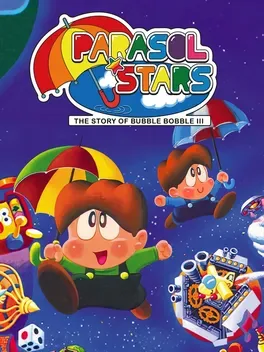
A retro arcade game featuring the bubble dragons Bub and Bob in human form. Swing parasols to stun enemies, collect fruits and play solo or co-op with a friend.
A new title in the Puzzle Bobble series featuring a four player co-op story mode.
Bursting with the same cheerful energy, adorable characters, and timeless gameplay as its predecessors, Puzzle Bobble 3D: Vacation Odyssey is the next evolution of the classic Japanese action puzzle game franchise—with the immersive fun of 3D!
Could be interesting
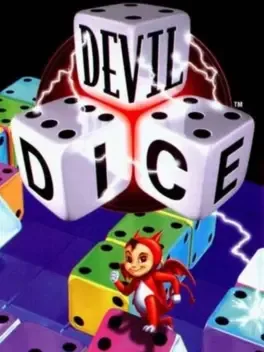
Devil Dice is a unique puzzle game, where the player controls a small devil that runs around a grid covered in large dice. The player can both stand atop dice, and stand on the ground (with the dice towering above). When standing on the dice, the player can move from die to die, or can roll a die in the direction he or she runs, revealing a different face as the die rotates. Creating a group of adjacent dice with identical pips—the size of which must be at least the number of pips—causes those dice to slowly sink into the field before disappearing. Chain reactions are possible by adding additional dice to a sinking set. Different types of dice are available in some modes, with different properties to make the game more challenging. It was originally created by developer Shift on the "homebrew" Yaroze platform, and later turned into a commercial game. Released in 1998, it is one of only a handful of games to make the leap from the Yaroze to commercial release. The game is a million-seller and a demo version was released as a PlayStation Classic game for the PlayStation 3 and PlayStation Portable on November 7, 2007.

R4: Ridge Racer Type 4 is the fourth game in the Ridge Racer series. It includes eight tracks (with reverse variants, for a total of 16 layouts) and 321 vehicles, all of which are fictional. This iteration was one of the first PlayStation titles to feature Gouraud shading on polygons, giving the game a visual depth that was previously missing. It was also the first Ridge Racer game on the system to feature two-player split-screen mode and offered two different driving models.

Published in 1993, the original Super Sidekicks (known as Tokuten Ou, "Goal-Scoring King" in Japan) was SNK's first soccer video game. It features 12 teams divided into two groups which compete for the "SNK Cup" (the main differences between teams is their formations on the field): Group A: Germany, Italy, Spain, England, Mexico, Japan Group B: Argentina, Holland, Brazil, France, United States, South Korea The players' team plays against all the others in their group, then it goes into an elimination tournament's semifinals and then the final to win the cup. There was also a hidden feature in the game, which wasn't documented, and affects a single player game. During a free kick for the CPU if the player has tapped button A for player two, the CPU performs a short-shot, while pressing the button A performs a longer kick.
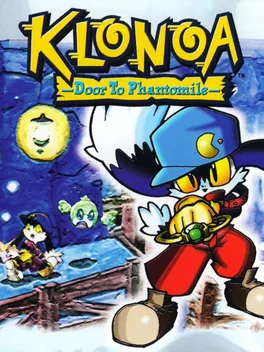
Klonoa: Door to Phantomile is a side-scrolling platform game viewed from a "2.5D" perspective. The player moves the protagonist, Klonoa, along a path in a two-dimensional fashion, but the game is rendered in three dimensions. This allows the path followed to curve and for the player to interact with objects outside of the path.
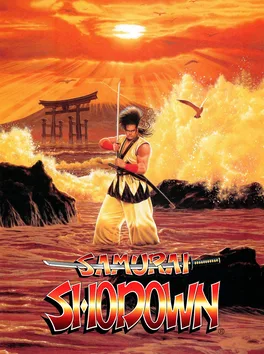
In early Japan, a man named Shiro Tokisada Amakusa preaches a heretic religion. Little does anyone know that Amakusa is really a servant of the evil Ambrosia, who took over Amakusa's body. Ambrosia wishes to shroud the world in darkness. Now, choose between 12 warriors (and 3 bonus characters) to fight for the honor of destroying Amakusa, and fulfilling a mission.

Sonic Wings Special is a 1996 vertical-scrolling shoot 'em up that combines the features in Sonic Wings, Sonic Wings 2, and Sonic Wings 3. It was ported to arcade as Sonic Wings Limited. The home console version adds new characters and endings, new bosses, updated graphics and unlockable planes. There are also Time Attack and 2-player modes. The game uses a branching stage system, so it is impossible to see all levels in one sitting. There is a total of 14 playable characters and many different endings (some of which are reused from previous games in the series). Overall the game has a comic feel. As of Summer 2012, the Android version of Sonic Wings Special has only 4 playable characters with 4 endings and 9 stages. However, the publisher is planning to add further elements of the original version.
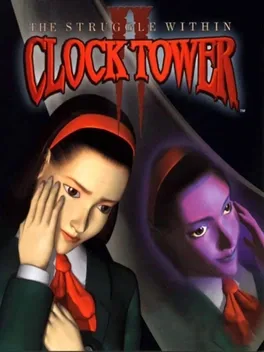
Clock Tower II: The Struggle Within, known as Clock Tower: Ghost Head in Japan, is a PlayStation point-and-click survival horror game and the third installment in the Clock Tower series. It was developed and published by Human Entertainment on March 12, 1998 in Japan and later published by Agetec on October 31, 1999 in North America. It was released as a PlayStation Classic on the Japanese PlayStation Network for PlayStation 3 on May 9, 2012. The game is a spin-off story with little to no connection to the story of the Barrows/Burroughs family or Scissorman, nor was Hifumi Kono involved with it. It does not take place in Europe as many of the others do; it takes place in Osaka, Japan. In the North American version, the setting was changed to Salinas, California, and the characters were given Westernized names. However, untranslated Japanese can be seen in the hospital entrance and even in the intro, there are Japanese-styled buildings, including a Shinto shrine. The game also contains various Japanese-styled rooms and samurai armor.
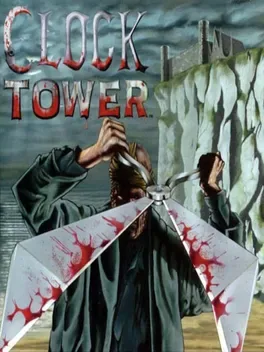
Clock Tower, known as Clock Tower 2 in Japan, is a PlayStation point-and-click survival horror game and a sequel to Clock Tower: The First Fear. One year after the events of Clock Tower: The First Fear, in late 1996, Jennifer Simpson has been adopted by Helen Maxwell, the assistant of a renowned psychiatrist, Samuel Barton, and is currently undergoing treatment at a university research building in Oslo, Norway, to help her cope with her traumatic experiences in the Clock Tower case and possibly shed some light on the mystery that was the Scissorman.
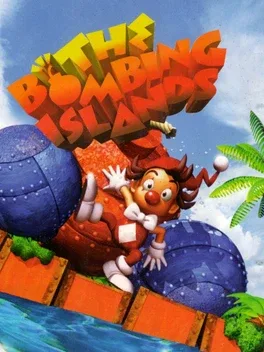
Clown World is in trouble. Mysterious blue bombs have appeared all over the planet, and King Clown needs help. In a royal decree, the king beckons for Kid Clown, a hero of past Kemco games, to clean up these bombs in all six continents. The strange, yet brave little clown sets out to blast the bombs away before the planet explodes. Clearing these bombs will not always be easy, as they have been arranged in puzzles across 60 different levels. Kid Clown must act wisely, because each level has only one igniter bomb that can detonate the bombs surrounding it. To successfully complete a level in one try, Kid Clown must arrange the bombs so that a chain reaction takes place. He also has to get a safe distance away from the reaction or he will explode.
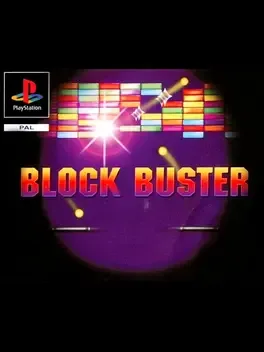
Block Buster (or Block Kuzushi or Simple 1500 Series vol.014 - The Block Kuzushi in Japan) is a good breakout game that can be played by 2 players in cooperative or VS mode. The game offers some interesting special moves like the one in which you can hit the ball with effect pressing a buttom. There are 3 different game modes: Attack mode, Endless mode & VS mode. With roots in the classic Breakout game from a few decades ago, Block Kuzushi continues where Arkanoid left off and updates the theme with colorful jewels to hit in addition to the standard rows of bricks. During the course of play, weapon upgrades may be picked up such as multiple balls, shooting power and other brick bashing powerups. Roaming objects on-screen may deflect your ball so watch out for surprise changes in trajectory when these nuisances are afoot. 60 levels of cleverly designed boards (and some not so clever ones) should hold your attention for a few hours.Show less