
Community Pom



Buy
Could be interesting

Suikoden is a Japanese-style role-playing game with several unusual additions. There are three kinds of combat in the game, the most common one being the traditional turn-based party combat (players can have up to six people in their active party). Magic runes can be equipped on the player's characters which allow limited usage of offensive and healing spells. There are also a few army battles, where the player must control whole units of fighters, archers, magicians, etc., and one-on-one fights (duels).
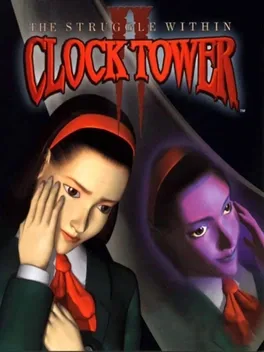
Clock Tower II: The Struggle Within, known as Clock Tower: Ghost Head in Japan, is a PlayStation point-and-click survival horror game and the third installment in the Clock Tower series. It was developed and published by Human Entertainment on March 12, 1998 in Japan and later published by Agetec on October 31, 1999 in North America. It was released as a PlayStation Classic on the Japanese PlayStation Network for PlayStation 3 on May 9, 2012. The game is a spin-off story with little to no connection to the story of the Barrows/Burroughs family or Scissorman, nor was Hifumi Kono involved with it. It does not take place in Europe as many of the others do; it takes place in Osaka, Japan. In the North American version, the setting was changed to Salinas, California, and the characters were given Westernized names. However, untranslated Japanese can be seen in the hospital entrance and even in the intro, there are Japanese-styled buildings, including a Shinto shrine. The game also contains various Japanese-styled rooms and samurai armor.
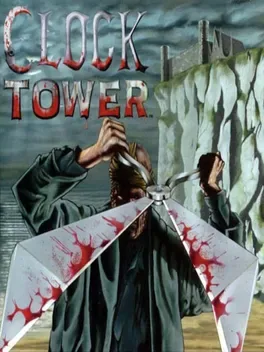
Clock Tower, known as Clock Tower 2 in Japan, is a PlayStation point-and-click survival horror game and a sequel to Clock Tower: The First Fear. One year after the events of Clock Tower: The First Fear, in late 1996, Jennifer Simpson has been adopted by Helen Maxwell, the assistant of a renowned psychiatrist, Samuel Barton, and is currently undergoing treatment at a university research building in Oslo, Norway, to help her cope with her traumatic experiences in the Clock Tower case and possibly shed some light on the mystery that was the Scissorman.
Should you enter Tecmo's Deception you should be warned! You must decide who lives and who dies. As in life, Tecmo's Deception will hold you responsible for your actions. Everything you do, everywhere you go, everyone you meet has a reason. Are you seeking revenge, resurrection, or redemption? It's your decision.
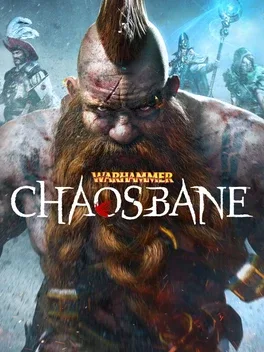
In a world ravaged by war and dominated by magic, you must rise up to face the Chaos hordes. Playing solo or with up to four in local or online co-op, choose a hero from four character classes and prepare for epic battles wielding some of the most powerful artefacts of the Old World.
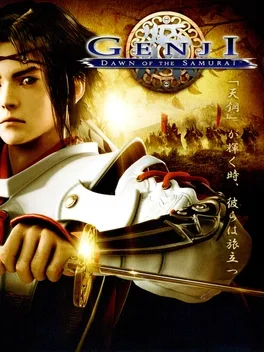
It is 1159 AD, and a brutal samurai clan called The Heishi have stepped in to take power after the old nobility fell. With their mystical stones, they rule the land through fear and violence.
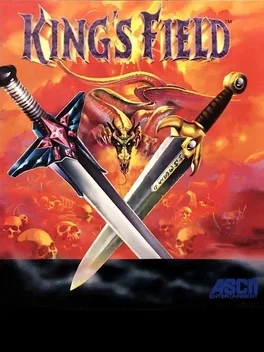
Prepare yourself for an epic action-adventure never before imaginable. Only now, with the gaming power made possible by the PlayStation is a world as vast and detailed as King's Field a reality. This first-person game is completely rendered in beautiful 3D polygon graphics, with texture mapping and fully controllable 360° viewing. Imagine a universe where you can travel freely - being able to look up and down, climb ancient ruins, traverse across oceans, jump off ridges, and duel enemies - all in real time, non-linear play. This visual world will not only astound you, but will pull you right into its universe. You will embark on a journey to an island of evil-ridden dungeons, villages, and castles as you seek the Moonlight Sword, which had been stolen by a cult of insidious worshipers of evil.
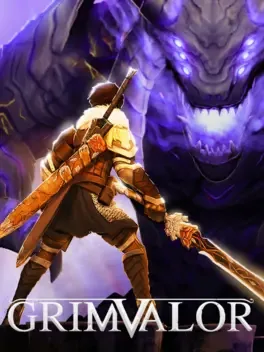
Grimvalor is a challenging hack & slash platformer with fast-paced combat in a dark fantasy world. Take control of a lone warrior on a quest to restore a corrupted realm. Embark on a journey through atmospheric landscapes and dungeons in a massive story-driven premium experience.
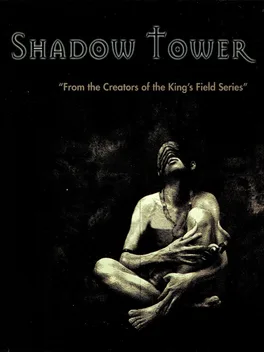
Shadow Tower is a first-person view action role-playing game developed by From Software and released in 1998. It shares many similarities with the King's Field series of games.
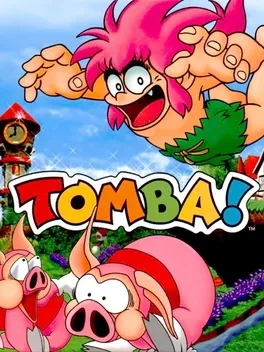
Tomba! is a side-scrolling platformer in which players control Tomba, a wild boy on the search for his grandfather's bangle that was stolen by some evil pigs. Although Tomba is normally restricted to a two-dimensional plane, there are certain points where he can jump or climb onto a new plane. Tomba's main method of attack is to jump on top of enemies to grab them, allowing him to hop around on them before throwing them away. This can also be used to open other objects such as eggs or treasure chests. Tomba is also able to use various projectile weapons such as maces and boomerangs and can swing on branches and poles. The game is based around a mission system, where the main character's (Tomba's) skills are employed to complete various tasks. Completion of a mission gives a certain amount of adventure points (AP) which are required for AP boxes which contain food (which gives you AP and restores 1 space of vitality) or items, and you may for example need 50,000 AP to open one. AP is also used to gain access to special places or information later in the game. Not all missions are necessary to progress in the game, however, they are required to achieve full completion. There are 130 events (missions) in the game, many of them rely on other events to be completed.