
Cosmic Soldier: Psychic War
Buy
Part of collection:
Cosmic Soldier
The 1987 sequel, Cosmic Soldier: Psychic War, was originally released for the MSX2 computer in Japan. In America, the game was released by Kyodai, and they changed the name to Psychic War and released the game for MS-DOS computers. The MS-DOS version censors Kayla's clothing. It changed the turn-based combat of its predecessor to a unique "tug of war" style real-time combat system, where battles are a clash of energy between the party and the enemy, with the player needing to push the energy towards the enemy to strike them, while being able to use a shield to block or a suction ability to absorb the opponent's power. The game also improves upon the conversation system of its predecessor and more closely resembles the one in Digital Devil Story: Megami Tensei released around the same time.
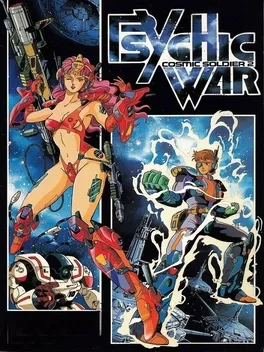
Action RPG sequel to Cosmic Soldier, released for Japanese computers in 1987 and for North American PC in 1989.
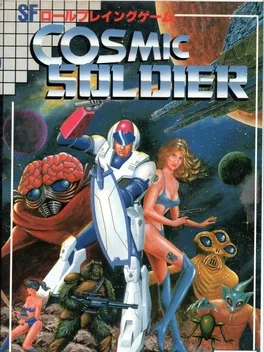
In the game, you must locate 3 data cards and 4 "filters" that allow access to a secret file in the enemy data bank. Data cards and filters are located in different stars of the Quila system, which can be reached immediately via an air shuttle; all the information you need in order to locate the items can be obtained by talking to enemies. Once the items are in your possession, you must locate the data bank and get the file.
Could be interesting
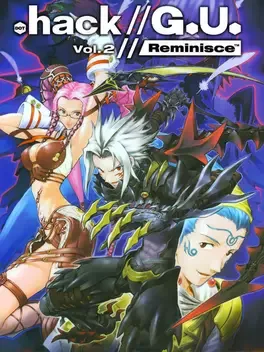
.Hack//G.U. Vol. 2: Reminisce is the second entry in the .hack//G.U. series containing: Vol. 1: Rebirth, .hack//G.U. Vol. 2: Reminisce and .hack//G.U. Vol. 3: Redemption. As in the previous .hack games, .hack//G.U. simulates a massively multiplayer online role-playing game as the player controls a character who starts playing it. Players assume the role of a participant in a fictional game called The World. While in The World, the player controls the on-screen player character, Haseo, from a third-person person perspective (with optional first-person mode). The player may control the camera using the game controller's right analog stick. Within the fictional game, players explore monster-infested fields and dungeons as well as "Root Towns" that are free of combat. They also can "log-off" from the game and return to a computer desktop interface which includes in-game e-mail, news, and message boards, as well as desktop and background music customization options. In Reminisce, an optional card game called "Crimson VS" becomes available. The player may save the game to a memory card both from the desktop and within The World at a Save Shop. After the player completes the game, a Data Flag appears on the save file, which allows the transfer of all aspects of the player character and party members to the next game in the series. This can also be applied to previous games if the player first finished the Reminsce or Redemption. Players can attack monsters in real time. However, the action pauses whenever the menu is opened in order to select magic to cast, items to use, or skills to perform. The player only directly controls Haseo, while the other characters are controlled by artificial intelligence. The player may either provide guidelines ("Free Will", "Rage", "Life", etc.) or issue direct commands (for example, to cast a particular magic at a particular enemy) to the computer-controlled characters. Monsters roam the environments freely or guard treasure chests. Once combat is initiated, via a "surprise attack" or the player being spotted, a wall erects around the combat area to prevent escape. Weapons give the player access to the Skill Trigger feature which allows them to perform a powerful attack at the cost of losing SPs. As an adept rogue character, Haseo can wield multiple weapons for close combat. Although Haseo can only use one weapon per battle, during Reminisce the player can change weapons in the middle of Skill Triggers. Under certain conditions, the player may execute an enhanced type of Skill Trigger called "Rengeki". These attacks deal greater damage and fill a Morale gauge, which allows the player and his team members to use a combination attack. Certain plot-related fights, called "Avatar battles", use a different interface which incorporates shoot 'em up gameplay elements. After depleting the opponent's health, players must charge up a "Data Drain" to end the battle. Root Towns are non-combat areas in The World. The player may restock on items, buy equipment, or chat and trade with other "players" of The World. The player may also undertake optional quests and visit guilds. A key feature of all towns is the Chaos Gate. This blue portal is used to travel between towns (called "servers") as well as access the fields and dungeons where battles take place. A password system controls the characteristics of each area. Depending on the characteristics of each word in the three word phrase, the resulting area may have different attributes such as prevalence of monsters or items, among other features.
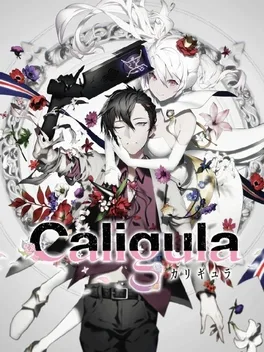
Featuring a story written by Persona veteran Tadashi Satomi, The Caligula Effect takes you inside a digital prison filled with brainwashed high school students, evil musicians, and an all-powerful virtual idol.
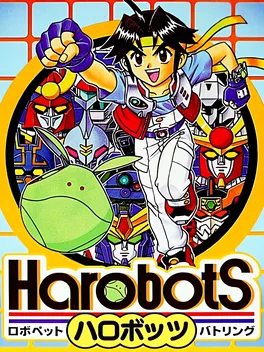
Harobots is a Role-Playing game, developed and published by Sunrise Interactive, which was released in Japan in 1999.
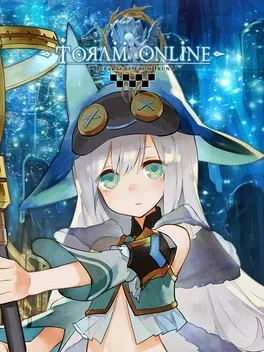
A free to play MMORPG games that has unique gameplay such as free-to-choose weapon, skill, or even the looks of your character. Make your own way to play the game!
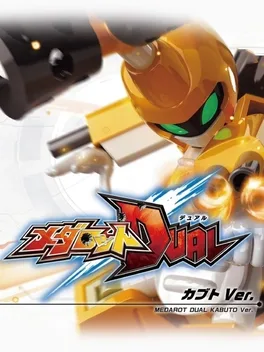
Medarot Dual is an arena-action spinoff of the Medabots series. Like most Medabots games, Dual is split into two separate versions.
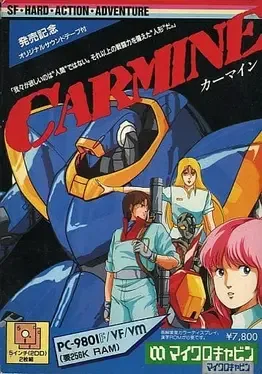
A first-person adventure game with RPG elements, released by Microcabin in 1986. The game featured environments rendered in 3D polygon graphics, for possibly the first time in a home video game, along with early survival horror elements. However, the game is better remembered for its cyberpunk narrative, which was adapted into a sci-fi novel shortly afterwards.
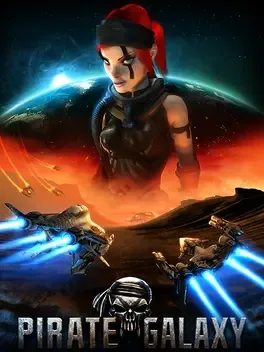
Pirate Galaxy is a 3D, sci-fi brower-based MMO from Splitscreen Studios and Gamigo with real-time action. The game's story concerns the invading alien Mantis and the fight to stop them.
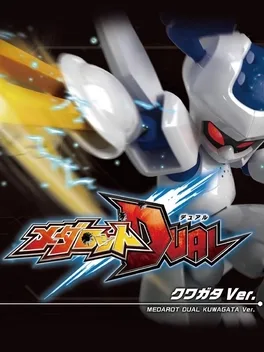
Medarot Dual is an arena-action spinoff of the Medabots series. Like most Medabots games, Dual is split into two separate versions.

Core: Licht is a hardcore war game. The highly fresh two-dimensional strategy gameplay will bring a unique combat experience. This is a difficult strategy attack and defense game. In every battle, the commander needs to consider card matching, skill timing, career selection... You can also use terrain, resources, special settings, etc. to win by surprise! Use your wisdom to generate different styles of play and enjoy the top victory of strategizing.
Prisoner is a classic 2d RPG with a science fiction theme in which the player controls a character that is in a town and will have to talk to different characters to advance in his quests.