
Discovering Endangered Wildlife




Buy
Could be interesting
Why is Numberland so fun? It’s because Numberland is a big animated cartoon, but in this cartoon, the child gets to be one of the characters — Stuart! And what’s going on in Numberland? As the children play the games with the cartoon playmates, they earn “brainpower,” which they see filling up Stuart’s brain. When they have enough brainpower, they can use Numberland’s powerful Imagination Machine! This machine turns “imagined” toys into “real” toys, which the children can then sell in Bee’s toy store. So in a nutshell – – they explore and explore, learn how to play games from cartoon playmates, earn brainpower, make toys, sell them to customers, and learn math the whole time…And they never seem to get tired of it!
JumpStart Study Helpers: Spelling Bee is a JumpStart game released in 2003. It is geared to 1st - 5th Grades and intended to assist in practicing spelling. It is a sister game to JumpStart Study Helpers Math Booster, and both were packaged together in a bundle called JumpStart Advanced Study Helpers in 2007. The game may be played in both English and Spanish.
A fun and exciting point & click story book adventure to Mars for kids and parents. Suitable for the young and the young at heart!
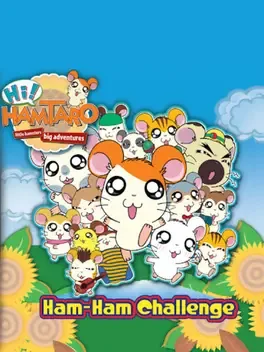
The player navigates Hamtaro to explore an outside area. He meets with the other Ham-Hams in order to play a variety of brain-training minigames. They are mostly educational, and were mainly designed for elementary-grade children.
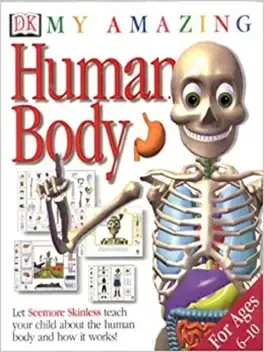
In this fantastic and funny anatomical interactive adventure, children join Seemore Skinless, a mischievous 3D skeleton, in a variety of games and activities aimed at answering commonly asked questions about the body. They'll learn about human anatomy, health, nutrition, and much more through fun activities like "building" a body and "a day in the life" of Seemore. Beautifully presented information, engaging activities and terrific reference resources all combine to create an anatomical adventure children will return to again and again!
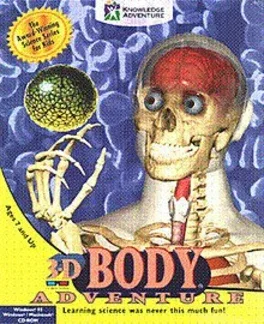
3-D Body Adventure is an educational video game about the human body.
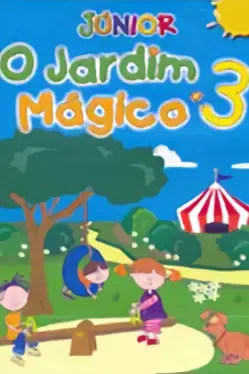
The magic class helps to consolidate the knowledge acquired in School in a fun way. Facilitates learning and prepares the child for new challenges. Portuguese Language, Mathematics, Fun holidays, Junior Graphics, and Who knows, knows!, Recess.
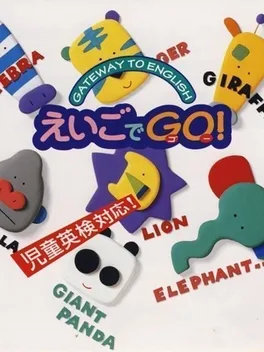
This game is designed to teach Japanese how to speak English through four different activities. Those activities include: Typing on an English or Japanese Katakana tutor keyboard to learn words and the objects that pair with them. Four different domestic locations with objects and their names dictated. Four categories of puzzles that indicate objects and their relationships. Four radios with their own topic, which show an object, the name in English and the name in Japanese.
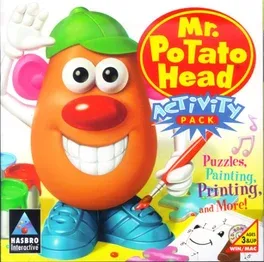
An educational computer game released in 1997, The Mr. Potato Head Activity Pack was a small collection of game modes where players could express their creativity. Players could draw, use stamps, make greeting cards, dress up Mr. Potato Head, create and solve jigsaw puzzles, and play Connect-The-Dots.
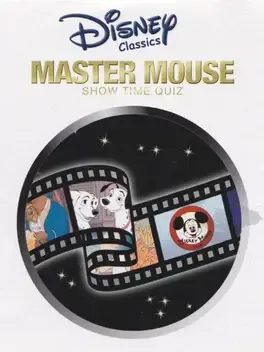
Disney Trivia Challenge, Disney's Master Mouse: Show Time Quiz is a quiz game where all the questions are based on Disney films, characters, songs etc. This is a game for one to four players, there are no computer opponents here, with three levels of difficulty. Each player selects a character, there are just four to choose from, enters their name and then the game begins. It takes place on a screen that represents a film studio, players take turns to click on a spinner which tells them how many squares they can move. Apart from the first move the players can move in any direction and the game highlights all possible moves for them. Each space on the game board is a different colour corresponding to the question category, Animation, Film, Song, Personalities and Mousellaneous, and all questions are multiple choice. If a player gets the question right they spin again and attempt another, if they get it wrong the next player takes their turn and so on. If a player lands on a space that is already occupied then there is a challenge question, all players on that square can take part ans tokens can be both won and lost. There is also a trivia vault where the player(s) can gamble one of their tokens for the vault's entire contents. Each time the player answers a question correctly they are awarded a token in that category, or in some cases a wild card token, and when five tokens have been logged for a category the player wins a medallion in that category. The object of the game is to collect a medallion in every category and at which point they will be allowed to attempt the champion question to win the game.