
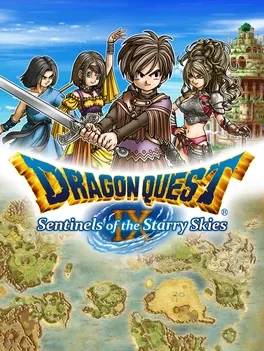
Dragon Quest IX: Sentinels of the Starry Skies


Buy
Part of collection:
Dragon Quest
(last 3 games)
Dragon Quest I & II HD-2D Remake is a stunning reimagination of the first two legendary adventures in The Erdrick Trilogy, brought together in one package.
The Dragon Quest III HD-2D Remake is a modernized turn-based JRPG that follows a hero’s quest to defeat the archfiend Baramos. It features updated HD-2D visuals and an orchestral score while maintaining the original's prequel narrative and non-linear world exploration. The core mechanics center on a vocation system for party customization, now including the new Monster Wrangler class. Modern updates like adjustable battle speeds and difficulty settings streamline the traditional experience of leveling characters and managing strategic combat.

This is the sixth major expansion for Dragon Quest X, known as Version 7, which will feature a new story, new characters, a new area called Zenias, and the new master vocation Dragon Mage.
Part of franchise:
Dragon Quest
(last 3 games)
Dragon Quest I & II HD-2D Remake is a stunning reimagination of the first two legendary adventures in The Erdrick Trilogy, brought together in one package.
The Dragon Quest III HD-2D Remake is a modernized turn-based JRPG that follows a hero’s quest to defeat the archfiend Baramos. It features updated HD-2D visuals and an orchestral score while maintaining the original's prequel narrative and non-linear world exploration. The core mechanics center on a vocation system for party customization, now including the new Monster Wrangler class. Modern updates like adjustable battle speeds and difficulty settings streamline the traditional experience of leveling characters and managing strategic combat.
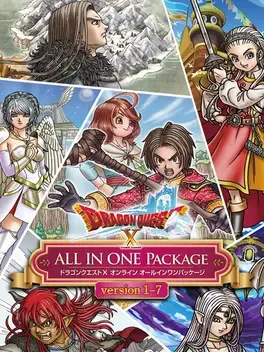
A new all-in-one package including versions 1 to 7 of Dragon Quest X Online.
Could be interesting
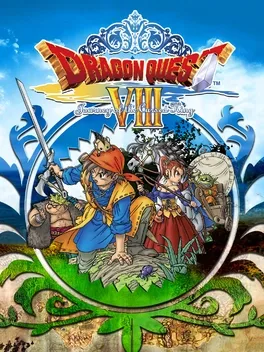
Dragon Quest VIII: Journey of the Cursed King is the eighth installment in the Dragon Quest series, developed by Level-5 and published by Square Enix for the PlayStation 2 video game console. It was also later released for the Nintendo 3DS in 2015. It is a traditional Japanese-style role-playing game with random enemy encounters, simple turn-based combat mechanics, and management of a party consisting of four characters, each belonging to a clearly defined class. Unlike its predecessors in the series and most Japanese RPGs in general, the game features a continuous world with fairly vast landscapes and integrated towns and dungeons, as opposed to world map traveling and locations represented by icons. The game features full camera rotation and optional first-person view. Like in the previous Dragon Quest games, many objects can be interacted with; for example, barrels can be physically lifted, carried, and broken, to reveal items hidden within.
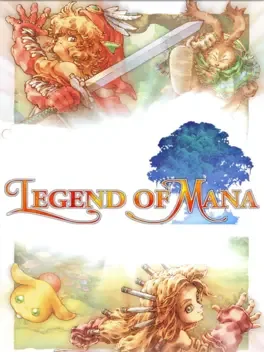
While incorporating action role-playing game elements from the three games which preceded it, Legend of Mana has its own distinct style of gameplay. Most notably, it gives the player the ability to shape the game's world of Fa'Diel according to his or her desires, a system which was incorporated through the use of "artifacts," which are gained as the player progresses through the game. The player uses the artifacts to create different towns, dungeons, etc., called "Lands", to venture to and explore. This creates a non-linear gameplay, since the game is driven by a series of what would be considered side-quests in other games. Legend of Mana features three different plots which can occur simultaneously, and which do not necessarily need to be completed for the player to finish the game. Legend of Mana was a financial success in Japan. While the game garnered considerable praise for its graphics and presentation, many critics and fans were turned off by the game's lack of a main storyline.

Eternal Sonata is a role-playing video game developed by tri-Crescendo and published by Namco Bandai Games. The game is centered on the Polish romantic pianist and composer Frédéric Chopin, who died of tuberculosis at the age of 39. The story envisions a fictional world dreamed by Chopin during his last hours that is influenced by Chopin's life and music, and in which he himself is a playable character, among others. The game's battle system centers on musical elements and character-unique special attacks. Light and darkness play a part in the appearance and abilities of enemies on the battlefield, as well as the types of magic that can be cast. The game features a selection of Chopin's compositions played by pianist Stanislav Bunin, though the original compositions were composed and arranged by Motoi Sakuraba. It is notable for its use of classical piano pieces, educational cutscenes featuring real paintings and photographs (in contrast to the cel-shading graphics of the game) and lush landscape design.
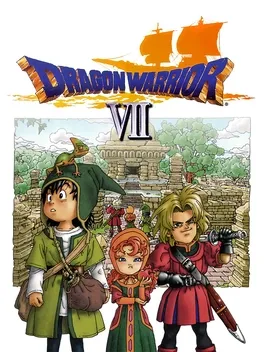
Dragon Quest VII is the seventh installment of the popular Dragon Quest series of role playing games and the first in the series to not be a part of a larger trilogy. It was the first main series Dragon Quest title to be released outside of Japan since the release of Dragon Quest IV: Chapters of the Chosen in North America in 1992, and the last DQ title to be released in North America with the Dragon Warrior name.
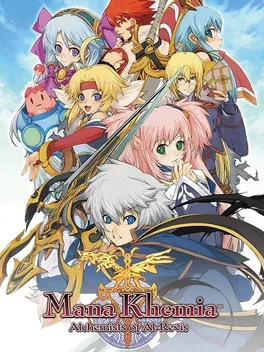
The 9th core Atelier game and the first of the two Mana Khemia games. The game's main focus is on the lead protagonist, Vayne Aurelius, the son of a legendary alchemist named Theofratus who had disappeared sometime after Vayne's birth. Since then, Vayne has led the life of a hermit, his only companion being a Mana in cat form named Sulpher. Vayne is invited to the Al-Revis Academy for alchemy training by Zeppel, one of the professors. He is quickly indoctrinated into the school by becoming part of an atelier led by Flay Gunnar (an older student who is known as The Defender of Justice) along with two other students, Jess (a clumsy girl who is nevertheless adept at alchemy), and Nikki (an impulsive beastgirl). They are soon joined by Pamela (the school's resident ghost), Anna (an 11-year-old master swordsman), Roxis (the son of a famous family of alchemists who is quickly forced to join the workshop by Flay), and Muppy (an alien the group discovers on an assignment). The eight of them are able to succeed at completing assignments, learn the skills of alchemy, and allow the workshop to prosper.
School is out for the summer, but mischievous Luso Clemens must first face detention to make up for his misbehavior. Alone in the library, he stumbles upon an ancient book with magical powers that summons him to the mystical land of Ivalice. Warped into the middle of a battlefield, Luso joins Cid and his clan to set off on an adventurous journey looking for a way home.
Grandia is a role-playing video game developed by Game Arts and published by Entertainment Software Publishing for the Sega Saturn console as the first game in their Grandia series. Initially released in Japan in 1997, the game was later ported to the PlayStation in 1999, with an English version of the game appearing on the platform in North America in the following September by Sony Computer Entertainment America, and later in Europe in March 2000 by Ubisoft. The game was produced by much of the same staff who worked on the company's previous role-playing endeavor, the Lunar series, including producer Yoichi Miyagi and music composer Noriyuki Iwadare. Since its release, Grandia has become notable for its combat mechanics, which have been carried over to future games within the franchise, and has spawned two spin-off titles – Grandia: Digital Museum and Grandia: Parallel Trippers – both released exclusively in Japan. In celebration of the announcement of renewing development on Grandia Online, which acts as a prequel to Grandia, the game was re-released on Sony's PlayStation Network platform in Japan as a downloadable title in April 2009 and in North America on February 25, 2010. It was re-released in Europe on November 10, 2010.
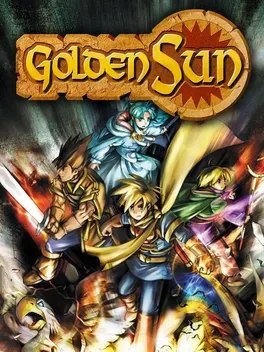
Evil is slowly covering the world. Forces of darkness are pursuing the lost art of Alchemy, and the fate of mankind hangs in the balance. You and your companions, armed with weapons, Psynergy magic, and a host of elemental creatures, must return peace to the world. Golden Sun is an epic role-playing game with an engrossing story, set in a massive world. Gather the elemental Djinn – fire, water, wind and earth – and combine them in unique ways to produce awesome magical effects.
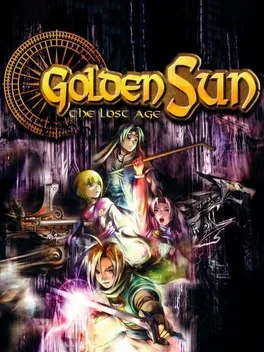
The story of Golden Sun: The Lost Age picks up right near the end of the first game. Golden Sun veterans will be surprised to learn that The Lost Age is played from the point of view of the party being chased as they try to light the remaining two lighthouses, which will unlock the power of alchemy for the world--or will it instead unlock the world's destruction? * LAN PVP mode via GBA Game Link Cable
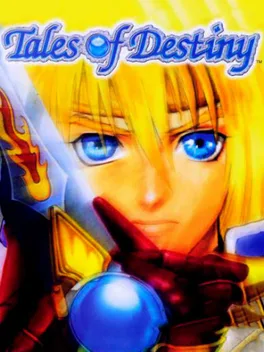
Tales of Destiny is a follow-up to Tales of Phantasia. Like its predecessor, it has the structure of traditional Japanese role-playing games, but substitutes turn-based combat for action-oriented one. Battles take place on separate side-scrolling screens and resemble those of a fighting game. The player controls the main hero, navigating him on the battle screen and performing various attacks and combos. Other party members are controlled by the game's AI, but it is possible to pause the battle at any time and assign new combat style to any one of them.