
Game no Tetsujin: The Shanghai


Buy
Could be interesting
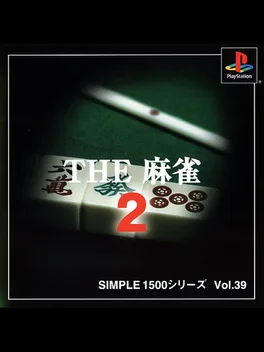
Simple 1500 Series vol. 39: The Mahjong 2 is a four players mahjong game in which the player can compete against three computer opponents to see if he can win the matchs. The game features also a quiz mode and a tutorial.
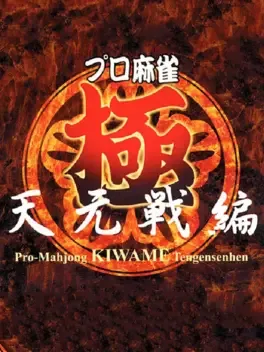
Pro Mahjong Kiwame is a four player Riichi mahjong game, unlike most one-on-one Mahjong games released at the time and the modern casual games. Players take and discard tiles until they've completed hands by forming groups and pairs.
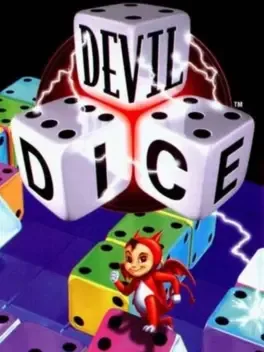
Devil Dice is a unique puzzle game, where the player controls a small devil that runs around a grid covered in large dice. The player can both stand atop dice, and stand on the ground (with the dice towering above). When standing on the dice, the player can move from die to die, or can roll a die in the direction he or she runs, revealing a different face as the die rotates. Creating a group of adjacent dice with identical pips—the size of which must be at least the number of pips—causes those dice to slowly sink into the field before disappearing. Chain reactions are possible by adding additional dice to a sinking set. Different types of dice are available in some modes, with different properties to make the game more challenging. It was originally created by developer Shift on the "homebrew" Yaroze platform, and later turned into a commercial game. Released in 1998, it is one of only a handful of games to make the leap from the Yaroze to commercial release. The game is a million-seller and a demo version was released as a PlayStation Classic game for the PlayStation 3 and PlayStation Portable on November 7, 2007.

Pro Mahjong Kiwame Plus II is a mahjong game and is the second game in the series released for the Playstation One console. The game features 16 different real mahjong players as opponents and the game mode is a 4 player vs mahjong. The game got 3 game modes: Professional, Gamble & Training. Mahjong is a game for four players that originated in China. It was called, meaning sparrow in ancient China, which is still the name most commonly used in some southern Chinese dialects such as Cantonese and Minnan, as well as in Japanese. However, most Mandarin-speaking Chinese now call the game má jiàng. Mahjong involves skill, strategy, and calculation, as well as a certain degree of luck (depending on the variation played, luck can be anything from a minor to a dominant factor in winning). In Asia, mahjong is also popularly played as a gambling game. In the game, each player is dealt either thirteen or sixteen tiles in a hand, depending on the variation being played. On their turn, players draw a tile and discard one, with the goal of making four or five melds (also depending on the variation) and one pair, or "head". Winning comes "on the draw" by drawing a new or discarded tile that completes the hand. Thus, a winning hand actually contains fourteen (or seventeen) tiles.
Based on the basic concepts of "simple and easy to play", "deep and addictive", and "very exhilarating when the mystery is solved" - includes 3 types of puzzle games.

Poy Poy is a multiplayer party game at heart. Grab a multi-tap and four friends and take part in an ultimate battle of skill and wit. The idea is to be the last man standing in this arena based combat game. But don't worry if you can't find a multi-tap or four friends. There's plenty of AI characters to battle in various tournament modes and you can also play a 2 player deathmatch (with or without computer opponents). If it sounds fun now, wait 'till you play it... Set in seven different 3D environments strewn with throwable objects, the game challenges you to a match against three other opponents armed with logs, rocks, ice blocks, and atomic bombs. If you run out of stuff to throw, you can toss your opponents around too. Each hit drops your life meter, so be careful who you pick a fight with.

Simple 1500 Series vol. 49: The Casino is a gambling game with some adventure elements, the game has a story mode in which the player is a man that arrives at a town and when he is in the airport he lost all his money but finds a coin of 50 and he decide to play in the casino to earn enough money to leave town. In the Casino he can play gambling games like Roulette, Card Slot, Card games, Horse racing bet, Tetris, etc
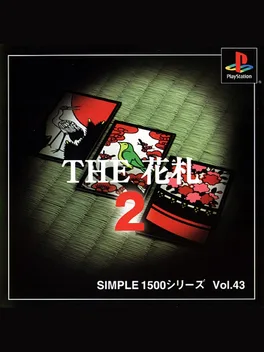
Simple 1500 Series vol. 43: The Hanafuda 2 is the second hanafuda game in the Simple 1500 series and also features a character creation mode in which the player can customize his character appearence (hair, eyes, face, etc) and them compete against different computer opponents in a sort of story mode. The game also has a free mode.
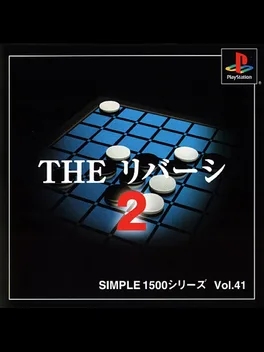
Simple 1500 Series vol. 41: Reversi 2 is a reversi game that features a character creation mode in which the player can customize his character appearence (hair, eyes, face, etc) and them compete against different computer opponents in a sort of story mode. The game also has a free mode.
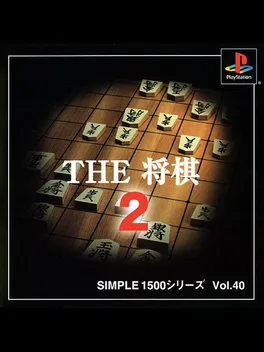
Simple 1500 Series vol. 40: The Shogi 2 is a shogi game that some difficulty levels and a tutorial.