
Lethal Enforcers


Buy
Part of collection:
Lethal Enforcers
(last 3 games)
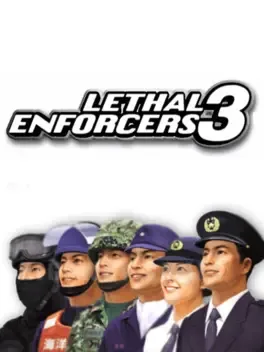
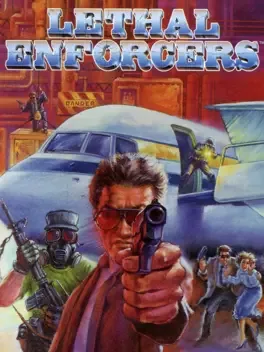
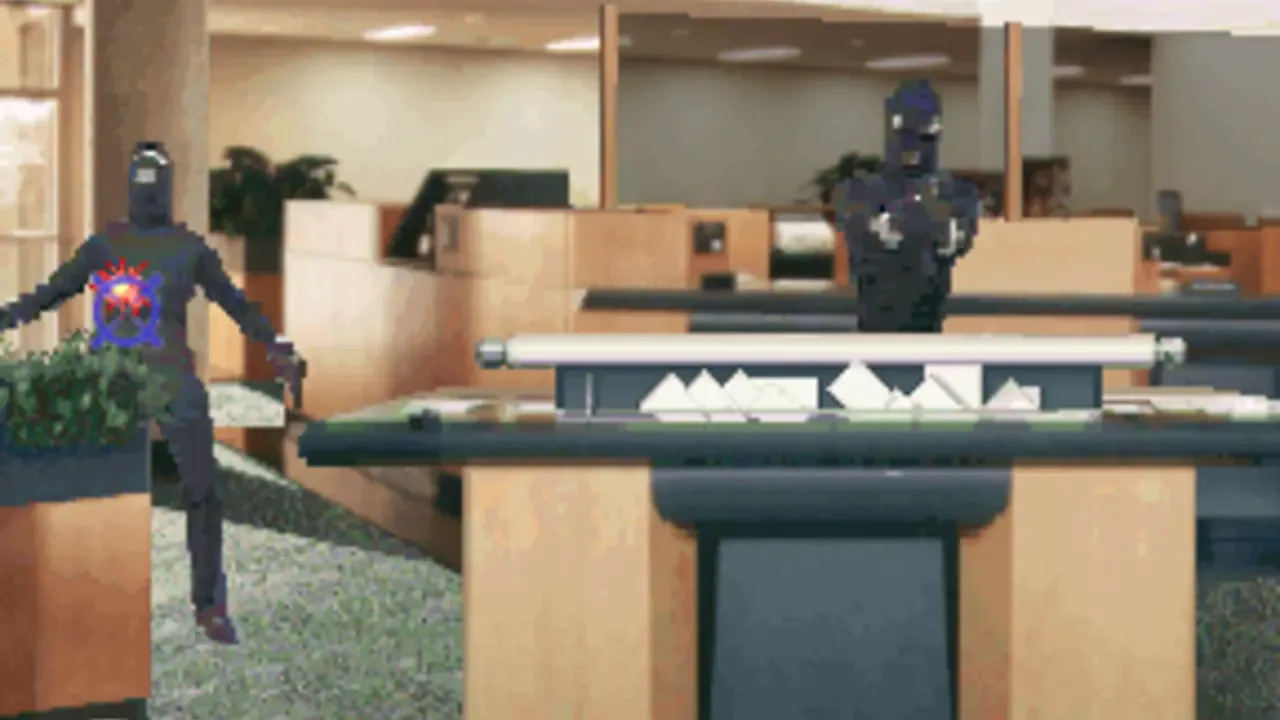
A light gun shooting game with the motif of a job that protects peace. There are stages for each occupation, and police officers, coast guard officers, riot police, etc. are active.
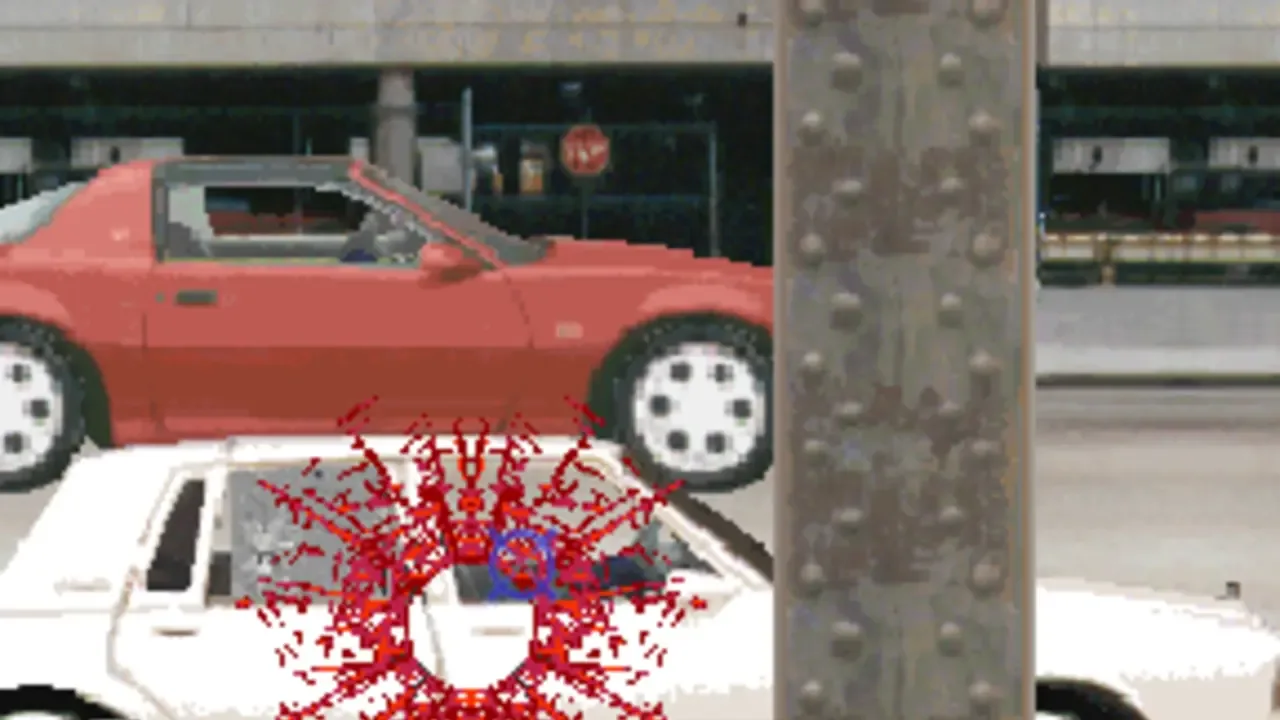
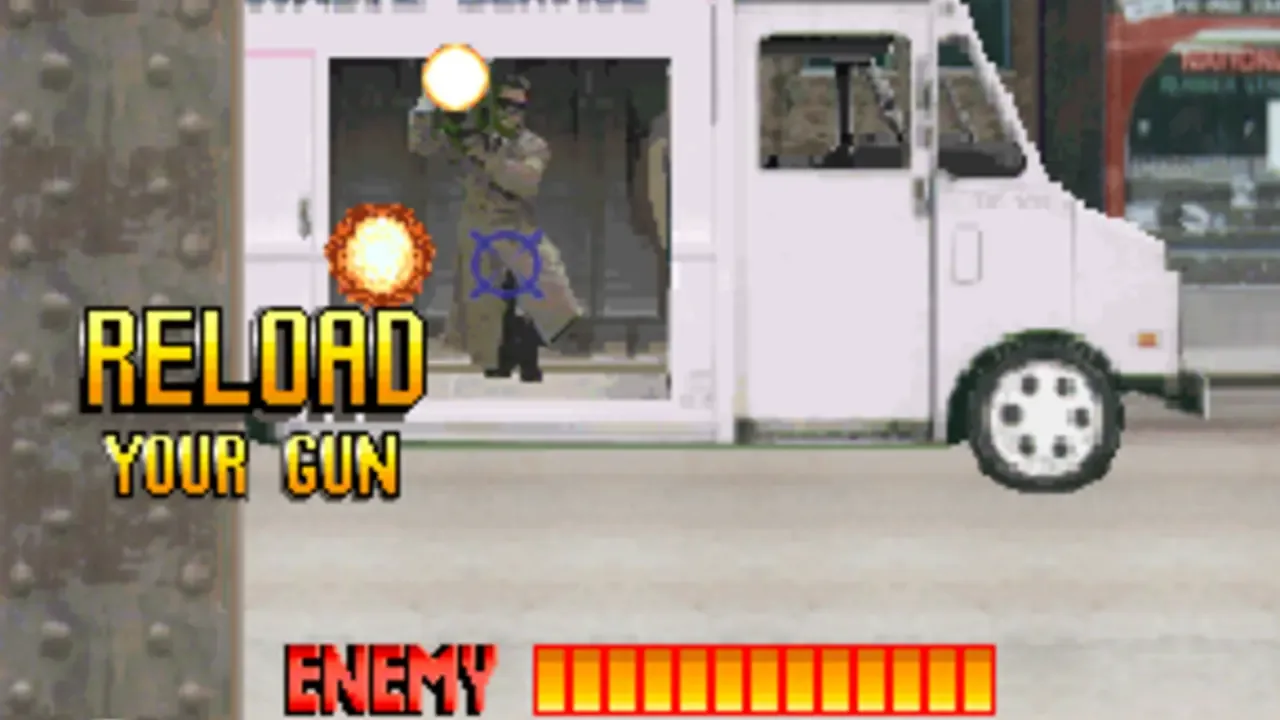
Lethal Enforcers I & II contains the Konami coin-op shooters Lethal Enforcers & Lethal Enforcers II: Gunfighters both on one disc. The games both share a similar gameplay structure with digitized enemy targets "popping up" on screen and simply needing to be shot down before they take a shot at you.The original game places you as a 1990s police officer fighting bank robbers, Chinese Mafia and drug dealers while in the sequel you are now a Sheriff up against more bank robbers and wrong doing but now set in the Old West. Lethal Enforcers can be played with either a standard game pad or for more of an authentic arcade experience, the Konami Hyperblaster light gun.
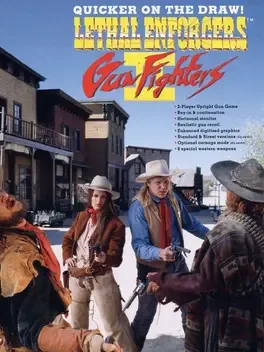
Lethal Enforcers II: Gun Fighters is a 1994 arcade and prequel to the original Lethal Enforcers. In contrast with the first game's modern law enforcement theme, Lethal Enforcers II takes place in the American Old West.
Could be interesting
Lethal Enforcers II: Gun Fighters is a 1994 arcade and prequel to the original Lethal Enforcers. In contrast with the first game's modern law enforcement theme, Lethal Enforcers II takes place in the American Old West.
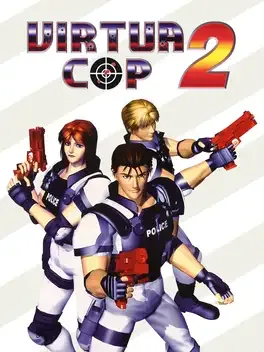
During the events of the first, the original Virtua Cops, Michael "Rage" Hardy and James "Smarty" Cools shut down the E.V.I.L Inc. criminal empire. Three of its leaders, King, Boss, and Kong are all in the maximum security federal pen. And the final, fourth member of the E.V.I.L Inc. gang, international terrorist Joe Fang is believed to have been killed in a helicopter crash, though his body was never found. After the downfall of E.V.I.L Inc., a comprehensive investigation of their black market and gun-running activities was launched in the Virtua City bank. Last year it looked as though the Virtua Squad had finally put an end to the E.V.I.L Syndicate’s reign of crime over Virtua City. The gangleaders were all either behind bars, in intensive care, or under 6 feet of dirt. And the Virtua City Police Special Investigations Unit got a new member in the shape of Janet Marshall, an expert in criminal psychology profiling. Then trouble started brewing in unlikely places.... The vice-president of the Virtua City Bank was killed in shady circumstances that were only officially termed "accidental". And the swollen accounts of the now-defunct E.V.I.L Syndicate, which he had been suspected of laundering, were emptied overnight. The missing funds amounted to more than the GNP of most small countries. Meanwhile, on the other side of town, alarms break the quiet and calm of the Virtua City air. A daring daylight raid on the biggest jeweler’s in the state! And at the site of the new subway construction, there’s been an unusual amount of unexplained activity involving some very suspicious-looking materiel. Looks like the E.V.I.L is reborn.
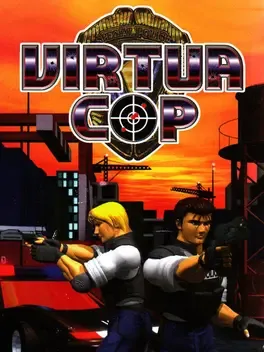
Players assume the role of police officers in a first-person perspective and use a light gun to shoot criminals and advance through the game, with penalties for shooting civilians. The players could also shoot powerups that grants him a weapon or a life. The weapon is lost if the player is hit, but not if he shoots a civilian. Virtua Cop was notable for its use of polygonal graphics, which were subsequently used in both House of the Dead and Time Crisis, instead of the two dimensional sprites that were popular for previous games in the same genre. It is also notable for being one of the first games to allow the player to shoot through glass. Its name derived from this graphical style, which was previously used in Virtua Fighter, Virtua Striker and Virtua Racing.
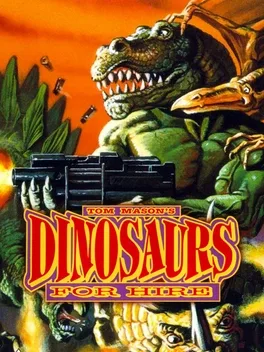
Unknown monsters and weird robotic creatures attack the Earth. For some reason, the only ones who can stop the invasion are the three Dinosaurs for Hire: Archie, a tyrannosaurus rex and their leader; the triceratops Lorenzo, lover of fine food, fine wine, and fine clothes, and the one-eyed, unpredictable stegosaurus Reese. Each dino has its own strengths and weaknesses. You guide the dinosaur of your choice through the platform levels of the game. You are equipped with a gun: tons of enemies will attack you from all the sides, so your best bet will be walking with the fire button pressed down. You can shoot to all the directions and also engage in melee combat when the enemy is too close. Each level has a boss enemy waiting for you in the end. There is also a cooperative two-player mode.
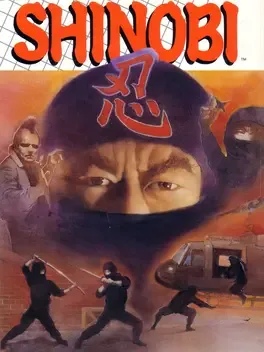
The five missions in the game are each three or four stages long. Several hostages are being held in each stage; Joe must rescue all of them before he is allowed to finish the stage. The last stage in each mission has no hostages, but instead features a powerful boss character whom Joe must defeat. After completing each of the first four missions the player is taken to a bonus stage, where he can earn an extra life if he is able to kill all of the ninjas leaping towards him. Completing the fifth mission ends the game. Also, once the fifth mission begins, continues are no longer allowed; the player has to finish the game with however many lives he has left at that point. If the player earns a place on the high score board, the number of credits it took him to get that score is displayed along with his score. Joe's standard weapons are an unlimited supply of shuriken, along with punches and kicks when attacking at close range. One hostage per stage gives him a power-up. When powered-up, his throwing stars are replaced by a gun that fires large, explosive bullets, and his close-range attack becomes a katana slash. Joe can also perform "ninja magic," which may be used only once per stage and kills (or damages, in the case of bosses) all enemies on the screen. The game also allows the enemies to hide behind boxes or use shields to block Musashi's shurikens.[4] Joe can be killed with one hit, provided he is hit by a projectile or melee attack, but if he does not find himself in those situations, the player can touch regular enemies and just be pushed back without being damaged. Since most enemies appear in the same place on each level, it is possible to master the game by memorizing their locations and devising patterns to defeat them. At the end of each stage, the player receives score bonuses based on performance. Completing the stage without using ninja magic or without using any throwing stars or bullets earns the player a point bonus. The player has three minutes to complete each stage; remaining time at the end of the stage is also converted to bonus points and added to the player's score.
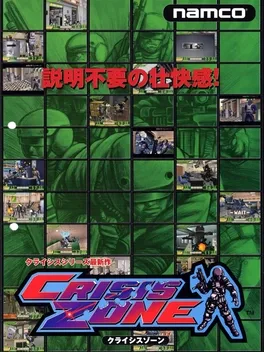
Crisis Zone is a light gun arcade game released by Namco in 1999, a spin-off of the Time Crisis series. As a feature, it handles a large machine gun type controller instead of a handgun like the conventional work. In 2004, the Playstation2 version was released with Guncon2 support.
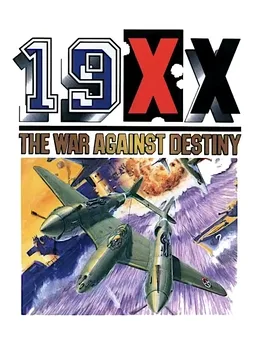
19XX: The War Against Destiny is a vertical scrolling shooter arcade game made by Capcom in 1995 (copyrighted in 1996). The game is the 4th of a series of World War II vertical shooters made by Capcom. The story takes place before a fictional war (Hence, the 19XX) as a lone pilot tries to defeat an entire army/evil organization from starting another World War, which soon escalates to a nuclear apocalypse.
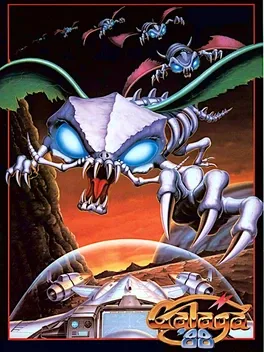
The gameplay in Galaga '88 is built on the same premise as that of the original Galaga game, but is in many ways more complex and more difficult. The game is divided into a series of 29 Stages distributed through eight Worlds. The starship Galaga accelerates between Stages and Worlds and even to higher dimensions (go to the section on Dimensional Travel below to find out more). With the exception of the third and eighth, each World culminates in a Challenging Stage. There are six such stages to engage in any full game, and each begins with the on-screen announcement "That's Galactic Dancin'!" and has its own YM2151-generated song to which the enemy formations dance. In any given Challenging Stage, both the design of the enemies and their dancing formations shall vary according to the player's current Dimension. As in Galaga, the objective is to destroy all forty enemies before they fly away off the screen. However, refraining completely from touching any controls for the duration of a Challenging Stage awards a "secret bonus" ranging in value from 10000 to 25000 points, and equal to the "special bonus" which would have been awarded for destroying all forty enemy aliens instead. Galaga '88 introduces a variety of new enemies and behaviors. Most of these special enemies are worth varying amounts of bonus points when destroyed. Some enemies can combine into larger enemies which take multiple hits to destroy, while others arrive in eggs, explode in a shower of fireworks, grow with multiple hits, or sport armor which makes them invincible while in formation. Certain enemies drop small formations of tiny creatures that wiggle their way down the screen, and still others can act as escorts to incoming groups of enemies and then quickly dive at the player before leaving the game. Most stages also include various obstacles which appear once the enemy formation has been assembled. These can be destroyed with either one or several shots, and the first one on each stage will leave a "Warp Capsule". At the start of the game, the player can select how many Galaga starships to start with (one or two), affecting their number of remaining lives. The game ends after the final boss is defeated (or when the player's last ship is destroyed or captured) - in the latter case, the player can continue the game for an additional credit. The Game Over screen shows the player's hit-miss ratio and a visual representation of their progress. If the player reaches Stage 27, the game also shows a picture of the final boss (damaged if defeated, but silhouetted if not). If the arcade operator has set the "continue" option to "on", the player also cannot continue if he is defeated on Stages 27-29.
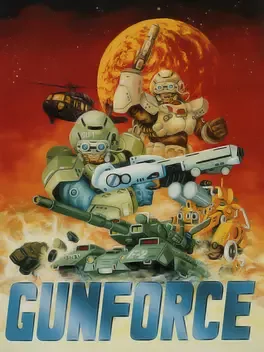
GunForce: Battle Fire Engulfed Terror Island or simply titled as GunForce, is a side-scrolling action shooting game produced by Irem for the arcades in 1991. The game was later ported by Bits Studios and published by Irem to the Super Famicom exclusively in Japan in 1992. Outside of Japan, it later received a sequel titled GunForce II, originally known in Japan as Geo Storm. The player is armed with a gun that fires rapid-fire bullets. Each direction it shoots can be fixed toward it so the player doesn't have to hold the joystick toward it. Players may find motorcycles to speed across enemy territory faster in addition to helicopters and cable cars. After scoring over any high score, whether they win or lose, players can enter their name into the high score list after the game over screen is "achieved". A strict time limit keeps the game going at a steady pace throughout; the consequence involves losing a life.
Helicopters come at you in waves, your mission is to take as many choppers down as possible. Pick up weapons and upgrades being dropped by your allies.