
Lotus Esprit Turbo Challenge

31.12.1990
Users 75/100
Genre: Racing
The first in a series of 3 racing games endorsed by the legendary car company, which is now a part of Proton. The game features a total of 32 fictitious racetracks from around the world, split into 3 difficulty levels. There are 19 computer opponents (15 on the 8-bit versions) and you have to finish in the top 10 (top 8 on the 8-bits) to progress. The higher you finish in one race, the lower down the grid you start for the next race. The opposition drivers have pun names based on the F1 drivers of the day - examples include Ricardo Pastry and Crashhard Banger. You can choose between sound effects or one of a variety of music pieces. The game features a simultaneous 2-player mode, but the 1-player mode only uses half the screen, a simple animation filling the other half. In most races you will have to make a pitstop for fuel in order to reach the finish. The tracks include features such as oil slicks, roadworks, boulders and rivers - contact with these (or the other cars) will slow you, but there is no car damage model.

Buy

Part of collection:
Lotus Challenge (last 3 games)

31.12.1992

The third game in the series combined the gameplay aspects of its predecessors, allowing players to choose between racing opponents of Lotus Turbo Challenge or the arcade-like time trials of Lotus 2. The two-player option was retained and the music selection feature returns (Patrick Phelan's soundtrack to Lotus III spawned many modern remixes). Lotus III also added a third car - a concept Lotus M200 automobile - and allowed the player to choose which one to race with. The game recycled most of the graphics from Lotus 2, but added a number of new sceneries.
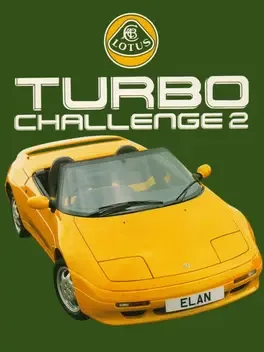
31.12.1991

The second Lotus game shifted focus to arcade-oriented gameplay. Being the first of the series released for a game console (for Sega Genesis/Mega Drive under the title Lotus Turbo Challenge), the fuel limit and difficulty levels were dropped, and the lap-based levels were replaced with course-based time trials, (not unlike arcade games such as Out Run), with the player required to complete each course within a specified time to qualify for the next one. In addition to the Esprit Turbo SE, Lotus Turbo Challenge 2 also featured the Lotus Elan SE, hence 'Esprit' being dropped from the title. There was no choice of car however; the player runs with the Elan SE on odd levels, and with the Esprit on even levels. Lotus 2's single-player mode uses all of the game screen instead of half, and opponent cars appear in a variety of colors (opponent cars in the original game were all white). However, music is absent from racing altogether; the player instead hears the car's engine sound. Lotus 2 was developed for the Amiga and then converted for the other platforms.
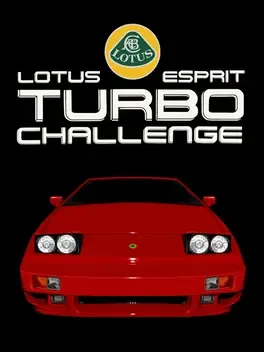
31.12.1990

The first in a series of 3 racing games endorsed by the legendary car company, which is now a part of Proton. The game features a total of 32 fictitious racetracks from around the world, split into 3 difficulty levels. There are 19 computer opponents (15 on the 8-bit versions) and you have to finish in the top 10 (top 8 on the 8-bits) to progress. The higher you finish in one race, the lower down the grid you start for the next race. The opposition drivers have pun names based on the F1 drivers of the day - examples include Ricardo Pastry and Crashhard Banger. You can choose between sound effects or one of a variety of music pieces. The game features a simultaneous 2-player mode, but the 1-player mode only uses half the screen, a simple animation filling the other half. In most races you will have to make a pitstop for fuel in order to reach the finish. The tracks include features such as oil slicks, roadworks, boulders and rivers - contact with these (or the other cars) will slow you, but there is no car damage model.

Could be interesting

22.12.2000

Aqua GT is powerboat racing game. It features three modes: Championship, Arcade and Two-player. Championship mode is the main single player game, where you advance through the Bronze, Silver and Gold Championships. In the Arcade gameplay mode you have to beat the clock. In two-player split screen mode you go head to head against another player. There are 5 boats to choose from, and you can unlock another 15 while progressing through the game. All boat vary in speed, acceleration and handling. The tracks are set in canals of major cities, like London, Amsterdam and New York. Each track has a high or low tide, and you can race at day time or during the night time.

31.12.1995

Super Skidmarks is a racing video game developed by Acid Software and released in 1995. The game is the sequel to Skidmarks and as such was also termed Skidmarks 2 and Super Skidmarks 2 by commentators. The game features “minimally realistic” action viewed from an isometric perspective as well as novelty vehicles such as wheeled cows and caravans. Various methods such as joypad adapters and link systems are employed to allow multiple players to compete, up to a maximum of 8. The game was critically acclaimed and a best-seller in the UK. Several upgrades to the Amiga original were released as well as conversions for the Amiga CD32 and Sega Mega Drive, the latter published by Codemasters.

31.12.1994

BC Racers is a kart racing game starring characters from the Core Design's Chuck Rock series of games. Each of the racers in this game rides a prehistoric motorcycle with a side car. On each two-character team, one person drives the motorcycle, and the other fights off opponents using clubs, punches, kicks, etc. Graphics in BC Racers consist of a flat landscape decorated with scaled sprites to compose the track and scenery.

31.12.1990

Become the biking legend Angel Nieto and race around 16 courses to win the championship.

31.12.1986

Kikstart 2 is a motorcycle trials racing videogame released for the Amiga, Amstrad CPC, Commodore 64 and ZX Spectrum. It enjoyed more success than its predecessor, Kikstart. The game allowed 2-player simultaneous (via a split-screen facility) or 1-player, vs-computer play. The game mechanics were copied into other games too, like the Game Boy game "Motocross Maniacs". The basic premise of the game is to control a bike using acceleration, braking, "hopping" and "wheelies" to navigate across a course of various obstacles, from ramps and gates to telephone boxes and tyres. The game was based on the BBC Television series Kick Start. An enhanced version was released for the Commodore 128,[1] one of the few native mode game titles for that computer. Source: https://en.wikipedia.org/wiki/Kikstart_2

31.12.1989

Burn rubber in this motorcycle racing game.

31.12.1995

Big Red Racing is a comical racing game, released for DOS in 1996. It was developed by Big Red Software and published by Domark (now Eidos). Big Red Racing was planned for release on five different systems: DOS, PlayStation, Sega Saturn, 3DO and Atari Jaguar, but the PlayStation, Sega Saturn, 3DO and Atari Jaguar versions were cancelled.

01.02.1991

A one player racing game published and developed by Atari in 1991.

12.11.1993

Final Stretch is a Formula One racing game developed by Genki. It is the spiritual sequel to their earlier game Aguri Suzuki F-1 Super Driving (rebranded in the US as Redline: F1 Racer), and like that game Final Stretch is licensed by FOCA and supervised by Japanese F1 racer Aguri Suzuki. The game employs a Mode 7-enabled viewpoint close to the ground that has multiple vantage points that the player can switch between and, with the FOCA license, uses many of the then-current F1 teams and racers. Unlike Redline: F1 Racer, Final Stretch was never released outside of Japan.