
Lotus Turbo Challenge 2


Buy
Part of collection:
Lotus Challenge
(last 3 games)
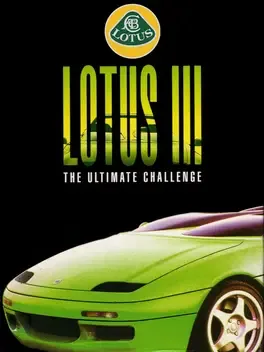
The third game in the series combined the gameplay aspects of its predecessors, allowing players to choose between racing opponents of Lotus Turbo Challenge or the arcade-like time trials of Lotus 2. The two-player option was retained and the music selection feature returns (Patrick Phelan's soundtrack to Lotus III spawned many modern remixes). Lotus III also added a third car - a concept Lotus M200 automobile - and allowed the player to choose which one to race with. The game recycled most of the graphics from Lotus 2, but added a number of new sceneries.
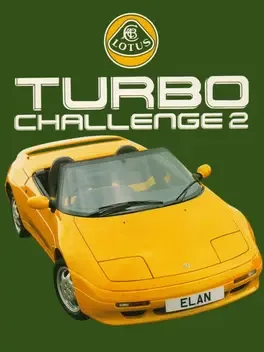
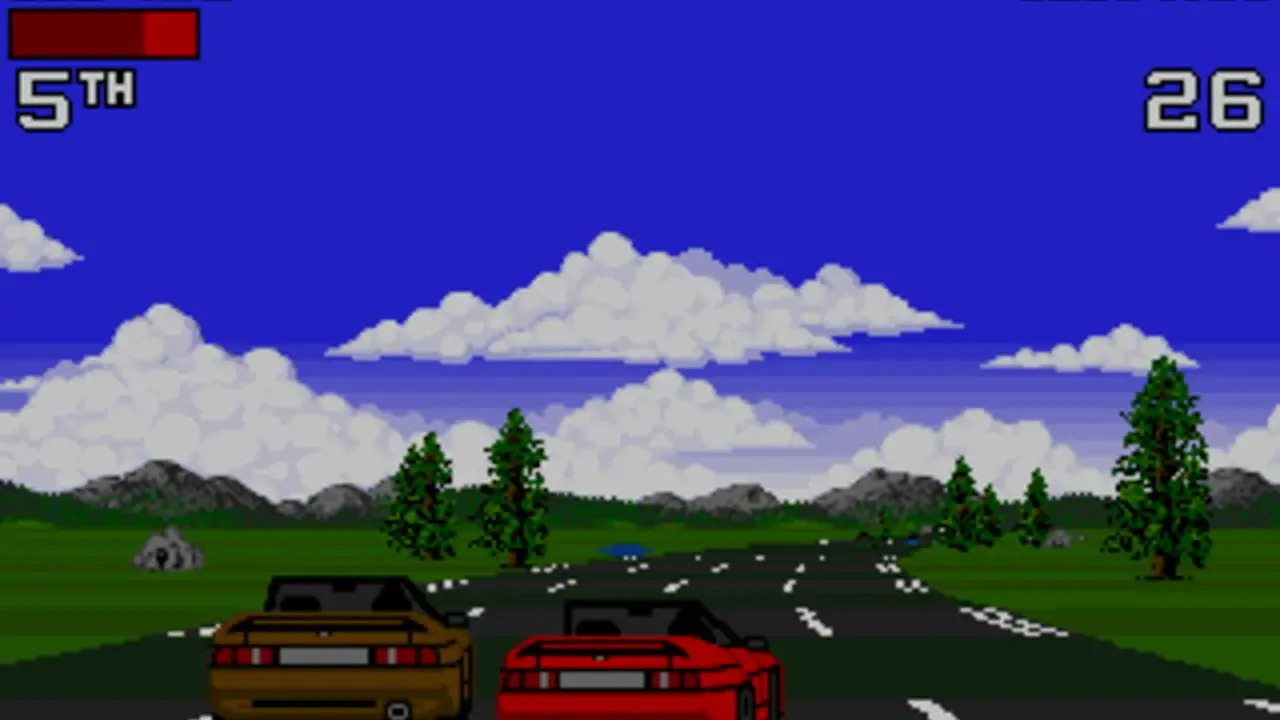
The second Lotus game shifted focus to arcade-oriented gameplay. Being the first of the series released for a game console (for Sega Genesis/Mega Drive under the title Lotus Turbo Challenge), the fuel limit and difficulty levels were dropped, and the lap-based levels were replaced with course-based time trials, (not unlike arcade games such as Out Run), with the player required to complete each course within a specified time to qualify for the next one. In addition to the Esprit Turbo SE, Lotus Turbo Challenge 2 also featured the Lotus Elan SE, hence 'Esprit' being dropped from the title. There was no choice of car however; the player runs with the Elan SE on odd levels, and with the Esprit on even levels. Lotus 2's single-player mode uses all of the game screen instead of half, and opponent cars appear in a variety of colors (opponent cars in the original game were all white). However, music is absent from racing altogether; the player instead hears the car's engine sound. Lotus 2 was developed for the Amiga and then converted for the other platforms.
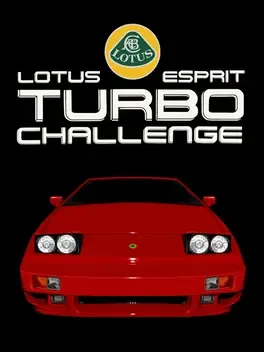
The first in a series of 3 racing games endorsed by the legendary car company, which is now a part of Proton. The game features a total of 32 fictitious racetracks from around the world, split into 3 difficulty levels. There are 19 computer opponents (15 on the 8-bit versions) and you have to finish in the top 10 (top 8 on the 8-bits) to progress. The higher you finish in one race, the lower down the grid you start for the next race. The opposition drivers have pun names based on the F1 drivers of the day - examples include Ricardo Pastry and Crashhard Banger. You can choose between sound effects or one of a variety of music pieces. The game features a simultaneous 2-player mode, but the 1-player mode only uses half the screen, a simple animation filling the other half. In most races you will have to make a pitstop for fuel in order to reach the finish. The tracks include features such as oil slicks, roadworks, boulders and rivers - contact with these (or the other cars) will slow you, but there is no car damage model.
Could be interesting
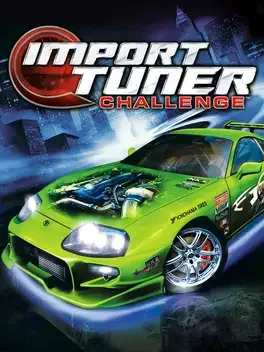
Import Tuner Challenge is set on the Shuto Expressways of Tokyo, Japan. There a total of 415 rivals in the game. It features C1 and Shinkanjo like many other TXR games but unlike TXR3, Import Tuner Challenge does not feature the highways of Nagoya, Osaka, and Yokohama. But two new highway sections of Tokyo are in the game which are Rt.3 Shibuya and Rt.4 Shinjuku.
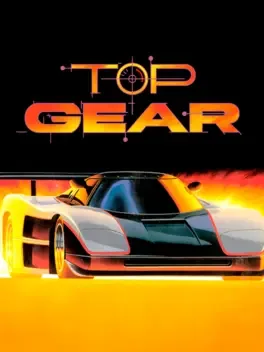
"Top Gear sends players over eight countries around the world with one of four cars, facing sharp turns, pit stops, and debris in this arcade-style racing game."
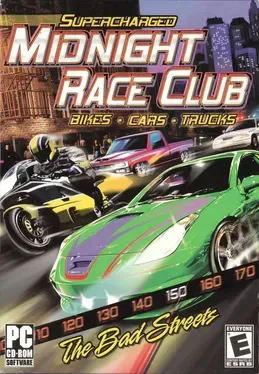
Midnight Race Club: Supercharged! is the second racing game from the developers behind the notorious Big Rigs: Over the Road Racing. Unlike Big Rigs, it has proper collision detection, unintentionally removing one of the quirks that made the previous game famous. Midnight Race Club was originally intended to be a single package along with Big Rigs, but GameMill decided to split the two early in development. For this reason, both games share an identical UI and near-identical gameplay.
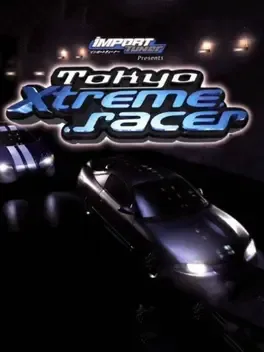
Tokyo Xtreme Racer is a racing video game released in 1999 as one of the console's launch titles, the game was one of the first mission-based racing games. The gameplay involves the player challenging other drivers on the Shuto Expressway in order to gain money to modify and enhance his or her car. The game features a wide variety of Japanese cars and tuning parts to purchase as the player progresses through rivals. When released in Japan, Shutokō Battle was one of the best selling Dreamcast titles at this time. The game is based on illegal highway racing in Tokyo's Wangan highway with custom tuned cars. A such phenomenon is growing popular in Japan since the 1990s with dedicated manga (Shutokō Battle's biggest inspiration being Wangan Midnight), anime series and video games (C1 Circuit, Wangan Trial, Naniwa Wangan Battle).
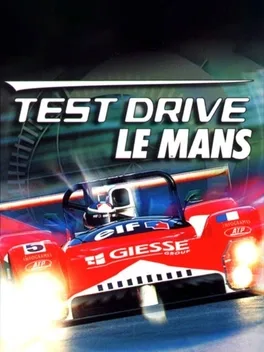
Take on the LeMans endurance racing challenge! Join one of the 25 factory teams take one of the over 50 vehicles (designed with assistance of actual teams) on the eight different LeMans circuits. The actual wear and tear are simulated. Tire wear, oil and fuel consumptions... Day and night and back to day driving.
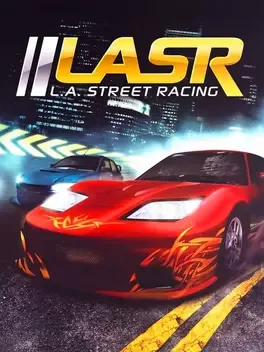
LA Street Racing is a street racing game set in Los Angeles where players climb from 61st place to challenge the underground champion Matt Peacock. Players start with a basic car and compete in high-stakes races at various locations across LA, betting car parts and eventually whole vehicles in pink slip races. The progression system features four prestige levels, each unlocking new racing locations and tougher opponents. Car customization involves strategic decisions about part compatibility and performance trade-offs, as mixing different upgrade tiers affects handling. The racing model emphasizes realistic vehicle physics, requiring careful braking and cornering techniques, while rewarding clean driving with nitrous boosts. The game includes multiplayer support for up to eight racers online.
The first in a series of 3 racing games endorsed by the legendary car company, which is now a part of Proton. The game features a total of 32 fictitious racetracks from around the world, split into 3 difficulty levels. There are 19 computer opponents (15 on the 8-bit versions) and you have to finish in the top 10 (top 8 on the 8-bits) to progress. The higher you finish in one race, the lower down the grid you start for the next race. The opposition drivers have pun names based on the F1 drivers of the day - examples include Ricardo Pastry and Crashhard Banger. You can choose between sound effects or one of a variety of music pieces. The game features a simultaneous 2-player mode, but the 1-player mode only uses half the screen, a simple animation filling the other half. In most races you will have to make a pitstop for fuel in order to reach the finish. The tracks include features such as oil slicks, roadworks, boulders and rivers - contact with these (or the other cars) will slow you, but there is no car damage model.
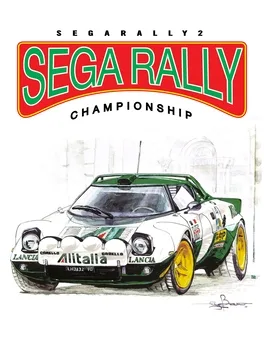
Sega Rally 2 is the sequel to Sega Rally Championship. It was released in 1998 in the arcades and was later ported to the Dreamcast and PC.
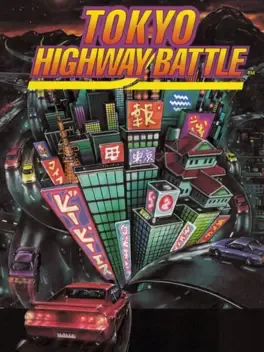
Players navigate through three Tokyo highway circuits driving one of 72 high-performance sports cars. While driving, players earn valuable points which are used to purchase upgrade parts for their vehicle. To ensure the most realistic gameplay, developers Bullet-Proof Software, enlisted the guidance of racing champion, Keiichi Tsuchiya and automotive specialist, Masaaki Bando Under their supervision, Bullet-Proof painstakingly recreated the physics and handling of each race car. The Saturn release, only released in Japan, included many more videos and starred the Drift King himself through these cutscenes.
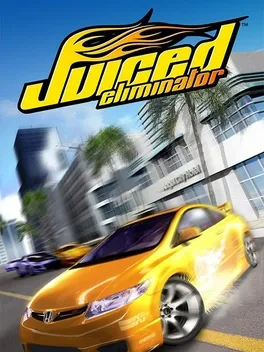
This version of Juiced is built specifically for PSP, with unique multiplayer games and and an expansion on the crew and pink-slip racing features. The game was built from the ground up on PSP, with new cars, tracks, characters and game modes. The built-in wireless connectivity on the PSP lends itself to expanding the multi-player options, including multiplayer crew races, pink slip racing and the all new ‘Eliminator’ mode where the slowest driver per lap is removed from the competition, and the winner is the last one left in the race.