
New Rally-X


Buy
Part of collection:
Rally-X
(last 3 games)

A remixed version of Rally-X, released first in the Namco Museum Remix compilation.

A remake of Rally-X released first in the Namco Classic Collection Vol. 2.
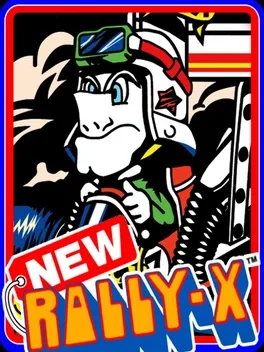
New Rally-X is a maze and driving arcade game that was released by Namco in 1981. It runs on similar hardware to that of its predecessor, and as its name suggests, it is a revised version of that title, which was released in the previous year. The only differences are that it has slightly enhanced graphics, easier gameplay, a new soundtrack, and a "Lucky Flag" (with the letter "L") that gives the player extra points for remaining fuel when collected, after which the round will continue if there are still flags remaining. The mazes are mostly identical, with some of the blocks from Rally-X changed into roads to reduce dead ends, and some different flag (and rock) locations. This title was manufactured in greater numbers and was much more popular in Japan than its predecessor.
Could be interesting
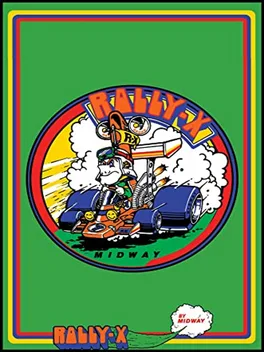
Rally-X is a maze & driving arcade game, that was released by Namco in 1980 and licensed to Midway Games for US manufacture and distribution in 1981. It was ported to the SG-1000 in Taiwan.
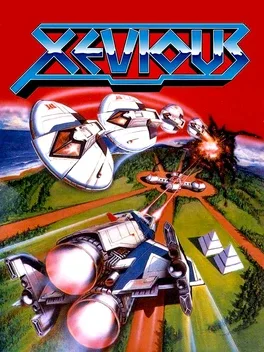
It's a nightmare, but it's true! Research shows that we are the actual aliens on Earth, and the ruthless Xevions are the original inhabitants. Now the Xevions want Earth back -- minus humans! Their invasion forces are fierce -- the land is crawling with deadly Domogram Rovers; the sky is black with Toroid Patrol Fleets and Zoshi Death Squads. Our puny weapons offer no defense. Earth's only hope is our powerful new Solvalou Fighter Plane. Its pilot will have a single mission: Penetrate the enemy ranks and destroy the Xevious Mother Ship. The mission is dangerous. We can't guarantee success. But at this point, it's do or die! One small problem. We still need a pilot. Any volunteers?
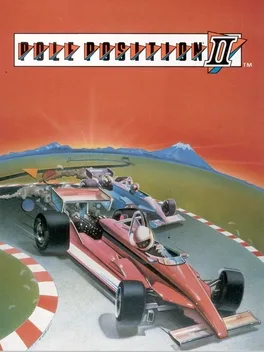
Just like the first game, but with improved graphics and 4 different tracks to choose.
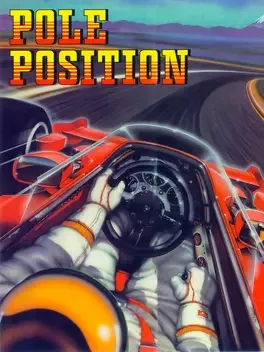
The very first racing game with the rear perspective camera and track based on real life.

World's Scariest Police Chases puts the player in the driver's seat of a powerful cop car with the goal of chasing down and apprehending a variety of criminals with diversely dangerous driving styles. The game offers over 50 miles of road and highway to patrol. A story mode follows the player's virtual law enforcement career and he goes up against more devious criminals and gains access to more powerful vehicles. Other modes of play allow more freeform law enforcement. When driving for law and order doesn't fit the mood, players also have the option of evading their fellow officers in the game's "Bad Boy" mode. Television host Sheriff John Bunnel adds commentary as players race toward mission goals.
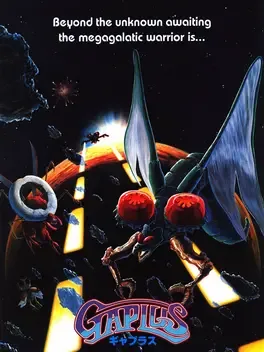
Gaplus is a fixed shooter arcade game that was released by Namco in 1984. It was the only other game to run on Namco Phozon hardware, and in the US, a modification kit was later released to change the name to Galaga 3, possibly to increase recognition among fans of the games even though there was no "Galaga 2". Since Gaplus is a sequel to Galaga, it has similar gameplay. The player controls a spaceship, that can now move vertically (limited to halfway up the screen, much like Atari's Centipede) as well as horizontally, and shoots at swarms of incoming insect-like aliens which fly in formation above it and swoop down to attack it in akamikaze-like dive. In this sequel, the level starts over if the player gets killed before all the enemies have come in. When all enemies are killed, the player moves on to the next level. By obtaining certain powerups, it is possible to shoot sixty bullets per screen, the most any Galaxian-related game has.

Nuts & Milk is a platform-style puzzle game developed and published by Japanese software developer Hudson Soft in 1983. The game was released initially on the FM-7, MSX, NEC PC-8801, NEC PC-6001, and later to the Famicom in Japan. It was the first third party video game to be released on a Nintendo console.
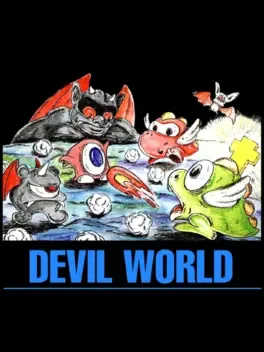
Devil World is a maze video game developed and published by Nintendo for the Nintendo Entertainment System. It was released in Japan on October 5, 1984 and in Europe on July 15, 1987. The game was also released on the Wii's Virtual Console in Japan on January 22, 2008 and in Europe and Australia on October 31, 2008. The game has similar gameplay to that of Pac-Man. It is the only game designed by Shigeru Miyamoto that has not been released in North America, despite the fact that the game is simple and in English. This was due to Nintendo of America's strict policies on the use of religious icons in games, which were at their strictest level at the time of the game's original release, but there would eventually be a North American release for the first time in October 2023 as part of the Nintendo Switch Online lineup.

In an alternate present, vast swathes of America have become no-go areas as the devastating effects of global warming ravage the continent. Floods, storms, bush-fires, tornadoes and hurricanes have driven people from towns and cities into safe zones as extreme weather wreaks havoc, creating thousands of square miles of dangerous uninhabitable areas. People turn to renewable energy in the face of the destruction caused by global warming. But these danger zones become a playground for a new breed of racer. With a stockpile of fuel to be burned, adrenaline junkies head into the wilderness to compete against each other in spectacular races against themselves and the elements.
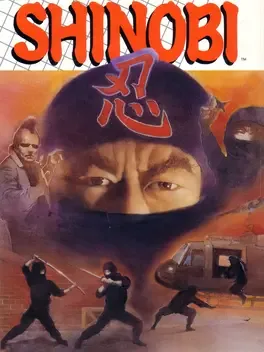
The five missions in the game are each three or four stages long. Several hostages are being held in each stage; Joe must rescue all of them before he is allowed to finish the stage. The last stage in each mission has no hostages, but instead features a powerful boss character whom Joe must defeat. After completing each of the first four missions the player is taken to a bonus stage, where he can earn an extra life if he is able to kill all of the ninjas leaping towards him. Completing the fifth mission ends the game. Also, once the fifth mission begins, continues are no longer allowed; the player has to finish the game with however many lives he has left at that point. If the player earns a place on the high score board, the number of credits it took him to get that score is displayed along with his score. Joe's standard weapons are an unlimited supply of shuriken, along with punches and kicks when attacking at close range. One hostage per stage gives him a power-up. When powered-up, his throwing stars are replaced by a gun that fires large, explosive bullets, and his close-range attack becomes a katana slash. Joe can also perform "ninja magic," which may be used only once per stage and kills (or damages, in the case of bosses) all enemies on the screen. The game also allows the enemies to hide behind boxes or use shields to block Musashi's shurikens.[4] Joe can be killed with one hit, provided he is hit by a projectile or melee attack, but if he does not find himself in those situations, the player can touch regular enemies and just be pushed back without being damaged. Since most enemies appear in the same place on each level, it is possible to master the game by memorizing their locations and devising patterns to defeat them. At the end of each stage, the player receives score bonuses based on performance. Completing the stage without using ninja magic or without using any throwing stars or bullets earns the player a point bonus. The player has three minutes to complete each stage; remaining time at the end of the stage is also converted to bonus points and added to the player's score.