
Puzzle Star Sweep


Buy
Parent game

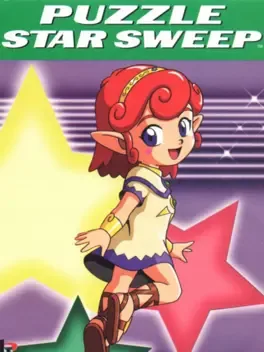
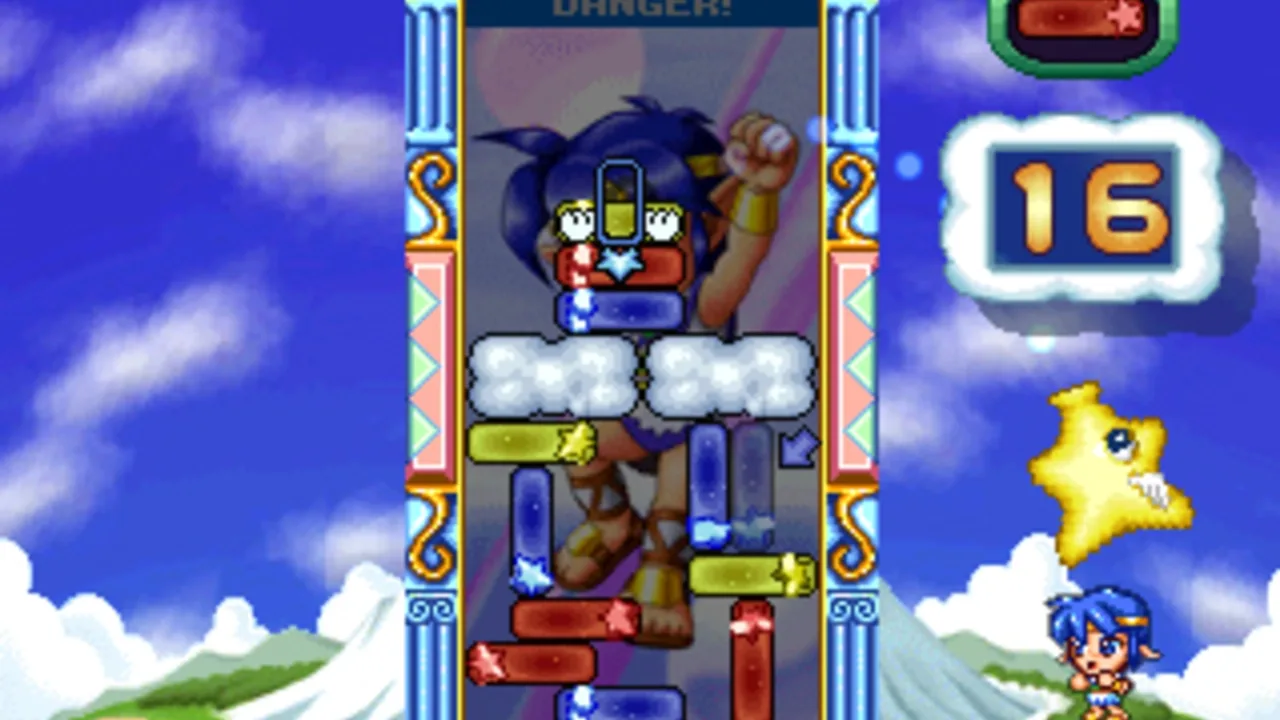
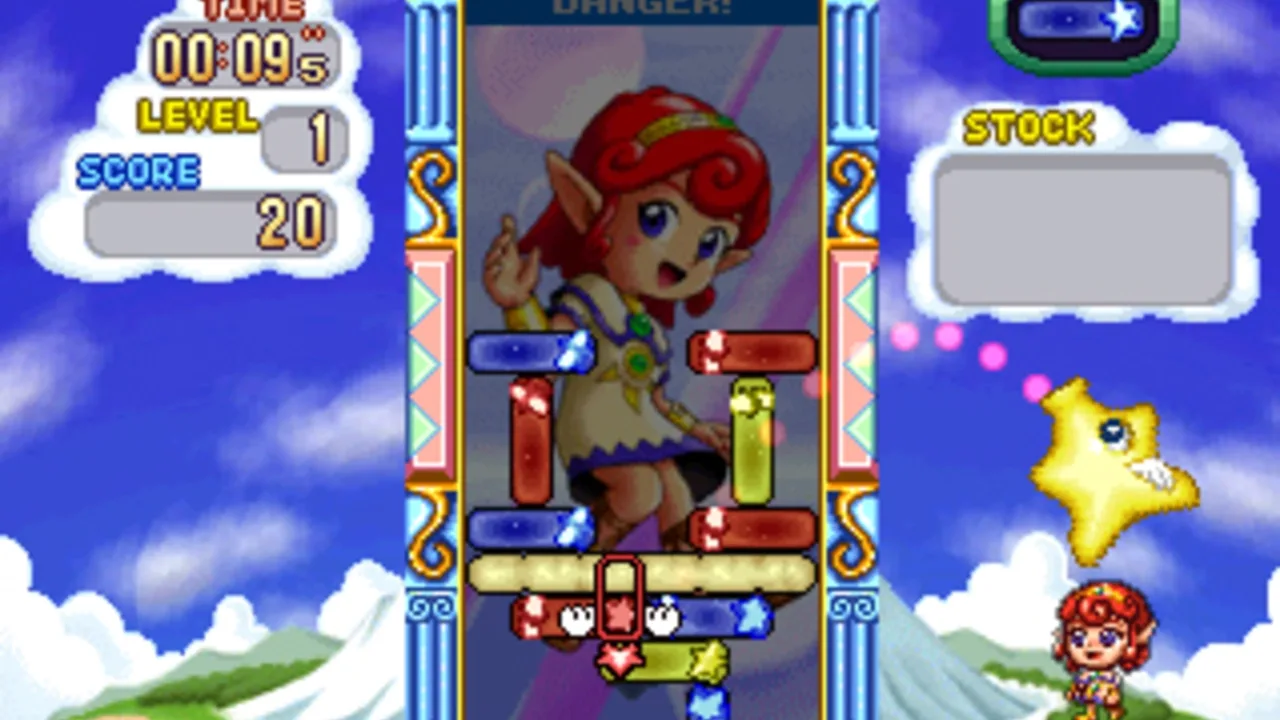
Starsweep is a puzzle game for Japanese Arcades by Japanese developer Axela, published in 1997. The gameplay is similar to that of the Puzzle League series, but with a more traditional Tetris-like gameplay where pieces fall from the top of the screen. Pieces come in three colors: red, yellow, and blue. Pieces commonly have a star on one end, or occasionally, a star on two ends. The aim of the game is to clear blocks from the playing field, by matching stars from same-coloured blocks. Players are rewarded for creating combos (which are called 'links') of piece clearances. The game ends when someone's piece level reaches the top of the playfield and is not cleared after three seconds. The one player 'story' mode revolves around moving around an island and playing against opponents who gradually become harder, and consists of playing against 9 opponents (although this can be adjusted). There are also activities that involve the player concentrating on a specific task within a time limit. These include getting a high score, a high number of links, surviving for as long as possible, and clearing a field in a short time.
Part of collection:
SuperLite 1500
(last 3 games)
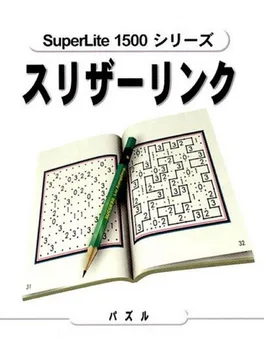
Slitherlink (also known as Fences, Takegaki, Loop the Loop, Loopy, Ouroboros, Suriza and Dotty Dilemma) is a logic puzzle developed by publisher Nikoli. Slitherlink is played on a rectangular lattice of dots. Some of the squares formed by the dots have numbers inside them. The objective is to connect horizontally and vertically adjacent dots so that the lines form a simple loop with no loose ends. In addition, the number inside a square represents how many of its four sides are segments in the loop. Other types of planar graphs can be used in lieu of the standard grid, with varying numbers of edges per vertex or vertices per polygon. These patterns include snowflake, Penrose, Laves and Altair tilings. These add complexity by varying the number of possible paths from an intersection, and/or the number of sides to each polygon; but similar rules apply to their solution. SuperLite 1500 Series - Slither Link is a puzzle game based on the Slitherlink logic puzzle featuring over 200 different stages.
A crossword is a word puzzle that normally takes the form of a square or rectangular grid of white and shaded squares. The goal is to fill the white squares with letters, forming words or phrases, by solving clues which lead to the answers. In languages that are written left-to-right, the answer words and phrases are placed in the grid from left to right and from top to bottom. The shaded squares are used to separate the words or phrases. Squares in which answers begin are usually numbered. The clues are then referred to by these numbers and a direction, for example, "4-Across" or "20-Down". At the end of the clue the total number of letters is sometimes given, depending on the style of puzzle and country of publication. Some crosswords will also indicate the number of words in a given answer, should there be more than one.
Popular collection of puzzle games will fill the picture will be completed based on the mass number of vertical and horizontal scratching puzzles first whenever visiting. The 200 questions included a wide range of offers from beginner to advanced, the size 10x10, 15x15, 20x20 sizes available 3. Configuration of the popular features button operation, and display position adjustment function, you can enjoy a comfortable play.
Could be interesting
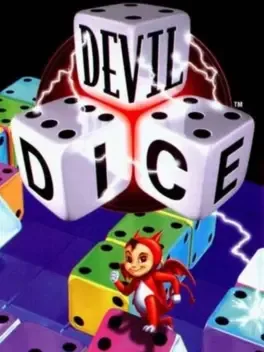
Devil Dice is a unique puzzle game, where the player controls a small devil that runs around a grid covered in large dice. The player can both stand atop dice, and stand on the ground (with the dice towering above). When standing on the dice, the player can move from die to die, or can roll a die in the direction he or she runs, revealing a different face as the die rotates. Creating a group of adjacent dice with identical pips—the size of which must be at least the number of pips—causes those dice to slowly sink into the field before disappearing. Chain reactions are possible by adding additional dice to a sinking set. Different types of dice are available in some modes, with different properties to make the game more challenging. It was originally created by developer Shift on the "homebrew" Yaroze platform, and later turned into a commercial game. Released in 1998, it is one of only a handful of games to make the leap from the Yaroze to commercial release. The game is a million-seller and a demo version was released as a PlayStation Classic game for the PlayStation 3 and PlayStation Portable on November 7, 2007.

Suikoden is a Japanese-style role-playing game with several unusual additions. There are three kinds of combat in the game, the most common one being the traditional turn-based party combat (players can have up to six people in their active party). Magic runes can be equipped on the player's characters which allow limited usage of offensive and healing spells. There are also a few army battles, where the player must control whole units of fighters, archers, magicians, etc., and one-on-one fights (duels).
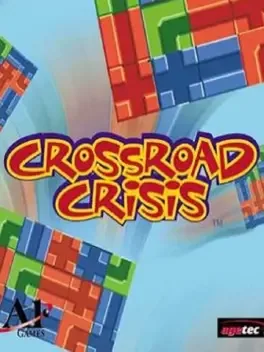
A budget release from Agetec, this puzzler (also known to some as Tic Tac Chicken) challenges gamers to create a safe path for a lost baby chick so he can return home. Slide and spin the tile pieces to form his walkway, but you're going to have to think quick -- the tiles are floating on water and the little guy isn't a good swimmer!
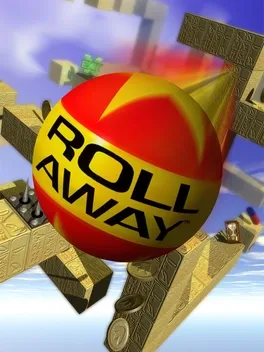
Roll Away is a 3D platform puzzle video game which places the player in control of a Kula beachball. The main objective of the game is to collect keys which unlock the level exits, as well as coins and jewels along the way. The game makes use of alternative physics, changing the direction of gravity as the ball moves.
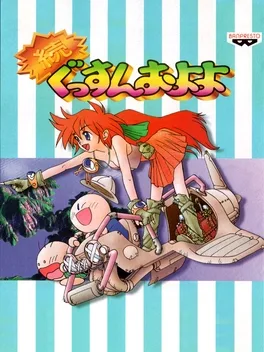
Zoku Gussun Oyoyo is an action puzzle game and a sequel to Risky Challenge. The game plays essentially the same as its predecessor — position falling blocks in a well, Tetris-style, to guide the characters to the exit of each stage — but includes 100 all-new puzzles and several new game modes. Normal and Versus modes are the single-player story and two-player versus modes returning from the previous game; Tsume mode is a dedicated puzzle mode; Climbing mode is an endless climb mode where the goal is to climb upward as far as possible; and Ranking Certification mode is a trial mode where the player must complete a selection of stages to earn higher rankings. The PlayStation and Saturn versions feature slightly different puzzle layouts but are otherwise identical.
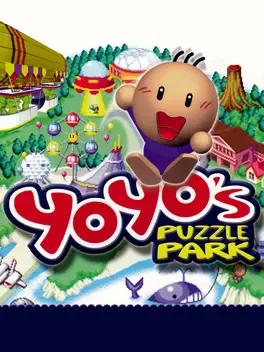
YoYo's Puzzle Park (released as "Gussun Paradise" in Japan) is a puzzle platform game featuring some sixty platform-filled levels similar to Bubble Bobble. The player (as Guss or Yodie) can hop around on them, while avoiding the enemies that crowd the platforms. ... In the multi-player mode, you can fight against your friends in a two-player deathmatch game.
Should you enter Tecmo's Deception you should be warned! You must decide who lives and who dies. As in life, Tecmo's Deception will hold you responsible for your actions. Everything you do, everywhere you go, everyone you meet has a reason. Are you seeking revenge, resurrection, or redemption? It's your decision.

R4: Ridge Racer Type 4 is the fourth game in the Ridge Racer series. It includes eight tracks (with reverse variants, for a total of 16 layouts) and 321 vehicles, all of which are fictional. This iteration was one of the first PlayStation titles to feature Gouraud shading on polygons, giving the game a visual depth that was previously missing. It was also the first Ridge Racer game on the system to feature two-player split-screen mode and offered two different driving models.
Based on the basic concepts of "simple and easy to play", "deep and addictive", and "very exhilarating when the mystery is solved" - includes 3 types of puzzle games.

Tokimeki Memorial Taisen Puzzle-Dama 2 is a sequel to the Tokimeki Memorial themed Taisen Puzzle-Dama spin-off game.