
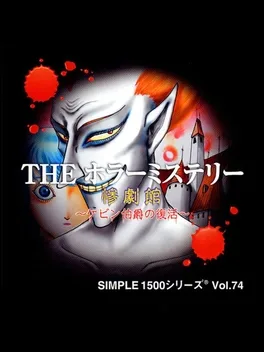
Simple 1500 Series Vol. 74: The Horror Mystery - Sangekikan: Kevin-hakushaku no Fukkatsu




Buy
Part of collection:
Simple 1500
(last 3 games)

Fans of classic aircraft take to the skies in Aces of the Air for the PlayStation. Pilot the vintage fliers in realistic 3D combat missions featuring old-school dogfighting techniques and ground combat. Each successfully completed mission earns players a new plane, all created with their own strengths and weaknesses. Those a bit nervous about the first flight will be happy to know a training mode teaches new fliers the basics of vintage aircraft control. Aces of the Air features realistic, 3-D flight simulation, with a focus on dogfighting techniques using vintage aircraft. Missions include aerial combat, strafing ground troops and materiel, and taking out heavily fortified enemy positions.

The first dodge ball game released on the PlayStation, All-Star Slammin' D-Ball features a horizontal view of the court as eight teams compete in one of two modes: Single Match and Tournament. Teams are individually rated from one to five in throwing, catching, dashing, and dodging abilities. Offbeat male and female characters of varying skill play for the Wild Cats, Pranksters, Heart Breakers, Ninjas, Snipers, Fireballs, Thunder Bolts, and Elementals. The game follows the general rules of dodge ball, in that the object is to knock out the opposing members of a team within a time limit. Players with the ball can aim right, left, high, or low. Thrown balls can be caught by the opposing team, which awards them points. These points can then be used to implement special throws such as the grenade, boomerang, and the screwdriver, making the balls more difficult to avoid or catch. Options include adjustable time limits for Single Matches and three levels of difficulty.

Simple 1500 Series Hello Kitty vol.3 Hello Kitty Block Kuzushi is a classic breakout game, in the style of the classic arcade game Arkanoid, in which the player controls hello kitty and has to destroy all the bricks in each level to advance to the next one. There are special bricks like in Arkanoid that allow the player to use speciall attack in the ball, like the slow effect, the fast attack, etc. The game got different levels depending of the player choices (in one you go through levels of letter C and in other in levels of letter B for example), each letter is divided into 5 different brick levels. After passing a level the player unlock a picture that he can later colour in the album mode.
Could be interesting
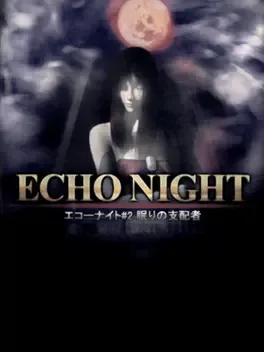
Echo Night 2: Nemuri no Shihaisha is a first person adventure. Like the first game, Echo Night 2 is played from a first-person perspective, but unlike most other first-person games there is no use of firearms in the game. When confronted by a ghost the player must turn on the lights in the room by means of a light switch. The player is often transported into the past via the passengers or certain objects. Once the player fulfills a task important to a spirit they will vanish and drop an "Astral Piece" which can be used to get a different ending scene.
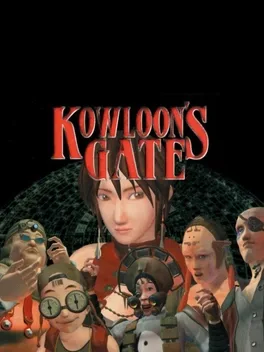
Kowloon's Gate is a 1997 Japanese adventure video game developed by Zeque. Set in the Kowloon Walled City in Hong Kong, it is considered a cult hit. Kowloon's Gate is a first person adventure game that puts the player in a futuristic fantasy world in which he will take the role of a young woman (a master feng shui) that will have to encounter different people, fight evil enmies, and solve some strange situations and puzzle to advance in the adventure and try to make that the world won't dissappear. Kowloon's Gate uses motion JPEG technology to render the strange CG enviroments you'll explore. Interact with unique characters, traverse the real-time 3D scenes freely, and solve imaginative puzzles in this Adventure game.

Zutto Issho is a first person perspective dating simulation game that when it was rereleased by Hamster the game graphics, the packanging & the ending song were changed. The goal of the game is to win the girls heart so the player will have to date her and make her feelings about the player's character grow. There are also some time limits in the conversations so the player have to decide quick what to do. There are also other characters to interact with (even the girls got their rival). The game features japanese voice acting for the characters.

Suikoden is a Japanese-style role-playing game with several unusual additions. There are three kinds of combat in the game, the most common one being the traditional turn-based party combat (players can have up to six people in their active party). Magic runes can be equipped on the player's characters which allow limited usage of offensive and healing spells. There are also a few army battles, where the player must control whole units of fighters, archers, magicians, etc., and one-on-one fights (duels).
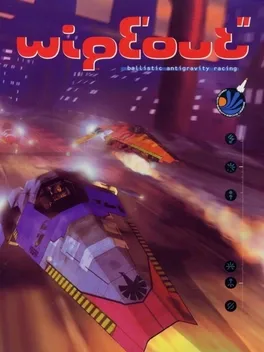
Wipeout is a racing game that is set in 2052, where players compete in the F3600 anti-gravity racing league. The game allows the player to pilot one of a selection of craft in races on several different tracks. There are four racing teams to choose from, and two ships for each team. Each ship has its distinct characteristics of acceleration, top speed, mass, and turning radius. By piloting their craft over power-up pads found on the tracks, the player can pick up various weapons and power-ups such as shields, turbo boosts, mines, shock waves, rockets, or missiles. The power-ups allow the player to either protect their craft or disrupt the competitors' craft.

Akagawa Jirou: Majo-tachi no Nemuri ("Jirou Akagawa's The Sleep of Witches") is a visual novel adventure game with a supernatural murder mystery theme. As with Chunsoft's Sound Novel series, it features a series of static photographs with Japanese text overlaid on top. The narrative is supported by background ambient music and sound effects. The story was written by Japanese thriller author Jirou Akagawa, based on his novels Majo-tachi no Tasogare and Majo-tachi no Nagai Nemuri. It concerns an office worker who is prompted to look into the apparent suicide of a girl from his childhood after receiving a weird phone call asking for help and a vivid dream about her. He returns to the mysterious mountain shrine where she was reported to have burned to death. The game was originally released for the Super Famicom in 1995 and later saw enhanced ports for the Sony PlayStation in 1999 (with the subtitle Fukkatsusai, or "Easter") and Windows PCs in 2001 (with the subtitle Kanzenban, or "Perfect Edition").
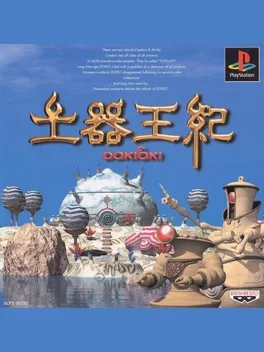
Doki Oki is a first person perspective in the style of games like Myst. In the game the player takes the role of a human that is summoned into another world by strange robotic creatures that tells him that they need his help to defeat a mysterious enemy.
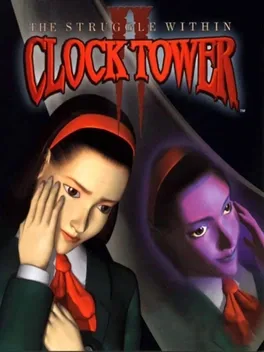
Clock Tower II: The Struggle Within, known as Clock Tower: Ghost Head in Japan, is a PlayStation point-and-click survival horror game and the third installment in the Clock Tower series. It was developed and published by Human Entertainment on March 12, 1998 in Japan and later published by Agetec on October 31, 1999 in North America. It was released as a PlayStation Classic on the Japanese PlayStation Network for PlayStation 3 on May 9, 2012. The game is a spin-off story with little to no connection to the story of the Barrows/Burroughs family or Scissorman, nor was Hifumi Kono involved with it. It does not take place in Europe as many of the others do; it takes place in Osaka, Japan. In the North American version, the setting was changed to Salinas, California, and the characters were given Westernized names. However, untranslated Japanese can be seen in the hospital entrance and even in the intro, there are Japanese-styled buildings, including a Shinto shrine. The game also contains various Japanese-styled rooms and samurai armor.
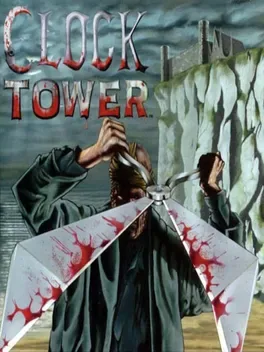
Clock Tower, known as Clock Tower 2 in Japan, is a PlayStation point-and-click survival horror game and a sequel to Clock Tower: The First Fear. One year after the events of Clock Tower: The First Fear, in late 1996, Jennifer Simpson has been adopted by Helen Maxwell, the assistant of a renowned psychiatrist, Samuel Barton, and is currently undergoing treatment at a university research building in Oslo, Norway, to help her cope with her traumatic experiences in the Clock Tower case and possibly shed some light on the mystery that was the Scissorman.

Devil Dice is a unique puzzle game, where the player controls a small devil that runs around a grid covered in large dice. The player can both stand atop dice, and stand on the ground (with the dice towering above). When standing on the dice, the player can move from die to die, or can roll a die in the direction he or she runs, revealing a different face as the die rotates. Creating a group of adjacent dice with identical pips—the size of which must be at least the number of pips—causes those dice to slowly sink into the field before disappearing. Chain reactions are possible by adding additional dice to a sinking set. Different types of dice are available in some modes, with different properties to make the game more challenging. It was originally created by developer Shift on the "homebrew" Yaroze platform, and later turned into a commercial game. Released in 1998, it is one of only a handful of games to make the leap from the Yaroze to commercial release. The game is a million-seller and a demo version was released as a PlayStation Classic game for the PlayStation 3 and PlayStation Portable on November 7, 2007.