
Akagawa Jirou: Majo-tachi no Nemuri






Buy
Could be interesting
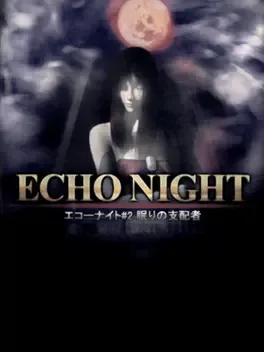
Echo Night 2: Nemuri no Shihaisha is a first person adventure. Like the first game, Echo Night 2 is played from a first-person perspective, but unlike most other first-person games there is no use of firearms in the game. When confronted by a ghost the player must turn on the lights in the room by means of a light switch. The player is often transported into the past via the passengers or certain objects. Once the player fulfills a task important to a spirit they will vanish and drop an "Astral Piece" which can be used to get a different ending scene.
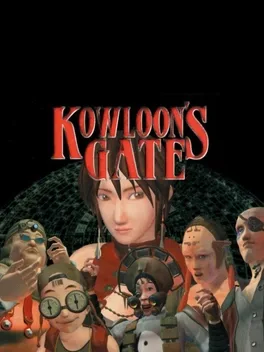
Kowloon's Gate is a 1997 Japanese adventure video game developed by Zeque. Set in the Kowloon Walled City in Hong Kong, it is considered a cult hit. Kowloon's Gate is a first person adventure game that puts the player in a futuristic fantasy world in which he will take the role of a young woman (a master feng shui) that will have to encounter different people, fight evil enmies, and solve some strange situations and puzzle to advance in the adventure and try to make that the world won't dissappear. Kowloon's Gate uses motion JPEG technology to render the strange CG enviroments you'll explore. Interact with unique characters, traverse the real-time 3D scenes freely, and solve imaginative puzzles in this Adventure game.
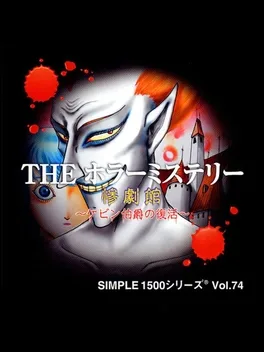
A sound novel where the player visits a small village that hides many deadly secrets. Simple 1500 Series vol.074 The Horror Mystery The Sangeki Yakata Cabin Hakushaku no Fukkatsu is an adventure game in which the player controls a character that arrives to a small town and there he will meet different kind of people but soon he will discover that that small town got some secrets hidden, some of them are deadly dangerous. Horror adventure writer Gore rice with tea nori synonymous with horror magazine "horror M" was supervised. Original story which is based on the "tragedy of Kevin Earl" deep-rooted popular in short stories of representative works of each other "tragedy can" be deployed. The story is composed of all 13 chapters, I'll be able to provide the ending of several to each chapter, and enjoy a variety of consequences.

Suikoden is a Japanese-style role-playing game with several unusual additions. There are three kinds of combat in the game, the most common one being the traditional turn-based party combat (players can have up to six people in their active party). Magic runes can be equipped on the player's characters which allow limited usage of offensive and healing spells. There are also a few army battles, where the player must control whole units of fighters, archers, magicians, etc., and one-on-one fights (duels).

Zutto Issho is a first person perspective dating simulation game that when it was rereleased by Hamster the game graphics, the packanging & the ending song were changed. The goal of the game is to win the girls heart so the player will have to date her and make her feelings about the player's character grow. There are also some time limits in the conversations so the player have to decide quick what to do. There are also other characters to interact with (even the girls got their rival). The game features japanese voice acting for the characters.
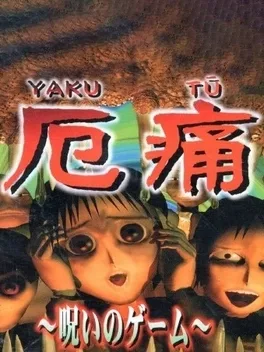
The Yakutsu Noroi Game is a Japan-only PlayStation horror visual novel game that is sequel to Yuujou Dangi. The protagonists visit an abandoned school at midnight to dig out a time capsule they buried when they were in elementary school. The trip turns out unexpected.
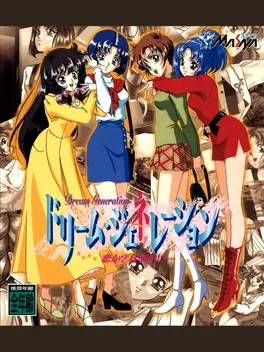
Dream Generation: Koi ka? Shigoto ka!?... is a raising simulation & love adventure game. The player controls 19-year-old Toranosuke Rokujō, an aimless college student who has no idea what he wants out of life. After meeting up with a group of his high-school classmates, he decides it's time to get his life in order, find a job, and find a girlfriend within the next year.

Fūraiki is a visual novel blending photographic backgrounds with anime-style character overlays. The player character is a travel blogger and photographer, who travels to Japan's northernmost island of Hokkaido to document his journeys for his blog. On the boat to the island, he encounters a number of young girls also traveling there, whom you will have additional opportunities to meet during the main part of the game.
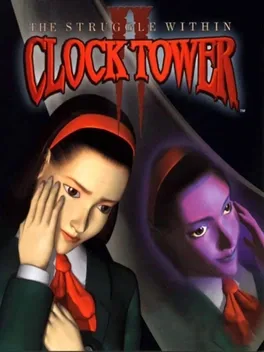
Clock Tower II: The Struggle Within, known as Clock Tower: Ghost Head in Japan, is a PlayStation point-and-click survival horror game and the third installment in the Clock Tower series. It was developed and published by Human Entertainment on March 12, 1998 in Japan and later published by Agetec on October 31, 1999 in North America. It was released as a PlayStation Classic on the Japanese PlayStation Network for PlayStation 3 on May 9, 2012. The game is a spin-off story with little to no connection to the story of the Barrows/Burroughs family or Scissorman, nor was Hifumi Kono involved with it. It does not take place in Europe as many of the others do; it takes place in Osaka, Japan. In the North American version, the setting was changed to Salinas, California, and the characters were given Westernized names. However, untranslated Japanese can be seen in the hospital entrance and even in the intro, there are Japanese-styled buildings, including a Shinto shrine. The game also contains various Japanese-styled rooms and samurai armor.
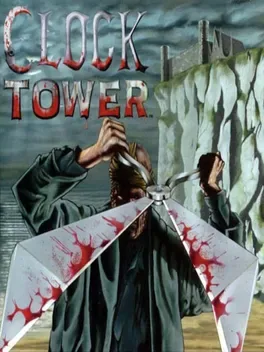
Clock Tower, known as Clock Tower 2 in Japan, is a PlayStation point-and-click survival horror game and a sequel to Clock Tower: The First Fear. One year after the events of Clock Tower: The First Fear, in late 1996, Jennifer Simpson has been adopted by Helen Maxwell, the assistant of a renowned psychiatrist, Samuel Barton, and is currently undergoing treatment at a university research building in Oslo, Norway, to help her cope with her traumatic experiences in the Clock Tower case and possibly shed some light on the mystery that was the Scissorman.