
Siren: Blood Curse








Buy
Part of collection:
Siren
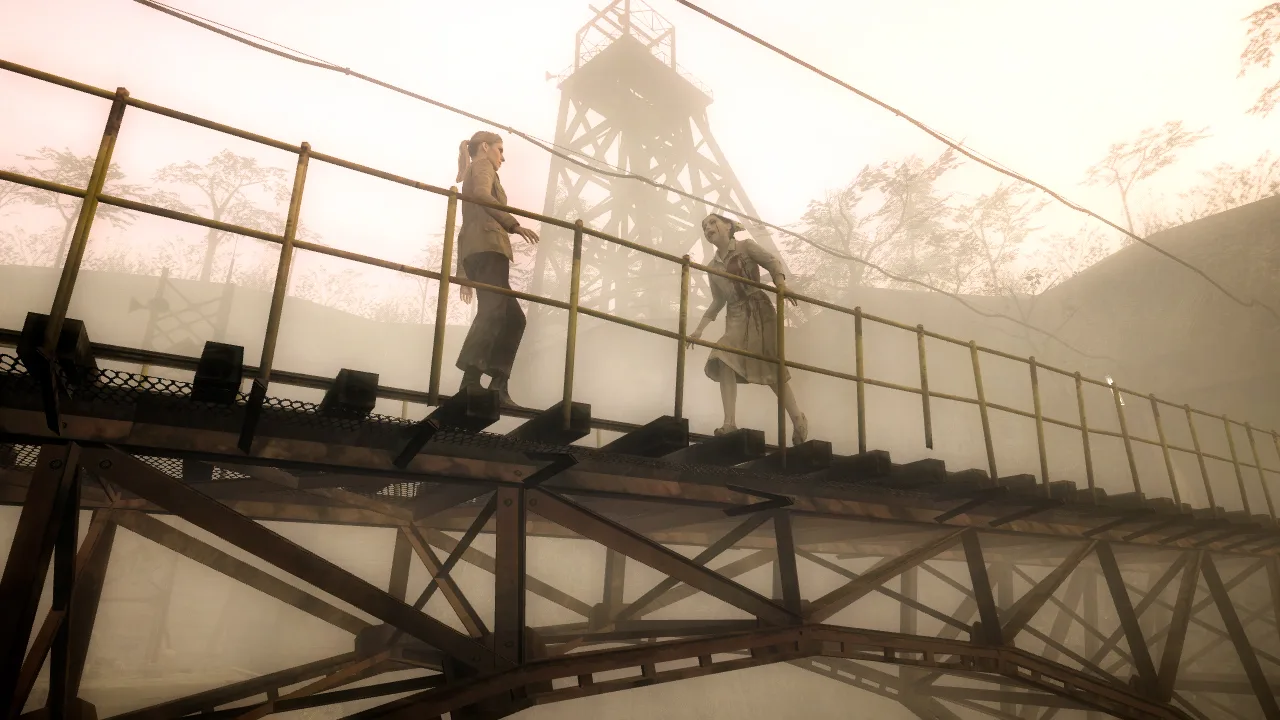
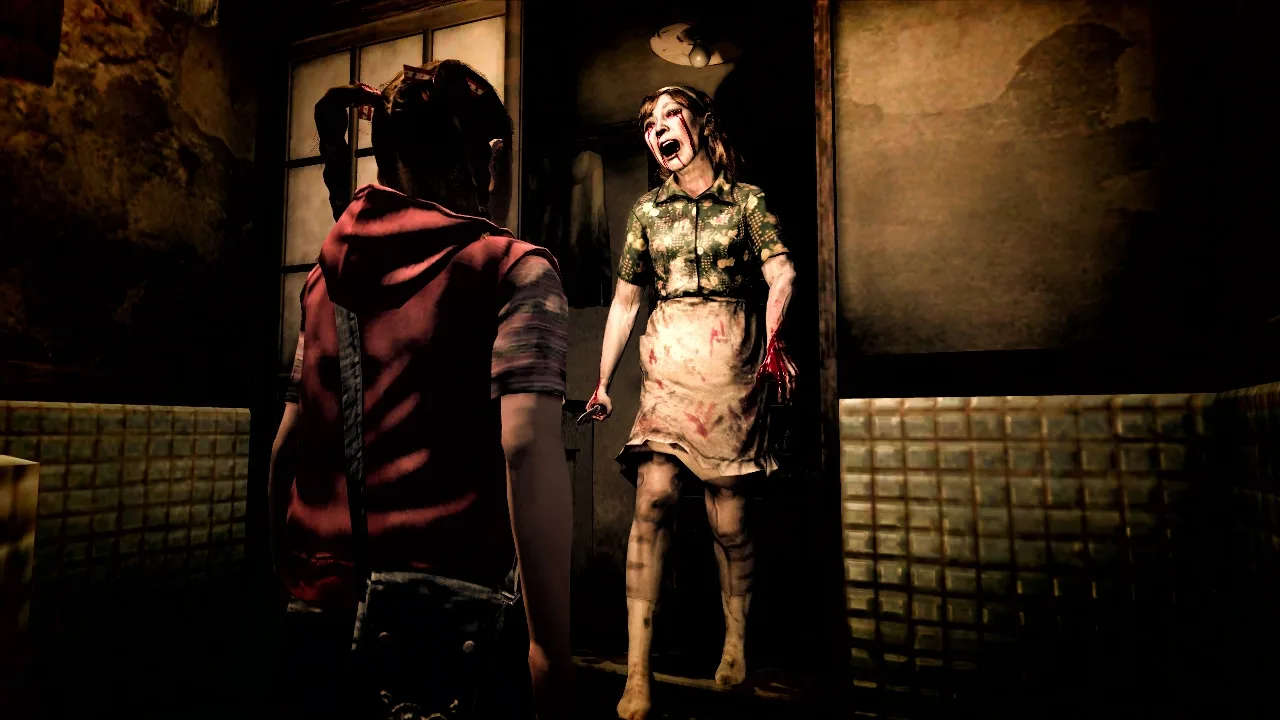
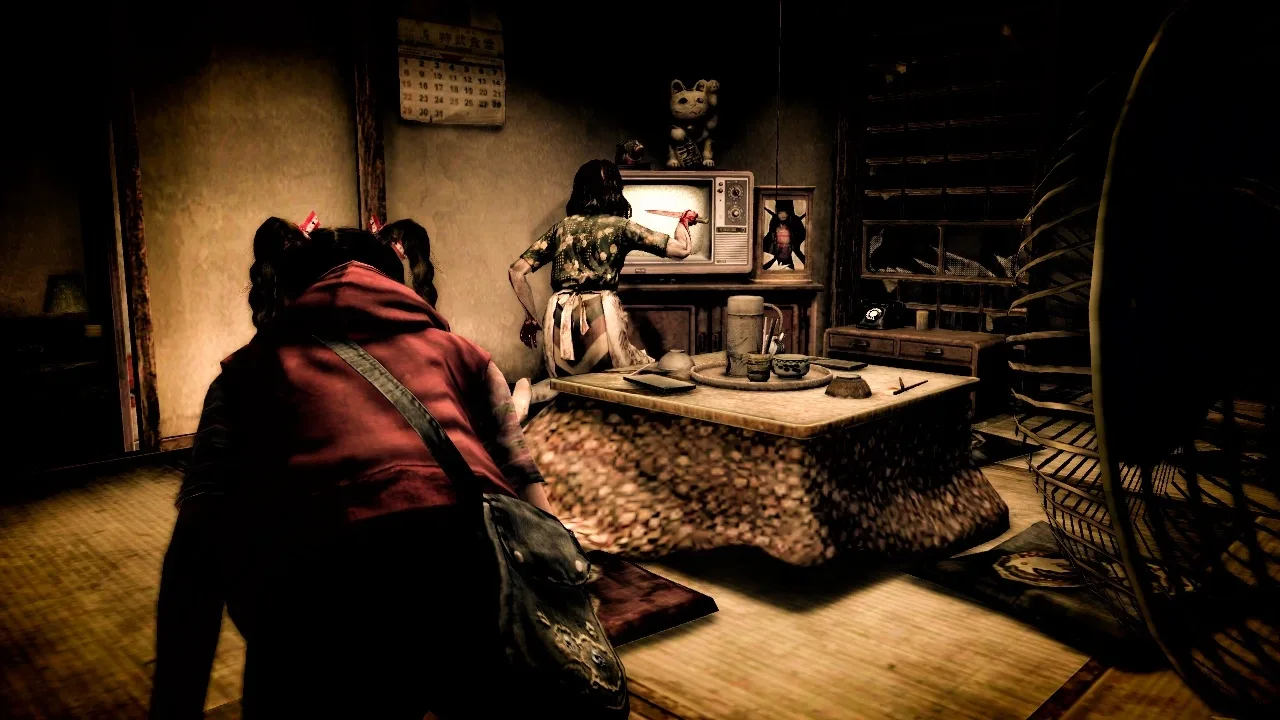
A TV crew from America arrive to research and film an exposé on the urban myth of Hanuda, the Vanished Village, where human sacrifices are said to have taken place. Hanuda is a dark, eerie world, frozen in the 1970s and surrounded by a red sea. An ancient curse has been set upon the town and you, as the visitors, must save the remaining inhabitants including the beautiful Miyako. In order to survive you must defend yourself from the vicious Shibito, or living dead, and other terrifying monsters. Across 12 chapters of horror, gamers will confront the mysteries of Hanuda in this new chapter of the the cult classic horror game. Throughout the game you will play each of the visitors to the village. The game's unique Sight-Jack System enables you to switch seamlessly between the visions of the hunted and the hunters. Blood, guts and gore are super-enhanced by amazing graphic effects, an advanced physics engine and shockingly realistic facial animations.

Forbidden Siren 2 is the second installment in the Siren series. The game tells the story of several characters who become trapped on Yamijima Island, an island off the coast of mainland Japan. On August 3, 1976, an underwater cable was cut, and all power to the island was lost. During the subsequent blackout, all of the islanders disappeared and the island became deserted. Twenty-nine years later, in 2005, a magazine editor called Mamoru Itsuki is visiting the island to conduct research for an article when the ferry he and a small group of other passengers are on capsizes, after it is hit by a red tidal wave. Shortly after his arrival, a group of soldiers crash land on the island after their helicopter has engine troubles. They must all find ways to survive the island's "monsters", the shibito. The game is played through several character perspectives, each with his or her own strengths and weaknesses, through an overlapping timeline of the fateful night that alternates between the present and the past. The story can unfold in different ways with, in many cases, two or more different versions of a level, which will have slightly different objectives than the original. If the player is thorough and plays through these optional versions, the story and characters may develop even further than before
The story revolves around an interconnected cast of characters that possess a power which enables them to see and hear what a nearby character sees. The game was followed by a PlayStation 2 sequel, a reimagining for the PlayStation 3 and a film adaption. Siren is divided into stages, each taking place in one of ten areas in the village of Hanuda, and organized chronologically in a table called the "Link Navigator". In order to complete a stage, the player must accomplish a primary objective that usually involves reaching an exit point, subduing undead enemies called "Shibito", or finding an item. Objectives in different stages are interconnected via a butterfly effect, and a character's actions in one stage can trigger a secondary objective in another stage. There are miscellaneous items scattered throughout each stage that give the player further insight into the plot's background. Once obtained, these items are archived in a catalog and can be viewed at any time during the game's duration. The game's player characters possess a psychic power named "sightjack," which enables them to see and hear what a nearby Shibito or human sees and hears, and thus pinpoint its position, as well as gain knowledge of their activities and of the position of obtainable items. The clarity of each target depends on the distance from the player character. Once a point of view is located, it can be assigned to one of certain buttons of the controller to easily switch between multiple points of view. However, the player character is unable to move during use of the ability and is thus vulnerable to attack. The game encourages the player to avoid Shibito rather than fight them. Characters can walk silently, avoid the use of a flashlight, and crouch behind objects to elude detection. Certain mission objectives require the player character to use items and/or the environment to distract Shibito from their activity, in order for them to achieve a goal. Others require the player to escort a non-player character. Player characters can also shout at any time in order to get the attention of nearby Shibito. Within most stages, the player character can hide in certain places such as cupboards and lock doors to prevent Shibito from entering. When a Shibito hears a sound made by the player character, it will search in the direction from which they heard the sound. If a character is seen by a Shibito, the latter will pursue the character to kill them either with a melee or ranged weapon or by strangulation. The Shibito will also shout to alert other nearby Shibito. Once the character has remained out of the Shibito's sight for a period of time, the Shibito will give up and resume its usual habits. Weapons are available for the player throughout the game, ranging from melee weapons to firearms. While Shibito can be knocked out in combat, they cannot be killed and will reanimate after a short period of time. If a character is injured, they can recover after some time has passed. Characters will lose stamina during combat and while running.
Could be interesting
The story revolves around an interconnected cast of characters that possess a power which enables them to see and hear what a nearby character sees. The game was followed by a PlayStation 2 sequel, a reimagining for the PlayStation 3 and a film adaption. Siren is divided into stages, each taking place in one of ten areas in the village of Hanuda, and organized chronologically in a table called the "Link Navigator". In order to complete a stage, the player must accomplish a primary objective that usually involves reaching an exit point, subduing undead enemies called "Shibito", or finding an item. Objectives in different stages are interconnected via a butterfly effect, and a character's actions in one stage can trigger a secondary objective in another stage. There are miscellaneous items scattered throughout each stage that give the player further insight into the plot's background. Once obtained, these items are archived in a catalog and can be viewed at any time during the game's duration. The game's player characters possess a psychic power named "sightjack," which enables them to see and hear what a nearby Shibito or human sees and hears, and thus pinpoint its position, as well as gain knowledge of their activities and of the position of obtainable items. The clarity of each target depends on the distance from the player character. Once a point of view is located, it can be assigned to one of certain buttons of the controller to easily switch between multiple points of view. However, the player character is unable to move during use of the ability and is thus vulnerable to attack. The game encourages the player to avoid Shibito rather than fight them. Characters can walk silently, avoid the use of a flashlight, and crouch behind objects to elude detection. Certain mission objectives require the player character to use items and/or the environment to distract Shibito from their activity, in order for them to achieve a goal. Others require the player to escort a non-player character. Player characters can also shout at any time in order to get the attention of nearby Shibito. Within most stages, the player character can hide in certain places such as cupboards and lock doors to prevent Shibito from entering. When a Shibito hears a sound made by the player character, it will search in the direction from which they heard the sound. If a character is seen by a Shibito, the latter will pursue the character to kill them either with a melee or ranged weapon or by strangulation. The Shibito will also shout to alert other nearby Shibito. Once the character has remained out of the Shibito's sight for a period of time, the Shibito will give up and resume its usual habits. Weapons are available for the player throughout the game, ranging from melee weapons to firearms. While Shibito can be knocked out in combat, they cannot be killed and will reanimate after a short period of time. If a character is injured, they can recover after some time has passed. Characters will lose stamina during combat and while running.

Hellnight (Dark Messiah in Japan) is a survival horror game at heart, although it has no combat gameplay. Controlling the nameless hero, the player must travel through the underground and protect Naomi. There is only one monster in the whole game, the "creature" itself, which is invulnerable and cannot be killed. Instead players are constantly on the run from it, making sure it does not catch them. The game is divided into large maze-like levels, each one usually populated by the creature who keeps pursuing the player (although he does change form after each level). At certain points there will be companions who can attack the monster and temporarily stun him. There are also people to talk to in the underground world, items to pick up, and puzzles to solve.

Enemy Zero was the second game to star the digital character Laura Lewis—the first being D. In E0, gameplay sequences alternate between interactive FMV and real time exploration, both from a first person perspective. The interactive FMV component uses gameplay identical to an earlier Warp game, D. The real time component of E0 is unique. Enemies are invisible, and location is only possible through the use of sound, with notes of different pitch helping the player find the distance and direction of enemies. Additionally, every gun in the game must be charged up immediately before each shot, and charging a shot for too long will cause the charge to dissipate, after which the charging must start over. Since all available guns have very limited range, this makes timing crucial; beginning to charge the gun too late or too soon will allow the enemy to reach Laura, resulting in an immediate game over. In Enemy Zero, reloading the gun and moving the character around are mechanics that have been made intentionally slow,[4] which stimulates players to avoid combat and direct contact with the alien enemies as much as possible. In the early segments of the game, avoiding detection is not only recommended; it is required, since the player has no means to defend him or herself without a gun. Enemy Zero is an example of a game containing stealth elements[5] roughly two years before the release of Metal Gear Solid popularized the genre worldwide, though ten years after Metal Gear started the genre in 1987.

Awakening shipwrecked just after a meteor collides with a remote biotech research island, you begin to discover an uncontrollable madness unleashed in the meteor's wake. As one secret uncovers another, you piece together a horrifying revelation that could lead to the end of life on Earth.

Tom Hansen is just another guy in the U.S. Coast Guard when his crew receives a mysterious order to undertake a hazardous rescue mission in the teeth of a winter storm. As the waves surge higher, Tom and his crewmates find the vessel, an abandoned Russian whaling ship. They board it, but discover that the ship has only been abandoned by human life. Something else is on board, something deadly, and soon Hansen is the only one left who can stop it. Joining forces with the only other survivor, Hansen must battle the inhuman menace and seek out its very heart for a confrontation that could have consequences for all of humanity.

Dino Crisis is a survival horror video game developed and published by Capcom in 1999. Set in a remote research facility, it follows special agent Regina as she investigates a scientific experiment gone wrong. The game combines exploration, puzzle-solving, and combat against hostile dinosaurs. It uses a real-time 3D environment rather than pre-rendered backgrounds, distinguishing it from earlier Capcom horror titles. Dino Crisis is often noted for its emphasis on tension, limited resources, and fast, unpredictable enemies.

Days Gone is an open-world action-adventure game developed by Bend Studio and published by Sony Interactive Entertainment. Released in April 2019 for PlayStation 4 and later for PC in May 2021, the game is set in a post-apocalyptic world where players control Deacon St. John, a drifter and bounty hunter navigating a landscape overrun by "Freakers," zombie-like creatures created by a global pandemic. The gameplay focuses on exploration, combat, and survival elements, with players able to use various weapons, craft supplies, and upgrade Deacon’s motorcycle, essential for travelling across the vast and hostile environment. Days Gone combines narrative-driven missions with an open world filled with dynamic events, enemy camps, and environmental challenges.
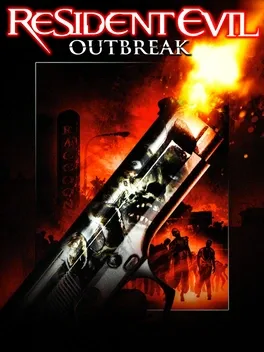
Resident Evil Outbreak is a survival-horror game released exclusively for the PlayStation 2. The gameplay is similar to the previous Resident Evil games and consists mainly of exploring, solving puzzles, finding items and surviving. It was the first Resident Evil game with multiplayer capability, using the PlayStation 2's online network. Up to four players could participate simultaneously in one scenario. Alternately, in single-player mode, the player is accompanied by two AI-controlled characters.

Kuon is a horror game set in Heian period (12th century) in Japan. You control three protagonists in the game. The story revolves around a man named Doman, an exorcist who was summoned by one of the noblemen to investigate a cursed manor. His daughter Utsuki is out to search for him when he doesn't return, and her sister is charmed by demons inhabiting a mysterious castle, turning into a demon herself. A young girl named Sakuya, Doman's disciple, also ventures into the depths of the demonic world, to prove herself worthy of her master. Once the player completes Utsuki's and Sakuya's scenarios, they unlocks the third scenario where they experiences the story from the point of view of Doman himself. The game is a mixture of third-person action and puzzle-solving. As in all survival horror games, your means of defense are limited and scarce. Unlike most games of the kind, physical attacks with weapons are not your only way to defend yourself against hordes of undead creatures. You can also learn and cast spells in the game, and even summon creatures (wolves, spiders, etc.) to fight at your side.

The story centers on Detective David Tapp who awakens in a decrepit, abandoned asylum. He has been captured by his longtime nemesis, Jigsaw. Obsessed with catching this serial killer, Tapp’s mission has consumed him and ruined his family, resulting in divorce, mental imbalance, and abandonment. Worse yet, this frantic hunt destroyed Tapp’s career while he watched his long-time friend and partner get killed by one of Jigsaw's traps. Now Jigsaw has the upper hand and has captured the detective. Tapp must play a deadly game—the likes of which he has been investigating for years—to escape, and in order to do so he must survive the lethal traps and puzzles that Jigsaw has put in place for him and others. But each victim has a dark connection to Tapp. Will Tapp save them? Can he survive his obsession to find the Jigsaw killer?