
Space Harrier II


Parent game
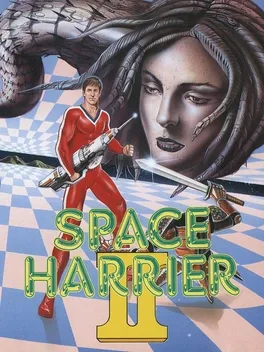
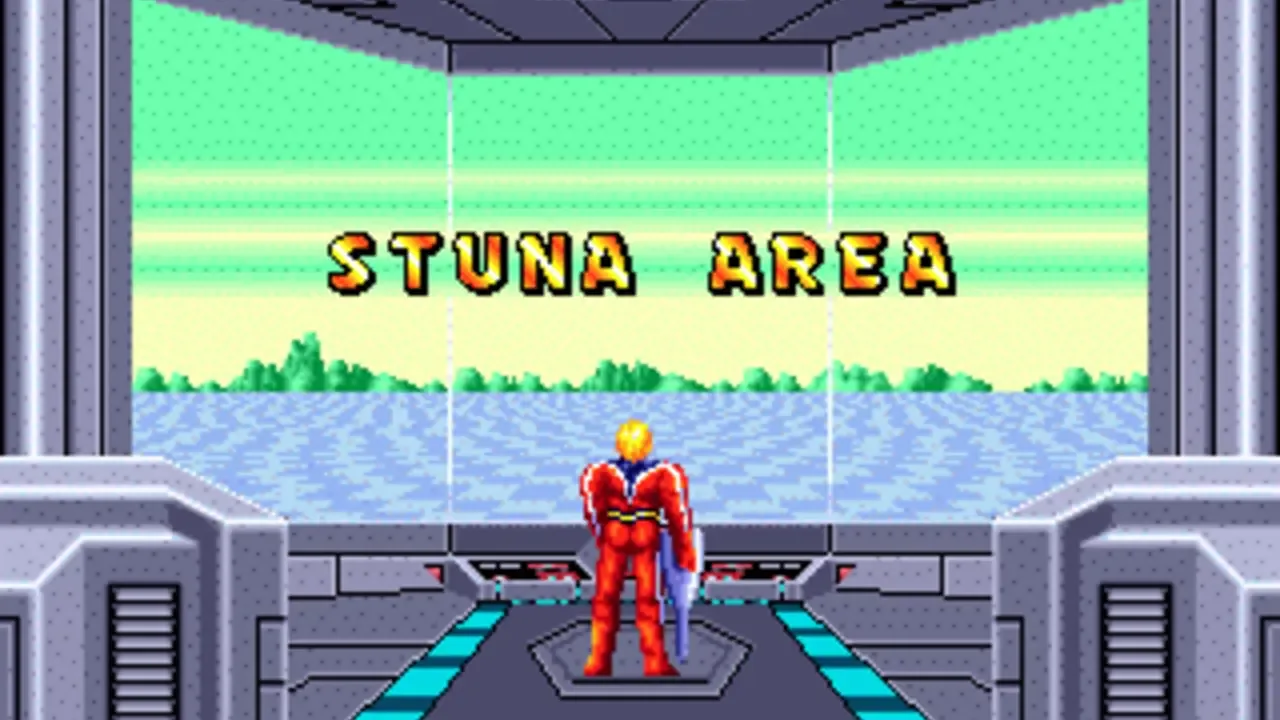
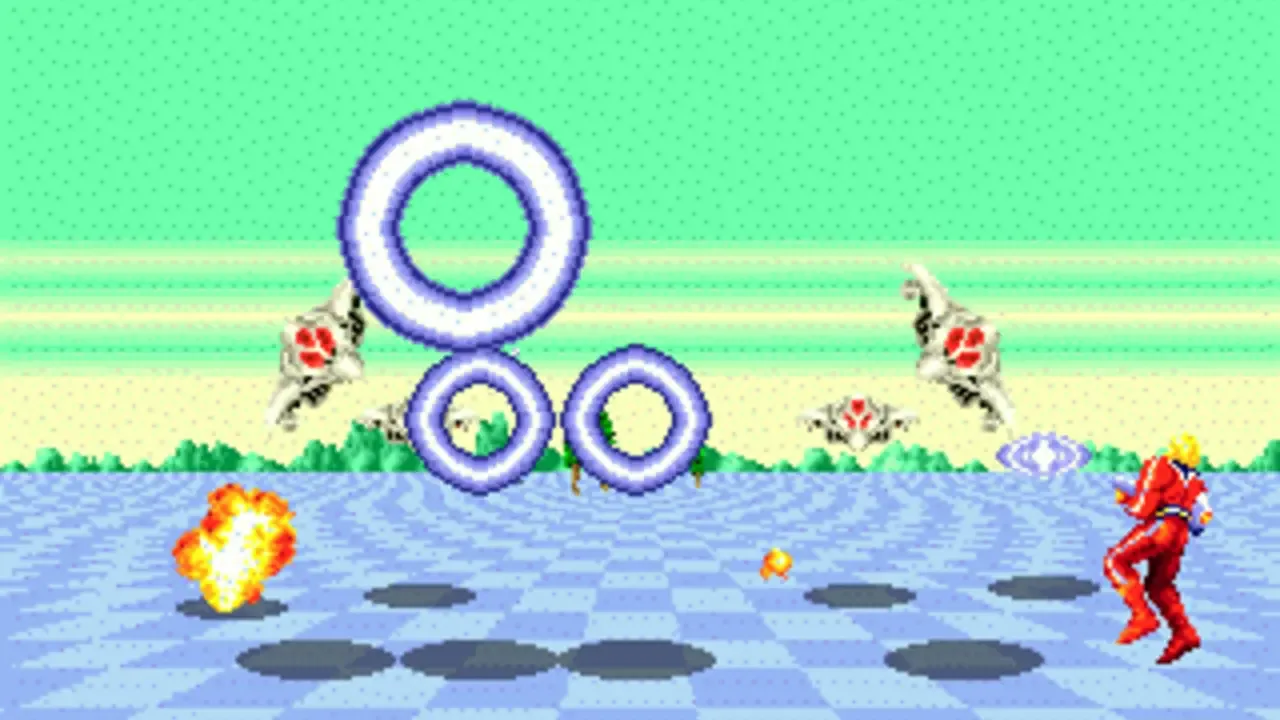
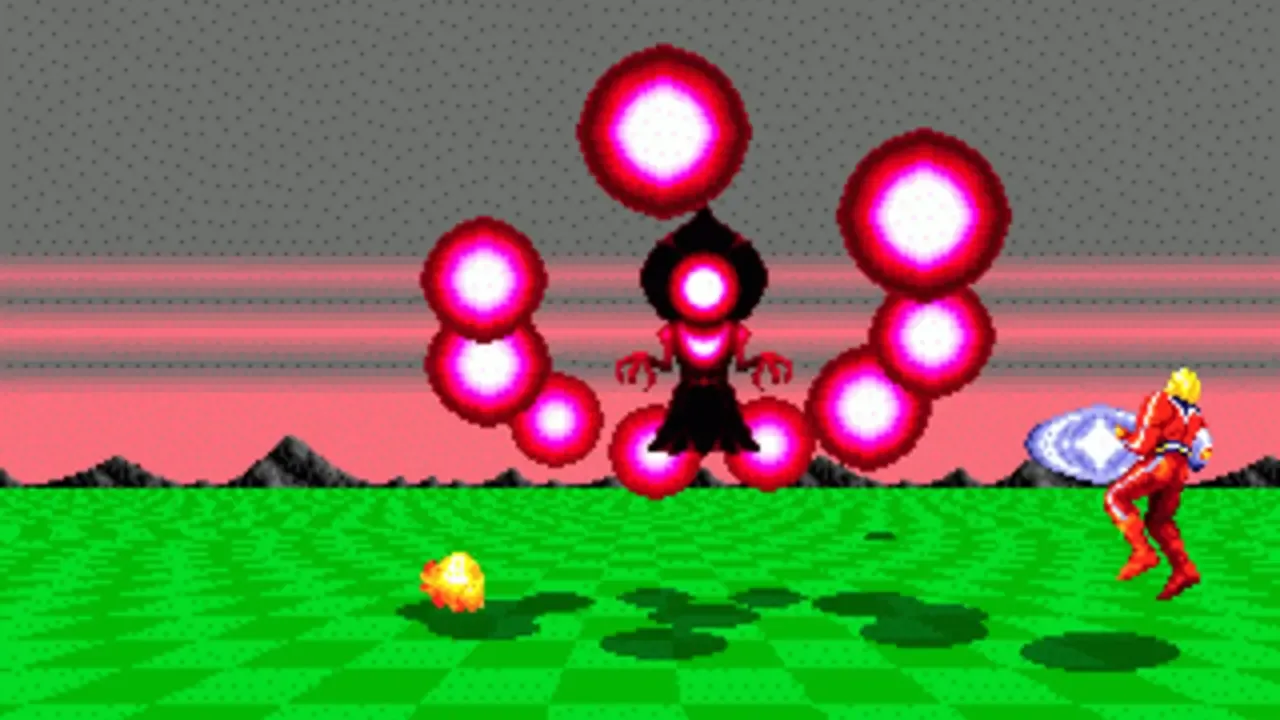
A call for help comes from deep in the universe. Fantasyland has been taken over by destructive forces. Quick on the scene is Space Harrier equipped with his laser, who must attempt to outwit and outmanoeuvre the hoards and prevent Fantasyland from being blown into oblivion!
Part of collection:
Space Harrier
(last 3 games)

A port of the Arcade game, made exclusively for the Sega Genesis/Mega Drive Mini 2.

Goal: Destroy all enemies. Harrier is in a constant state of motion as he traverses the Fantasy Zone. Can he eliminate all evil, supernatural beasts in order to save Dragon Land? Use your jet laser cannon to shoot while dodging obstacles. Can you beat all stages and reach the end? Play Sega Ages Space Harrier today! The Switch Port is based on the arcade release with options for arcade style side panels on screen, a CRT display. There is also an option to use the Joy-con like an arcade joystick, holding it vertically and tilting it for movement. It includes the widescreen support and additional boss from the 3DS version of the game. It also adds a new game mode where a support character protects the player from damage with barriers, though they get disabled for a time if the support character is attacked.
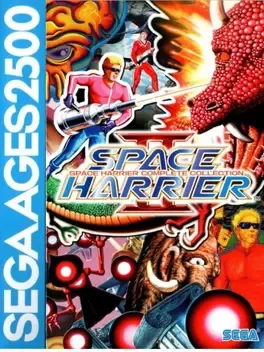
Released to honor the 20th anniversary of Space Harrier, this is a compilation of emulated Space Harrier games for the Playstation 2. It includes Space Harrier, Space Harrier 3D, and Space Harrier II. There are multiple versions of Space Harrier (including the Master System and Game Gear version), the option for a 2D and 3D mode for Space Harrier 3D, and a host of archived materials. The manual includes additional commentary from the original developers.
Could be interesting
A call for help comes from deep in the universe. Fantasyland has been taken over by destructive forces. Quick on the scene is Space Harrier equipped with his laser, who must attempt to outwit and outmanoeuvre the hoards and prevent Fantasyland from being blown into oblivion!
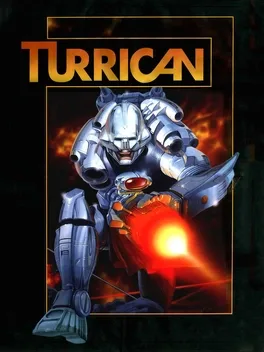
Turrican is a 1990 video game programmed and designed by Manfred Trenz. It was first developed for the Commodore 64 by Rainbow Arts, but was ported to other systems later. In addition to concept design and character creation, Trenz personally programmed Turrican on the Commodore 64. A sequel, Turrican II, followed 1991 for the Commodore 64 and other platforms.
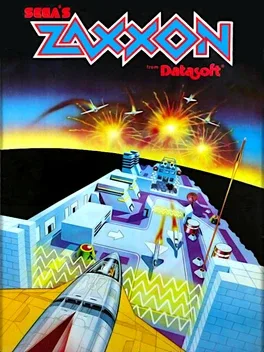
Zaxxon is a 1982 isometric shooter arcade game developed and released by Sega. The game gives the player the experience of flying a fighter craft through a fortress while shooting at enemy entities (missiles, enemy gunfire, etc.) The object of the game is to hit as many targets as possible without being shot down or running out of fuel, which can be replenished paradoxically, by blowing up fuel drums.
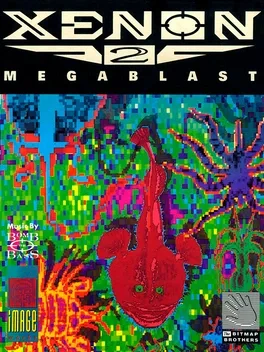
No-one likes a and loser. And no-one comes more universally despised than Xenites. For a thousand years they have been plotting revenge for their humiliating defeat in the last Galactic Conflict. Now the very fabric of time is in danger. The Xenites have planted five Time Bombs through history. Only you can save the day - not to mention the Universe. The last time you met it was a playground scrap. This time it is war.
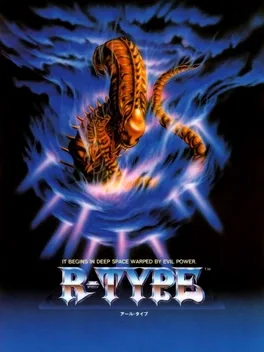
R-Type is set in the 22nd century, and the player flies a futuristic fighter craft called the R-9a "Arrowhead", named for its shape, and because it is the ninth model in the 'R' series of fighter craft (but it is the first of the series to actually be used in combat; the previous models were all prototypes). The mission is to 'blast off and strike the evil Bydo Empire'. The R- in the series title originally stood for "ray", as in a ray of light. It was a reference to the many different types of ray-like weapons in the first R-Type. his was later retconned in R-Type Final to refer specifically to the production code as well as a term of endearment for the player fighter craft, the "Round Canopy". The original R-Type was well received by most gaming critics. However, it was also infamous for its relentless difficulty. It earned 7th place in IGN's Top 10 most difficult games to beat. The gameplay of R-Type is noticeably distinct among shoot 'em ups. Invariably the player will lose, not because of an inequality in firepower, but because of the design of the levels themselves. There is usually a 'correct' way to get through a level, but players must learn these by experience - i.e. by losing and restarting from earlier in the level. The game innovated with its weapon system compared to contemporary shooters, featuring a chargeable shot (beam-meter), and detachable 'force' pod; levels were designed to require different tactics and ideal weapons (air-air, diagonal, or air-ground laser).
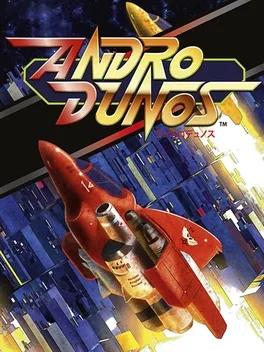
Andro Dunos is a horizontally scrolling shoot 'em up arcade game released by Visco in 1992 for the SNK Neo-Geo MVS. The player controls a futuristic fighter spacecraft with different weapon settings that you can switch between, and shoot enemies, collect power-ups, and defeat bosses to advance levels.
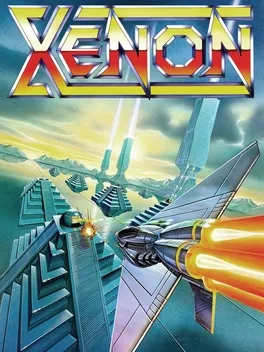
Xenon is a 1988 vertical scrolling shooter computer game, developed by The Bitmap Brothers and published by Melbourne House which was then owned by Mastertronic. Xenon was followed in 1989 by Xenon 2: Megablast. The player assumes the role of Darrian, a future space pilot called into action by a mayday report from his superior on a nebula space station. As of late, the colonies of mankind have been under attack by mysterious and violent aliens called the Xenites and it is finally time for Darrian to engage them. Unlike most scrolling shooters, the player can move in any direction instead of straight up. The player craft has two modes, a flying plane and a ground tank. The transition between crafts can be initiated at almost any time during play (except during the mid- and end-of-level boss sections, as well as certain levels where a certain mode is forced), and the mode chosen depends on the nature of the threat the player faces. Destroying some enemies released power-ups the player could catch to enhance their ship.
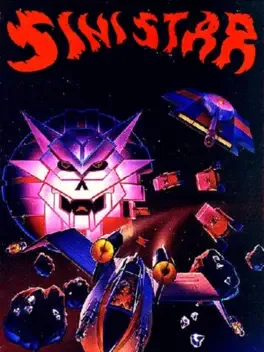
The player pilots a lone spacecraft, and must create "Sinibombs" by shooting at drifting planetoids and catching the crystals that are thereby released. Sinibombs are needed to defeat the game boss, Sinistar, an animated spacecraft with a demonic skull face. Sinistar does not exist at the start of the game, and is continuously under construction by enemy worker ships. Though time is crucial, attempting to mine too quickly will destroy a planetoid without releasing any crystals. Enemy worker ships are also gathering crystals (often stealing them from the player) which they use to construct the Sinistar. Enemy warrior ships can directly attack the player's ship. The player is given a head-start before the enemy ships have enough crystals to begin construction. Game ends when the player's ships are all destroyed. Once the Sinistar is completely formed, a digitized voice makes various threatening pronouncements, including "Beware, I live!," "I hunger, coward!," "I am Sinistar!," "Run! Run! Run!," "Beware, coward!", "I hunger!," "Run, coward!," and a loud roaring sound. The Sinistar has no weapon attacks, but if it contacts the player's ship while it darts about the playfield, the player's ship will be "eaten" and destroyed. A total of 13 Sinibombs are required to destroy a fully built Sinistar, although an incomplete Sinistar can be damaged to slow construction. Each short-range Sinibomb automatically targets the Sinistar when fired, but can be intercepted by a collision with an enemy ship, enemy fire, or a planetoid. The player moves from one zone to the next each time he defeats the Sinistar. A sequence of four zones repeats continuously after the first zone. Each is named for the most numerous feature of that zone: Worker Zone, Warrior Zone, Planetoid Zone, and Void Zone (the Void Zone is especially difficult because it has very few planetoids). Beginning with the first Worker Zone, a completed but damaged Sinistar can be repaired/rebuilt by the enemy ships by gathering more crystals, extending its "lifespan" if the player is unable to kill it quickly.

Run… fly… dodge those obstacles, but return fire on wave after wave of attacking aliens. Armed with a really big gun, you have to defend yourself against the alien hordes using your wits to navigate around the screen. But watch out for those end of level bosses! Originating in the arcades, Space Harrier is a third-person rail shooter with pseudo-3D graphics, set in the same world as Fantasy Zone. The lone titular hero fights aliens with a fireball-launching cannon, which can also be used to transform the hero into a flying rocket. The protagonist is constantly in motion, but the speed of his movement can be regulated by the player.

The objective of the game is to complete all 50 rallies without running out of fuel. There is no limit to how many vehicles a player can receive to complete a rally, as long as they have fuel. However, the destruction of the vehicle will subtract a small amount from the player's fuel tank. In the arcade, Genesis and Lynx versions, players could start the game at a higher rally, with additional opportunities to jump several levels from time to time. Players can continue their game from where they left off; however, the player has only one chance to complete the 50th and final rally. For completing the final rally the player gets one million points as a bonus. Players can get fuel in four ways: green globes, red globes, a checkpoint, and the rally point.