
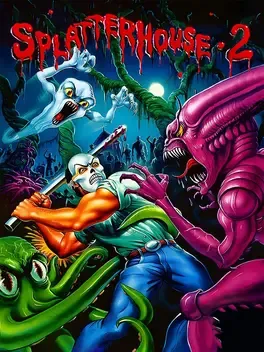
Splatterhouse 2


Buy
Part of collection:
Splatterhouse
(last 3 games)
Splatterhouse is a horror themed beat 'em up hack and slash video game developed by Namco Bandai Games for PlayStation 3 and Xbox 360. It was released in North America on November 23, 2010 and in Europe on November 26, 2010. It is a reimagining and a reboot of the original Splatterhouse which was released in 1988.
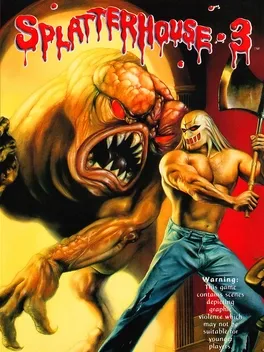
Splatterhouse 3 is a video game released by Namco for the Mega Drive/Genesis in 1993. It is the sequel to Splatterhouse 2 and was one of the first games to be given a rating by Sega's own Videogame Rating Council.
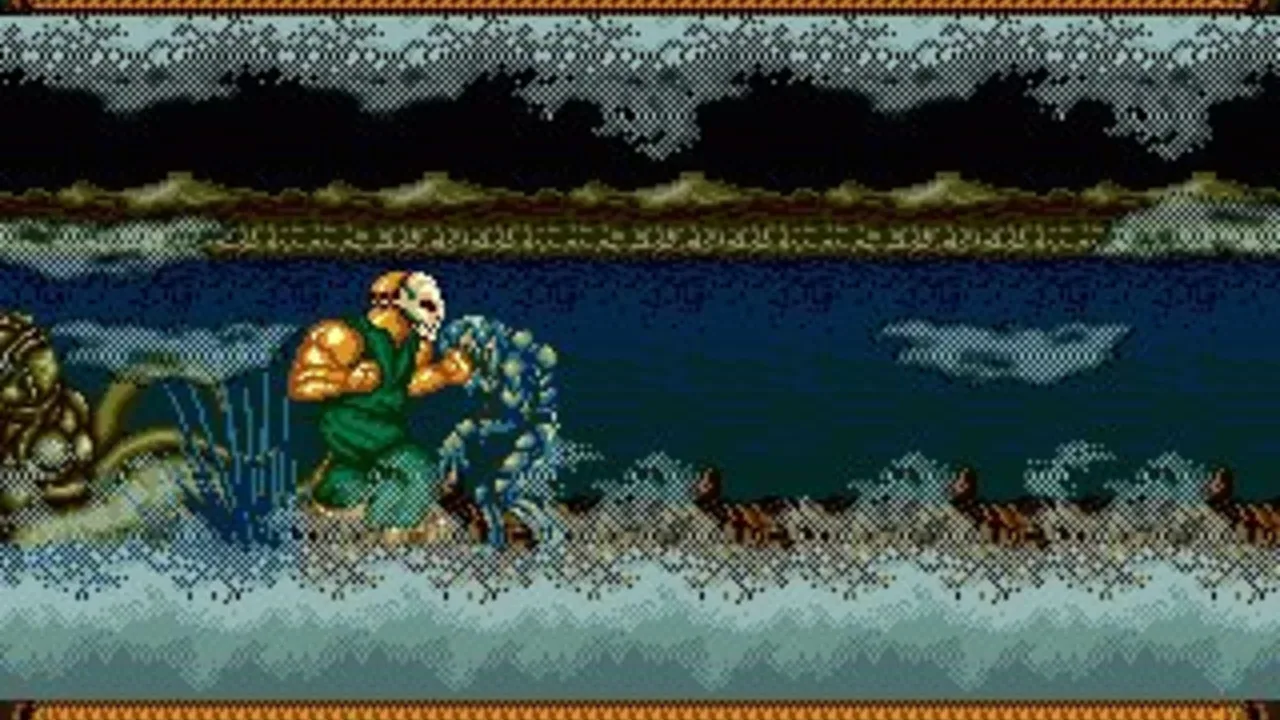
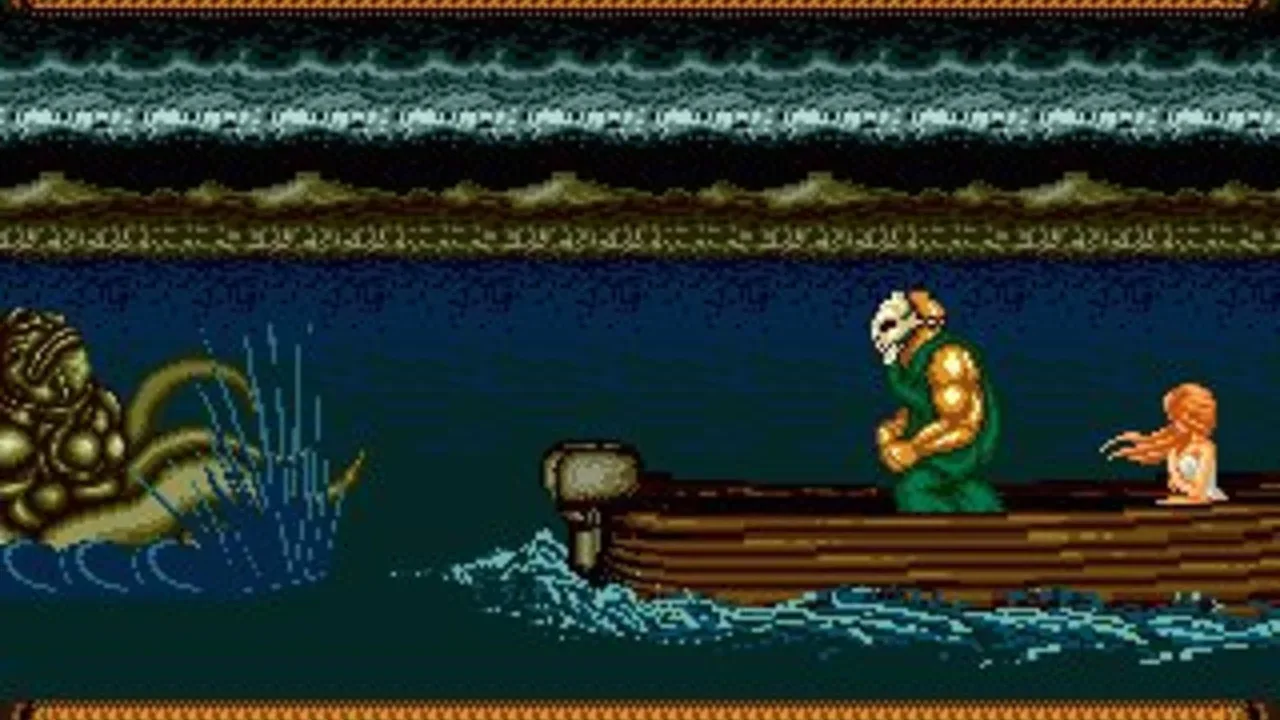
Three months have gone by since the events of the first game. The Terror Mask, which has reformed after breaking at the climax of the first game, appears to Rick and repeatedly tempts him to "go back to the house", telling him that Jennifer "doesn't have to die". It closes by telling Rick "You need me.". Rick succeeds in rescuing Jennifer, and the House sinks into the bottom of the river.
Could be interesting
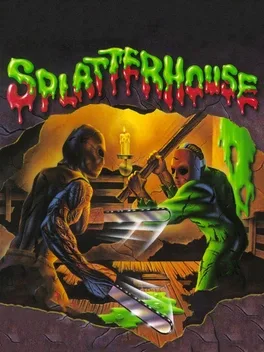
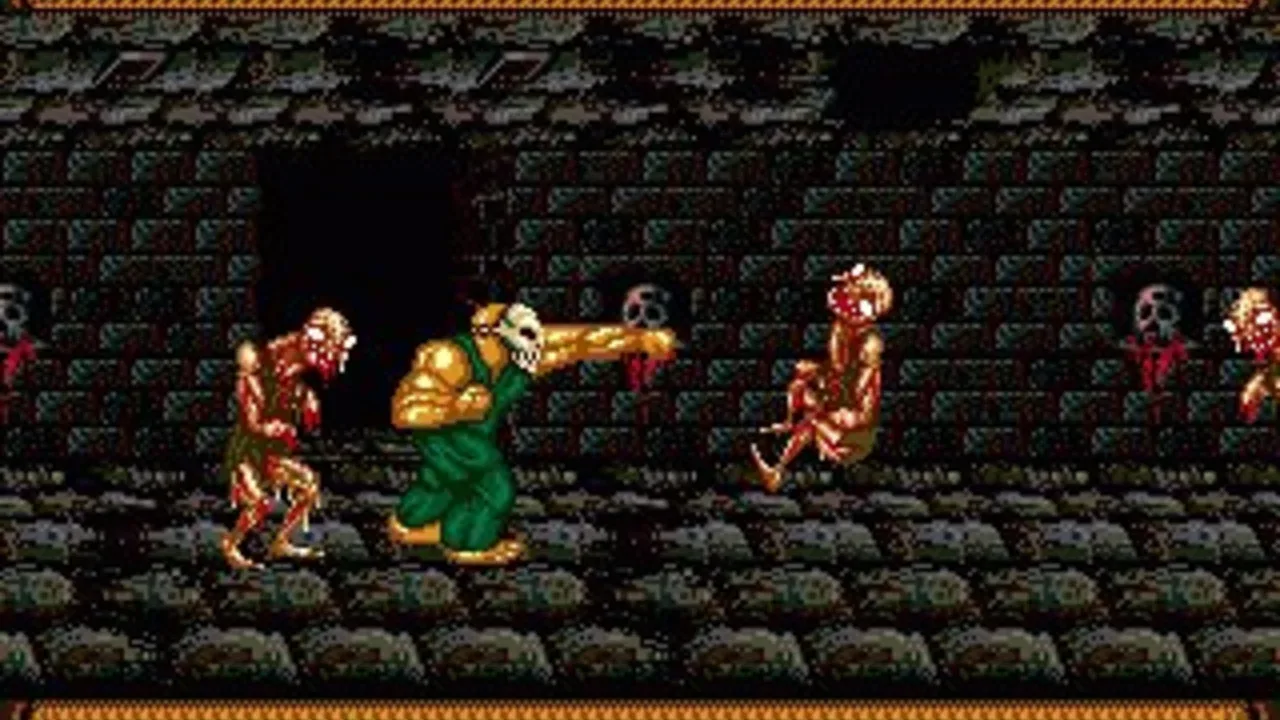
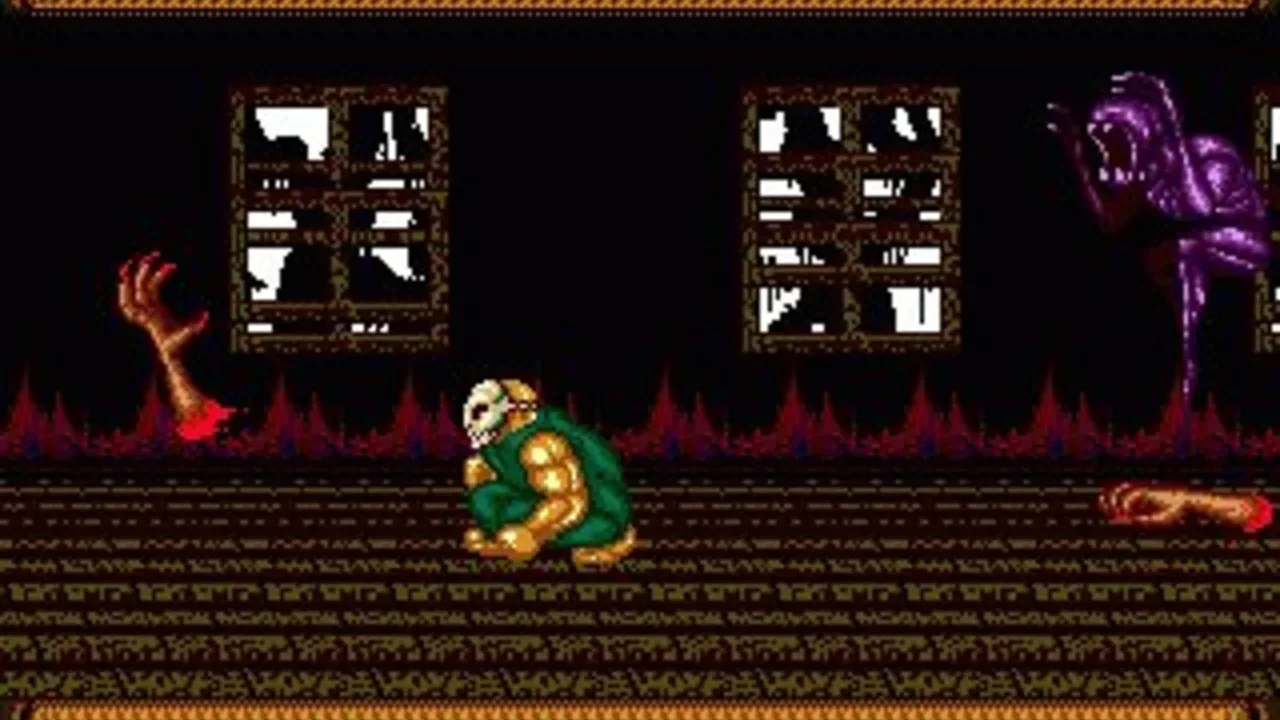
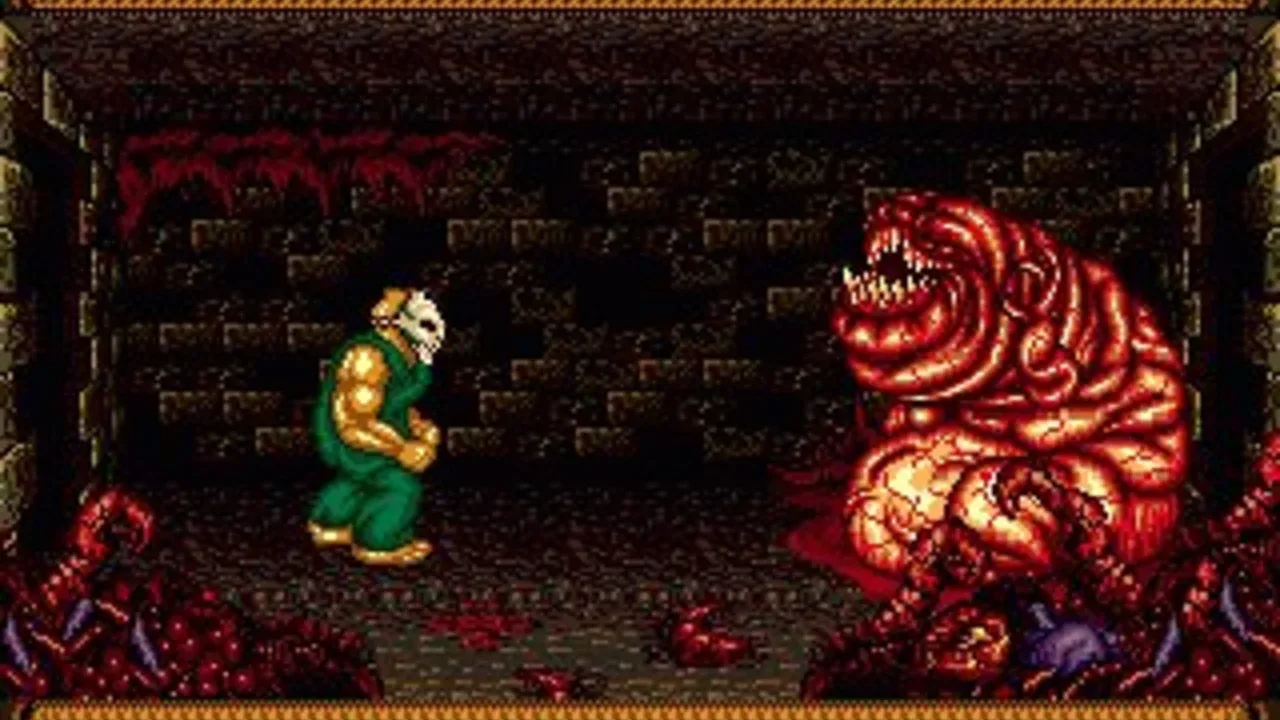
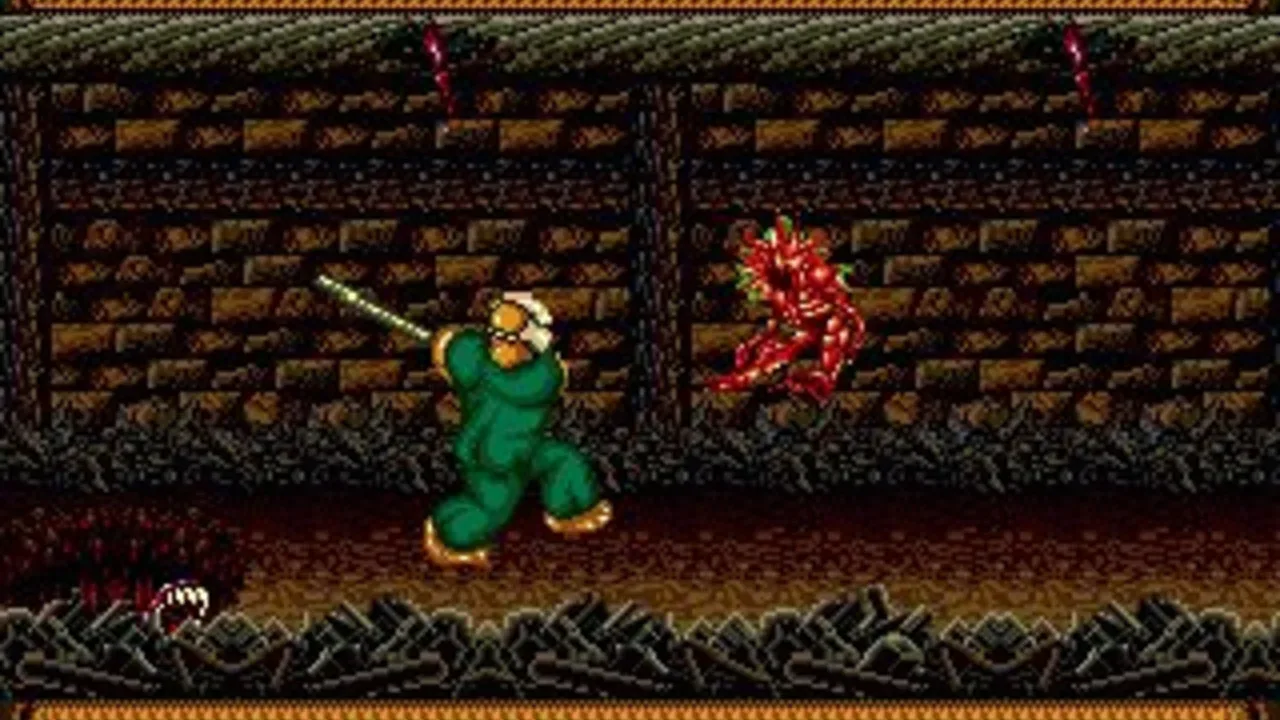
Splatterhouse is a sidescrolling beat 'em up video game in which the player controls Rick, a parapsychology student who is trapped inside West Mansion. After his resurrection by the Terror Mask, Rick makes his way through the mansion, fighting off hordes of creatures in a vain attempt to save his girlfriend Jennifer from a grisly fate. Players of this game will also recognize a number of western horror film influences, such as Friday the 13th and Evil Dead 2. Similar to many sidescrolling beat 'em up games, Rick can only move in a two-dimensional environment. The playing field does not feature a three-dimensional area, a feature that was added later in the series with Splatterhouse 3. He has the ability to jump and can punch and kick. Rick also has a Special Attack, where he will perform a drop kick that sends him skidding along the ground, damaging any enemies he hits. Rick can also perform a low kick, low punch, and jumping attacks, as well as pick up and use various weapons placed in the levels. All of the levels consist of walking left to right, with occasional auto-scrolling segments. However, alternative pathways through sections of the house are possible by falling down through holes or jumping up onto ladders. In this way, branching gameplay is possible, if only prevalent in the middle levels. Levels culminate in boss fights that take place in a single room. Unlike traditional side-scrolling fighters, boss fights have varying objectives and styles. Unlike most arcade games in the genre, Splatterhouse sends players back to checkpoints after losing lives or reaching game over, discouraging "credit feeding" as a method of overcoming the various challenges.
Splatterhouse 3 is a video game released by Namco for the Mega Drive/Genesis in 1993. It is the sequel to Splatterhouse 2 and was one of the first games to be given a rating by Sega's own Videogame Rating Council.
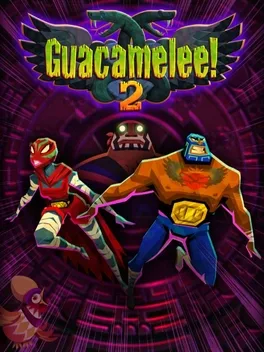
Seven years after defeating Carlos Calaca, Juan Aguacate is forced to don his luchador mask again to face a new threat - this time to the very fabric of space and time. Punch your way through a whole new Metroid-vania style world and try to save the Mexiverse!

This is a completely different game than its 16-bit counterpart on the Genesis/Mega Drive, and was originally released on the Sega Game Gear and Master System. To stop the evil Dr. Robotnik, Sonic must traverse six zones consisting of three levels each. Most of the zones are based on those in the original game, but some are entirely new, including a jungle environment and a huge airship. Other unique differences are one level that scrolls automatically and one that is aligned vertically instead of horizontally. Most of the enemies (mechanized animals, defeated by Sonic's spikes when jumping or rolling) and power-ups (speed-ups, shields, extra lives) are the same as in the Genesis version as well. Sonic can pick up golden rings for protection (when hit, he simply loses all of his rings instead of a life) and bonuses: 100 rings gain Sonic an extra life, and 50 remaining rings at the end of a level allow access to pinball-themed special stages full of bumpers and springs. The final level of a zone is always a boss fight against Robotnik. Some of the boss fights differ in the Master System and Game Gear versions of the game, with special designs for the handheld version due to the smaller visible screen area. Sonic should also collect the six Chaos Emeralds to keep them from falling into Robotnik's hands. In a departure from the original game, these are not hidden in the special stages but somewhere in the regular levels.
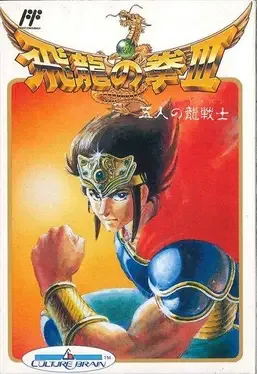
The third NES game in the Hiryuu no Ken saga
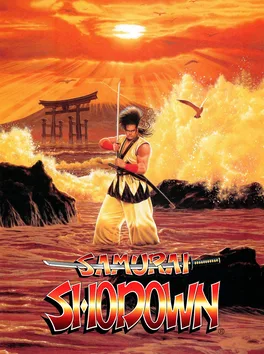
In early Japan, a man named Shiro Tokisada Amakusa preaches a heretic religion. Little does anyone know that Amakusa is really a servant of the evil Ambrosia, who took over Amakusa's body. Ambrosia wishes to shroud the world in darkness. Now, choose between 12 warriors (and 3 bonus characters) to fight for the honor of destroying Amakusa, and fulfilling a mission.
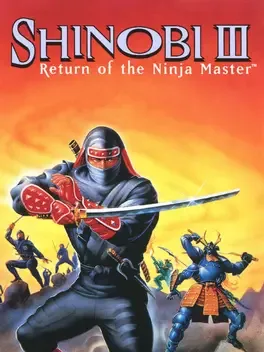
Shinobi III: Return of the Ninja Master, released as The Super Shinobi II in Japan, is the fourth game in the Shinobi series and a direct sequel to The Revenge of Shinobi.

The world's fastest brawler is back. Experience cinematic kung-fu in the most epic stickman fighter ever made. Staying true to the original, you play with only two buttons. Every press matters, do not button mash!
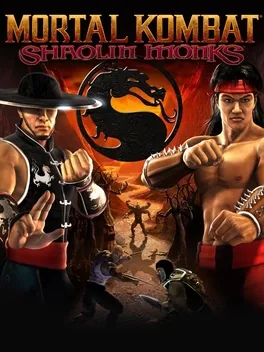
Mortal Kombat: Shaolin Monks is an action-adventure beat 'em up video game set in the Mortal Kombat universe. Players take on the roles of the iconic Shaolin monks Liu Kang and Kung Lao, either solo or in cooperative mode, as they defend Earthrealm against the threats of Outworld. The game offers a reimagining of the storyline from Mortal Kombat II.
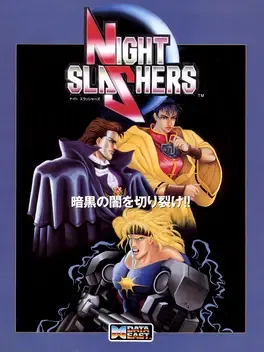
The dead have risen from their graves, and monsters and mutants prey upon what's left of the living. Three monster hunters have joined together, using their knowledge of the occult to slay the undead scourge.