
Star Cruiser II: The Odysseus Project


Buy
Part of collection:
Star Cruiser
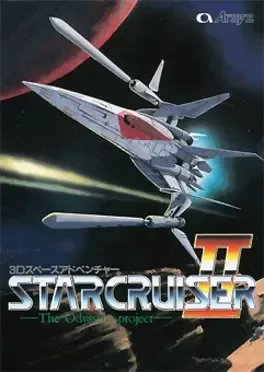
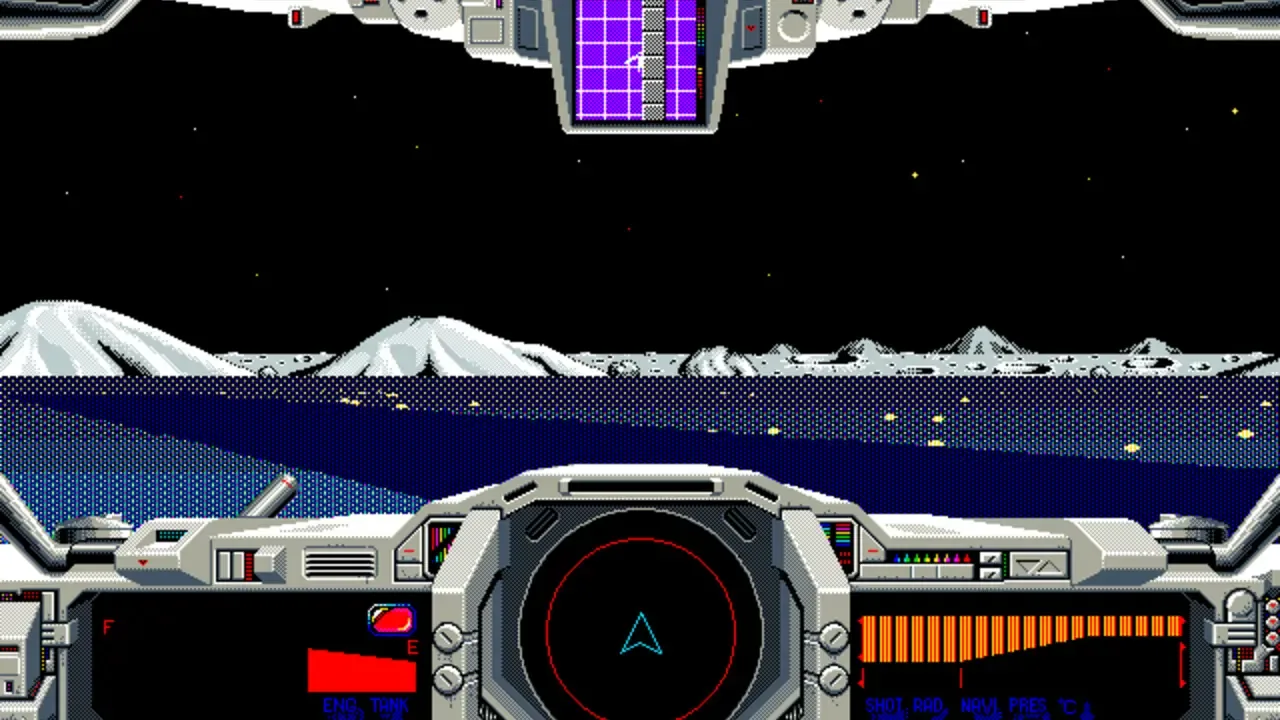
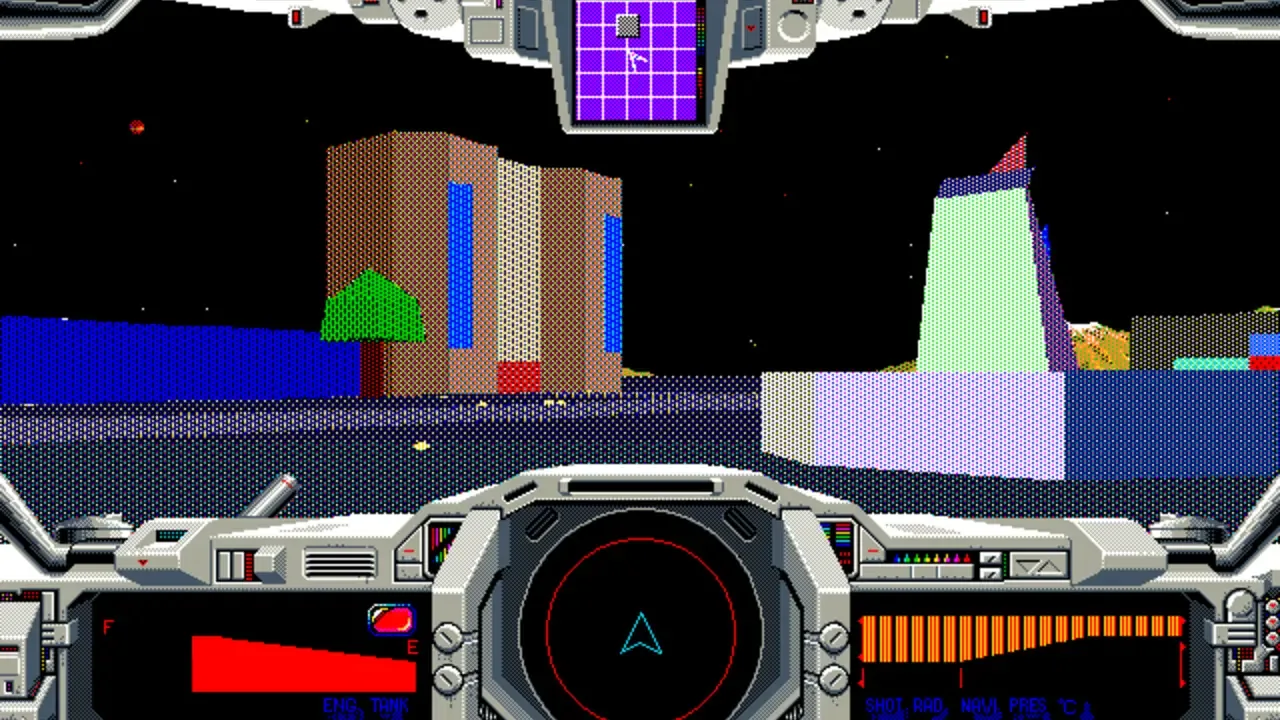
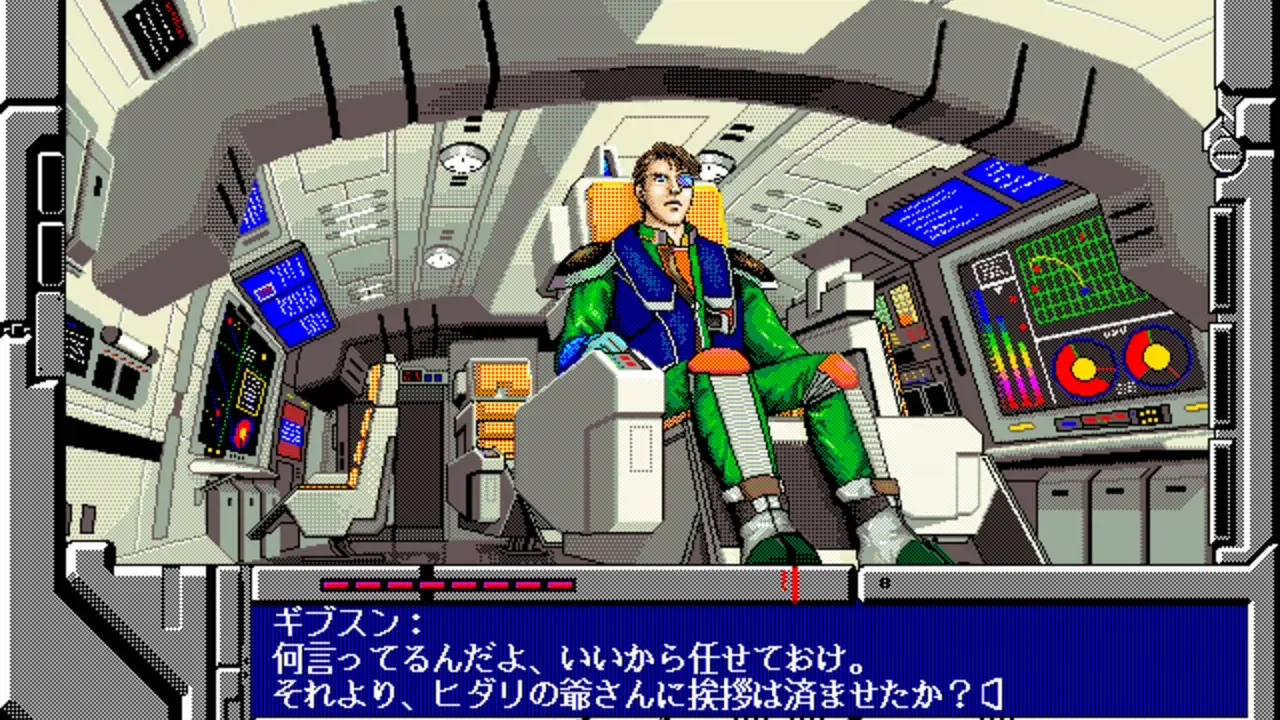
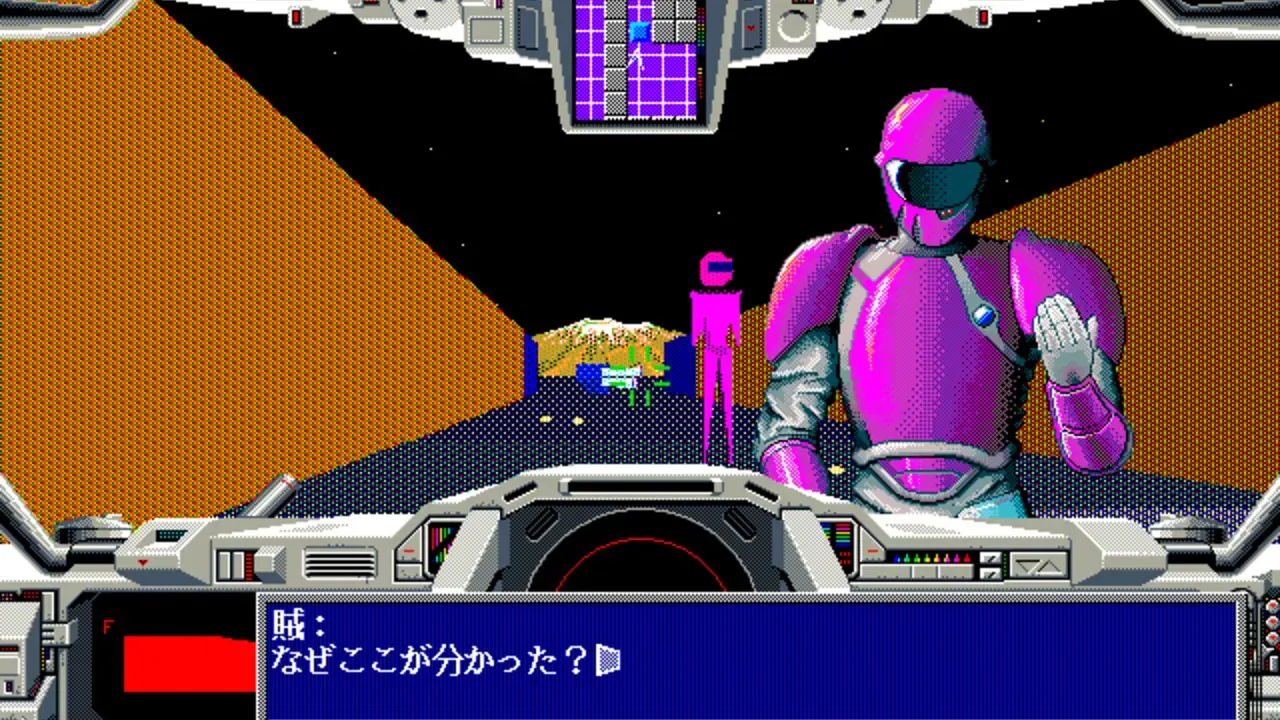
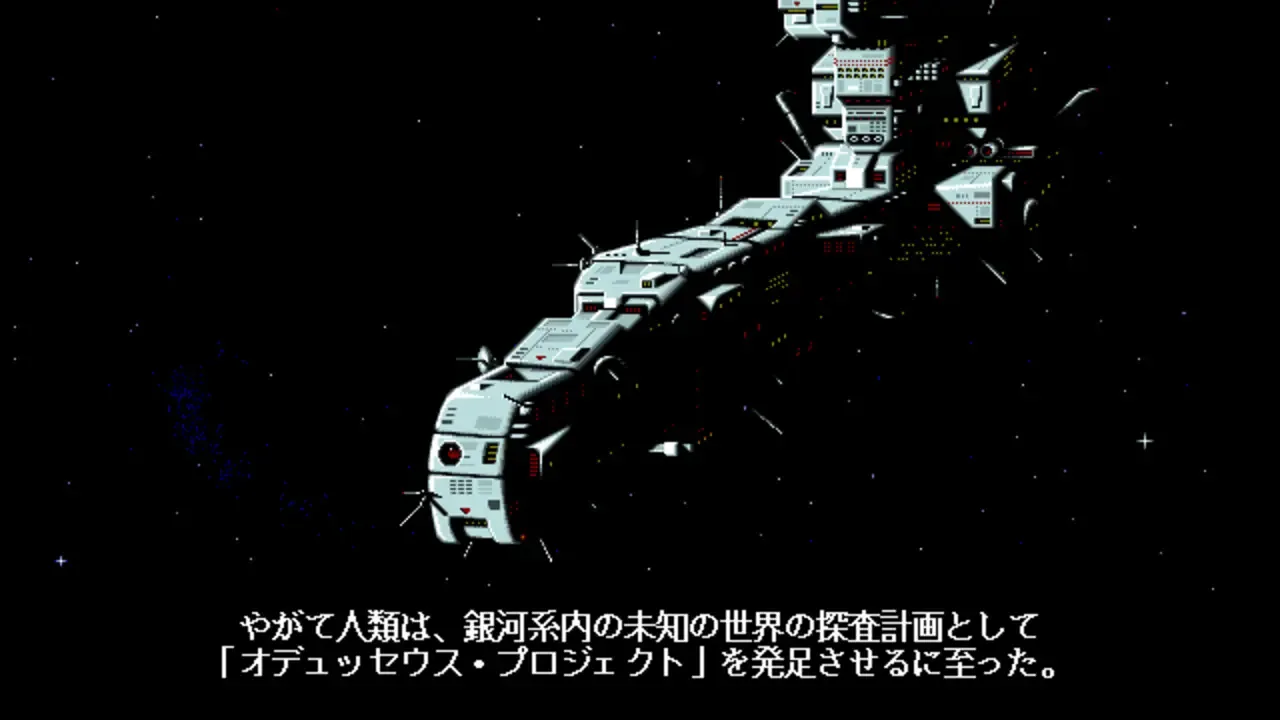
The Odysseus Project is a follow-up to Star Cruiser. Gameplay concept and visual style are very similar to that of the predecessor: it is a first-person 3D shooter with extensive exploration and customization elements, which grants it a light role-playing angle. Much of the game is spent on planet surfaces, in populated or hostile areas. Combat is action-based by default, but there is an option for a menu-based combat as well. There is a variety of weapons, armor, gadgets, and items to find or purchase. It is also possible to physically navigate a spaceship. Combat in space plays similarly to on-foot battles, with the additional of a freely rotatable camera.

An early first-person role-playing shooter released by Arysis Software for the PC-88 and PC-98 in 1988, and later ported to the Sharp X68000 and Mega Drive/Genesis. Ahead of its time, it had 3D polygon graphics, FPS gameplay, strafing controls, open-world space exploration, and an epic sci-fi space opera plot.
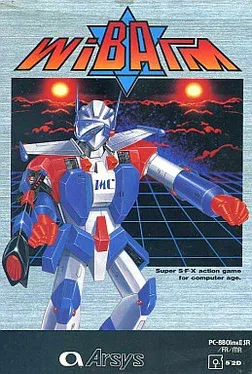
An early role-playing shooter released by Arsys Software for the PC-88, PC-98 and FM-7 computers in 1986 and ported to MS-DOS by Brøderbund. An early RPG-shooter hybrid, it was one of the first computer games with polygonal 3D environments, along with full 360-degree third-person exploration for indoor environments.
Could be interesting
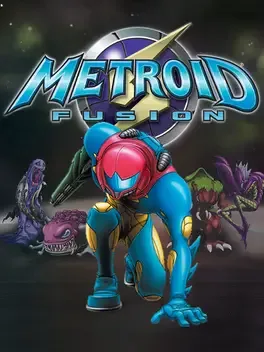
Metroid Fusion is a side-scrolling action-adventure game that combines exploration, combat, and progression within a structured environment. Players navigate distinct sectors, acquire new abilities, and unlock access to previously restricted areas as they advance. The game emphasizes guided objectives alongside ability-based traversal, with a focus on atmospheric tension, evolving threats, and progression through upgrades.
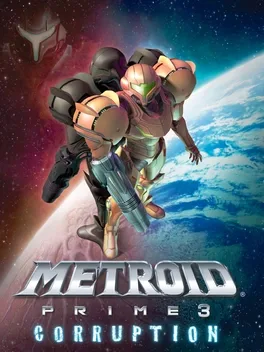
The trilogy closes as corruption creeps over the universe… and into Samus Aran. Using the Wii Remote and Nunchuk, players control Samus as she partners with other bounty hunters, shoots down enemies, and explores alien worlds in a harrowing mission to stop the mutagenic Phazon from spreading across the galaxy.
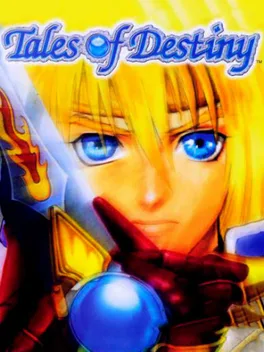
Tales of Destiny is a follow-up to Tales of Phantasia. Like its predecessor, it has the structure of traditional Japanese role-playing games, but substitutes turn-based combat for action-oriented one. Battles take place on separate side-scrolling screens and resemble those of a fighting game. The player controls the main hero, navigating him on the battle screen and performing various attacks and combos. Other party members are controlled by the game's AI, but it is possible to pause the battle at any time and assign new combat style to any one of them.
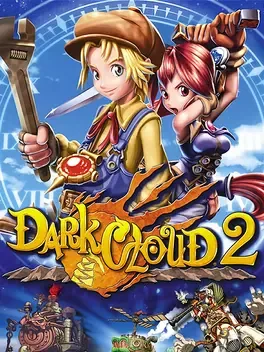
BUILD your world. INVENT your weapons. CREATE your adventure. Discover a secret binding the past, present and future. A secret where an innocent inventor, a temporal warrior and an ageless evil hold the key. Experience an epic action/RPG adventure that relies on your innovation as much as exploration and fighting reflexes.
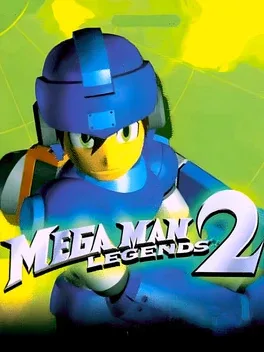
Mega Man, Roll, and all your favorites are back in this all new 3-D adventure! Far away, in an isolated wasteland, a mysterious girl and an infamous treasure have been discovered. It's the legendary "Sealed Key," rumored to unlock an even greater mystery known as the Great Legacy. What power does the Great Legacy hold? Now, a raced unfolds as Mega Man and his friends embark on a journey which will alter their destinies forever.

FTL: Faster Than Light is a single-player strategy game with roguelike design. The player commands a spaceship from a top-down view, managing systems such as weapons, engines, shields, and life support while recruiting crew and upgrading the vessel. The ship travels across procedurally generated sectors, jumping between beacons that present random events, stores, and enemy encounters. Combat plays out in real time with the option to pause and issue orders. Losing the ship or its crew ends the run and requires starting over, giving each playthrough a different layout and set of challenges.
The first "Star Ocean" released outside of Japan. It was later re-released on the PSP under the name "Star Ocean: Second Evolution".
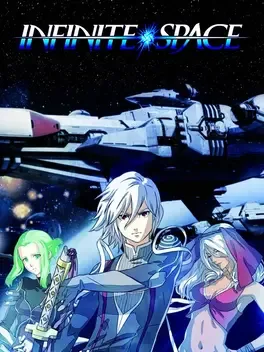
Infinite Space, a role playing game exclusively for the Nintendo DS portable handheld system, takes place in outer space and gives players the ability to control, build, outfit and customize more than 150 spaceships. Infinite Space stretches the DS hardware to the limit, offering over 200 characters and the ability to control multiple spaceships at any one time. Releasing in 2009 and currently being produced by Atsushi Inaba and directed by Hifumi Kouno (from developer Nude Maker), Infinite Space is one of the most complex RPG titles developed for the DS to date, and shows PlatinumGames commitment to teaming up with the most creative minds in gaming.
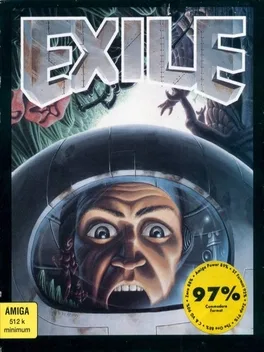
Exile is a single-player action-adventure video game originally published for the Acorn Electron and BBC Micro in 1988 by Superior Software and later ported to the Commodore 64, Amiga, CD32 and Atari ST, all published by Audiogenic. Exile's game physics engine qualifies it to be the first game to have a complete Newtonian motion model. At the time of its release it was considered to push the boundaries of what was possible on home computers, particularly on the 8-bit platforms. It remains probably the most complex game available for the BBC Micro. The game was designed and programmed by Peter Irvin (author of Starship Command, a space shoot-em-up with an innovative control system) and Jeremy Smith (author of Thrust, a game based on cave exploration with a simpler physics model).
While incorporating action role-playing game elements from the three games which preceded it, Legend of Mana has its own distinct style of gameplay. Most notably, it gives the player the ability to shape the game's world of Fa'Diel according to his or her desires, a system which was incorporated through the use of "artifacts," which are gained as the player progresses through the game. The player uses the artifacts to create different towns, dungeons, etc., called "Lands", to venture to and explore. This creates a non-linear gameplay, since the game is driven by a series of what would be considered side-quests in other games. Legend of Mana features three different plots which can occur simultaneously, and which do not necessarily need to be completed for the player to finish the game. Legend of Mana was a financial success in Japan. While the game garnered considerable praise for its graphics and presentation, many critics and fans were turned off by the game's lack of a main storyline.