
Suspended



Buy
Could be interesting
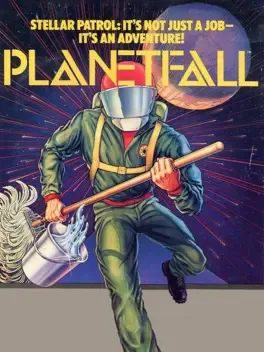
Planetfall is a science fiction interactive fiction computer game written by Steve Meretzky, and the eighth title published by Infocom in 1983. Like most Infocom games, thanks to the portable Z-machine, it was released for several platforms simultaneously. The original release included versions for the PC (both as a booter and for DOS) and Apple II. The Atari ST and Commodore 64 versions were released in 1985. A version for CP/M was also released. Although Planetfall was Meretzky's first title, it proved one of his most popular works and a best-seller for Infocom; it was one of five top-selling titles to be re-released in Solid Gold versions including in-game hints. Planetfall utilizes the Z-machine originally developed for the Zork franchise and was added as a bonus to the "Zork Anthology". The word planetfall is a portmanteau of planet and landfall, and occasionally used in science fiction to that effect. The book Planetfall written by Arthur Byron Cover, uses the game image on the cover, and is marketed "In the bestselling tradition of THE HITCHHIKER'S GUIDE TO THE GALAXY.[2] A sequel, Stationfall, was released in 1987. Planetfall teleports you 12,000 years into an outrageous future. You joined the Stellar Patrol to explore the galaxy, but all you've seen is the end of a mop - until your ship explodes and you're jettisoned onto a mysterious, deserted planet. Luckily, you have Floyd, a lovable multi-purpose robot with the personality of a mischievous 8-year-old. He's the ideal companion with whom to brave your new world, as you dare its dangers and uncover its secrets.
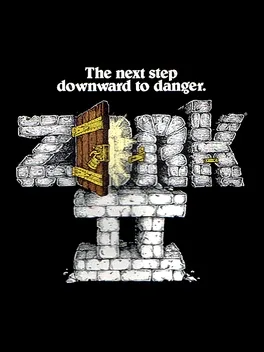
The adventure begins in the Barrow from "Zork I" armed only with the trusty brass lantern and sword of elvish antiquity. The purpose of the game is not initially clear. Like its predecessor, Zork II is essentially a treasure hunt. Unlike the previous game, the ten treasures are tied together by a crude plot. Finding the treasures does not end the game, nor are all the treasures needed to finish the game. Instead, the adventurer must figure out a way to use the treasures in order to reach the game's finale.
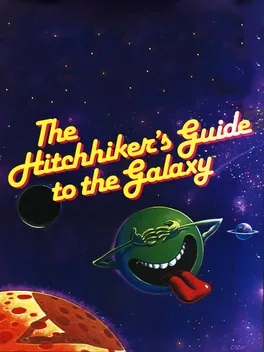
The Hitchhiker’s Guide to the Galaxy is a classic Interactive Fiction game. Though divergent from the source material, the main characters, locations, and concepts are here. Unlike the book, death can come quickly if Arthur fails to observe his surroundings, collect inventory, talk to people, and consult the Guide. Don't panic!
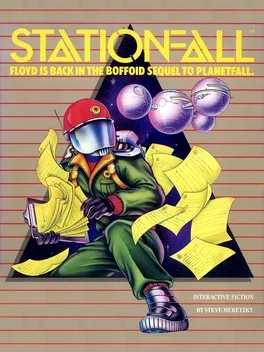
Stationfall is an interactive fiction computer game written by Steve Meretzky and released by Infocom in 1987. Like the majority of Infocom's works, it was released simultaneously for several popular computer platforms of the time, such as the Commodore 64, Apple II, and PC. The game is a sequel to Planetfall, one of Infocom's most popular titles. It is Infocom's twenty-fifth game. Following the events on Resida in Planetfall, the player's character received a promotion from lowly Ensign Seventh Class to Lieutenant First Class. The life of an officer in the Stellar Patrol is no better than that of a humble enlistee, however. Five years after the thrills of saving an entire planet from destruction, the character is stuck in a boring desk job that demands piles of tedious paperwork instead of menial cleaning duties. A typically boring assignment comes in: accompany a spacetruck to a space station and pick up a load of "Request for Stellar Patrol Issue Regulation Black Form Binders Request Form Forms". To make things even more dull, spacetrucks are fully automated, so it will pilot itself once the proper coordinates are entered. But the task does authorize the use of a robot assistant, and coincidentally enough, Floyd, a beloved companion revived at the end of Planetfall, is one of the choices.
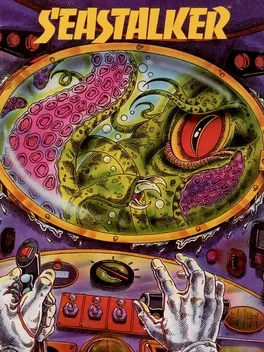
Seastalker is an interactive fiction computer game designed by Stu Galley and Jim Lawrence and published by Infocom in 1984. Like most of Infocom's works, it was released simultaneously for several popular computer platforms of the time, such as the Commodore 64, Apple II, and IBM PC. The game was marketed as an introduction to interactive fiction for pre-teen players. It is Infocom's twelfth game. Galley and Lawrence later wrote Moonmist for Infocom. The player's character is a young inventor and marine scientist. A research facility called the Aquadome issues a call for help, indicating that the undersea structure is being attacked by a sea monster. With helpful assistant Tip, the player must navigate to the Aquadome in the new untested two-person submarine Scimitar and investigate the problem. But that isn't all... it looks like there may be a saboteur within the Aquadome as well.
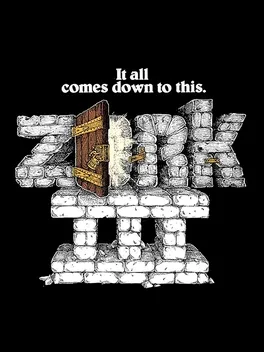
In the third game of the adventure game series Zork, you are once again a nameless adventurer, only this time you won't travel through a beautiful magical land, but are immediately cast into a deep dungeon. Like in a dream, you hear a mysterious voice telling you that you have passed all the tests but one. When conscience returns to you, you find yourself on the endless spiral of stairs, with only your trusty lantern near you... will you be able to survive the horrors of the Dungeon?
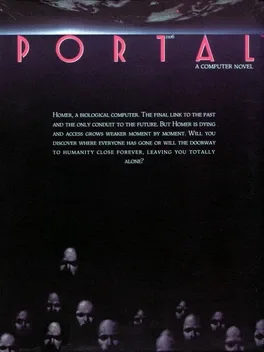
Portal was an ambitious attempt to tell a story with the depth of a novel and the interactivity of a game, sitting somewhere between interactive fiction and simulation of a computer system.

You play as a xenohistorian on an expedition. You've been dropped (more literally than you planned) by a dropship over the ground of the Ancients. Your equipment was scattered and the dropship crashed. Now it's just you, your wits, and the Ancients to help you find a way home.
Lieutenant Huchess came to, an hour or so ago. That was around the time Runoma, blazing orange-hot so near this, its second planet, fell below the distant, jagged crag line. Ensign Covegn died not long after -- Sandra Marie Covegn, both legs crushed under the weight of the pod's torn hatch. Night came quickly, bringing with it cool and howling winds that whistle through desert rocks and carry other, more dangerous sounds.
This is where I end and you begin. That, at least, is what I want to think. I don’t know you. Perhaps one day I will. But this Implementation-rather, its copies-are my seeds blowing to the wind. The palm-parsers, their oak gears whirring, will be pressed into hands long after I finish this. Hands like yours. A metatextual work of interactive fiction by Anya Johanna DeNiro.