
Sutte Hakkun


Buy
Parent game
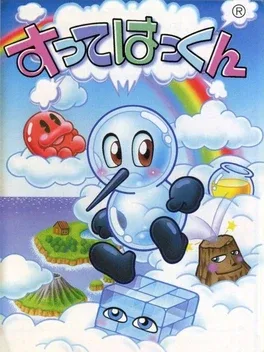
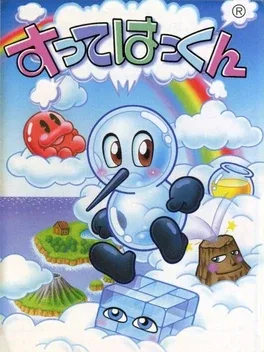
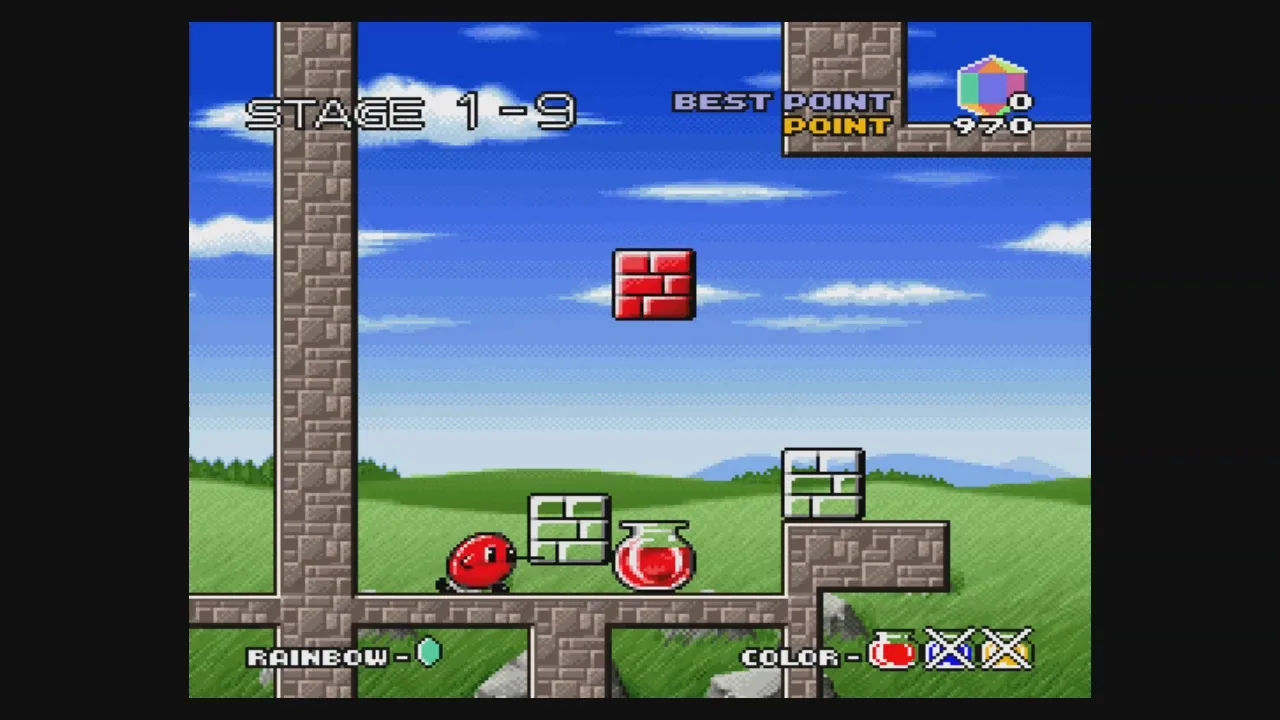
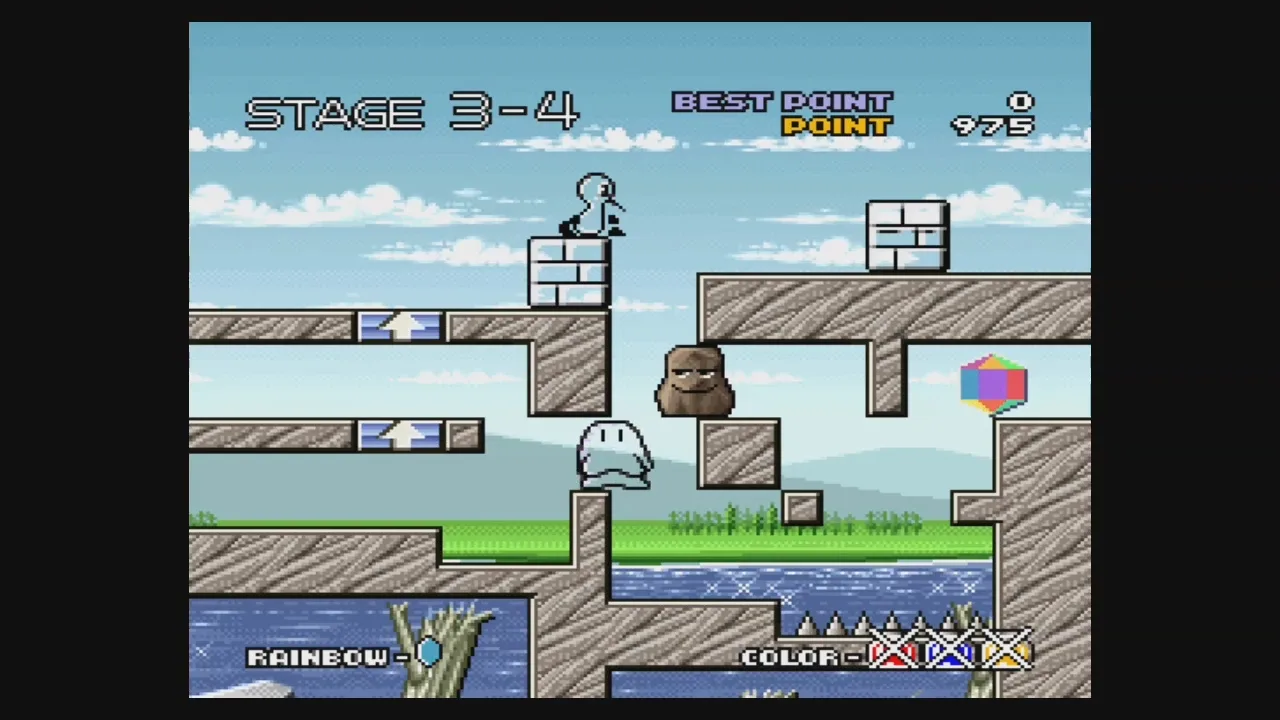
Sutte Hakkun is a puzzle action game in the shape of a platformer. The playing character is an abundant-beaked bird resembling a penguin, named Hakkun, that is able to walk and jump but not to fly. The Rainbow of Happiness shined in the sky above Peaceful Islands: one day it broke apart and now Hakkun has to track down, collect, and put together all rainbow crystals to relive it. The gameplay hinges upon two elements: blocks and potions, the latter of several colours. Hakku makes its way through levels by changing the position of blocks — that will be done by swallowing them to release them on an other place then — and sucking potions — that are to be injected to blocks by the beak, endowing them with new properties consequential to the colour of the fluid — from jars. A level is cleared when the rainbow shards in it are collected. Neither a time limit nor enemy characters are there impeding Hakkun's way. Equally distinctive is the score system: a set number of points is given at the beginning of each level, and a decrease happens with any move made, thus rewarding the player for completing levels with as little moves as possible. This version would later get re-released as the expanded "Event Version", which added a ranking system, followed by other two "Event Versions" released for the Satellaview. Another expanded version of the game, called Sutte Hakkun as well, was released as a Nintendo Power downloadable game, containing many levels left out of the Satellaview broadcast due to the Satellaview 8MB Memory Pak size. That version was also released later as a Super Famicom standard cartridge and for the Wii and Wii U Virtual Consoles.
Part of collection:
Sutte Hakkun
(last 3 games)
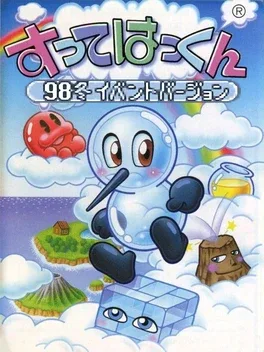
Sutte Hakkun: 98 Event Version is a special Winter themed version of Sutte Hakkun released for the Satellaview.
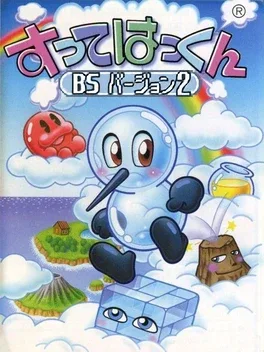
Sutte Hakkun BS Version 2 is a platform/puzzle game that was released in 1998 in Japan. As the game's title implies, it is a sequel of sorts to the earlier Sutte Hakkun (Nov. 1997) and Sutte Hakkun Event Version (Oct. 1997). A later titles in the same series, Sutte Hakkun '98 (Dec. 1998) followed a month after the broadcast of Sutte Hakkun Version 2.
This version was released for use with the Nintendo Power cartridge, and included all the levels designed by game creators (which wasn't possible to do with the 8MB Satellaview Memory Pak). It was afterwards released as a Super Famicom standard cartridge and also for the japanese Wii and Wii U Virtual Console. Sutte Hakkun is a puzzle action game in the shape of a platformer. The playing character is an abundant-beaked bird resembling a penguin, named Hakkun, that is able to walk and jump but not to fly. The Rainbow of Happiness shined in the sky above Peaceful Islands: one day it broke apart and now Hakkun has to track down, collect, and put together all rainbow crystals to relive it. The gameplay hinges upon two elements: blocks and potions, the latter of several colours. Hakku makes its way through levels by changing the position of blocks — that will be done by swallowing them to release them on an other place then — and sucking potions — that are to be injected to blocks by the beak, endowing them with new properties consequential to the colour of the fluid — from jars. A level is cleared when the rainbow shards in it are collected. Neither a time limit nor enemy characters are there impeding Hakkun's way. Equally distinctive is the score system: a set number of points is given at the beginning of each level, and a decrease happens with any move made, thus rewarding the player for completing levels with as little moves as possible.
Could be interesting
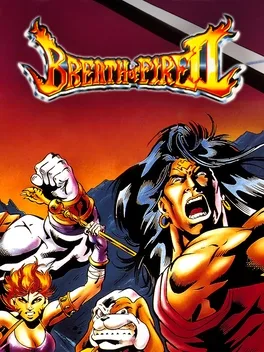
The incredible sequel to the best-selling RPG hit Breath of Fire is here! You are the last member of the Dragon clan, fighting to rid the world of a growing evil. A cast of unusual and exciting companions joins you in your adventures across a wondrous land full of magic and mystery. You'll find strange mystic items, memorable monsters and exotic locations in your quest to conquer evil. There's strategy and spellcasting galore in the hours of compelling action and adventure that awaits you. Breath of Fire II is the ultimate in RPG excitement!
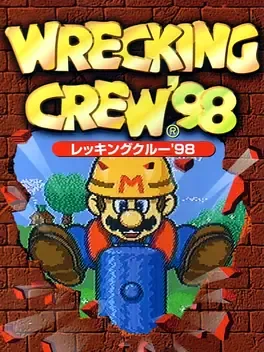
Wrecking Crew '98 is a Japan-only puzzle video game released for the Super Famicom. It is the sequel to the Nintendo Entertainment System game Wrecking Crew. The game takes on a more competitive approach, featuring puzzle-versus elements akin to games like Tetris and Puyo Puyo. Such additions include chain reactions, as well as attacks unleashed into the opponent's play area upon successfully clearing lines.
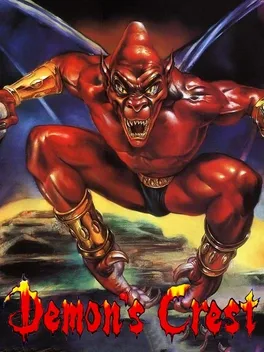
This is the third game featuring Firebrand from the Gargoyle's Quest series. It is side a scrolling platformer.
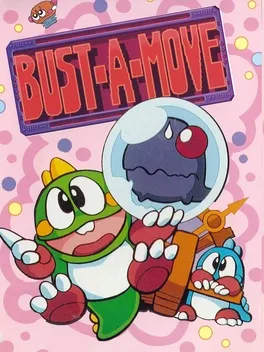
Bust-A-Move (also known as Puzzle Bobble) is a real-time puzzle game in which the player controls a device called "pointer" at the bottom of the screen, aiming and releasing randomly colored bubbles upwards. Depending on the aiming, the bubbles may float up directly or bounce off the walls, changing their trajectory. The goal is to aim the bubbles in such a way that they will touch identically colored ones. When such bubbles form a group of three or more, they pop and disappear from the screen. If the ceiling of the area is covered by too many bubbles, it will gradually descend; the game is over when it nearly reaches the player-controlled pointer. Should the player fail to release the bubbles within a specific time limit, they will be released automatically, unaffected by the pointer's aiming.
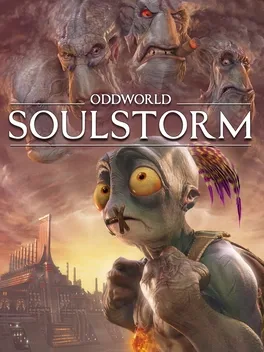
Oddworld: Soulstorm is a modern re-imagining of the 1998 title Oddworld: Abe's Exoddus. It serves as a direct sequel to Oddworld: New 'n' Tasty. The player controls Abe, a reluctant hero who inadvertently sparked an uprising and now must lead his fellow Mudokons in their fight for freedom against the Magog Cartel and the planet’s ruling power.
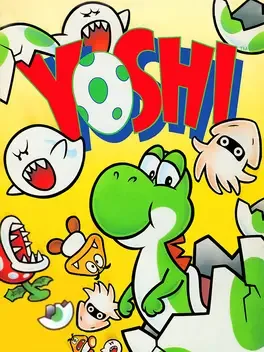
Yoshi is a puzzle game featuring the titular character. In this game, the player must stack two of the same Mario enemy on top of one another to clear them. The concept of the game was inspired by Tetris.
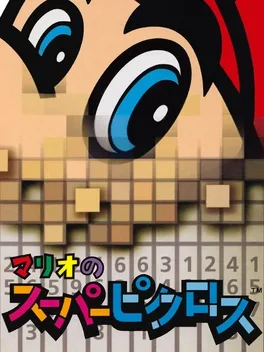
Mario's Super Picross is the first sequel to the Game Boy game, Mario's Picross, and can be played on the Super Famicom. After the commercial failure of Mario's Picross in the West, this sequel was released only in Japan. The game plays much the same way as the first, except Wario appears in it and presents his own set of special rules, which also return in the sequel. Other features includes game-saves, hints and tutorials.
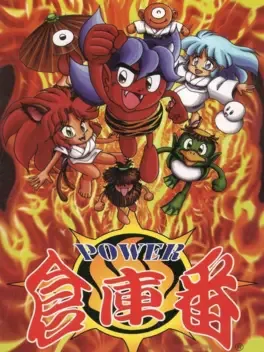
Power Sokoban is a Puzzle game, developed by Atelier Double and published by Nintendo, which was released in Japan in 1999.
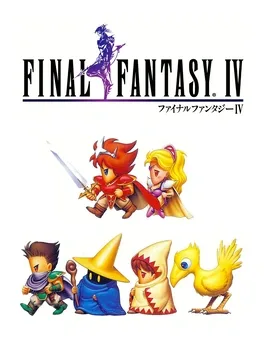
FINAL FANTASY IV is the fourth main installment in the FINAL FANTASY series, developed and published by Squaresoft. It was released in July 1991 for the Super Nintendo Entertainment System in Japan, and released as FINAL FANTASY II in North America in October 1991 with alterations made due to Nintendo of America's guidelines at the time.
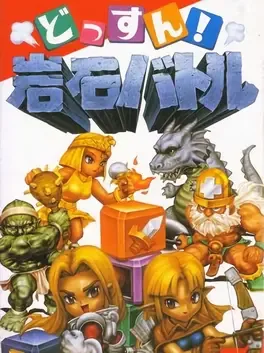
A falling block puzzle game in a pseudo-medieval fantasy setting that pits two characters against each other in an abstract form of combat that is quite similar to games like Columns. Combining at least three matching symbols in a vertical, horizontal or diagonal line does not only clear them off the screen, but also deals damage to an opponent. This means that players do not only have to keep their game area clear, but also pay attention to their characters health bar. Once a block touches the top of the screen or the health bar is diminished the game ends. There are four different icons that have different effects when combined: Books, swords and rocks deal damage to an opponent by attacking with fireballs, dragons or swords. Bottles heal a certain amount of health. Purple blocks have no effect, but clog up the screen nonetheless. Chain reactions result in particularly powerful attacks or place one or more grey blocks inside the opponents area. They can be destroyed just like ordinary blocks, but they always stay in the same spot and do not fall down. More complex chain reactions give access to special attacks, up to three of which can be held and activated with the shoulder buttons. Special attacks have different effects that include clearing all purple blocks, using all potions and clearing the bottom three lines.