
Sword of the Berserk: Guts' Rage


Buy
Part of collection:
Berserk
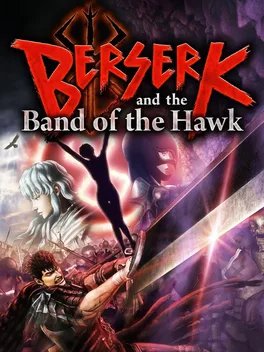
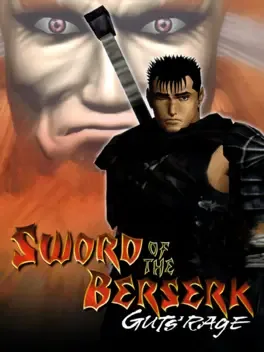
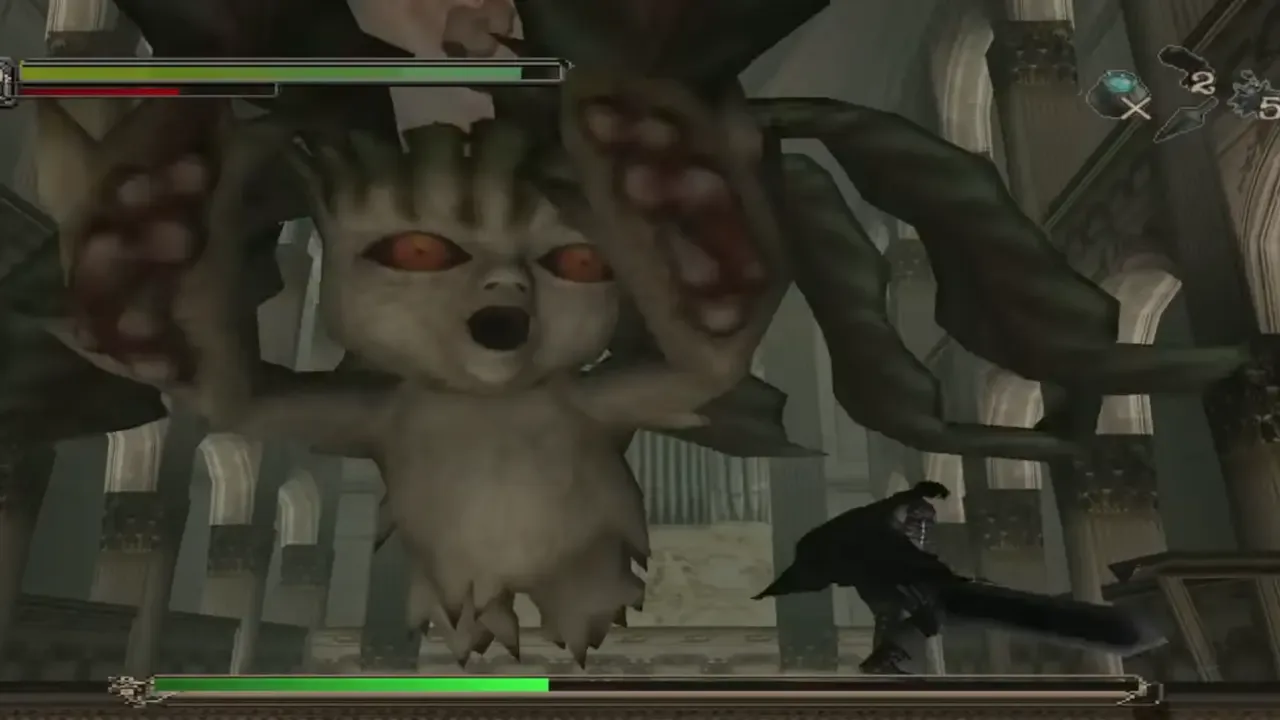
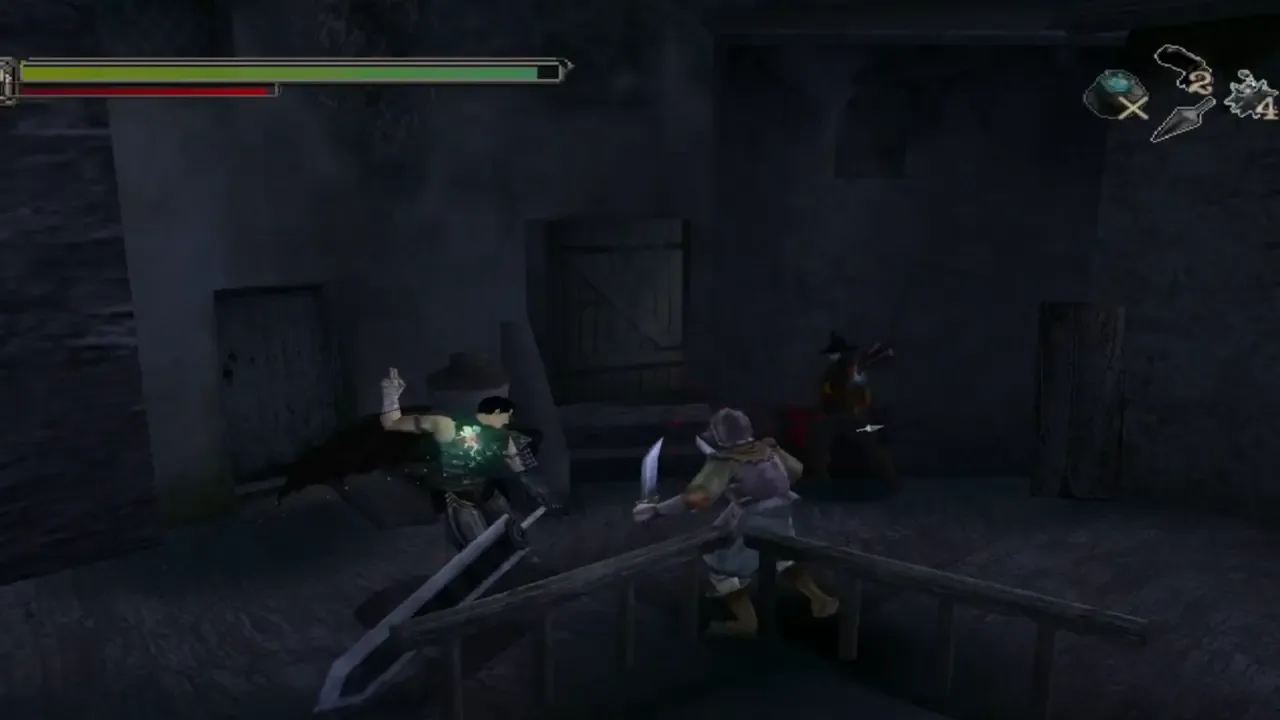
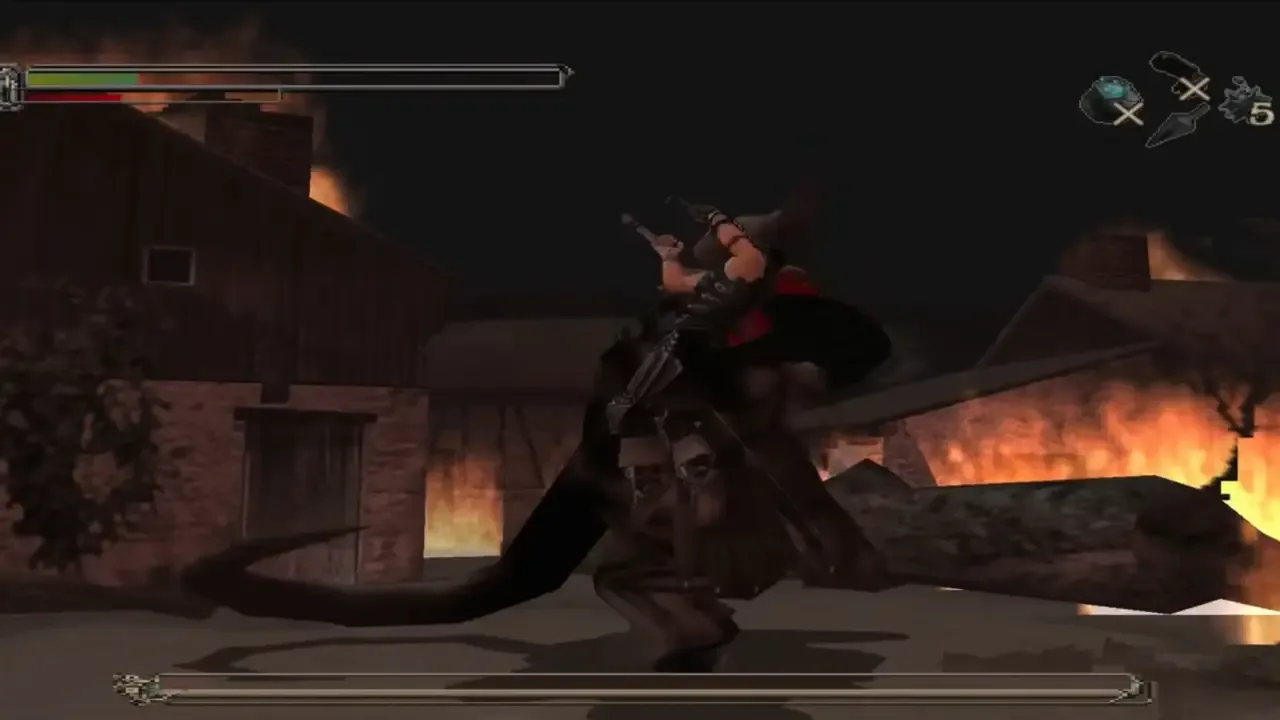
Behold the fierce blend of "Warriors" and "Berserk"! The action of cutting through hundreds of enemies, fundamental to the Warriors series, is fused together with the dark and gruesome atmosphere of the world of "Berserk", making various heretofore unseen acts possible, such as using a giant man-sized sword to cut enemies in half, as well as smash or send them flying with the "Slash" and "Smash" actions.
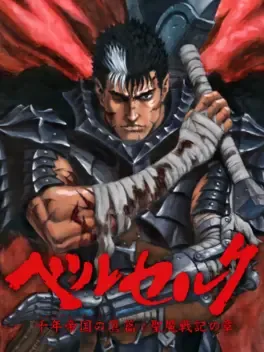
The second video game based on the manga Berserk. It was released by Sega-Sammy in Japan for the PlayStation 2 on October 7, 2004. Sammy licensed the game to YBM-Sisa for a Korean version, which was released at the same time.
An outcast warrior enters a land plagued by an evil curse. Guts is unlike ordinary men for he carries the Dragon Slayer, a mighty blade of retribution whose fury knows no equal. His enemies will know true fear once they encounter his Berserk rage!
Part of franchise:
Berserk
Behold the fierce blend of "Warriors" and "Berserk"! The action of cutting through hundreds of enemies, fundamental to the Warriors series, is fused together with the dark and gruesome atmosphere of the world of "Berserk", making various heretofore unseen acts possible, such as using a giant man-sized sword to cut enemies in half, as well as smash or send them flying with the "Slash" and "Smash" actions.
The second video game based on the manga Berserk. It was released by Sega-Sammy in Japan for the PlayStation 2 on October 7, 2004. Sammy licensed the game to YBM-Sisa for a Korean version, which was released at the same time.
An outcast warrior enters a land plagued by an evil curse. Guts is unlike ordinary men for he carries the Dragon Slayer, a mighty blade of retribution whose fury knows no equal. His enemies will know true fear once they encounter his Berserk rage!
Could be interesting
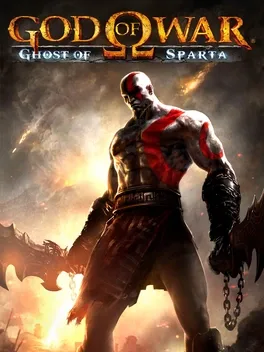
"Marking Kratos' second foray into portable gaming, God of War: Ghost of Sparta stands as a spin-off nestled between the events of God of War and God of War II. Despite ascending to the title of the god of war, Kratos remains haunted by nightmarish visions. One such vision compels him to embark on a new journey when he witnesses his mother, Callisto, imprisoned in Atlantis under the dominion of the sea god Poseidon. Against Athena's counsel to ignore the vision, Kratos sets forth to unravel his past and, in the process, rescue his long-lost brother, Deimos, from the clutches of the god of death, Thanatos. This second instalment for the PlayStation Portable (PSP) maintains a gameplay style akin to its predecessor, introducing a handful of new mechanics. Kratos wields his trusty Blades of Athena in this quest, now augmented with a new magic known as Thera's Bane, amplifying the potency of his attacks. The game also introduces several new magical items and a fresh secondary weapon. In addition to the captivating story mode, Ghost of Sparta offers the "Temple of Zeus," a location where players can spend orbs acquired in the Battle Arena to acquire various art and other bonuses."
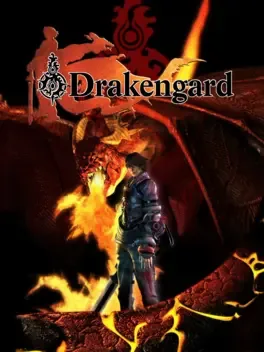
Drakengard follows the story of a kingdomless prince named Caim who fights for the Union against the Empire. Under the Union's protection are the Hierarchs and the Goddess, currently Caim's sister Furiae, who is a human manifestation of one of the four seals that protect the world from being broken. As the game begins, Caim is fatally wounded in a battle with the Empire. Encountering a captured Red Dragon who is also near death, Caim makes a fateful choice. In exchange for both their lives, the Red Dragon and Caim will enter a pact. This pact will forever chain their lives to one another and link their souls, at the cost of something irreplaceable. Recharged with the fires of a Dragon, Caim's vengeance burns over the enemy... The player controls Caim on his quest. The game is separated into three distinct modes: Aerial combat, Ground combat and Event Combat. In Aerial Combat, Caim rides dragonback against a variety of airborne foes breathing fireballs (strong single shots and weaker multiple lock-on shots). The Dragon is agile and is able to evade incoming threats, turning around completely in a moment. In Ground combat, the game is shown in 3rd person though usually large, open areas. Controlling Caim, his primary ability is the use of a variety of weapons found on the battlefield, each with their own magic powers. These are leveled up through continued usage, and specifically through the killing of individual enemies. In ground combat, Caim may also call forth his Dragon to ride and strafe enemies from the air. Event combat is similar to Ground combat, but shown isometrically, restricted to a single weapon and without the aid of a dragon. It is used mainly to tell story sequences.
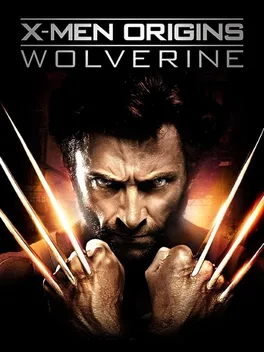
A port of X-Men Origins: Wolverine, a hack-and-slash action-adventure game loosely based on the film of the same name.
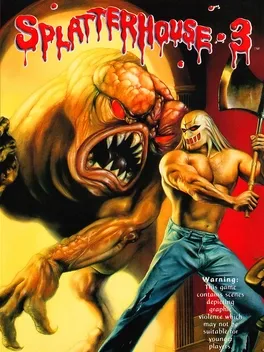
Splatterhouse 3 is a video game released by Namco for the Mega Drive/Genesis in 1993. It is the sequel to Splatterhouse 2 and was one of the first games to be given a rating by Sega's own Videogame Rating Council.
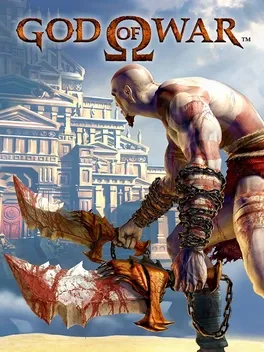
God of War is an action-adventure hack-and-slash video game developed by Santa Monica Studio and published by Sony Computer Entertainment (SCE). Initially launched for the PlayStation 2, the game stands as the first instalment in the God of War series and the third in chronological order. Loosely inspired by Greek mythology, it unfolds in ancient Greece with vengeance as its central theme. The player takes on the role of Kratos, the protagonist, a Spartan warrior devoted to the Olympian gods. Tasked by the goddess Athena, Kratos is assigned to eliminate Ares, the God of War and Kratos' former mentor. Ares had deceitfully manipulated Kratos into killing his wife and daughter. As Ares attacks Athens fueled by hatred for Athena, Kratos embarks on a quest to locate Pandora's Box, the sole object capable of permanently stopping the vengeful god.
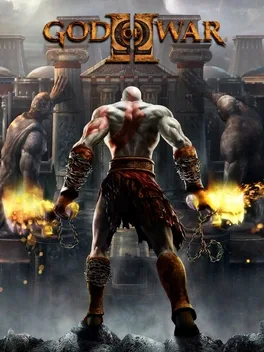
God of War II, an action-adventure hack-and-slash video game, was developed by Santa Monica Studio and published by Sony Computer Entertainment (SCE). Initially launched for the PlayStation 2, it serves as the second installment in the God of War series, the sixth in chronological order, and a sequel to 2005's God of War. The game is rooted in Greek mythology and unfolds in ancient Greece, revolving around the theme of vengeance. The protagonist, Kratos, is the new God of War, having defeated the former, Ares. However, Kratos is betrayed by Zeus, the King of the Olympian gods, who not only strips him of his godhood but also kills him. Dragged slowly to the Underworld, Kratos is rescued by the Titan Gaia, who guides him to seek out the Sisters of Fate. These entities have the power to enable time travel, allowing Kratos to prevent his betrayal, and ultimately seek revenge on Zeus.

Set in the realm of brutal Greek mythology, God of War III is a single-player game that allows players to take on the climatic role of the ex-Spartan warrior, Kratos, as he scales through the intimidating heights of Mt. Olympus and the dark depths of Hell to seek revenge on those who have betrayed him. Armed with double-chained blades, and an array of new weapons and magic for this iteration of the trilogy, Kratos must take on mythology's darkest creatures while solving intricate puzzles throughout his merciless quest to destroy Olympus. Utilizing a new game engine built from the ground up and state-of-the-art visual technologies, the development team behind God of War III has made standard-setting strides in giving players the realistic feel of actually being on the battlegrounds. With texture resolutions quadrupling since God of War II on PlayStation 2 computer entertainment system, God of War III, in its debut on the PS3 system, will feature fluid, life-like characters, as well as dynamic lighting effects, a robust weapon system, and world-changing scenarios that will truly bring unmistakable realism to Kratos' fateful quest. Players will have a chance to join battles on a grand scale that is four times larger than its predecessor.
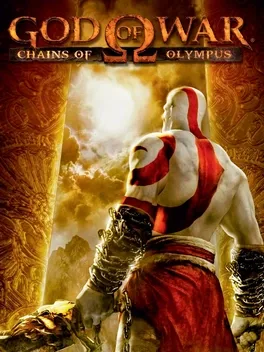
Kratos makes his inaugural appearance on a portable gaming platform in the third instalment of the God of War series. Chains of Olympus serves as a prequel, unfolding its narrative a decade before the events in the original God of War. While retaining the familiar gameplay dynamics of its predecessors, subtle modifications enhance the overall experience. Kratos embarks on a journey through various levels, engaging in relentless combat against foes and formidable bosses, deciphering puzzles based on manipulating boxes, and participating in quick-time events. Throughout his odyssey, he amasses red orbs to fortify his weapons and abilities, secures Gorgon eyeballs to augment his health, and acquires Phoenix feathers to amplify his magical prowess. The game's controls underwent refinement to harmonize with the reduced button configuration of the PSP. Dodging, for instance, now necessitates the utilization of both shoulder buttons and the analogue stick. The iconic Blades of Chaos, synonymous with the God of War series, make a return, accompanied by an array of new weapons and magical spells such as the Sun Shield, Efreet spell, and Light of Dawn. The narrative unfolds as the Gods dispatch Kratos to the city of Attica, charging him with the defence against an encroaching Persian army. However, as Morpheus unleashes chaos, Kratos finds himself compelled to harness his formidable powers to once again rescue the world from impending doom.
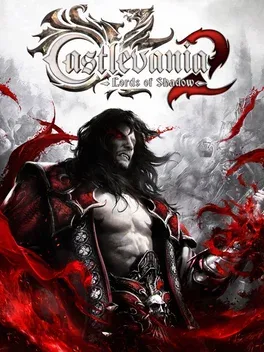
Castlevania: Lords of Shadow 2 is an action-adventure game and a sequel to the 2010 game, Castlevania: Lords of Shadow, and the 35th installment on the Castlevania franchise. The game was developed by MercurySteam and published by Konami. This is MercurySteam's last contribution to the franchise. The story is set in both medieval and modern worlds. As in the previous game, the player controls Gabriel Belmont, now known as Dracula, as he fights through an open world. During the game's opening sequence the player is able to control Dracula while he still possesses all his powers as well as all of his weapons. Dracula's main weapon is his Blood Whip, a weapon that is comparable to the Combat Cross from the original Lords of Shadow. Replacing the magic system from the previous game are the Void Sword and the Chaos Claws. The Void Sword can replenish Dracula's health when used while the Chaos Claws can be used to break through enemy defenses and deliver powerful attacks. The story mode in Lords of Shadow 2 has been stated to be far longer than the previous one. The game is mainly an open world allowing the player to choose what route to take. This game also features a movable camera, something that was not available in the first Lords of Shadow game.
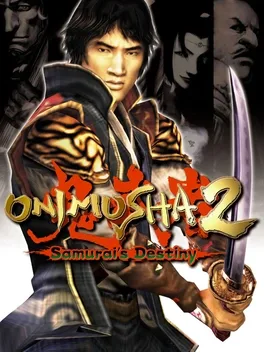
Onimusha 2 is the second installment in the Onimusha series of video games released in May of 2002. The game retains the action elements from its predecessor such as the use of multiple special weapons that can be upgraded by defeating enemies. Apart from the main character, the game features four playable sub-characters, each of whom shares a part in the story. The player's actions determine which characters will decide to help Jubei in his quest. These characters were added by the Capcom staff to give a bigger depth to the game and expand the game's feeling of adventure.