
Baroque Syndrome


Buy
Part of collection:
Baroque
(last 3 games)
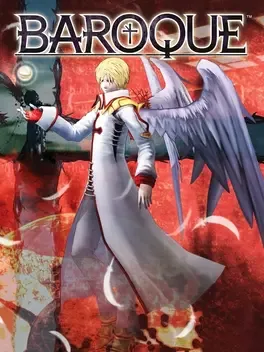
An updated remake of Baroque, a post-apocalyptic RPG game in which all hell has literally broke loose on earth. As the game starts, the world has been devastated by a heat wave and left nothing but demon infested ruins and a mysterious "Nerve Tower" which many claim that holds the answers to the apocalypse. You play as an amnesiac survivor who decides to enter the tower in search for clues to both your identity and the reasons behind the apocalypse. The game plays as an RPG dungeon-crawler, in which you control your character and attempt to clear each floor in the tower from monsters, earning experience and items and only occasionally journeying outside the tower to get weapons and equipment from a few NPCs. The PS2 remake adds additional floors, items and creatures and updates the whole game with a completely polygonal engine (the original used 2D sprites to depict characters and monsters). Furthermore, the point of view has been changed from first person to third person and the gameplay has been modified accordingly to make the game more of an action-RPG than the original.
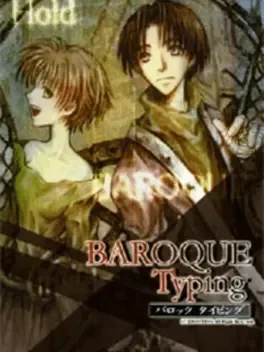
Baroque Typing is a spin-off of the dark fantasy roguelike RPG Baroque, developed by Sting Entertainment. Released for PC, this title reimagines the post-apocalyptic world of the Neuro Tower as a typing game. Similar to The Typing of the Dead, players must defeat grotesque enemies and progress through the distorted environment by accurately typing words and phrases that appear on screen. The game features characters and assets from the original Baroque universe, blending the series' signature grim atmosphere with educational typing mechanics.
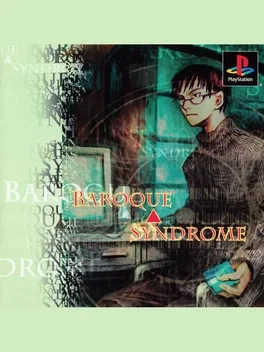
The game is played as an interactive novel, with 2D still pictures of settings and characters being the main graphic elements, and all actions being described via scrolling texts. At several intervals you will have to make a choice that branches the plot in different directions, but that's all the interaction you get to make.
Part of franchise:
Baroque
(last 3 games)

This ported edition of Baroque Syndrome presents the visual novel depicting the events before the main Baroque story. Play as Kitsune, owner of the Baroque Shop, and experience a branching narrative shaped by your choices. Fonts, stills, animations, and UI have been remastered for smoother play.

Baroque-Ya is a collection from Japanese developer and publisher Sting, bringing together four titles from the company's post-apocalyptic Baroque series for the Nintendo Switch. This collection brings together four distinct titles from the series' history: BAROQUE: Original Version: The game that started it all. This is the original 1998 version of the 3D dungeon-crawling RPG, where players guide an amnesiac protagonist through the ever-changing Neuro Tower to atone for a forgotten sin. BAROQUE Syndrome: A prequel to the main story, originally released as a visual novel in 2000. This game delves into the lives of the characters and the events that led to the world-altering catastrophe known as the Great Heat Wave. BAROQUE Shooting: Reversed: An updated release of the 2000 PC spin-off. This title is a 2D side-scrolling shoot 'em up, offering a fast-paced, action-oriented take on the Baroque universe. BAROQUE Become a Meta-Being Revive: An updated version of the 2022 arcade-style game. In this Frogger-esque title, players take on the role of a Meta-Being, navigating obstacles to survive in the distorted world.

Become a Meta-Being and head for the Neuro Tower… The protagonist is a Meta-Being! A jumping action game set in the world of BAROQUE.
Could be interesting
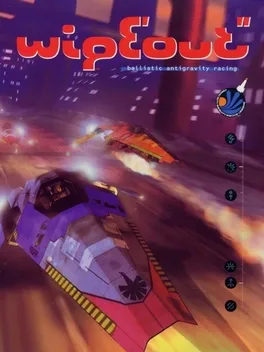
Wipeout is a racing game that is set in 2052, where players compete in the F3600 anti-gravity racing league. The game allows the player to pilot one of a selection of craft in races on several different tracks. There are four racing teams to choose from, and two ships for each team. Each ship has its distinct characteristics of acceleration, top speed, mass, and turning radius. By piloting their craft over power-up pads found on the tracks, the player can pick up various weapons and power-ups such as shields, turbo boosts, mines, shock waves, rockets, or missiles. The power-ups allow the player to either protect their craft or disrupt the competitors' craft.

With no rules, no limits and no pit stopping, anything goes in this collision course of crumple zones, hit & run mayhem, and street level slamming where wrecking your opponent's motor in ultra-realistic smashes and crashes is the name of the game. Take on the rigors of a full Championship season and pit your wits against a motley crew of psycho-waster racers such as the Suicide Squaddies, Skum and The Optician as you storm up the rankings from Rookie to Pro. Reckon you can handle it? Destruction Derby works with a serial link cable for two player head-to-head action.
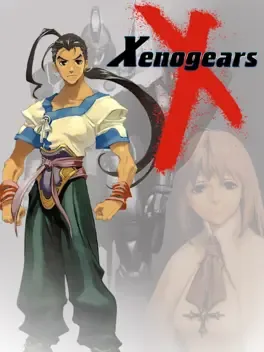
Xenogears Blends Authentic RPG Gameplay with Exquisite Hand-Drawn and Computer-Generated Animation in a Grand Science Fiction Tale. An intricate storyline involving many human and non-human characters will prove to captivate audiences of all ages. Players can rotate the amazingly detailed 3D gameplay maps 360 degrees, and have the ability to navigate around the environment by jumping and climbing. In battle, mega-robots can be controlled, adding great variety to play. A new real-time combat system eliminates restrictive menus, using button commands to provide fast-paced, intuitive action. Players can wield dramatic magical spells or engage in real-time polygonal robot vs. robot battles. Combined with dynamic camera angles and intense lighting effects, Xenogears is an experience that won't be forgotten.

Metal Slug is a 1996 run-and-gun arcade video game originally developed by Nazca Corporation and released by SNK for the Neo Geo MVS. It is the first installment in the eponymous series. Set in 2028, players assume the role of Peregrine Falcon Strike Force soldiers Marco Rossi and Tarma Roving in a fight against the Rebel Army led by Donald Morden and overthrow his coup d'état to prevent a New World Order.

Policenauts is an interactive movie/graphic novel/adventure game with a hard science fiction storyline, written and directed by Hideo Kojima, and published by Konami. It was initially released for the PC-9821 computer platform in 1994, followed by remade versions for the 3DO in 1995, and the PlayStation and Sega Saturn in 1996. The game has never been officially released outside Japan, despite plans for an English localization of the Saturn version. On August 24, 2009 (in honor of the 46th birthday of the game designer, Hideo Kojima), an unofficial English translation patch was released onto the internet. The game is set in a primarily first person perspective and uses a point-and-click interface: the player can move the cursor and have the protagonist (Jonathan Ingram) analyze objects around his environment or talk to other characters in the game. Like in Snatcher, the game features shooting segments where the player must defend their character from incoming enemies. The player can use the shooting trainer at the police department to test their reflex and accuracy. There are numerous puzzles in the game, including an event where the player must dismantle a bomb by following their partner's instructions. The console versions of the game all include support for their respective mouse peripherals. The Saturn version features light gun support for the shooting segments. The game was notable for being an early example of extensive voice recording in video games. It also featured a theme revolving around space exploration and occasional full-motion video cut scenes. The gameplay was largely similar to Snatcher, but with the addition of a point-and-click interface and some first-person shooter segments. Policenauts also introduced summary screens, which act to refresh the player's memory of the plot upon reloading a save, an element Kojima would later use in Metal Gear Solid. The PlayStation version of Policenauts could also read the memory card and give some easter egg dialogues if a save file of Konami's dating sim Tokimeki Memorial is present, a technique Kojima would also later use in Metal Gear Solid.
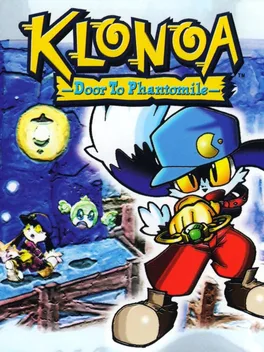
Klonoa: Door to Phantomile is a side-scrolling platform game viewed from a "2.5D" perspective. The player moves the protagonist, Klonoa, along a path in a two-dimensional fashion, but the game is rendered in three dimensions. This allows the path followed to curve and for the player to interact with objects outside of the path.
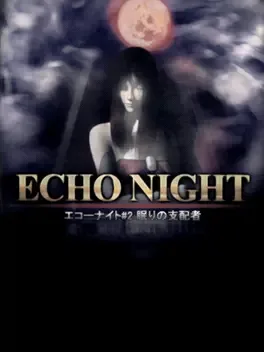
Echo Night 2: Nemuri no Shihaisha is a first person adventure. Like the first game, Echo Night 2 is played from a first-person perspective, but unlike most other first-person games there is no use of firearms in the game. When confronted by a ghost the player must turn on the lights in the room by means of a light switch. The player is often transported into the past via the passengers or certain objects. Once the player fulfills a task important to a spirit they will vanish and drop an "Astral Piece" which can be used to get a different ending scene.
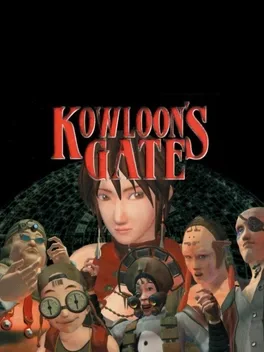
Kowloon's Gate is a 1997 Japanese adventure video game developed by Zeque. Set in the Kowloon Walled City in Hong Kong, it is considered a cult hit. Kowloon's Gate is a first person adventure game that puts the player in a futuristic fantasy world in which he will take the role of a young woman (a master feng shui) that will have to encounter different people, fight evil enmies, and solve some strange situations and puzzle to advance in the adventure and try to make that the world won't dissappear. Kowloon's Gate uses motion JPEG technology to render the strange CG enviroments you'll explore. Interact with unique characters, traverse the real-time 3D scenes freely, and solve imaginative puzzles in this Adventure game.

Coming back to the family Hotel after years, a strong-willed woman finds herself trapped with the ghosts from her past and a cellular telephone as the only way to unveil a terrible truth.
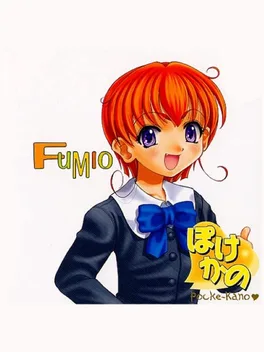
Pocke-Kano - Fumio Ueno is a sort of an adventure game with mini games in which the player start the game meeting Fumio Ueno, a little girl that he finds injured in the floor and he takes to an hospital. After that he will continue visiting her and during the game he will more or less appreciated by her depending of the results of the different mini games that the player can play in his PocketStation that will make him earn money to buy Fumio better presents. One different thing about the game is that you will see her raise from a little girl to a woman (the game last 7 years of the girl's lifetime). Bring up young Fumio Ueno in this girl raising sim. Practice skills away from the PlayStation with the PocketStation memory unit.