
Computer Space



Buy
Part of collection:
Computer Space
Following their loss of Nolan Bushnell and his success with Pong, Nutting Associates cobbled together this clone with the branding of Computer Space.
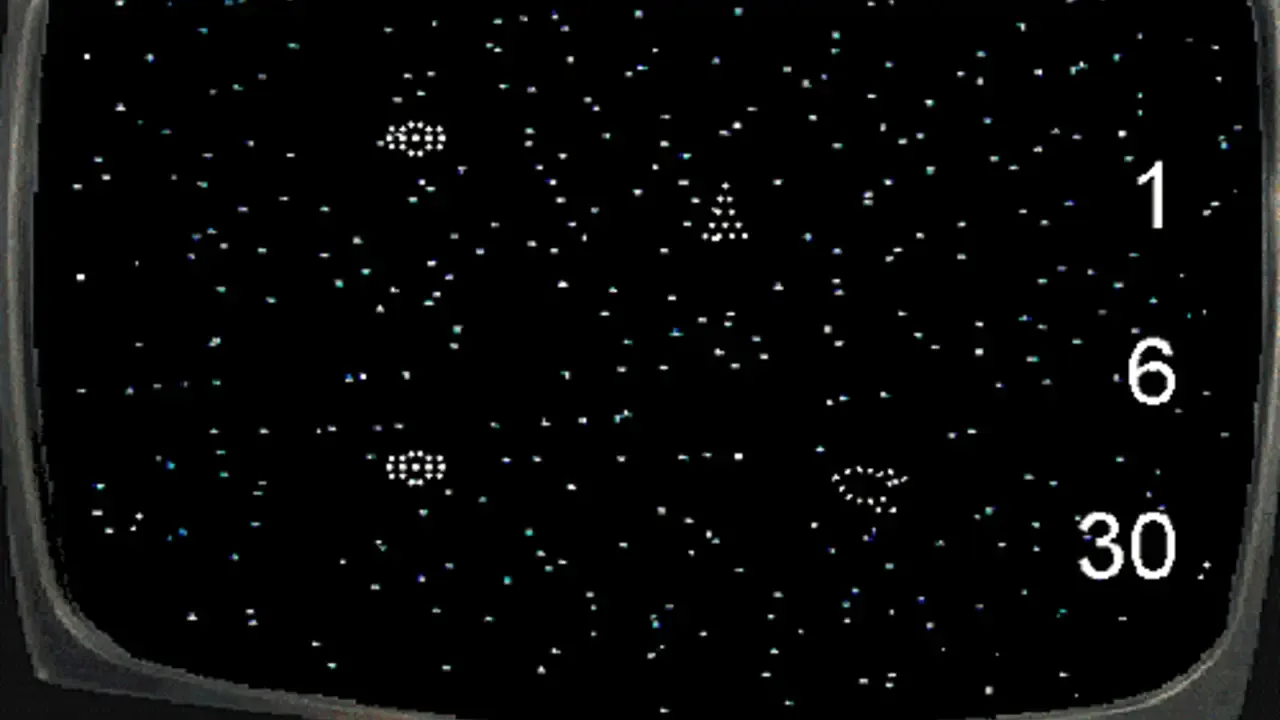
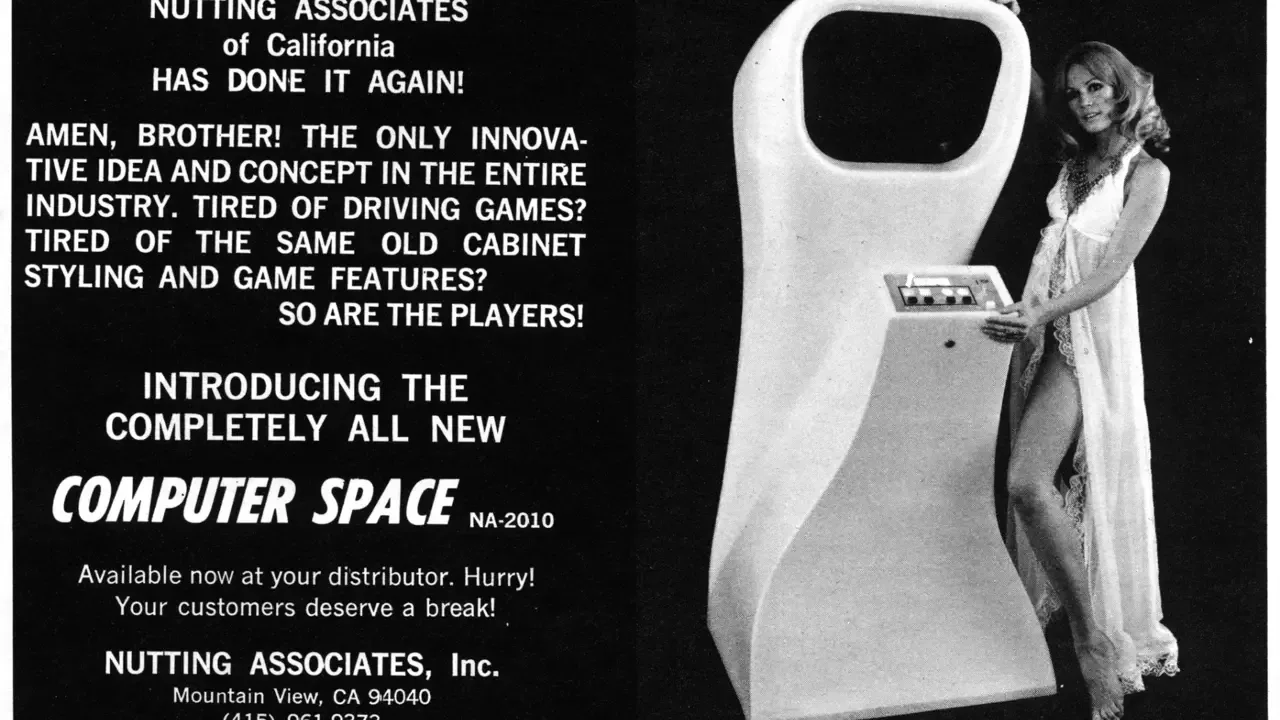
Computer Space is a video arcade game released in 1971 by Nutting Associates. Created by Nolan Bushnell and Ted Dabney, who would both later found Atari, Inc., it is generally accepted that it was the world's first commercially sold coin-operated video game of any kind, predating the Magnavox Odyssey's release by six months, and Atari's Pong by one year. It was first location tested at The Dutch Goose in August 1971, then debuted at the MOA show on October 15, 1971, and then officially released in November 1971. Though not commercially sold, the coin operated minicomputer-driven Galaxy Game appeared around the same time, located solely at Stanford University.
Could be interesting
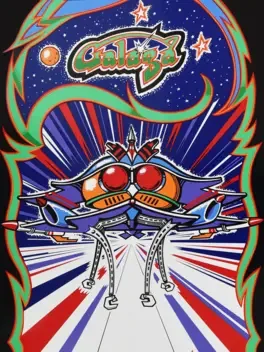
The objective of Galaga is to score as many points as possible by destroying insect-like enemies. The player controls a starfighter that can move left and right along the bottom of the playfield. Enemies swarm in groups in a formation near the top of the screen, and then begin flying down toward the player, firing bombs at the fighter. The game ends when the player's last fighter is lost, either by colliding with an enemy or one of its bullets, or by being captured. Galaga introduces a number of new features over its predecessor, Galaxian. Among these is the ability to fire more than one bullet at a time, a count of the player's "hit/miss ratio" at the end of the game, and a bonus "Challenging Stage" that occurs every few levels, in which a series of enemies fly onto and out of the screen in set patterns without firing at the player's ship or trying to crash into it. These stages award a large point bonus if the player manages to destroy every enemy. Another gameplay feature new to Galaga is the ability for enemies to capture the player's fighter. While the player is in control of just one fighter, a "boss Galaga" (which takes two shots to kill) periodically attempts to capture the fighter using a tractor beam. If successful, the fighter joins the enemy formation. If the player has more lives remaining, play resumes with a new fighter. The captured fighter flies down with the enemy that captured it, firing upon the player just like normal enemies, and can be shot and destroyed. The player can free the fighter by destroying the boss Galaga while in flight, causing the captured fighter to link up with the player's current fighter, doubling his or her firepower but also making a target twice as large. Galaga has an exploitable bug that can cause the attackers to stop firing bullets at the player, due to a coding error. In addition, similar to the famous "Split-Screen bug" in Pac-Man, a bug exists in Galaga in which the game "rolls over" from Level 255 to Level 0. Depending on the difficulty setting of the machine, this can cause the game to stall, requiring that the machine be reset or power-cycled in order to start a new game.
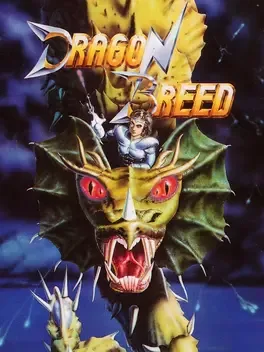
The player's character is a human who rides a large, green, flying Chinese-style dragon. The dragon is invincible, capable of blocking most enemy projectiles and damaging enemies on contact; the human, however, is not, but is armed with a forward-firing crossbow. The dragon's body is flexible and responds to the player's movement, enabling the player to use the dragon as a mobile shield or as a whip-like weapon. You can also circle the tail around a group of enemies to kill them. The tail of the yellow or blue dragon can be coiled around the player to offer almost complete invulnerability for a limited time. The dragon can also spit fireballs. By holding the fire button down, the dragon will build up fire in its mouth; the longer the button is held down, the more powerful the fireball will be. There are four levels of fireball power; at its strongest, the fireball resembles a dragon's head. The game also contains some platforming elements - the human is able to dismount on horizontal platforms. Power-ups can be acquired by shooting small green dragons that appear intermittently throughout the levels, or they can be collected from the ground on foot. There are four different power-ups, each of which provides a different weapon to the dragon. Collecting multiple power-ups of the same colour makes that weapon more powerful. The dragon changes colour depending upon which power-up has been collected. Red enables the dragon to breathe a flame. The flame gets longer if more power-ups are collected. Yellow enables the dragon's body to fire crescents in all directions. White enables the dragon to produce up to four miniature dragons, which home in on enemies. Blue enables the dragon to fire downward bolts of electricity from its underside.
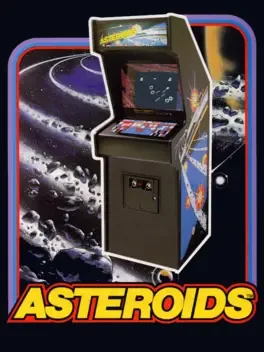
Asteroids is an arcade space shooter released in November 1979. The player controls a spaceship in an asteroid field which is periodically traversed by flying saucers. The objective of the game is to destroy both, asteroids and saucers. The triangular ship can rotate left and right, fire shots straight forward, and thrust forward. Once the ship begins moving in a direction, it will continue in that direction for a time without player intervention unless the player applies thrust in a different direction. The ship eventually comes to a stop when not thrusting. The player can also send the ship into hyperspace, causing it to disappear and reappear in a random location on the screen, at the risk of self-destructing or appearing on top of an asteroid.
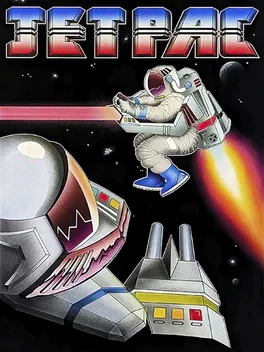
The 'Acme Interstellar Transport Company' is delivering spaceship kits to various planets in the solar system throughout the Galaxy; and as chief test pilot, all you have to do is assemble the Rockets, and thrust on to your next destination. As you don't often get the chance of a free trip across the Galaxy, this is a great opportunity to get rich! Stop off on several planets on your journey, collect the odd sack of precious gems, elements or gold, and take them back with you. Sounds simple doesn't it! But before you make yourself the richest person in the whole Universe, remember to refuel your Spaceship - with 6 fuel pods - every time you land on a planet. Any other goodies you collect are yours to keep. Upon landing, you will find yourself equipped with the very latest Hydrovac Jet Pac, which can automatically air lift almost any rocket stage, fuel pod or valuables that you care to land upon, and release them over the rocket ship base. Don't forget your mega-powerful, Quad Photon Laser Phasers can blast any nasty, mean aliens who might object to your visit.
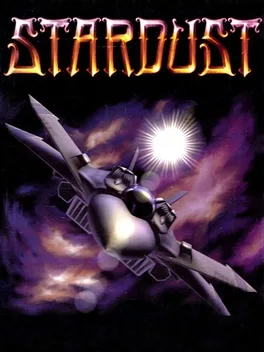
This is where it all began – way back in 1993 with the original Stardust, a legendary shoot-em-up for the Amiga 500 (an Atari STE version followed in ‘94) that wowed critics and gamers alike. Stardust dazzled with its tight controls, solid gameplay and stunning technical achievements like ray-traced graphics, full-screen animations & 3D hyperspace tunnel sequences. Players controlled an upgradeable starship equipped with various weapons, missiles and shields. The playfield “wrapped”, so if anything went off-screen it reappeared on the opposite side. Stardust featured five different worlds (all connected by 3D hyperspace tunnels) and 30 action-packed levels full of asteroids, enemies, and bosses bent on destruction. At game’s end, the evil mutant penguin Professor Schaumund made his first-ever appearance (and subsequent escape), meaning he could (and did) return to wreak cosmic havoc in future Stardust titles!
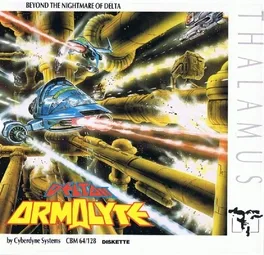
The aim of Armalyte is to progress to the end of a long, horizontally-scrolling level where the screen will cease scrolling and battle will commence with a Boss. Beating the Boss allows the player to progress to the next level. There are eight levels in all. Smaller Bosses are encountered midway through each level and these also have to be beaten to progress further. During each level the player encounters numerous small enemy ships, many of which fly in fixed formation. Levels also feature scenery which can destroy the player's ship if touched. Weapons can be upgraded through an upgrade system.
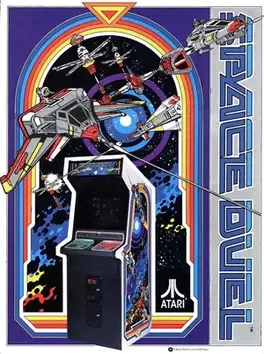
Space Duel is an arcade game released in 1982 by Atari Inc. It is a direct descendant of the original Asteroids, with asteroids replaced by colorful geometric shapes like cubes, diamonds, and spinning pinwheels. The player has five buttons: two to rotate the ship left or right, one to shoot, one to activate the thruster, and one for force field. Shooting all objects on the screen completes a level.

In this shoot 'em up the player has to fight off four assault waves consisting of different enemy types until he reaches a huge UFO. After destroying the protective plates guarding the UFO's pilot in his cockpit the player can kill the pilot. The game starts anew with harder enemies.

You are Frald Rancer and control a space ship which must journey from your home planet to outer space to defeat enemy invaders. Once all the enemies are defeated then return home. The game moves in a forward direction where the screen objects move towards and down to the player. Approaching enemy ships are small, in the distance, and become larger and move faster as they approach the player. The player controls a fighter at the bottom of the screen, which can only move from side to side. Shots can be fired at a diagonal, as well as straight, by twisting the joystick from side to side. At certain stages, ground targets will appear and can be destroyed by using the "Burn" button. The laser disc generated backgrounds are largely non-interactive during game play. They form the backgrounds on which the game is played on. Scenes do work in with the backgrounds, however that is the extent. Some backgrounds appear as they should have elements of interactively, however, were not used in the release of the game. These include scenes where the player is going through an asteroid field and asteroids fly towards the player. Another scene is in the crystal caverns, where there are many obstacles which could have been made to be avoided. These are only two of many scenes which could have had interactive elements. The game may have been decided to have been too hard to play with these background obstacles and computer fighters to play. Hence removing the background interactively to make the game more playable. The game starts with the player in Frald Rancer's home city, then taking off into outer space via a fly-by of the city. The backgrounds are very Sci-Fi and are fantasy themed. They are very interesting, more so than the game. The music from the laser disc also complements the laser disc video very well and makes up for the sometimes annoying, computer generated sounds.

Stinger is a shoot-em-up developed by Konami. It is the North American version of the sequel to Twinbee.