
Asteroids


Buy
Part of collection:
Asteroids
(last 3 games)
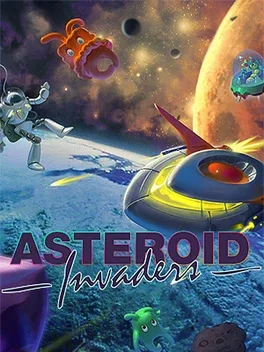
Asteroid Invaders is fast-paced, neo-classic space shooter game. Remastered with compelling, graphics, music,enemies, bosses and weapons.
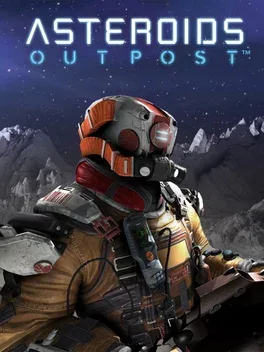
Asteroids: Outpost is an open world, sandbox survival game. Mankind has expanded its reach into the distant corners of the solar system. Near-space vessels, heavy industry on the moon and thriving colonies on Mars extend humanity's empire into the great blackness of space. With the earth's mines nearly spent, industrialists rely on the wealth of the heavens. Our solar system's massive Asteroid Belt is a mother lode of resources, just waiting to be torn free and shipped home. "The Belt" is the humanity's newest frontier, as wild and untamed as any that man has faced. Ambitious prospectors blast off with little more than an Outpost Module and a Mining Tool, to tear the hide off these asteroids and find their fortunes. This bonanza doesn't come without risks. Mere survival is a daily struggle. Asteroid storms bombard the surface, destroying Outposts, and hostile claim jumpers can appear at any moment. For the brave, there is a fortune to be made. For the foolish - there is only death. Welcome to the new Gold Rush.
A brand new Asteroids experience for the iPhone.
Could be interesting
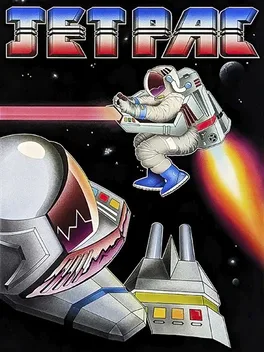
The 'Acme Interstellar Transport Company' is delivering spaceship kits to various planets in the solar system throughout the Galaxy; and as chief test pilot, all you have to do is assemble the Rockets, and thrust on to your next destination. As you don't often get the chance of a free trip across the Galaxy, this is a great opportunity to get rich! Stop off on several planets on your journey, collect the odd sack of precious gems, elements or gold, and take them back with you. Sounds simple doesn't it! But before you make yourself the richest person in the whole Universe, remember to refuel your Spaceship - with 6 fuel pods - every time you land on a planet. Any other goodies you collect are yours to keep. Upon landing, you will find yourself equipped with the very latest Hydrovac Jet Pac, which can automatically air lift almost any rocket stage, fuel pod or valuables that you care to land upon, and release them over the rocket ship base. Don't forget your mega-powerful, Quad Photon Laser Phasers can blast any nasty, mean aliens who might object to your visit.
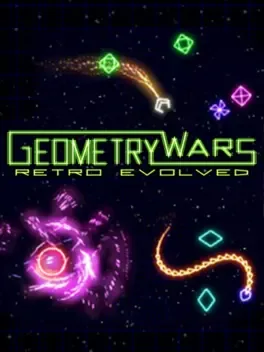
Geometry Wars: Retro Evolved is a old school style shooter, but remixed for the 21st century with next generation graphics and deep, modern gameplay. Playing is simple: you are a geometric "ship" trapped in a grid world, facing off against waves of deadly wanderers, snakes, and repulsars. Your aim is to survive long enough to set a high score!
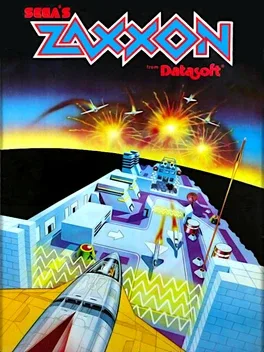
Zaxxon is a 1982 isometric shooter arcade game developed and released by Sega. The game gives the player the experience of flying a fighter craft through a fortress while shooting at enemy entities (missiles, enemy gunfire, etc.) The object of the game is to hit as many targets as possible without being shot down or running out of fuel, which can be replenished paradoxically, by blowing up fuel drums.

In this shoot 'em up the player has to fight off four assault waves consisting of different enemy types until he reaches a huge UFO. After destroying the protective plates guarding the UFO's pilot in his cockpit the player can kill the pilot. The game starts anew with harder enemies.
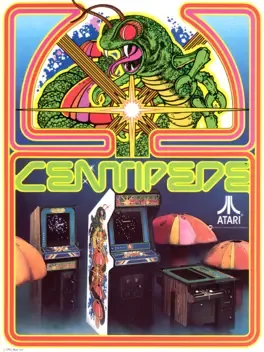
Centipede is a vertically-oriented shoot 'em up arcade game produced by Atari, Inc. in 1980. The game was designed by Ed Logg along with Dona Bailey, one of the few female game programmers in the industry at this time. It was also the first arcade coin-operated game to have a significant female player base. The player defends against swarms of insects, completing a round after eliminating the centipede that winds down the playing field.
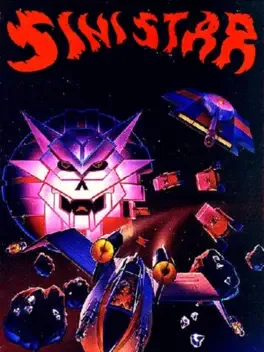
The player pilots a lone spacecraft, and must create "Sinibombs" by shooting at drifting planetoids and catching the crystals that are thereby released. Sinibombs are needed to defeat the game boss, Sinistar, an animated spacecraft with a demonic skull face. Sinistar does not exist at the start of the game, and is continuously under construction by enemy worker ships. Though time is crucial, attempting to mine too quickly will destroy a planetoid without releasing any crystals. Enemy worker ships are also gathering crystals (often stealing them from the player) which they use to construct the Sinistar. Enemy warrior ships can directly attack the player's ship. The player is given a head-start before the enemy ships have enough crystals to begin construction. Game ends when the player's ships are all destroyed. Once the Sinistar is completely formed, a digitized voice makes various threatening pronouncements, including "Beware, I live!," "I hunger, coward!," "I am Sinistar!," "Run! Run! Run!," "Beware, coward!", "I hunger!," "Run, coward!," and a loud roaring sound. The Sinistar has no weapon attacks, but if it contacts the player's ship while it darts about the playfield, the player's ship will be "eaten" and destroyed. A total of 13 Sinibombs are required to destroy a fully built Sinistar, although an incomplete Sinistar can be damaged to slow construction. Each short-range Sinibomb automatically targets the Sinistar when fired, but can be intercepted by a collision with an enemy ship, enemy fire, or a planetoid. The player moves from one zone to the next each time he defeats the Sinistar. A sequence of four zones repeats continuously after the first zone. Each is named for the most numerous feature of that zone: Worker Zone, Warrior Zone, Planetoid Zone, and Void Zone (the Void Zone is especially difficult because it has very few planetoids). Beginning with the first Worker Zone, a completed but damaged Sinistar can be repaired/rebuilt by the enemy ships by gathering more crystals, extending its "lifespan" if the player is unable to kill it quickly.
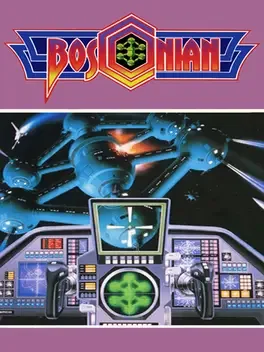
The object of Bosconian is to score as many points as possible by destroying enemy bases and ships. The player controls a small fighter ship that can move in eight directions and can fire both forward and backward. Each level consists of a number of green space stations that must all be destroyed to advance to the next level (a semi-transparent mini-map helps identify their location). Each station consists of six cannons arranged in a hexagon, surrounding a central core. The player must either destroy all six cannons or shoot the core to destroy a station, and in later levels the core is capable of defending itself. Additionally, the player must avoid or destroy asteroids, mines, and a variety of enemy missiles and ships that attempt to collide with the player's ship. Enemies occasionally launch formation attacks — destroying the leader causes all remaining enemies to disperse, but destroying all enemies in a formation scores extra bonus points. A spy ship (worth a random bonus value) also appears occasionally, which must be destroyed or the enemies will go berserk.
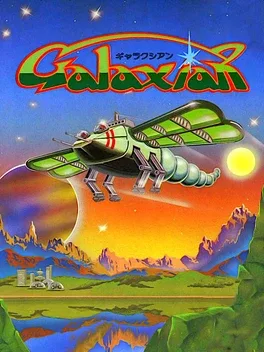
Galaxian is a shooter arcade game developed by Namco in 1979. It was released by Namco in Japan and a few months later by Midway Games in North America. The game was developed to compete with Taito Corporation's Space Invaders, released a year earlier, and featured a similar space theme. The player controls a space ship in the bottom part of the screen and shoots at enemies descending from the top of the screen. The game was received very well by the public and has continued to be a game with a competitive community to this day. It was followed by a successful sequel called Galaga in 1981 and two less known sequels called Gaplus in 1984 and Galaga '88 in 1987. Galaxian was one of the most popular games in the golden age of arcade video games.
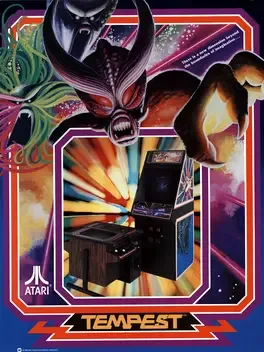
Tempest is a 1981 arcade game by Atari Inc., designed and programmed by Dave Theurer. It takes place on a three-dimensional surface, sometimes wrapped into a tube, which is viewed from one end and is divided into a dozen or more segments or lanes. The player controls a claw-shaped spaceship (named Blaster) that crawls along the near edge of the playfield, moving from segment to segment. Tempest was one of the first games to use Atari's Color-QuadraScan vector display technology. It was also the first game to allow the player to choose their starting level (a system Atari dubbed "SkillStep"). This feature increases the maximum starting level depending on the player's performance in the previous game, essentially allowing the player to continue. An official port was released for the Atari ST. An official port that bears the Atari logo was released by Superior Software for the BBC Micro and Acorn Electron in 1985, and another by Electric Dreams for the ZX Spectrum and Amstrad CPC in 1987. Versions for the Atari 2600 and 5200 were in the works in Atari, Inc. during 1984, and unfinished prototypes exist for both of them.
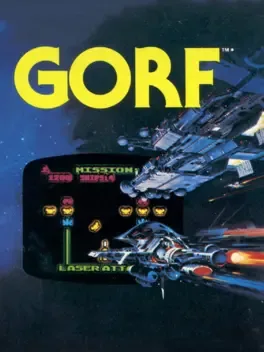
Gorf actually consists in the Arcade version of five different types of space shooters. The first one ist basically is a Space Invaders clone. In the second one a formation of space ships is hovering at the top of the screen while single space ships will disengage from the formation and dive down at you. The third variant is a Glaxian clone and only available in the Arcade version. In the fourth mini-game the enemy will come out of a circular hyperspace field and attack you. After having destroyed four of your attackers the game proceeds to the fifth game stage. Here a huge mothership is dropping bombs at you from the top of the screen. You defeat the mothership with a well placed projectile hitting it between its two major sections. After that the game starts from the gebinning on a higher difficulty level.