
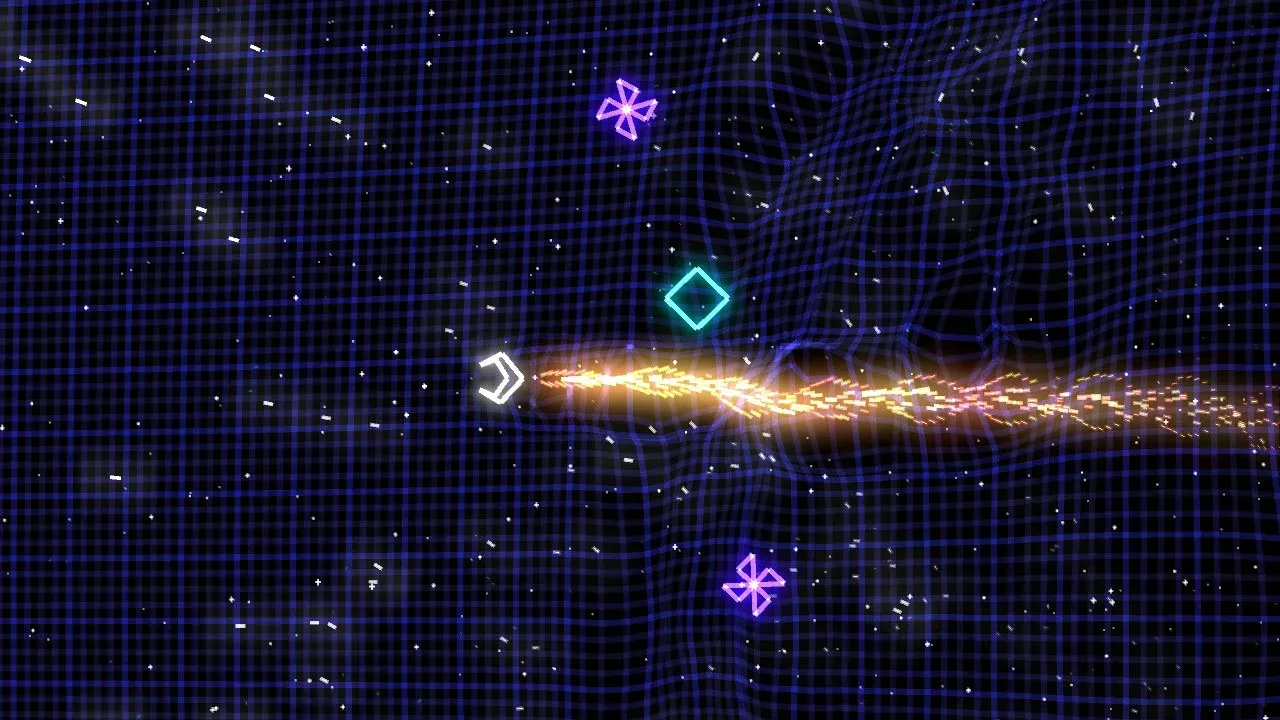
Geometry Wars: Retro Evolved


Buy
Part of collection:
Geometry Wars
(last 3 games)
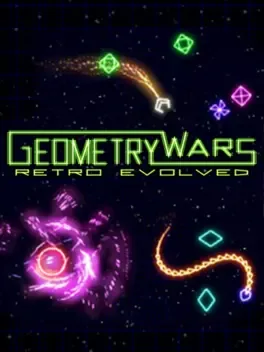
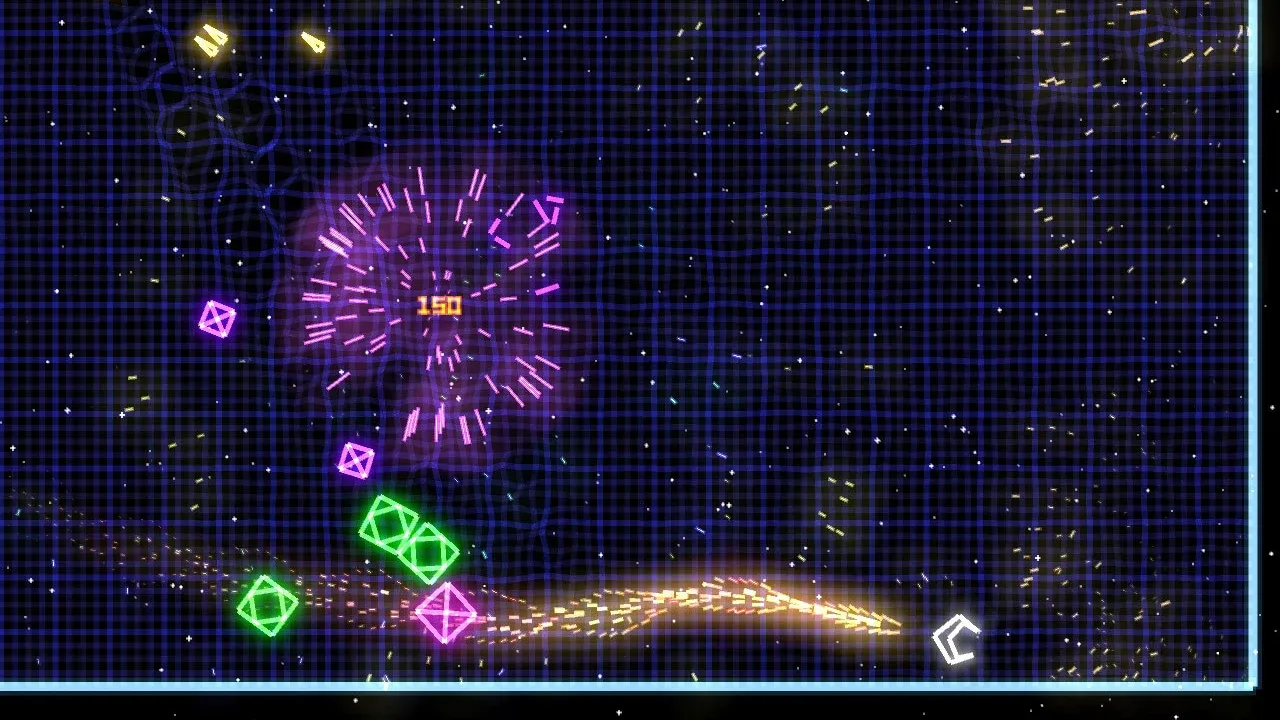
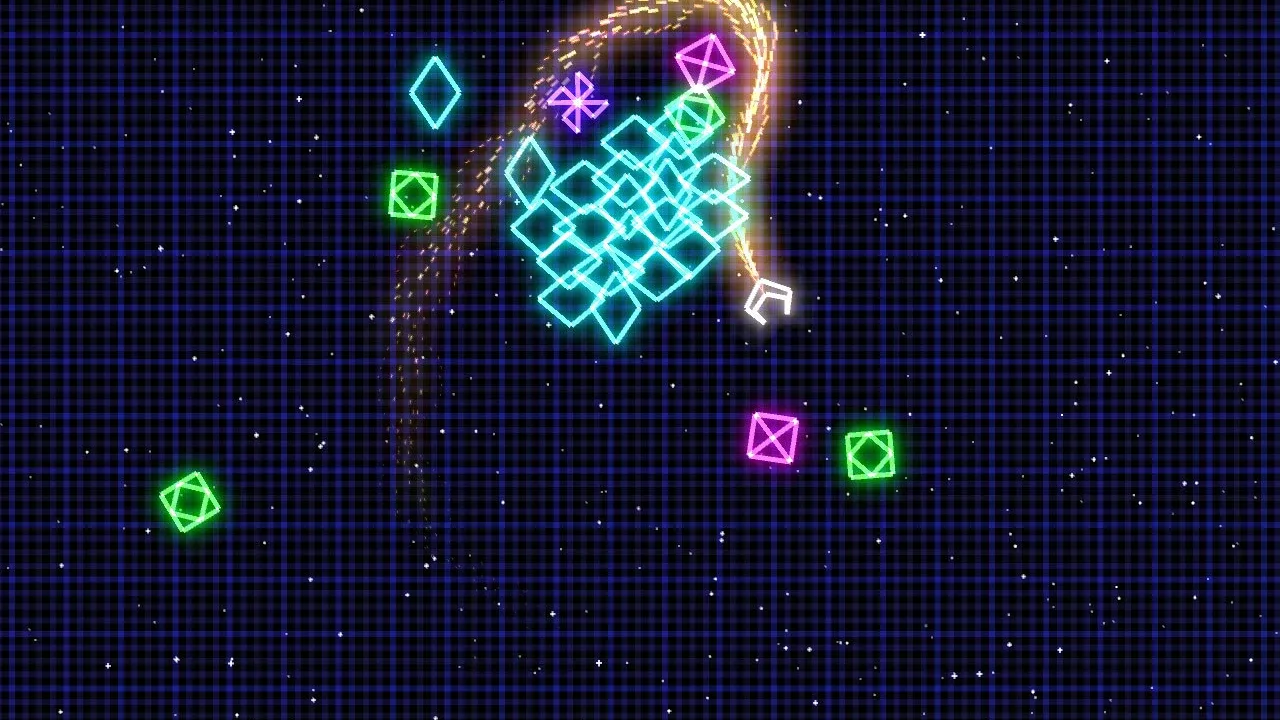
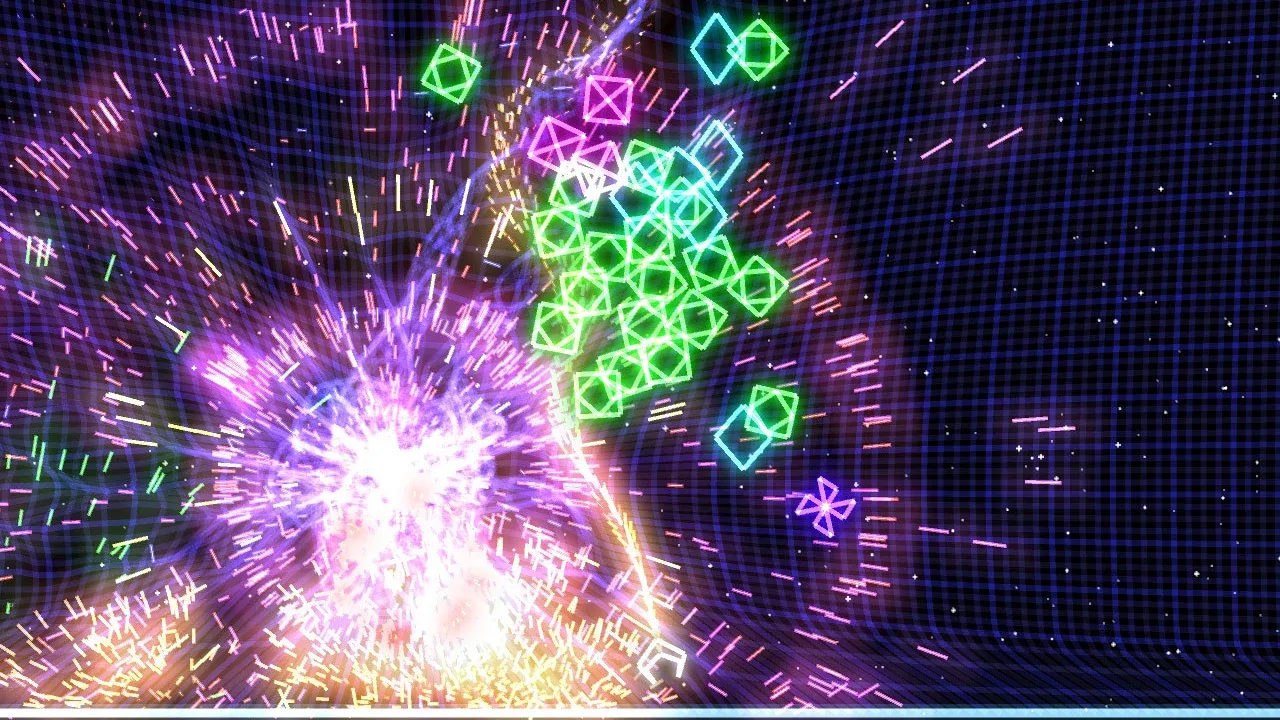
Enjoy the next chapter in the award-winning Geometry Wars franchise and battle through waves of enemies on 3D grids in this frenetic arcade shooter! The game has over 50 single player levels including Adventure and Classic Arcade modes, 3D grids and over 10 battle modes and 4 unique companion drones. Enjoy both cooperative and Online Competitive Multiplayer modes!
Experience the full evolution of the award-winning Geometry Wars franchise and battle through waves of enemies on 3D grids in this frenetic arcade shooter! Geometry Wars 3: Dimensions Evolved includes all of the great content & features from Geometry Wars 3: Dimensions and more.

Bizarre Creations' dual-joystick shooter for the iPhone and iPad.
Could be interesting
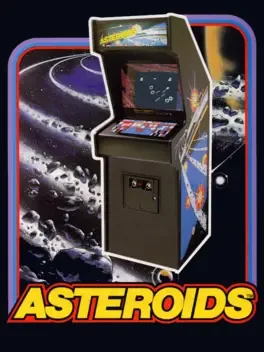
Asteroids is an arcade space shooter released in November 1979. The player controls a spaceship in an asteroid field which is periodically traversed by flying saucers. The objective of the game is to destroy both, asteroids and saucers. The triangular ship can rotate left and right, fire shots straight forward, and thrust forward. Once the ship begins moving in a direction, it will continue in that direction for a time without player intervention unless the player applies thrust in a different direction. The ship eventually comes to a stop when not thrusting. The player can also send the ship into hyperspace, causing it to disappear and reappear in a random location on the screen, at the risk of self-destructing or appearing on top of an asteroid.
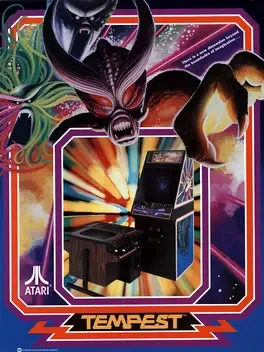
Tempest is a 1981 arcade game by Atari Inc., designed and programmed by Dave Theurer. It takes place on a three-dimensional surface, sometimes wrapped into a tube, which is viewed from one end and is divided into a dozen or more segments or lanes. The player controls a claw-shaped spaceship (named Blaster) that crawls along the near edge of the playfield, moving from segment to segment. Tempest was one of the first games to use Atari's Color-QuadraScan vector display technology. It was also the first game to allow the player to choose their starting level (a system Atari dubbed "SkillStep"). This feature increases the maximum starting level depending on the player's performance in the previous game, essentially allowing the player to continue. An official port was released for the Atari ST. An official port that bears the Atari logo was released by Superior Software for the BBC Micro and Acorn Electron in 1985, and another by Electric Dreams for the ZX Spectrum and Amstrad CPC in 1987. Versions for the Atari 2600 and 5200 were in the works in Atari, Inc. during 1984, and unfinished prototypes exist for both of them.
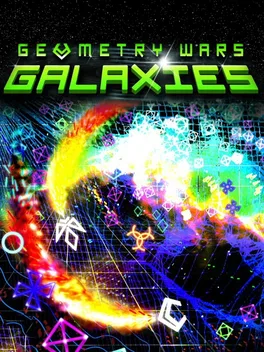
Geometry Wars: Galaxies is set in a space-like environment where the player must shoot geometrical shapes in order to score points, gain lives, acquire bombs and survive as long as possible. The game is played to an upbeat electro soundtrack.
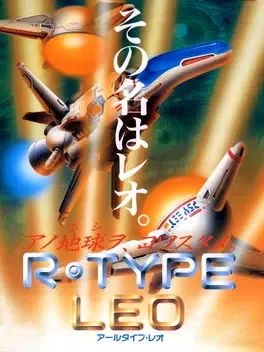
R-Type Leo is a horizontally scrolling shooter arcade game. It is a spin-off of the R-Type series and the last entry to be released in Arcades. R-Type Leo was initially an original shoot 'em up game in development by Nanao before Irem retooled it into an R-Type project instead. It is also the first R-Type game to feature simultaneous two player gameplay.
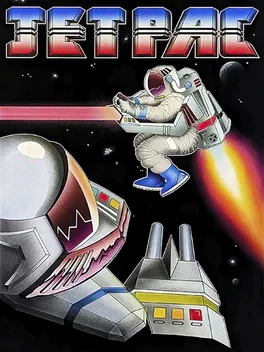
The 'Acme Interstellar Transport Company' is delivering spaceship kits to various planets in the solar system throughout the Galaxy; and as chief test pilot, all you have to do is assemble the Rockets, and thrust on to your next destination. As you don't often get the chance of a free trip across the Galaxy, this is a great opportunity to get rich! Stop off on several planets on your journey, collect the odd sack of precious gems, elements or gold, and take them back with you. Sounds simple doesn't it! But before you make yourself the richest person in the whole Universe, remember to refuel your Spaceship - with 6 fuel pods - every time you land on a planet. Any other goodies you collect are yours to keep. Upon landing, you will find yourself equipped with the very latest Hydrovac Jet Pac, which can automatically air lift almost any rocket stage, fuel pod or valuables that you care to land upon, and release them over the rocket ship base. Don't forget your mega-powerful, Quad Photon Laser Phasers can blast any nasty, mean aliens who might object to your visit.
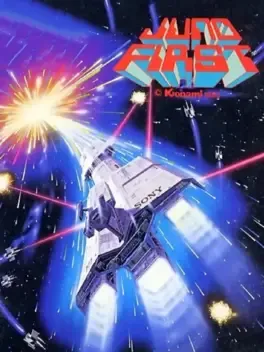
Juno First is a shoot 'em up originally developed and published by Konami Corporation for Arcades. The game was later published by Mylstar Electronics (US arcades), Datasoft Inc. (Atari 8-bit, PC Booter, and Commodore 64), and Sony Computer Entertainment Japan (MSX). Juno First is a top down, vertical scrolling shooter in which there is a limited amount of time to defeat the enemies in each wave. The players spaceship starts out with a laser that has a longer reach than the enemy weapons. The enemies start out firing a few bullets at the ship but the amount enemy fire rapidly increases as players progress through to the next waves. Certain enemies fire tracking missile-like projectiles that can shoot additional bullets.
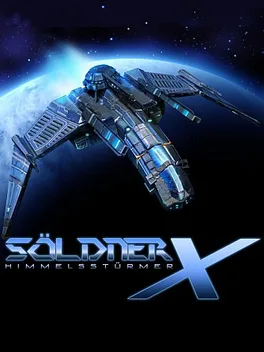
The celestial planet Conceyta orbits with its moon in a dust- and gas-covered solar system. Within lurks an evil unknown to man that bears a danger so much greater than any threat yet witnessed. A dark, mysterious power has manifested itself in the depths of the gas giant, absorbing life and technology, and assimilating all in its wake. Spacecraft, pilots, androids, and computers: Nothing is safe. No one can escape the virus that infects all life forms, turning once brave heroes and peaceful colonists alike into ravaging, chaotic forces, fighting each other and infecting more in the process. Soulless technology and hate-driven humanoids are all that's left of Earth's once-proud fleet. The galaxy as we know it is threatening to fall apart. War, death, and bedlam have taken hold of civilisation. Humankind is at the brink of extinction. Those who aren't yet infected--the resistance, a band of mercenaries, soldiers and civilians--are Earth's final hope, and they have one goal in common: To stop the deadly infection and destroy the core of all evil, hidden in the depths of Conceyta. Scouts have undertaken a merciless mission to bring detailed plans and data on the location of the power and its defence line in a last attempt to save humankind. So it has come to be that the last remaining pilot, a mercenary and bounty hunter, is the only chance of survival, ironically driven by the desire for wealth and fame. Left with little choice, the resistance has developed a star fighter capable of intercepting the evil force, equipped with a deadly weapon system and of utmost agility. With no time to lose, the 10th and final prototype of the ship is handed to the pilot. Its name: "Sldner-X". Should the pilot succeed, his name shall live on in the memories of man forever to come. And so the battle begins.

In this shoot 'em up the player has to fight off four assault waves consisting of different enemy types until he reaches a huge UFO. After destroying the protective plates guarding the UFO's pilot in his cockpit the player can kill the pilot. The game starts anew with harder enemies.
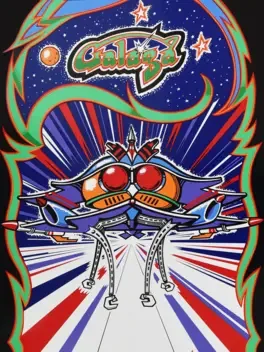
The objective of Galaga is to score as many points as possible by destroying insect-like enemies. The player controls a starfighter that can move left and right along the bottom of the playfield. Enemies swarm in groups in a formation near the top of the screen, and then begin flying down toward the player, firing bombs at the fighter. The game ends when the player's last fighter is lost, either by colliding with an enemy or one of its bullets, or by being captured. Galaga introduces a number of new features over its predecessor, Galaxian. Among these is the ability to fire more than one bullet at a time, a count of the player's "hit/miss ratio" at the end of the game, and a bonus "Challenging Stage" that occurs every few levels, in which a series of enemies fly onto and out of the screen in set patterns without firing at the player's ship or trying to crash into it. These stages award a large point bonus if the player manages to destroy every enemy. Another gameplay feature new to Galaga is the ability for enemies to capture the player's fighter. While the player is in control of just one fighter, a "boss Galaga" (which takes two shots to kill) periodically attempts to capture the fighter using a tractor beam. If successful, the fighter joins the enemy formation. If the player has more lives remaining, play resumes with a new fighter. The captured fighter flies down with the enemy that captured it, firing upon the player just like normal enemies, and can be shot and destroyed. The player can free the fighter by destroying the boss Galaga while in flight, causing the captured fighter to link up with the player's current fighter, doubling his or her firepower but also making a target twice as large. Galaga has an exploitable bug that can cause the attackers to stop firing bullets at the player, due to a coding error. In addition, similar to the famous "Split-Screen bug" in Pac-Man, a bug exists in Galaga in which the game "rolls over" from Level 255 to Level 0. Depending on the difficulty setting of the machine, this can cause the game to stall, requiring that the machine be reset or power-cycled in order to start a new game.
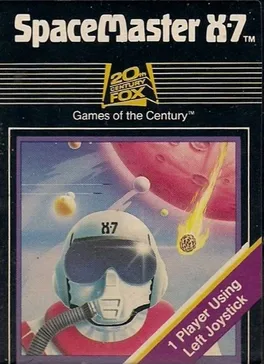
Your assault ship was specially designed to destroy Hyperion Military Bases. Destroy as many as possible. You can fire missiles in the gaps in the Force Field or from inside the Force Field. If you are able to sneak inside, you must quickly destroy the bace before the Force Field closes on your ship. This is no easy task!