
Galaxian3


Buy
Parent game
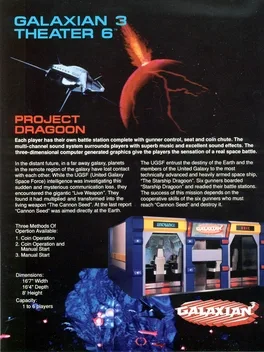
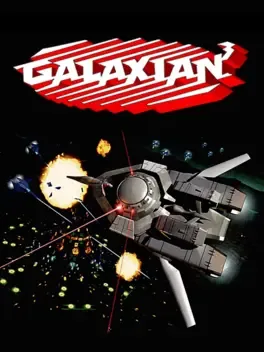
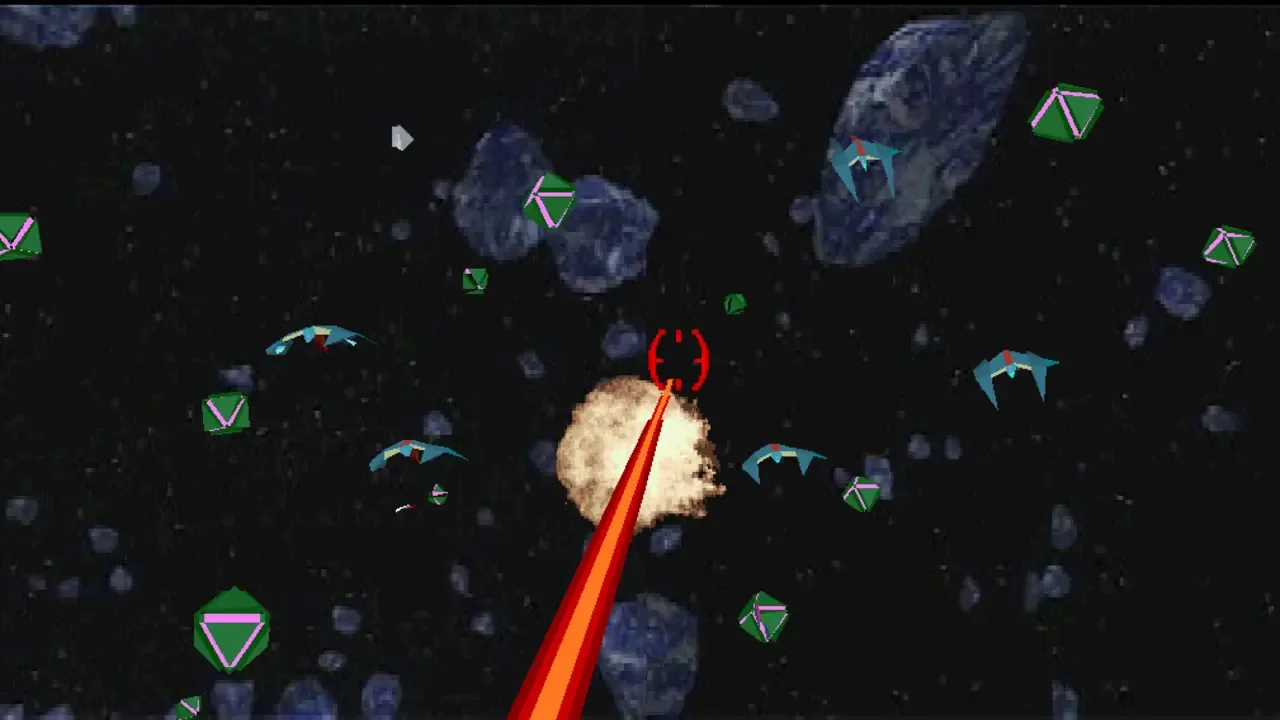
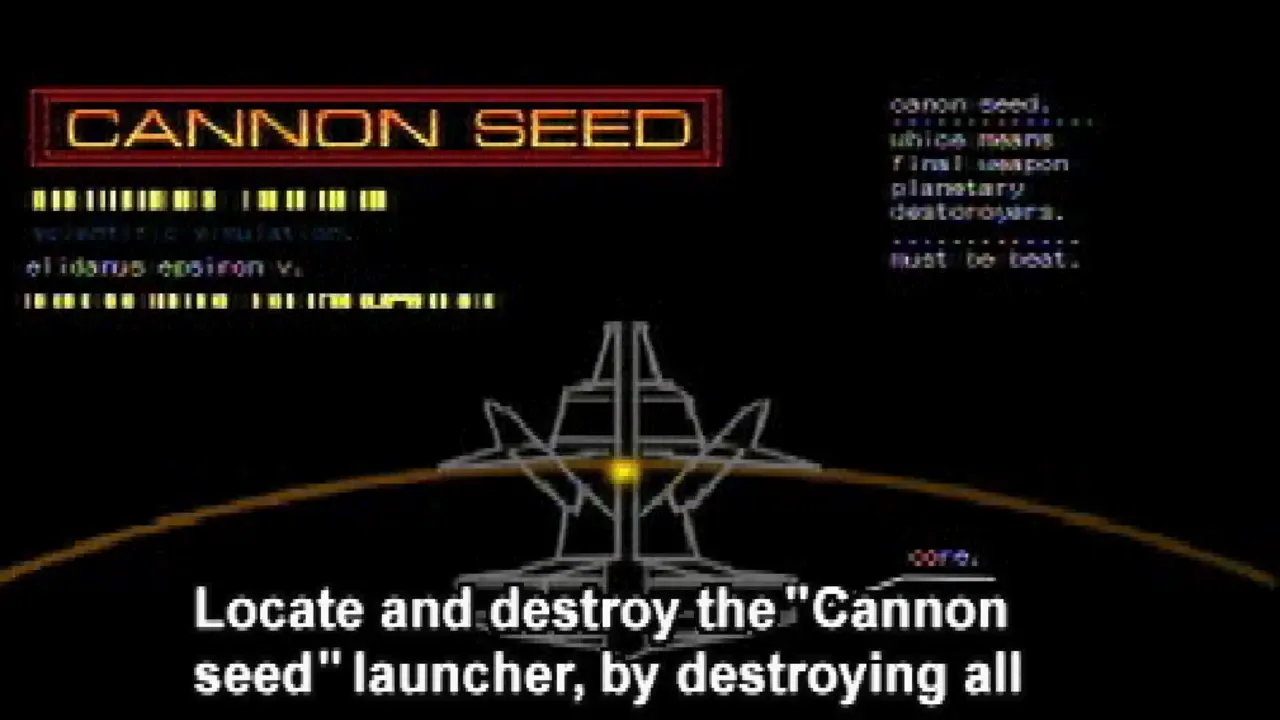
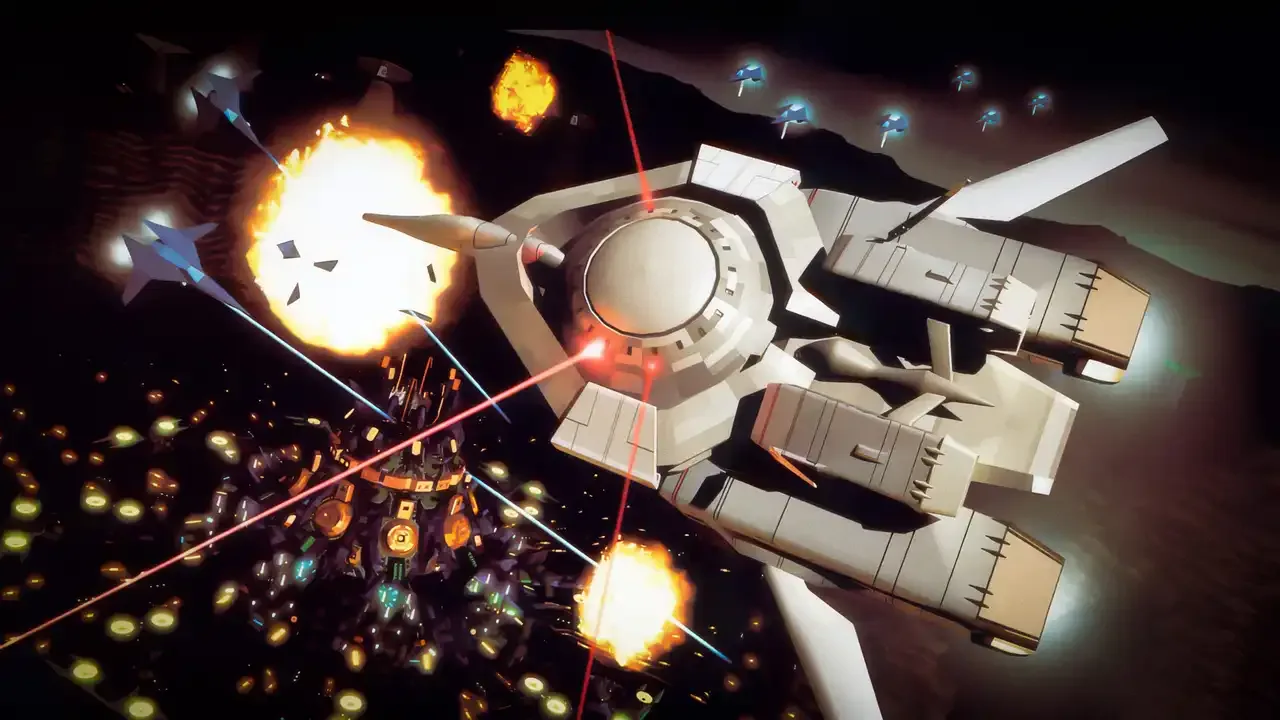
Galaxian3: Project Dragoon is a 3D rail shooter video game developed and published by Namco. It was originally a theme park attraction designed for the International Garden and Greenery Exposition (Expo '90) in Japan, and was later released as an arcade game in 1992. The game involves players controlling a starship named the Dragoon in its mission to destroy Cannon Seed, a superweapon set to destroy what is left of the human race.
Part of collection:
Galaxian
(last 3 games)
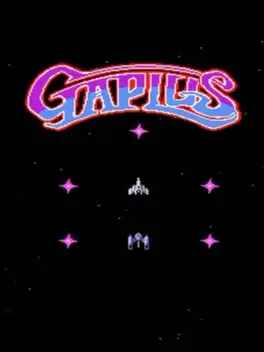
A port of Gaplus developed by M2 for the NES capabilities, released in Namco Museum Archives (Namcot Collection).
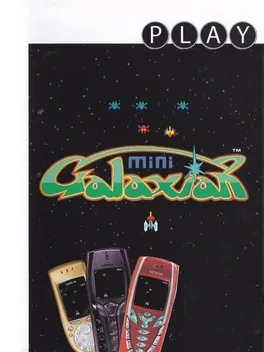
"Miniature" remake of Galaxian. Gameplay involves shooting down small formations of diving enemies.
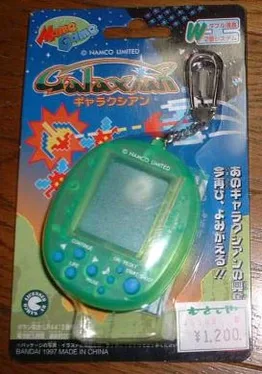
A port for handheld devices.
Part of franchise:
Galaxian
(last 3 games)
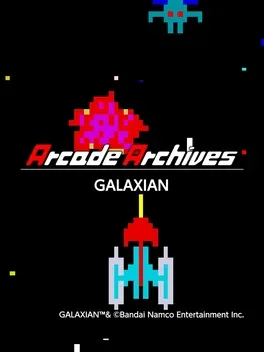
"Galaxian" is a shooting game released by Namco in 1979. You control a Galaxip and shoot aliens that approach you in eerie curves. Aliens during the assault double your score, and the flagship (Galboss) can be shot at in turn, starting with the escort (red alien), for a higher score. Deftly dodge enemy aliens and destroy the large formation.
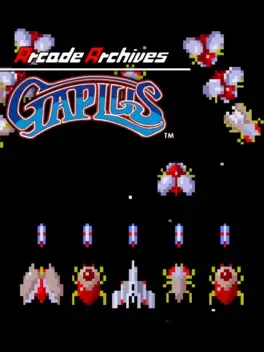
Strike back with powerful Blaster Head weapons!
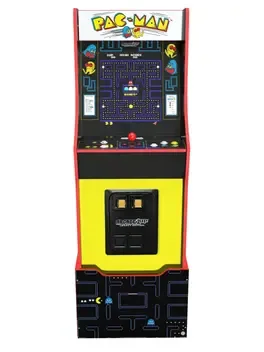
Pac-Man 12-in-1 Legacy Series is an arcade machine bundle by Arcade1Up that features various arcade games from Namco.
Could be interesting
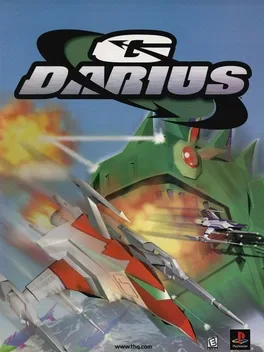
G-Darius is a shoot'em up arcade game, released by Taito in 1997. It is the fourth arcade installment of the Darius series and the first in the entire series to feature three-dimensional polygonal graphics. Much like previous installments in the Darius series, G-Darius is a two-dimensional horizontally scrolling shoot'em up set in a fictional future.
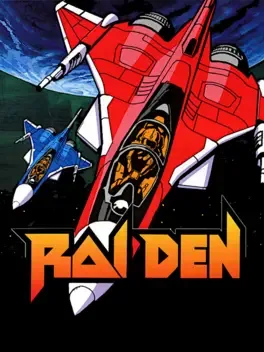
Raiden consists of eight vertical scrolling missions where the player maneuvers the Raiden craft dodging and destroying enemy robots, buildings, ground targets, and aircraft. There are bombs and missile powerups as well as collectable medals which add to the score. When player dies, the fighter's fragments become projectiles that damage enemies. After defeating the Stage 8 boss, the mission is completed, and player receives 1 million points for each completed loop. Afterwards, it will start back to Stage 1. This time around, enemies shoot faster and at a more rapid rate.

Sonic Wings Special is a 1996 vertical-scrolling shoot 'em up that combines the features in Sonic Wings, Sonic Wings 2, and Sonic Wings 3. It was ported to arcade as Sonic Wings Limited. The home console version adds new characters and endings, new bosses, updated graphics and unlockable planes. There are also Time Attack and 2-player modes. The game uses a branching stage system, so it is impossible to see all levels in one sitting. There is a total of 14 playable characters and many different endings (some of which are reused from previous games in the series). Overall the game has a comic feel. As of Summer 2012, the Android version of Sonic Wings Special has only 4 playable characters with 4 endings and 9 stages. However, the publisher is planning to add further elements of the original version.
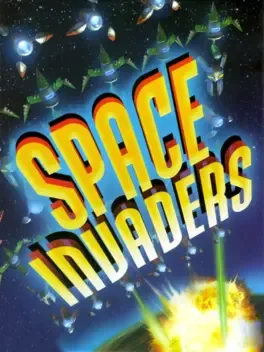
Space Invaders is a game in which the player controls a laser cannon by moving it horizontally across the bottom of the screen and firing at descending aliens. The aim is to defeat five rows of eleven aliens—some versions feature different numbers—that move horizontally back and forth across the screen as they advance towards the bottom of the screen. The player defeats an alien, and earns points, by shooting it with the laser cannon. As more aliens are defeated, the aliens' movement and the game's music both speed up.
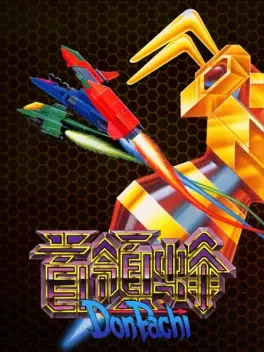
DonPachi is a 1995 vertical manic shoot-'em-up originally in arcades and was the first game from the developer Cave. Settings are mainly woodland and enemies are military vehicles and robots, culminating in the final boss, a huge robotic bee. One of three weapon configurations is chosen at start and then leveled up through dropped power-ups. DonPachi was ported to the Sega Saturn and Sony Playstation in 1996.
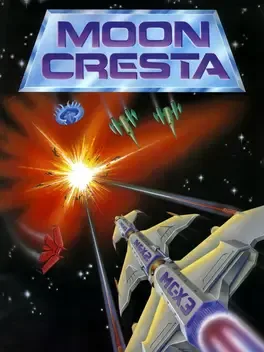
Moon Cresta is an arcade game released in 1980 by Nichibutsu. A moving starfield gives the impression of vertical scrolling, but the game is a fixed shooter in the vein of Namco's Galaxian. Incentive Software published a version of this arcade game for many 8-bit home computers of the time. Dempa also released a port of both Moon Cresta and Terra Cresta for the X68000. It was also released on the Wii Virtual Console in Japan on March 9, 2010 and PlayStation 4 (Arcade Archives) in 2014.
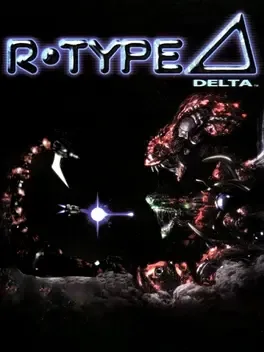
R-Type Delta is a horizontally scrolling shooter video game released only on the PlayStation. It is the fourth game in the R-Type series (hence Delta, the fourth letter of the Greek alphabet) and also the first game in the R-Type series rendered in full 3D graphics.
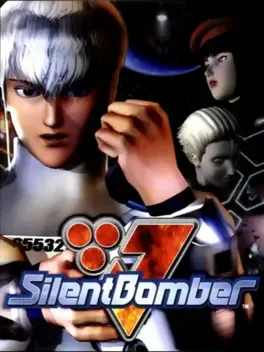
Silent Bomber is an old school style game which takes place in the future. You play as a character named Jutah Fate, a genetically engineered man created by the government. You're an expert at using bombs. You start out being able to set only a few bombs at a time, but eventually you can increase the number by collecting E-Chips. It's a fast paced game of blowing things up before they blow you up.
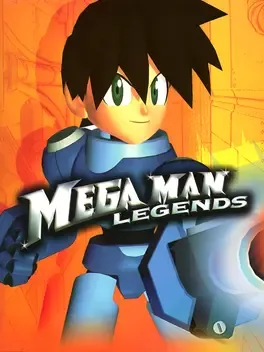
THE BLUE BOMBER BLASTS INTO A WHOLE NEW DIMENSION Mega Man blasts his way into the third dimension in an amazing new adventure. Mega Man Legends combines the best of classic Mega Man action with enormous bosses, a riveting storyline and all the depth of the hottest RPG. Explore vast 3-D worlds in your quest to find the treasure of all treasures, the Mother Lode. You'll love the new 3-D graphics, deadly weapons and non-stop action... unless of course, you're a boss. * Awesome Weapons! * Diabolical Bosses! * Legendary Gameplay! * Non-Stop 3-D Action!
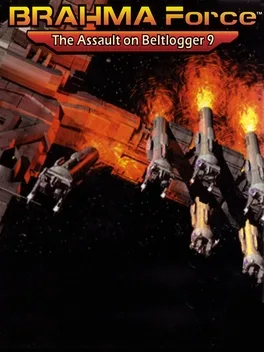
A mech-based FPS; pilot your Bipedal Robotic Assault Heavy Mechanized Armor (built by Bronx Industries, of course) through the Beltlogger 9 excavation colony... ...discover what happened to the Beltlogger 9 colony- it may be related to the events on Probe Ship Mina 3, wherein a lone person apparently under the control of an outside intelligence slaughtered his shipmates.