
Hyper Crazy Climber




Buy
Part of collection:
Crazy Climber
(last 3 games)
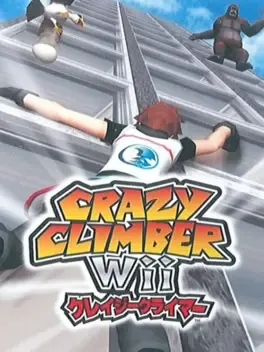
Crazy Climber Wii brings motion control climbing to the arcade classic franchise.
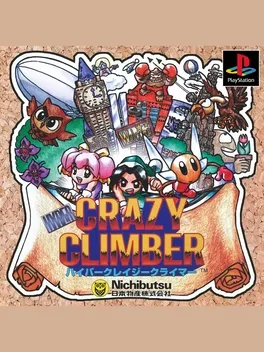
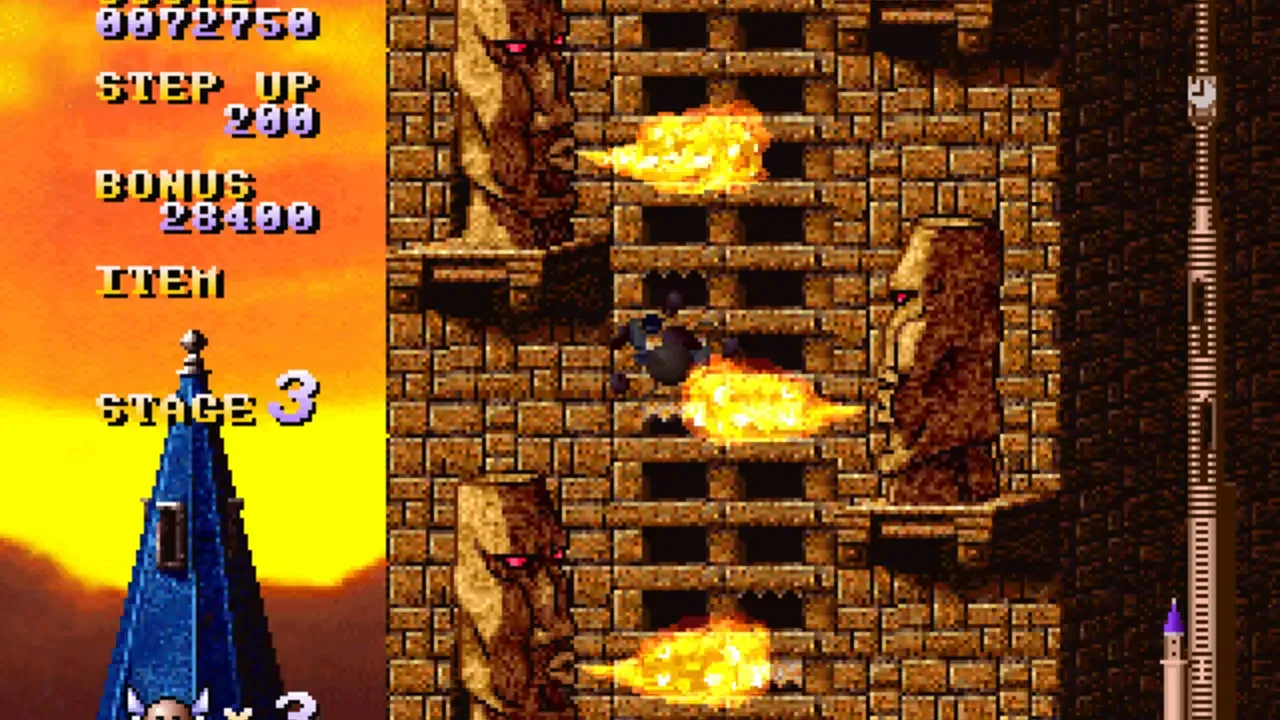
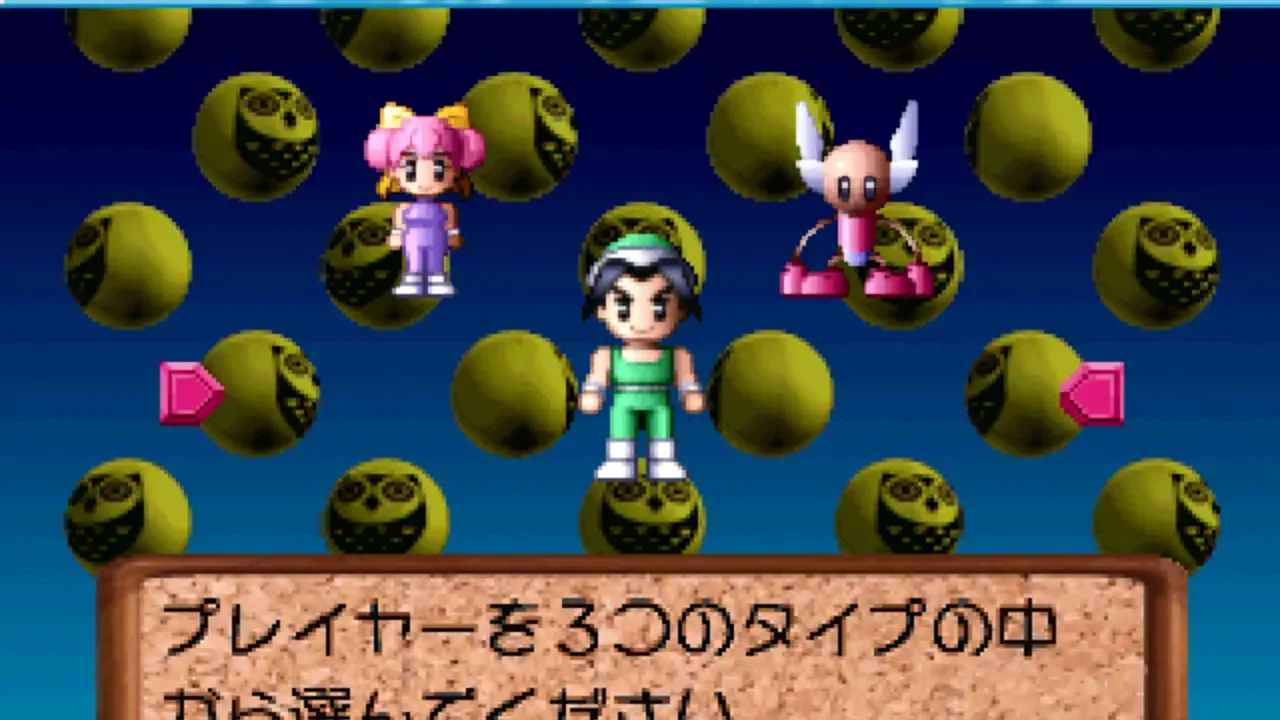
Hyper Crazy Climber, a PlayStation game based on Nichibutsu's cult classic Crazy Climber, melds the climbing play mechanic of its arcade ancestor with the trappings of Mario-era 2D adventure titles. At the beginning of the game, players choose one of three characters: a human boy or girl, or an insect-like climber. Each has different levels of climbing speed and endurance (which measures how many hits they can take from falling objects before losing their grip). The basic gameplay of climbing structures is the same, though Hyper Crazy Climber has numerous different settings, including an abandoned clock tower, a misty mountain, and even a giant beanstalk, all rendered with some excellent foreground and background graphics. All of these structures have convenient grids on them, analogous to the windows of the original Crazy Climber. Hyper Crazy Climber doesn't offer much of a chance to stop and drink in that nicely drawn scenery, though there are many new dangers, ranging from the original game's nuisance of people throwing objects, to deadly avalanches of large boulders which can dislodge the climber with a single hit. The object of the game is to survive these various levels and settings to reach the final level with its prerequisite boss showdown. The original Crazy Climber is also included with the new version.
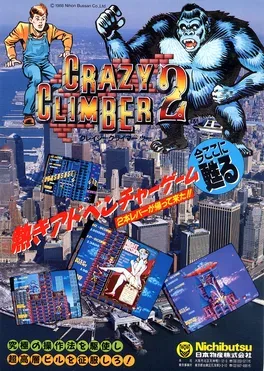
Crazy Climber 2 (クレイジークライマー2?) is a 1988 arcade game developed and published by Nichibutsu. It is the sequel to the 1980 arcade game Crazy Climber. The gameplay is mostly identical to that of its predecessor, but there some significant differences. Unlike its predecessor, Crazy Climber 2 was only released in Japan.
Could be interesting

R4: Ridge Racer Type 4 is the fourth game in the Ridge Racer series. It includes eight tracks (with reverse variants, for a total of 16 layouts) and 321 vehicles, all of which are fictional. This iteration was one of the first PlayStation titles to feature Gouraud shading on polygons, giving the game a visual depth that was previously missing. It was also the first Ridge Racer game on the system to feature two-player split-screen mode and offered two different driving models.

Published in 1993, the original Super Sidekicks (known as Tokuten Ou, "Goal-Scoring King" in Japan) was SNK's first soccer video game. It features 12 teams divided into two groups which compete for the "SNK Cup" (the main differences between teams is their formations on the field): Group A: Germany, Italy, Spain, England, Mexico, Japan Group B: Argentina, Holland, Brazil, France, United States, South Korea The players' team plays against all the others in their group, then it goes into an elimination tournament's semifinals and then the final to win the cup. There was also a hidden feature in the game, which wasn't documented, and affects a single player game. During a free kick for the CPU if the player has tapped button A for player two, the CPU performs a short-shot, while pressing the button A performs a longer kick.

Suikoden is a Japanese-style role-playing game with several unusual additions. There are three kinds of combat in the game, the most common one being the traditional turn-based party combat (players can have up to six people in their active party). Magic runes can be equipped on the player's characters which allow limited usage of offensive and healing spells. There are also a few army battles, where the player must control whole units of fighters, archers, magicians, etc., and one-on-one fights (duels).
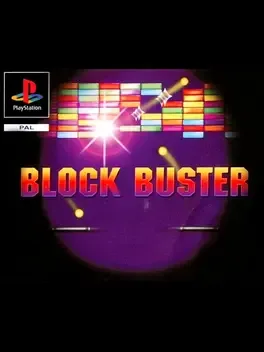
Block Buster (or Block Kuzushi or Simple 1500 Series vol.014 - The Block Kuzushi in Japan) is a good breakout game that can be played by 2 players in cooperative or VS mode. The game offers some interesting special moves like the one in which you can hit the ball with effect pressing a buttom. There are 3 different game modes: Attack mode, Endless mode & VS mode. With roots in the classic Breakout game from a few decades ago, Block Kuzushi continues where Arkanoid left off and updates the theme with colorful jewels to hit in addition to the standard rows of bricks. During the course of play, weapon upgrades may be picked up such as multiple balls, shooting power and other brick bashing powerups. Roaming objects on-screen may deflect your ball so watch out for surprise changes in trajectory when these nuisances are afoot. 60 levels of cleverly designed boards (and some not so clever ones) should hold your attention for a few hours.Show less
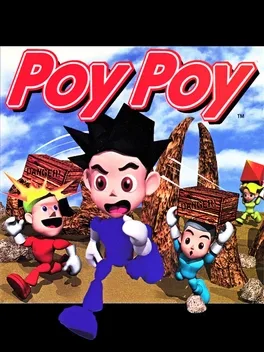
Poy Poy is a multiplayer party game at heart. Grab a multi-tap and four friends and take part in an ultimate battle of skill and wit. The idea is to be the last man standing in this arena based combat game. But don't worry if you can't find a multi-tap or four friends. There's plenty of AI characters to battle in various tournament modes and you can also play a 2 player deathmatch (with or without computer opponents). If it sounds fun now, wait 'till you play it... Set in seven different 3D environments strewn with throwable objects, the game challenges you to a match against three other opponents armed with logs, rocks, ice blocks, and atomic bombs. If you run out of stuff to throw, you can toss your opponents around too. Each hit drops your life meter, so be careful who you pick a fight with.

Sonic Wings Special is a 1996 vertical-scrolling shoot 'em up that combines the features in Sonic Wings, Sonic Wings 2, and Sonic Wings 3. It was ported to arcade as Sonic Wings Limited. The home console version adds new characters and endings, new bosses, updated graphics and unlockable planes. There are also Time Attack and 2-player modes. The game uses a branching stage system, so it is impossible to see all levels in one sitting. There is a total of 14 playable characters and many different endings (some of which are reused from previous games in the series). Overall the game has a comic feel. As of Summer 2012, the Android version of Sonic Wings Special has only 4 playable characters with 4 endings and 9 stages. However, the publisher is planning to add further elements of the original version.

PEAK PERFORMANCE is a racing game based on the Chevrolet Pikes Peak International Hill Climb. The signature course, Pikes Peak Hill Climb, is a solitary climb up a mountain, with more turns on one track than most have in an entire game. This track, as with half of the other four courses, features a combination of dirt and pavement in both urban and rural settings, providing enough variety and difficulty to keep things interesting. Each of the game's 25 cars has its own feel, giving the game a good amount of depth and keeping the replay value high. Each car can also be colored, named, and completely customized, right down to the wheels.
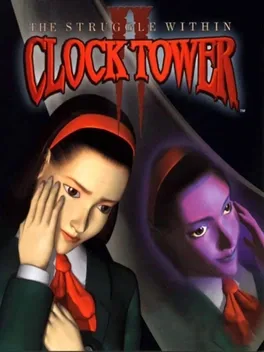
Clock Tower II: The Struggle Within, known as Clock Tower: Ghost Head in Japan, is a PlayStation point-and-click survival horror game and the third installment in the Clock Tower series. It was developed and published by Human Entertainment on March 12, 1998 in Japan and later published by Agetec on October 31, 1999 in North America. It was released as a PlayStation Classic on the Japanese PlayStation Network for PlayStation 3 on May 9, 2012. The game is a spin-off story with little to no connection to the story of the Barrows/Burroughs family or Scissorman, nor was Hifumi Kono involved with it. It does not take place in Europe as many of the others do; it takes place in Osaka, Japan. In the North American version, the setting was changed to Salinas, California, and the characters were given Westernized names. However, untranslated Japanese can be seen in the hospital entrance and even in the intro, there are Japanese-styled buildings, including a Shinto shrine. The game also contains various Japanese-styled rooms and samurai armor.
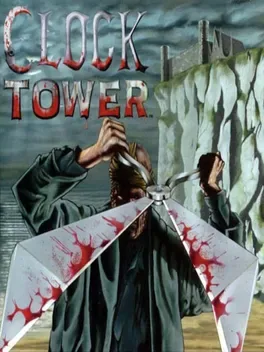
Clock Tower, known as Clock Tower 2 in Japan, is a PlayStation point-and-click survival horror game and a sequel to Clock Tower: The First Fear. One year after the events of Clock Tower: The First Fear, in late 1996, Jennifer Simpson has been adopted by Helen Maxwell, the assistant of a renowned psychiatrist, Samuel Barton, and is currently undergoing treatment at a university research building in Oslo, Norway, to help her cope with her traumatic experiences in the Clock Tower case and possibly shed some light on the mystery that was the Scissorman.
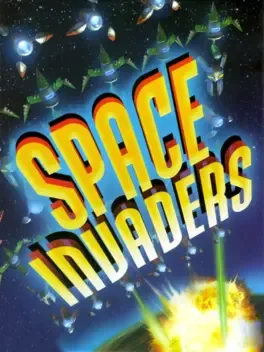
Space Invaders is a game in which the player controls a laser cannon by moving it horizontally across the bottom of the screen and firing at descending aliens. The aim is to defeat five rows of eleven aliens—some versions feature different numbers—that move horizontally back and forth across the screen as they advance towards the bottom of the screen. The player defeats an alien, and earns points, by shooting it with the laser cannon. As more aliens are defeated, the aliens' movement and the game's music both speed up.