
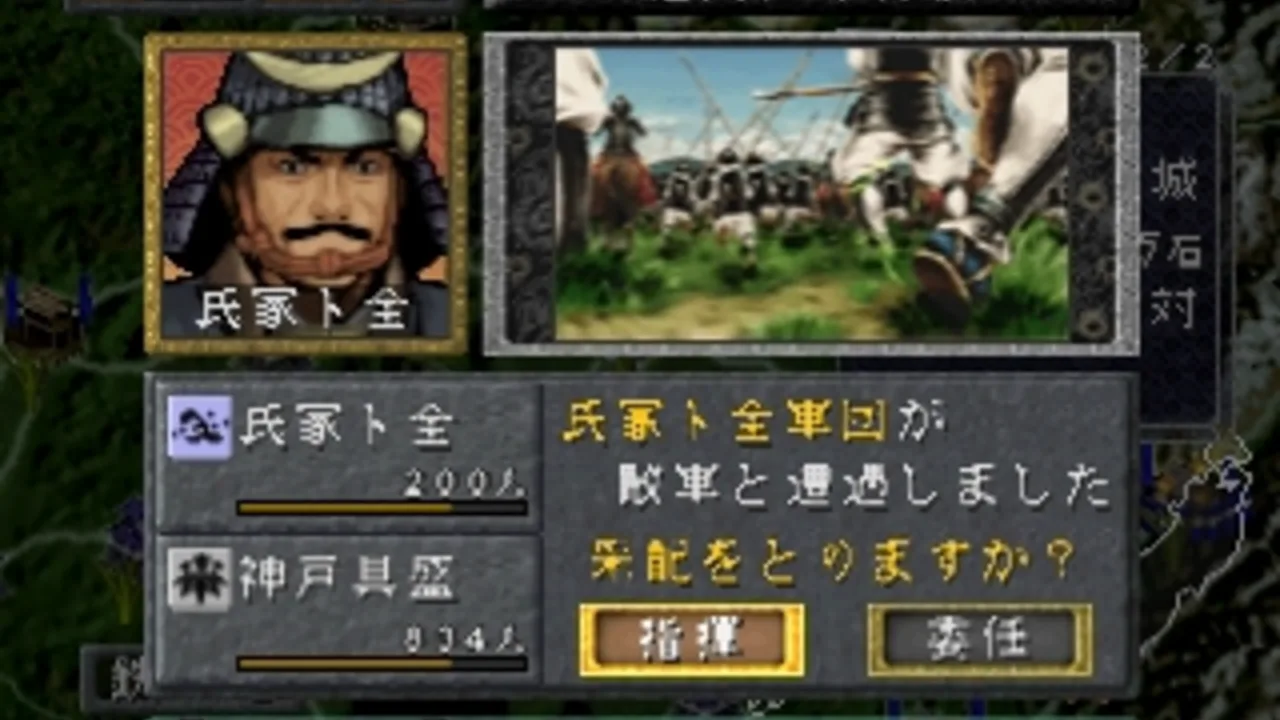
Sengoku Mugen



Buy
Could be interesting
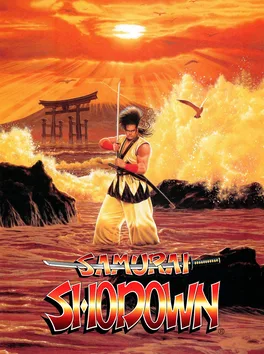
In early Japan, a man named Shiro Tokisada Amakusa preaches a heretic religion. Little does anyone know that Amakusa is really a servant of the evil Ambrosia, who took over Amakusa's body. Ambrosia wishes to shroud the world in darkness. Now, choose between 12 warriors (and 3 bonus characters) to fight for the honor of destroying Amakusa, and fulfilling a mission.
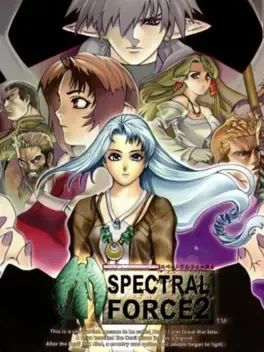
The sequel to Spectral Force is set in a fantasy world called Neverland. The ruler of Demon Kingdom was defeated by the hero Chiffon, leaving behind a son and a daughter, the children of his human wife. The two half-demons strive to regain the lost power. The sister Hiro re-builds the Demon Kingdom, while the brother Jadou finds a way to communicate with our world, and summons a Japanese schoolgirl who soon becomes a mighty warrior under his guidance.
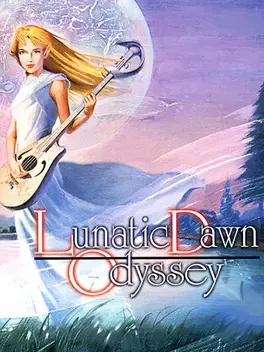
Lunatic Dawn Odyssey is a RPG in which the player controls a group of adventures that begina quest, they will go through different towns and other places. In their journeys they will face different kind of enemies and could talk to different characters and they can change their equipment in the shops. The game uses a first person perspective in the adventure part and a third person perspective in the battle part. The battle part is the classic turn based rpg style. The game features a high degree of freedom since the character can get married and have children and each time that the game is played the circunstances can changed so there are a lot of different endings.
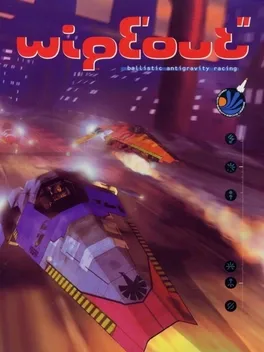
Wipeout is a racing game that is set in 2052, where players compete in the F3600 anti-gravity racing league. The game allows the player to pilot one of a selection of craft in races on several different tracks. There are four racing teams to choose from, and two ships for each team. Each ship has its distinct characteristics of acceleration, top speed, mass, and turning radius. By piloting their craft over power-up pads found on the tracks, the player can pick up various weapons and power-ups such as shields, turbo boosts, mines, shock waves, rockets, or missiles. The power-ups allow the player to either protect their craft or disrupt the competitors' craft.
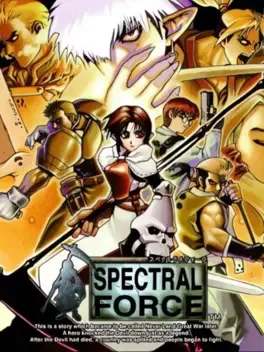
Spectral Force is the first in a long series of tactical role-playing games. This is a war simulation game set in "Neverland", where humans, gods, and the demon clans each wage war over the continents for their own visions of unity.
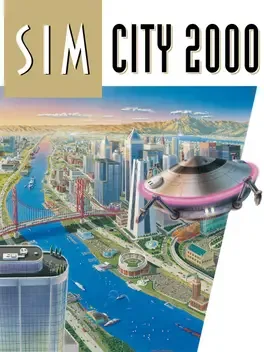
It has all the features, flexibility, art, animation, and power you need to create an environment of your dreams. Choose from a selection of bonus cities and scenarios to rule or ruin as you please. Build schools, libraries, hospitals, zoos, prisons, power plants, and much more... Lay down roads, railways, and highways. Explore the underground layer and build subways and utilities without compromising your aesthetics. Customize different buildings or design your own graphics sets from scratch. This is the ultimate classic Maxis city-building and management simulation. If this game were any more realistic, it'd be illegal to turn it off!
Should you enter Tecmo's Deception you should be warned! You must decide who lives and who dies. As in life, Tecmo's Deception will hold you responsible for your actions. Everything you do, everywhere you go, everyone you meet has a reason. Are you seeking revenge, resurrection, or redemption? It's your decision.
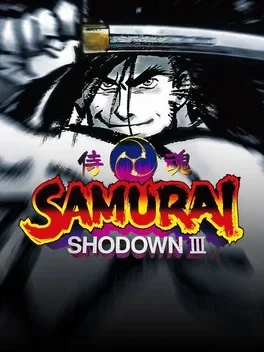
Samurai Shodown III was to be the start of a bold new direction for the franchise. The most obvious difference between this game and the others in the series is the notably darker aesthetic. The more light-hearted characters (Earthquake, Cham Cham, and Gen-an to name a few) from the previous games have been excised, and even the kabuki master, Kyoshiro Senryo, received a redesign, transforming him from a flamboyant stage performer into a grim-faced, muscular man. All of the characters have been completely redrawn. The animation is very smooth for all characters, another departure from the graphical style of the second game.
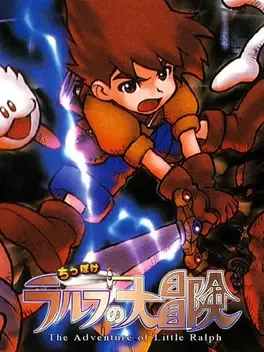
The Adventure of Little Ralph is a 2D platformer. In this game the player controls Ralph, who has been turned back into a child by the evil demons who have invaded his homeland. In order to stop them and return to his former self, he must get through each area filled with enemies, traps, and many hidden routes. Ralph is armed with swords and various magic powers and also has the assistance of a small furry companion. The game's levels are interconnected, unlike the "stages" of most other platform games.
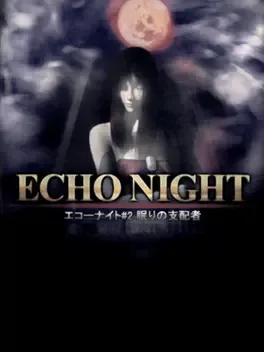
Echo Night 2: Nemuri no Shihaisha is a first person adventure. Like the first game, Echo Night 2 is played from a first-person perspective, but unlike most other first-person games there is no use of firearms in the game. When confronted by a ghost the player must turn on the lights in the room by means of a light switch. The player is often transported into the past via the passengers or certain objects. Once the player fulfills a task important to a spirit they will vanish and drop an "Astral Piece" which can be used to get a different ending scene.