
StarBlade


Buy
Could be interesting
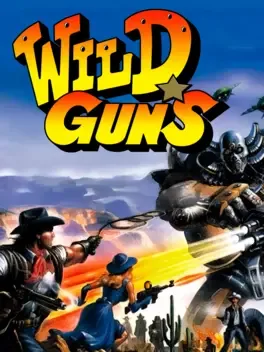
Released in 1994, Wild Guns is a shooting gallery video game for the Super Nintendo Entertainment System, developed by Natsume. Its setting is a unique blend of the Wild West, steampunk, and science fiction. The narrative revolves around Annie and Clint, a bounty hunter duo on a quest for vengeance after Annie's family is killed. Players can choose to control either Annie or Clint, navigating through the foreground, avoiding enemy fire, and taking down hostile robots in the background. This gameplay combines elements from third-person shooters and light gun games.
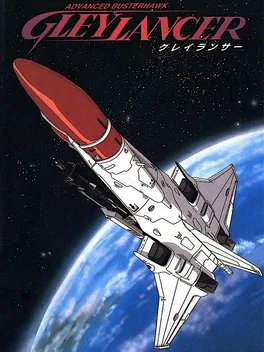
Advanced Busterhawk Gley Lancer, commonly known as Gleylancer (グレイランサー), is a 1992 Sega Mega Drive shoot-'em-up by NCS released exclusively in Japan (despite having some of its text, such as in the Mover configuration screen described below, in near-perfect English). It was released internationally on the Wii Virtual Console in 2008. Despite the English configuration screen, translation group M.I.J.E.T. released a patch which translated the story text in 2006-2007. Lucia is the 16-year-old daughter of a fighter pilot who disappears while fighting a war between humans and aliens in 2025. He was captured by aliens whom he had captured earlier who had the ability to teleport. Lucia hijacks the prototype fighter CSH-01-XA "Gley Lancer" to save him.
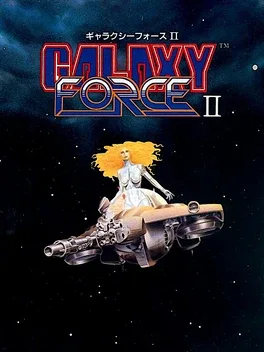
The peaceful and prosperous solar system Junos was located at the end of the Milky Way. Those who called its five planets home had no idea what was about to happen... Halcyon, ruler of the Fourth Empire, had Junos marked as its final target in the galactic massacre, and had sent the bulk of his attacking force in with a single purpose – the elimination of all life forms in the system, and the construction of a gigantic fortress on each of the five planets from which to rule the galaxy. Galaxy Force II is not a true sequel to the orginal game but a an enhanced version of the original. It was released roughly two months after the release of the first part thus making it obsolete.
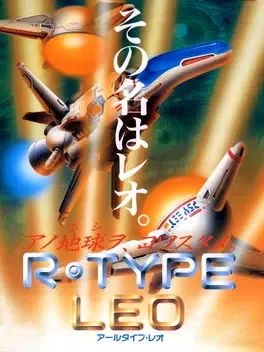
R-Type Leo is a horizontally scrolling shooter arcade game. It is a spin-off of the R-Type series and the last entry to be released in Arcades. R-Type Leo was initially an original shoot 'em up game in development by Nanao before Irem retooled it into an R-Type project instead. It is also the first R-Type game to feature simultaneous two player gameplay.
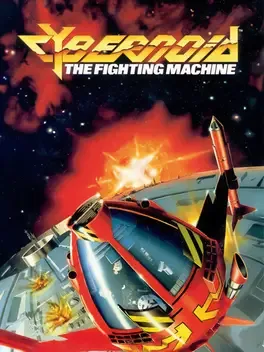
Cybernoid: The Fighting Machine is a shoot 'em up developed and published in 1987 by Hewson Consultants for the ZX Spectrum, and was then ported to the Amstrad CPC, Atari ST, Commodore 64, NES, and Amiga. It was programmed by Raffaele Cecco. The Sinclair ZX Spectrum and Atari ST versions featured a main theme by Dave Rogers, while the Commodore C64 version (later released on the Wii's Virtual Console service) featured a completely different theme by Jeroen Tel.
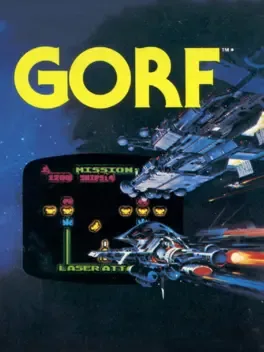
Gorf actually consists in the Arcade version of five different types of space shooters. The first one ist basically is a Space Invaders clone. In the second one a formation of space ships is hovering at the top of the screen while single space ships will disengage from the formation and dive down at you. The third variant is a Glaxian clone and only available in the Arcade version. In the fourth mini-game the enemy will come out of a circular hyperspace field and attack you. After having destroyed four of your attackers the game proceeds to the fifth game stage. Here a huge mothership is dropping bombs at you from the top of the screen. You defeat the mothership with a well placed projectile hitting it between its two major sections. After that the game starts from the gebinning on a higher difficulty level.
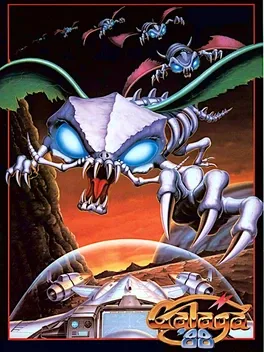
The gameplay in Galaga '88 is built on the same premise as that of the original Galaga game, but is in many ways more complex and more difficult. The game is divided into a series of 29 Stages distributed through eight Worlds. The starship Galaga accelerates between Stages and Worlds and even to higher dimensions (go to the section on Dimensional Travel below to find out more). With the exception of the third and eighth, each World culminates in a Challenging Stage. There are six such stages to engage in any full game, and each begins with the on-screen announcement "That's Galactic Dancin'!" and has its own YM2151-generated song to which the enemy formations dance. In any given Challenging Stage, both the design of the enemies and their dancing formations shall vary according to the player's current Dimension. As in Galaga, the objective is to destroy all forty enemies before they fly away off the screen. However, refraining completely from touching any controls for the duration of a Challenging Stage awards a "secret bonus" ranging in value from 10000 to 25000 points, and equal to the "special bonus" which would have been awarded for destroying all forty enemy aliens instead. Galaga '88 introduces a variety of new enemies and behaviors. Most of these special enemies are worth varying amounts of bonus points when destroyed. Some enemies can combine into larger enemies which take multiple hits to destroy, while others arrive in eggs, explode in a shower of fireworks, grow with multiple hits, or sport armor which makes them invincible while in formation. Certain enemies drop small formations of tiny creatures that wiggle their way down the screen, and still others can act as escorts to incoming groups of enemies and then quickly dive at the player before leaving the game. Most stages also include various obstacles which appear once the enemy formation has been assembled. These can be destroyed with either one or several shots, and the first one on each stage will leave a "Warp Capsule". At the start of the game, the player can select how many Galaga starships to start with (one or two), affecting their number of remaining lives. The game ends after the final boss is defeated (or when the player's last ship is destroyed or captured) - in the latter case, the player can continue the game for an additional credit. The Game Over screen shows the player's hit-miss ratio and a visual representation of their progress. If the player reaches Stage 27, the game also shows a picture of the final boss (damaged if defeated, but silhouetted if not). If the arcade operator has set the "continue" option to "on", the player also cannot continue if he is defeated on Stages 27-29.
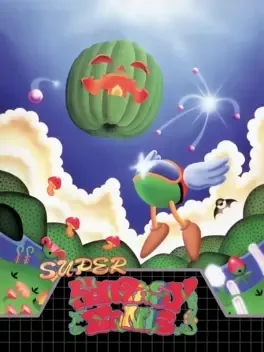
Super Fantasy Zone is an entry in the Fantasy Zone series of games, and was initially released in 1992 for the Sega Mega Drive. Unlike previous outings, Super Fantasy Zone was handled entirely by Sunsoft (under license from Sega), who had previously brought Fantasy Zone and Fantasy Zone II to the Nintendo Famicom. For unknown reasons the game was not released in cartridge form in North America, but is currently unconfirmed as being a Sega Channel title. It eventually saw a more widespread release as part of the Wii's Virtual Console service.
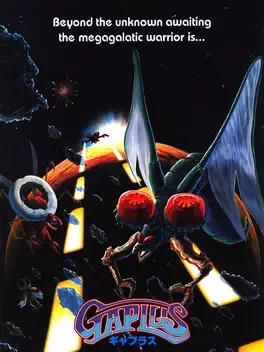
Gaplus is a fixed shooter arcade game that was released by Namco in 1984. It was the only other game to run on Namco Phozon hardware, and in the US, a modification kit was later released to change the name to Galaga 3, possibly to increase recognition among fans of the games even though there was no "Galaga 2". Since Gaplus is a sequel to Galaga, it has similar gameplay. The player controls a spaceship, that can now move vertically (limited to halfway up the screen, much like Atari's Centipede) as well as horizontally, and shoots at swarms of incoming insect-like aliens which fly in formation above it and swoop down to attack it in akamikaze-like dive. In this sequel, the level starts over if the player gets killed before all the enemies have come in. When all enemies are killed, the player moves on to the next level. By obtaining certain powerups, it is possible to shoot sixty bullets per screen, the most any Galaxian-related game has.
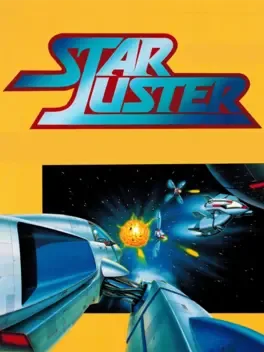
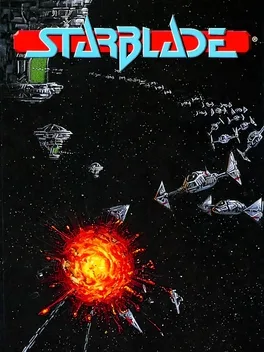
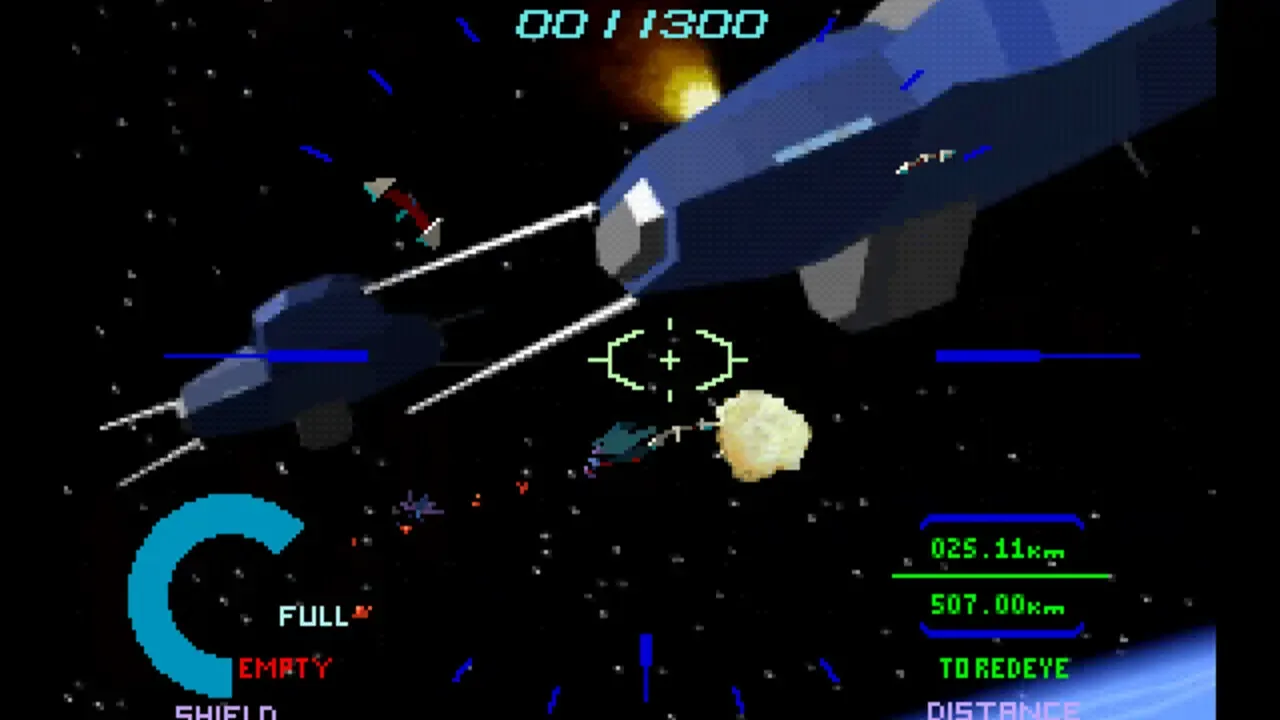
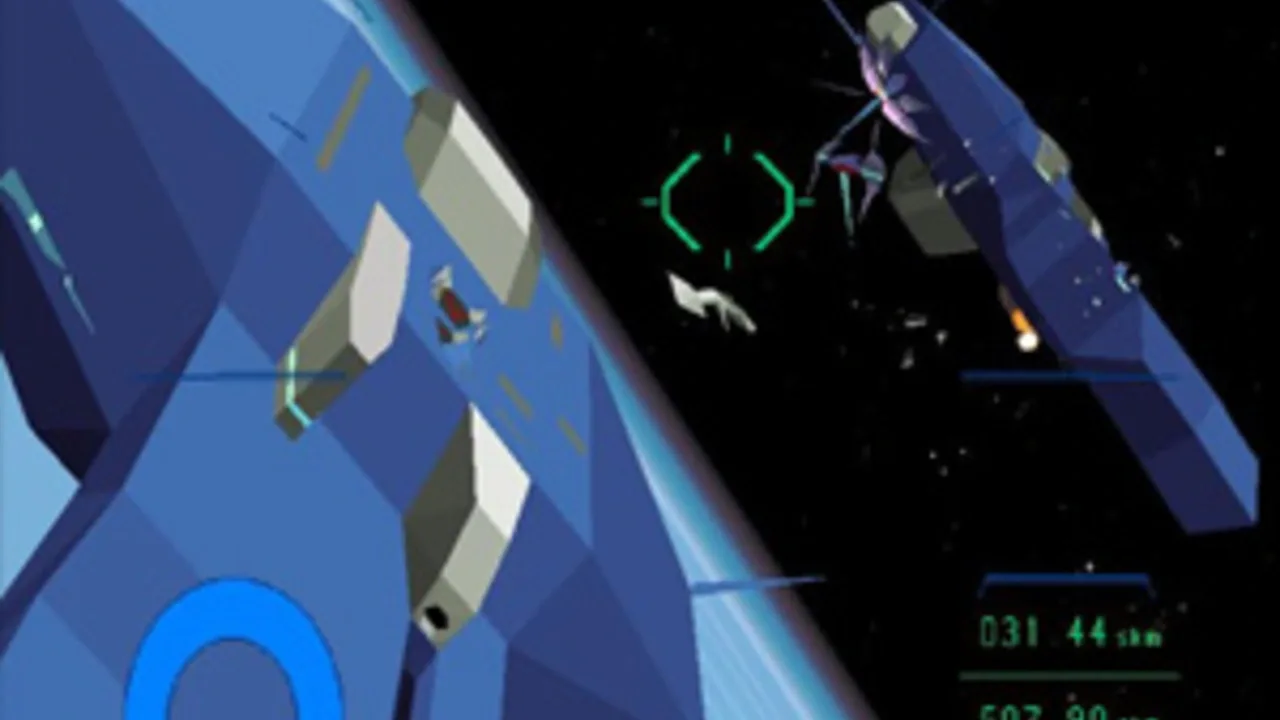
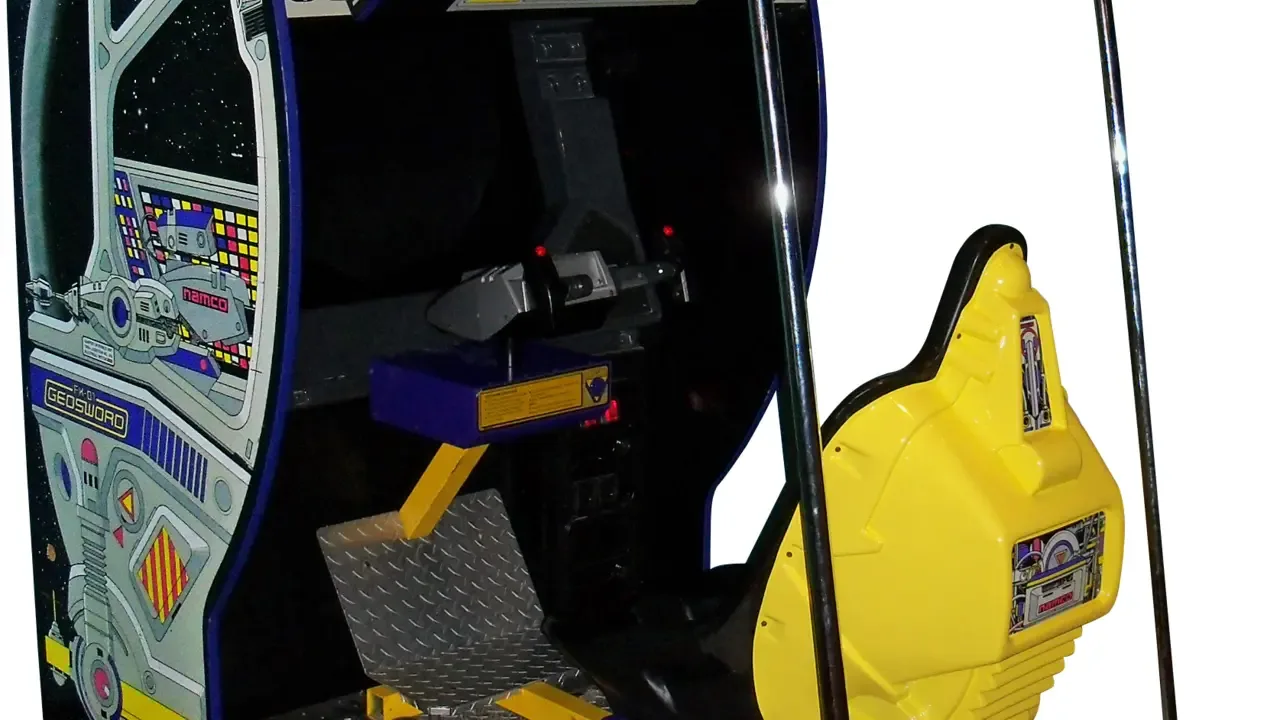
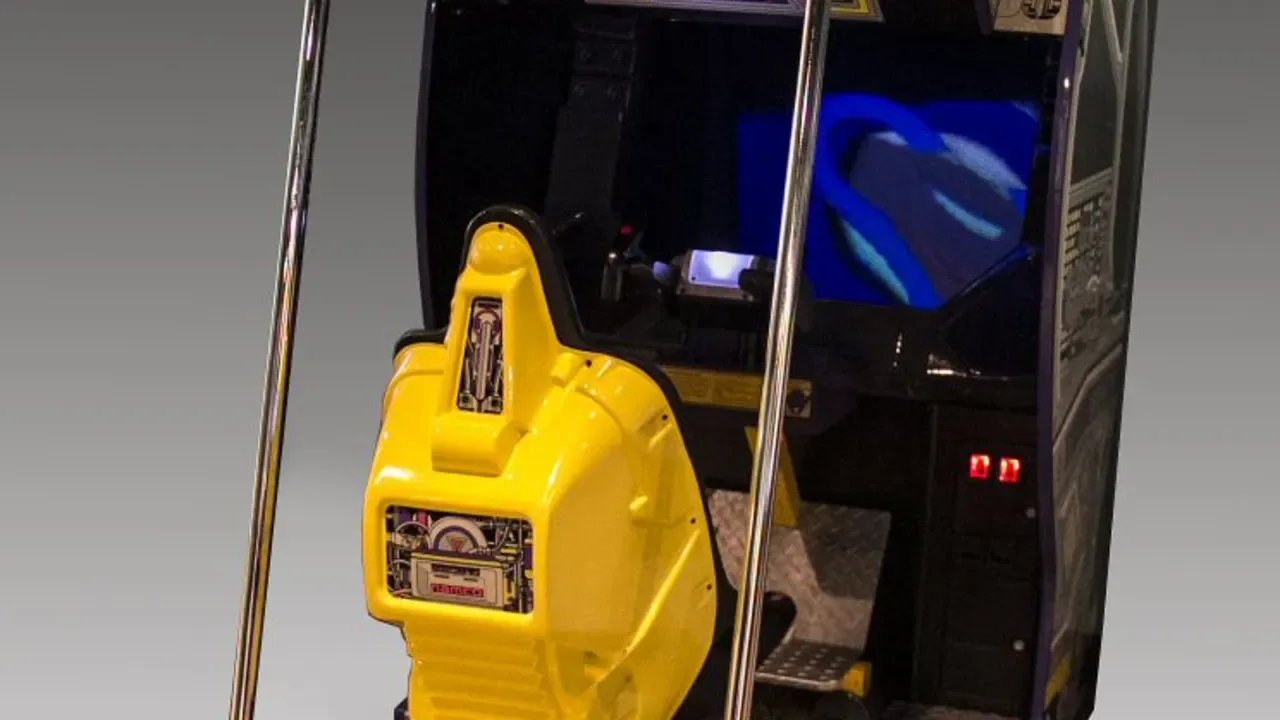
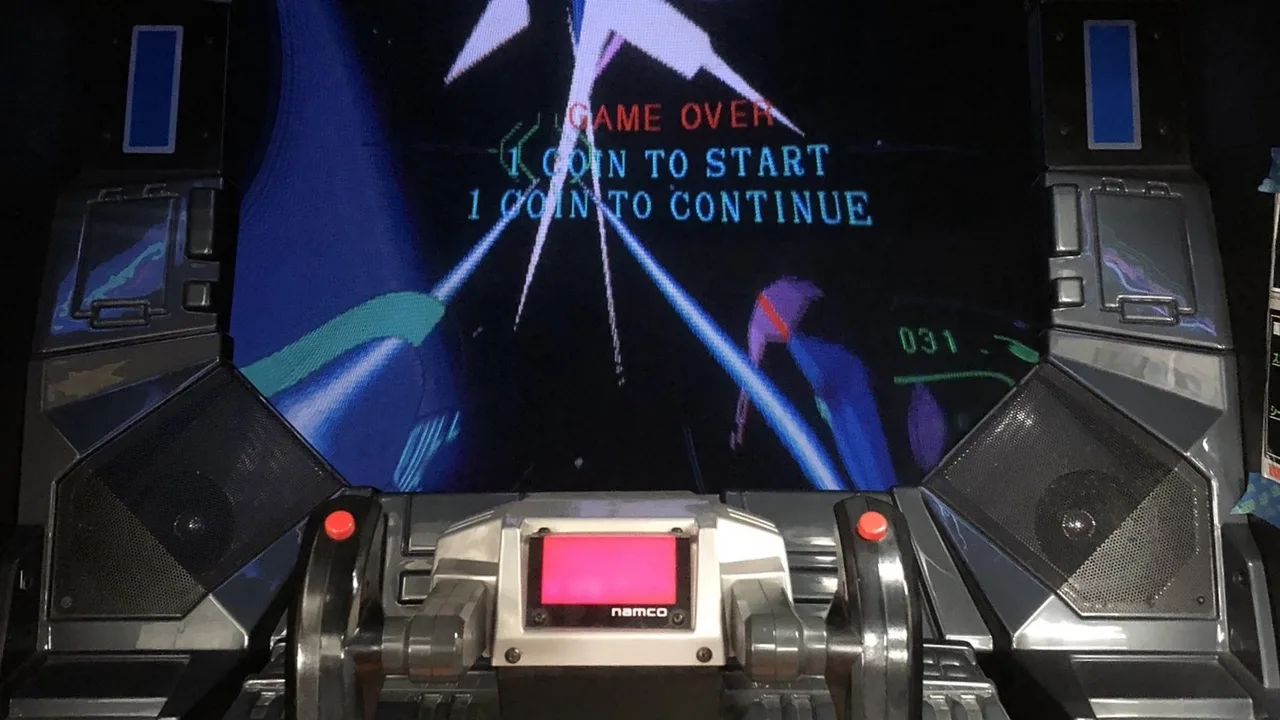
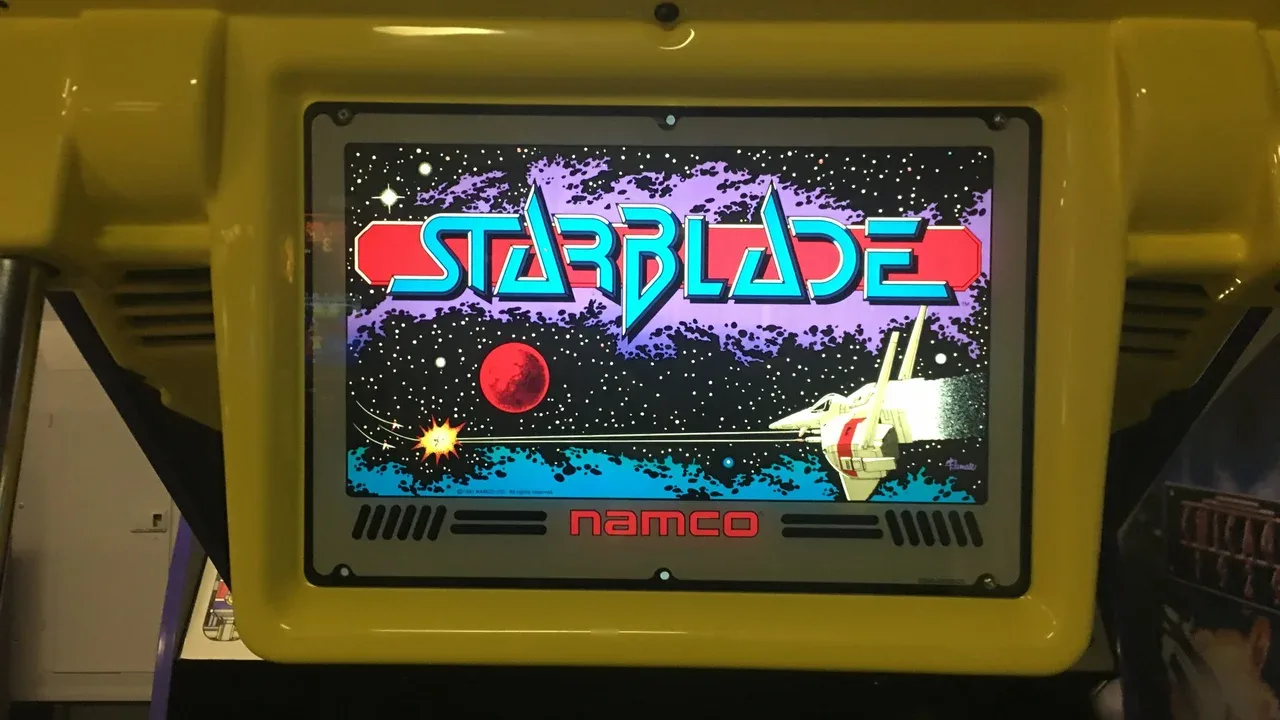
A first-person 3-D space shooter from Namco.