
Wizardry: Crusaders of the Dark Savant


Buy
Part of collection:
Wizardry
(last 3 games)
Announced for the series 40th anniversary, Wizardry Variants: Daphne is a brand-new mobile RPG focused on unforgiving dungeon crawling and party building.
Wizardry: Proving Grounds of the Mad Overlord is a full 3D remake of the first game in the legendary Wizardry series of RPGs. It is built directly on top of the original 1981 game's code. Although it looks all new, underneath the hood is the authentic game. You can even view the original Apple II interface as you play. While the well-known difficulty of the enemies has not been altered, quality-of-life improvements have been added in every area. Party management, navigation, spellcasting, and combat have all been significantly enhanced.
Wizardry Online is a free-to-play massively multiplayer online role-playing game for PC, and a series in Wizardry Renaissance, developed by Gamepot and published by Sony Online Entertainment released on November 14, 2010 in Japan, and January 30 in North America and Europe via Steam. The game services ceased its operation on July 31, 2014 in North America and Europe, and later December 20, 2016 in Japan. An unofficial private server still exists.
Part of franchise:
Wizardry
(last 3 games)
Announced for the series 40th anniversary, Wizardry Variants: Daphne is a brand-new mobile RPG focused on unforgiving dungeon crawling and party building.
Wizardry: Proving Grounds of the Mad Overlord is a full 3D remake of the first game in the legendary Wizardry series of RPGs. It is built directly on top of the original 1981 game's code. Although it looks all new, underneath the hood is the authentic game. You can even view the original Apple II interface as you play. While the well-known difficulty of the enemies has not been altered, quality-of-life improvements have been added in every area. Party management, navigation, spellcasting, and combat have all been significantly enhanced.
This is a sequel to "Wizardry: Seimei no Kusabi", released in November 2009. There are three dungeons available, and the game added quality-of-life features to make it more user-friendly such as save points and fast travel. Existing characters from the previous game have been removed, and players can create their own characters and form an original party from the beginning. The game features various systems designed to enhance the fun of dungeon exploration, such as a real-time dungeon that uses the touch pen to solve various gimmicks, a "FAST mode" that cuts attack and spell effects and speeds up messages, a "cooperative attack" that can be activated by combining spells and active skills used during a turn, encounter monsters and adventure records, and a manual to check "achievements." "Wizardry" is an RPG born in 1981 and is considered the originator of computer RPGs and a globally popular work. This game is a 3D dungeon RPG where players can enjoy labyrinth exploration by delving into deep dungeons. Please enjoy the adventure that follows the world view and system that are characteristic of "Wizardry" while incorporating unique gimmicks that are unique to the Nintendo DS.
Could be interesting
Ten years ago, Wizardry set the standards in Fantasy Role-Playing (FRP). Now after two million copies have been sold and dozens of awards have been won, Bane of the Cosmic Forge raises and redefines those standards. This new Wizardry , the truest simulation ever of Fantasy Role Playing, will push your computer, your mind, and your sense of adventure to their very limits. Only through the power of the latest computer technology could the full dimensions of this new genre in FRP be possible.

Loren The Amazon Princess is a fantasy visual novel with RPG elements. The player reads through the story and occasionally has to fight against fantasy monsters.
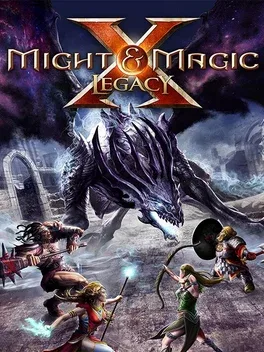
After a decade, a Might & Magic RPG is back with both the unique core formula and a new set of improved and fine-tuned features. In the wake of the spectacular events in Might & Magic Heroes VI, you will play in a party of four adventurers entangled in intrigue and political machinations unfolding in and around Karthal. The city, on the verge of secession, is prey to competing factions vying for its control. Your actions will determine the fate of the city. Might & Magic X Legacy is an authentic solo experience in the classic first-person RPG genre. Create and lead your group into an exciting open world and battle mythical powerful creatures while collecting ancient magical treasures!
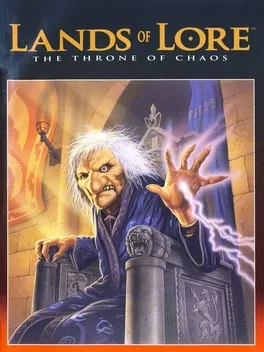
Lands of Lore: The Throne of Chaos takes you on an adventure: save the dying king and stop the evil sorceress Scotia’s Dark Army. Your band of heroes will travel through a vast fantasy word full of mysterious places, dangerous monsters, and hidden treasures in a quest to find a way to defeat the immortal evil enchantress and save the world.

Even after the good Dragonarmies defeated the evil Dragonarmies in the War of the Lance, there are still pockets of Evil left on the continent of Ansalon, which is located on the world of Krynn. Rampaging through the lands surrounding the cities which are still used as bases of power by the forces of Evil, the characters will uncover a plot by the Aurak Draconian Myrtani to lure the good armies into a trap and wipe them out.

Ravensword brings unprecedented visuals to the role playing and adventure genre. Explore a vast and richly detailed world, gather powerful weapons, collect hundreds of items, increase your skills, and follow a deep storyline to solve the mysteries of the Kingdom of Tyreas. The game has received many comparison to open world role-playing games in the Elder Scrolls series of games, such as Skyrim. Combat has three main types, with exceptions. Two, melee and ranged, are equipment based. There are various melee and ranged combat styles. Each style has separate skills and equipment, that are individually trained. Magic also has different spells, but all are trained similarly using similar equipment and the same skills.
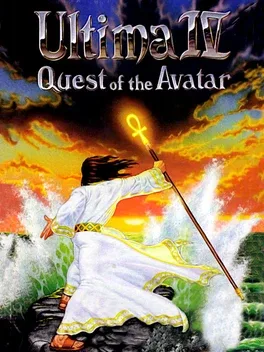
Following the defeat of the evil triad in the previous three Ultima games, the world of Sosaria changed beyond recognition: continents rose and sank, and new cities were built, heralding the advent of a different civilization. Unified by the reign of the benevolent monarch Lord British, the new world was renamed Britannia. Lord British wished to base people's well-being on the ethical principles of Truth, Love, and Courage, proclaiming the Eight Virtues (Honesty, Compassion, Valor, Justice, Sacrifice, Honor, Spirituality, and Humility) as the ideal everyone should strive for. The person who could accomplish full understanding and realization of these virtues would serve as a spiritual leader and a moral example for the inhabitants of Britannia; he alone would be able to obtain holy artifacts, descend into the Stygian Abyss, and access the Codex of Ultimate Wisdom. This person is the Avatar. The fourth game in the Ultima series features an improved game engine, with color graphics and enhanced character interaction: the player can have conversations with non-playable characters by typing names of various topics. However, the main difference between Ultima IV and its predecessors in the series (as well as other role-playing games) lies in the game's objectives and the ways to fulfill them. Instead of building up a character by any means possible in order to face a villain in the end of the game, in Ultima IV the player is trying to become the Avatar, a role model for people. This means upholding the Eight Virtues, basically trying to become a better person. Making morally conscious decisions and helping other people is not done expecting a material reward, but because it is the actual goal of the game and the main focus of its gameplay. The game frowns on behavior typical of most other RPGs, such as backstabbing fleeing enemies or picking up everything that isn't nailed down even if it does not belong to the protagonist. This different approach established the game's reputation as the first "true" Ultima, influencing the design philosophy of later installments and the overall spirit of the series. Character creation is done by choosing responses to morally ambiguous questions. Each of the Eight Virtues corresponds to a character class; by determining the player's personal priorities in the virtues, the game assigns a class and a starting location for the Avatar. After emerging in Britannia, the player is free to explore it in various ways (on foot, moongate teleportation, on horseback, by ship, etc.). Certain items must be collected in any order to enter the Stygian Abyss and complete the game. The Avatar also has to reach the highest level in all virtues. This is achieved by various means: donating blood increases Sacrifice, not fleeing from combat increases Valor, etc. The process, however, is not irreversible: should the Avatar overpay a blind seller, he gains Compassion points; should he, on the other hand, cheat the seller by underpaying, his level in several virtues would decrease. These unorthodox features of the game co-exist with plenty of traditional RPG elements, such as dungeons to explore and hostile monsters to kill. Enemies are encountered on the world map as well as in dungeons; combat takes place on separate top-down screens, allowing player-controlled and enemy parties freely move on them. Characters accumulate experience points and level up, gaining higher amount of hit points and access to stronger magic spells. Like in the previous installments of the series, world map, town exploration and combat are presented from a top-down view, while the dungeons are pseudo-3D and are explored from first-person perspective. Ultima IV also introduces several new gameplay features to the series and role-playing games in general. A number of initially non-playable characters living in various areas of the game world are able to to join the party and fight alongside the hero, replacing traditional player-generated characters or mercenaries and adventurers available only in special locations. Additional new elements include buying and combining reagents in order to cast spells, puzzle rooms in dungeons, and others.
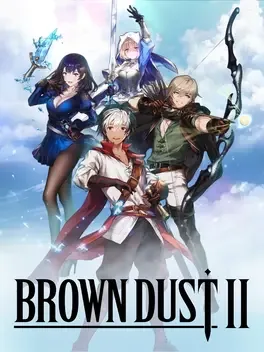
The continent of Svern, which had been under the rule of the Karian Empire a long time ago, became peaceful under the reign of five kingdoms. However, an ominous shadow of dark magic looms, and the fate of the Five Kingdoms is slowly twisted. Tensions rise amid the growing embers of war, and the terrifying fiend of fate heads for the peaceful Lugo village...

Centuries ago, mankind and dragons battled, causing chaos. Eventually, the Order of the Flame formed, uniting humans and dragons as protectors of peace. Under their guidance, Drakan flourished in magic and harmony. Drakan features a unique engine that seamlessly combines outdoor and indoor scenes. Play as Rynn, wielding swords and bows, or ride Arokh, using fiery breath as a weapon. Engage in battles against dragons, spiders, scavengers, and Wartocks.

Dragon View is an action role-playing game released for the Super Nintendo Entertainment System in 1994. It is a follow-up to Drakkhen and combines side-scrolling combat with exploration across a 3D overworld. Players control Alex as he searches for his kidnapped girlfriend, Katarina, and confronts threats across a fantasy kingdom.