
Zombies Ate My Neighbors




Buy
Part of collection:
Zombies Ate My Neighbors
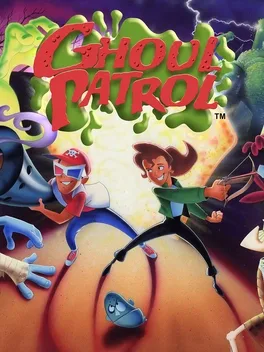
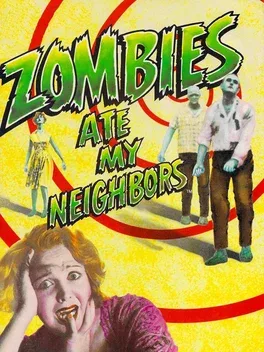
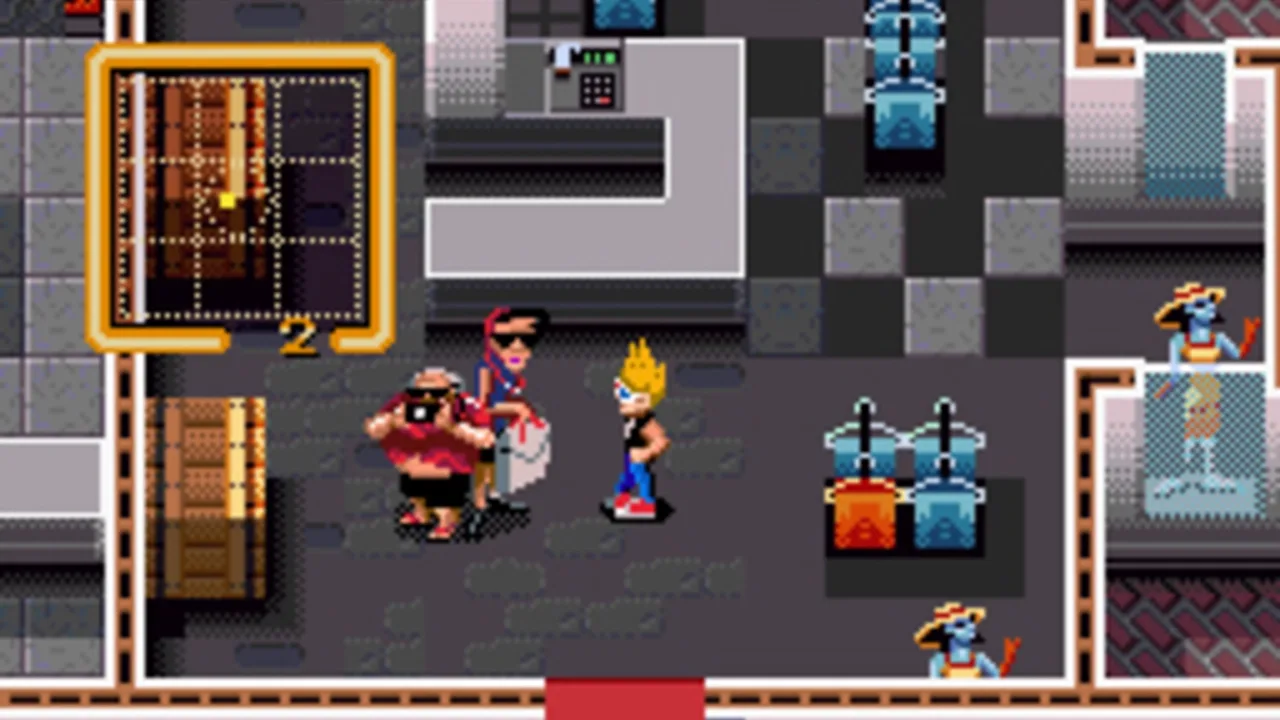
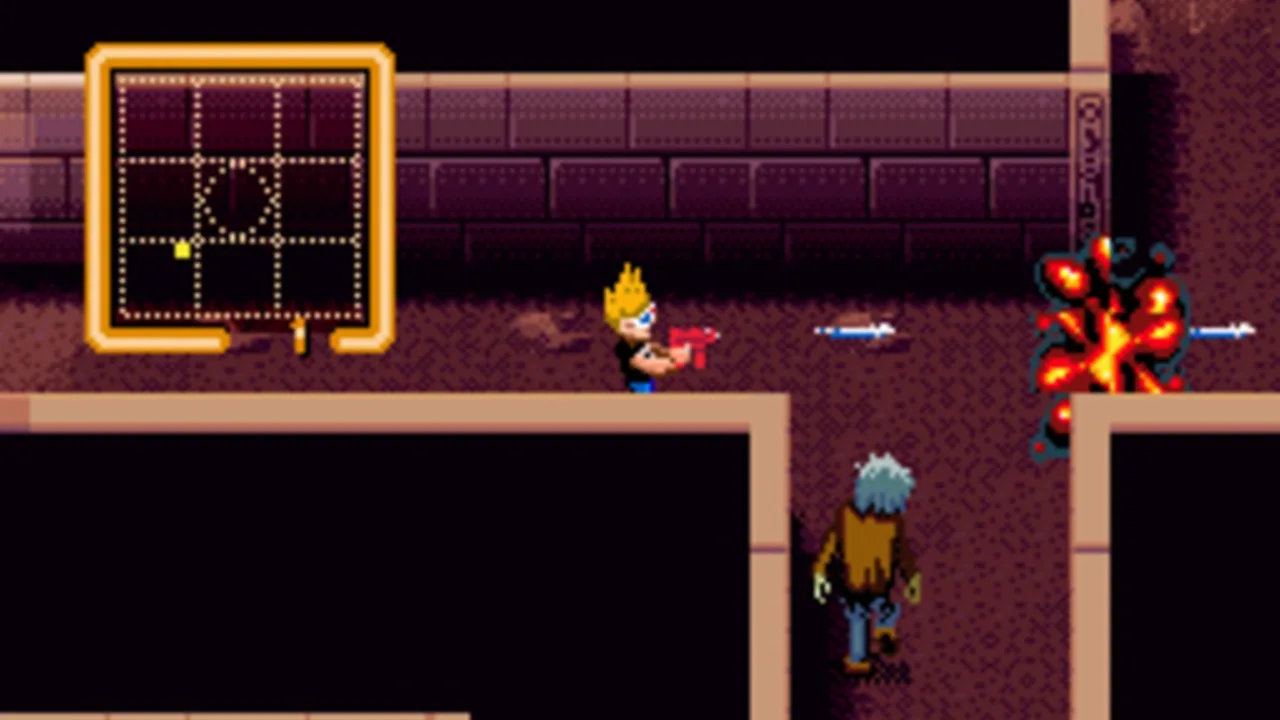
In the sequel to Zombies Ate My Neighbors you as the kids - Zeke or/and Julie - have to save the world from demon the lord of skeletons, ghouls, ghosts and etc. Shooting them by super-new weapons like Plasma Gun or Lobbing Smash Gun, you need to rescue ten trapped victims on each level and fight the boss at the end. But also you have to remember that ammo is limited.
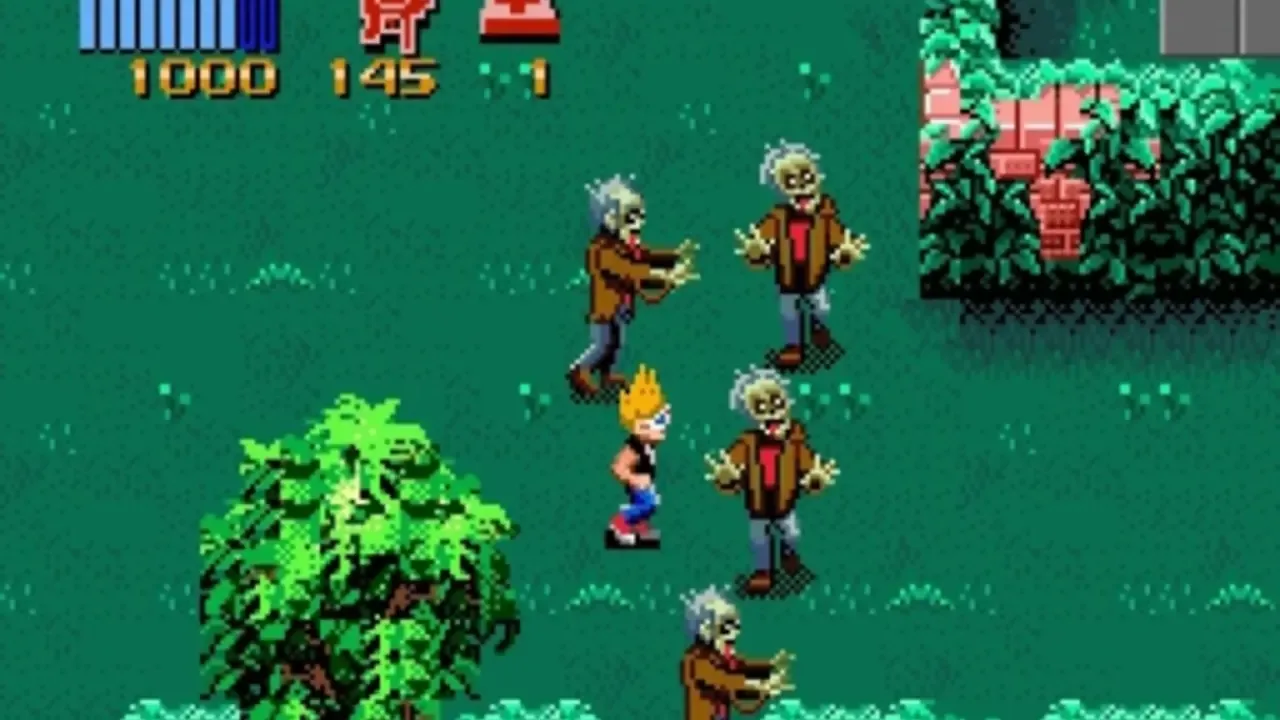
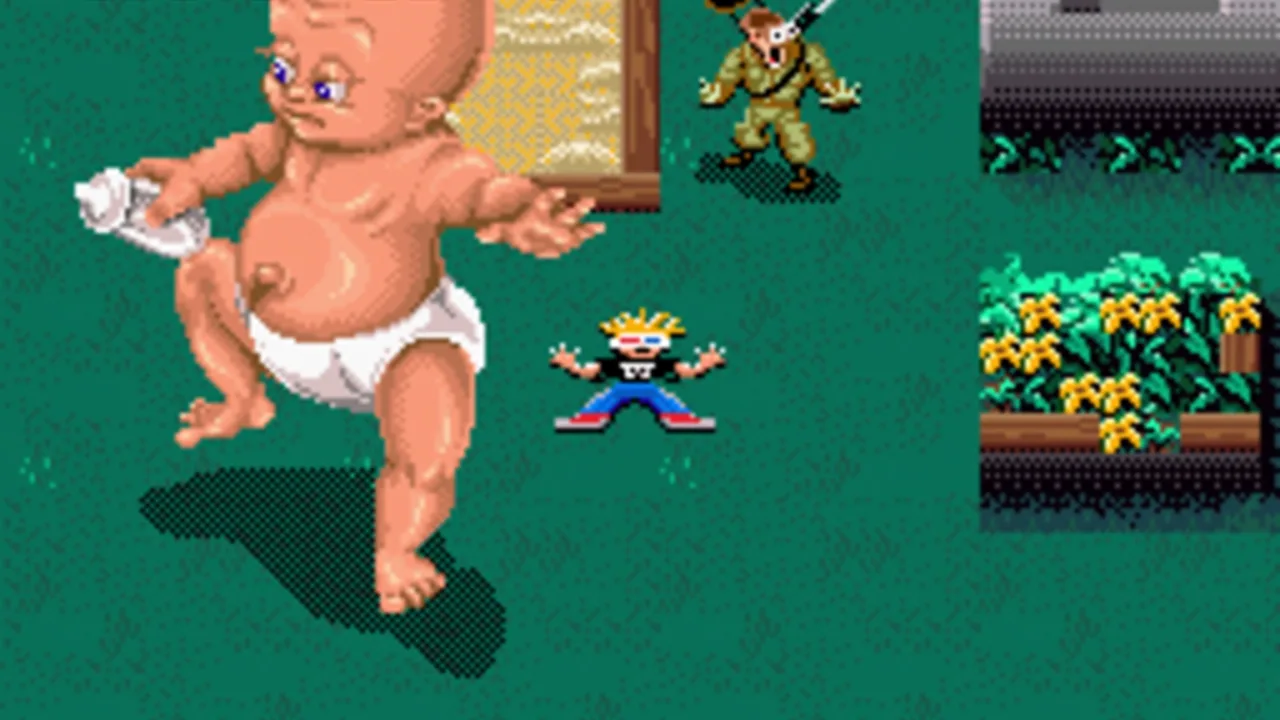
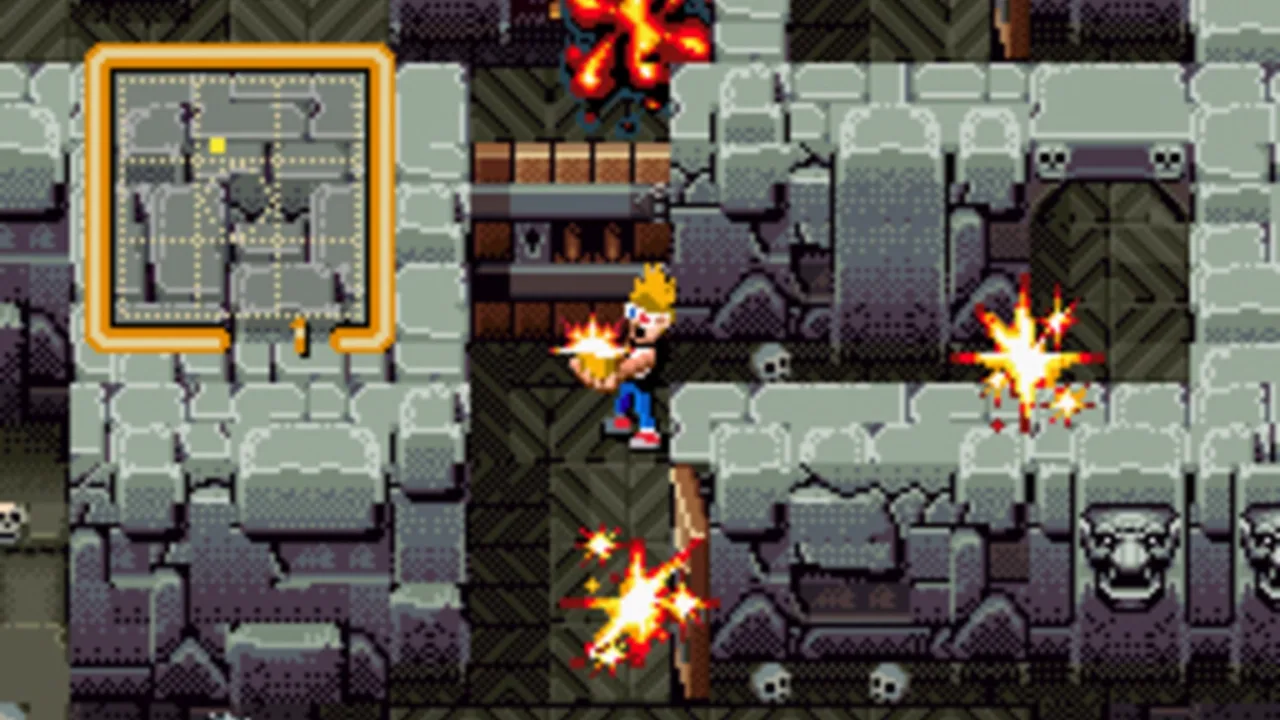
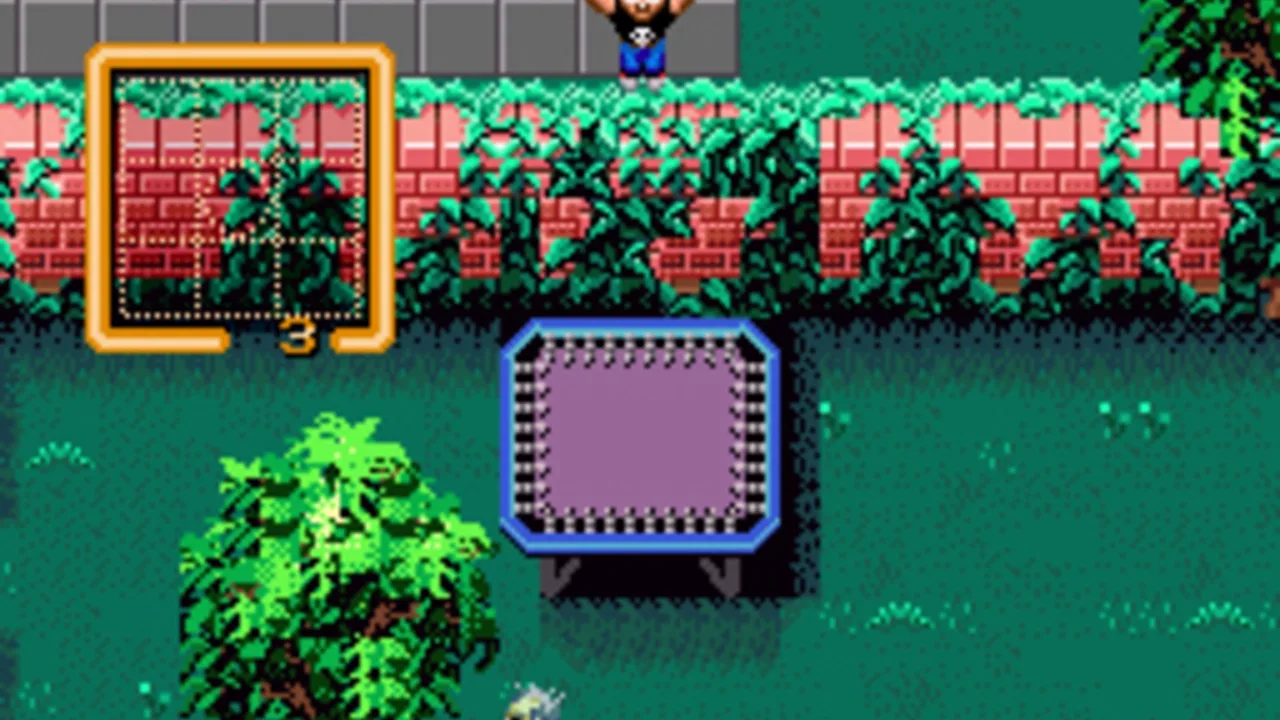
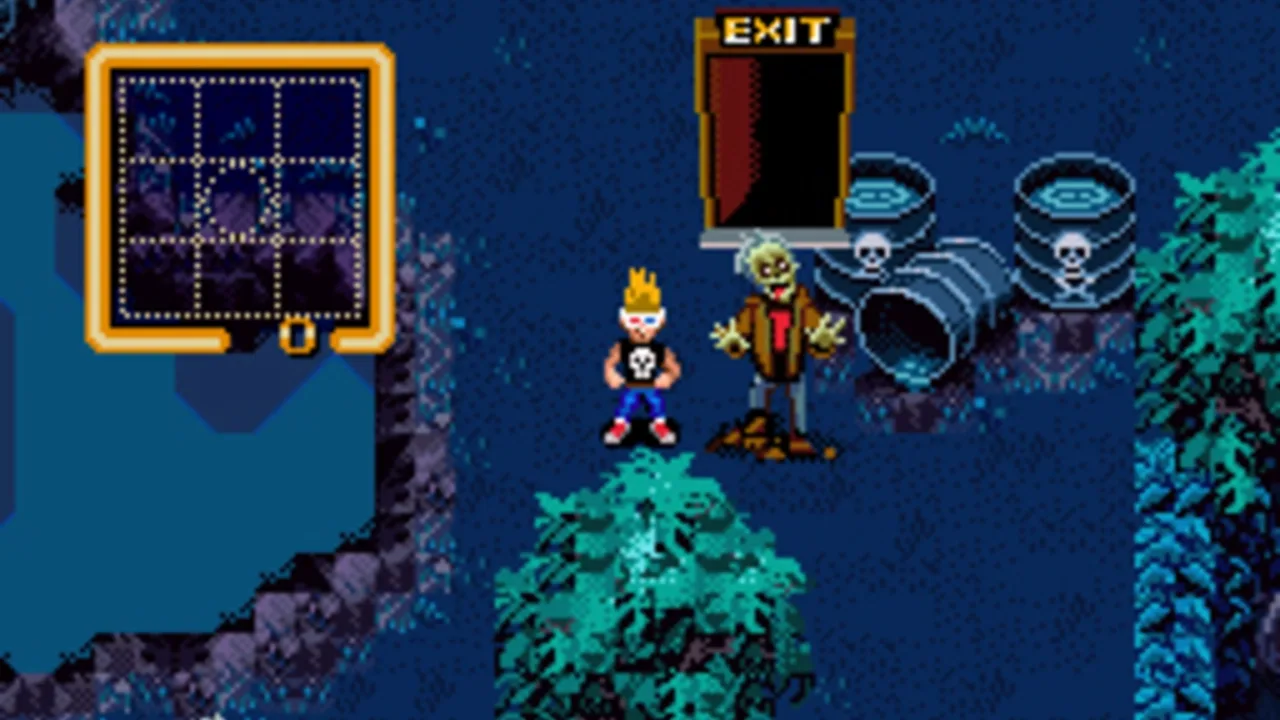
In the game you are a male or female protagonist (Zeke or Julia), fighting the vampires, mummies, zombies, etc. on over 50 levels (not including secrets) and saving all of the people you find. There are defined number of neighbors you save on every level. When they are free then "Exit" door opens and you jump on next level.The levels differ from mall and grocery store to beaches and football fields. Using different weapons such as bazooka or water gun you have to kill the bosses such as huge babies, dragons or ants at the end of levels. You can play the game with two players cooperatively.
Part of franchise:
Zombies Ate My Neighbors
In the game you are a male or female protagonist (Zeke or Julia), fighting the vampires, mummies, zombies, etc. on over 50 levels (not including secrets) and saving all of the people you find. There are defined number of neighbors you save on every level. When they are free then "Exit" door opens and you jump on next level.The levels differ from mall and grocery store to beaches and football fields. Using different weapons such as bazooka or water gun you have to kill the bosses such as huge babies, dragons or ants at the end of levels. You can play the game with two players cooperatively.
Could be interesting
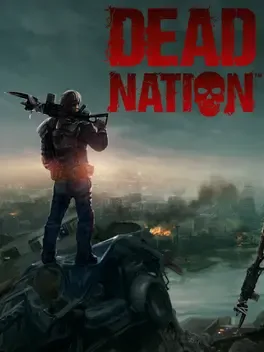
Dead Nation is a top-down shoot 'em up video game for PlayStation 3 developed by Finnish video game developer Housemarque. It was released on November 30, 2010 in North America, and December 1 in Europe. Players are awarded score multipliers and money when zombies are killed. Money is used to purchase and upgrade weapons on checkpoints, and multipliers to grant better scores. Each time players are hit, they lose multipliers and health

Assume the role of the human-hating alien Crypto once again, in the sci-fi action-adventure spoof, bound to enslave mankind. Take revenge on humanity for destroying your mothership. “Make War, not Love” and take on new enemies such as secret agents, giant creatures, Soviet Forces and even ninja warriors in an expanded open-world.
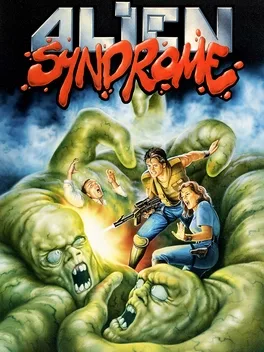
The time bomb is set. It's the only sure way to get rid of these aliens. For good. They're vile. Vicious. And villainous. And they've infested our outcolony. They're holding hundreds of inhabitants hostage. Some of them your friends. So get in there. And get blasting. Inside, you'll find state-of-the-art weaponry. It's yours for the taking. There's sector after sector to purge. Each more intricate than the one before it. And there are Super Aliens to confront. Each more hideous than the one before it. Get the hostages out. And get as many aliens as you can. Before the blast gets all of you.
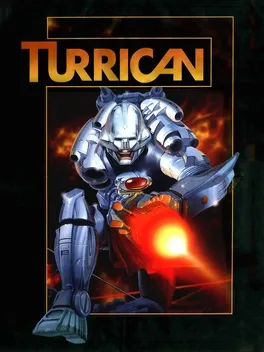
Turrican is a 1990 video game programmed and designed by Manfred Trenz. It was first developed for the Commodore 64 by Rainbow Arts, but was ported to other systems later. In addition to concept design and character creation, Trenz personally programmed Turrican on the Commodore 64. A sequel, Turrican II, followed 1991 for the Commodore 64 and other platforms.
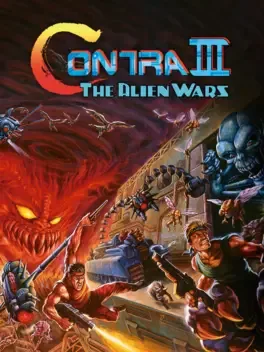
This game is action from beginning to end, do not think that you will have a moment of peace, even because Aliens are at war with planet earth, and resting will be your least concern.
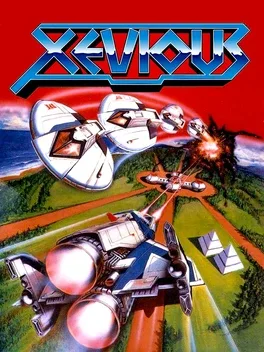
It's a nightmare, but it's true! Research shows that we are the actual aliens on Earth, and the ruthless Xevions are the original inhabitants. Now the Xevions want Earth back -- minus humans! Their invasion forces are fierce -- the land is crawling with deadly Domogram Rovers; the sky is black with Toroid Patrol Fleets and Zoshi Death Squads. Our puny weapons offer no defense. Earth's only hope is our powerful new Solvalou Fighter Plane. Its pilot will have a single mission: Penetrate the enemy ranks and destroy the Xevious Mother Ship. The mission is dangerous. We can't guarantee success. But at this point, it's do or die! One small problem. We still need a pilot. Any volunteers?
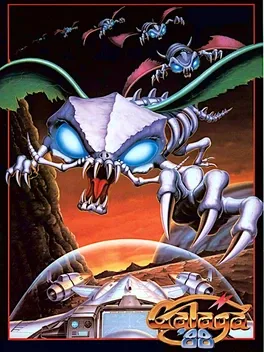
The gameplay in Galaga '88 is built on the same premise as that of the original Galaga game, but is in many ways more complex and more difficult. The game is divided into a series of 29 Stages distributed through eight Worlds. The starship Galaga accelerates between Stages and Worlds and even to higher dimensions (go to the section on Dimensional Travel below to find out more). With the exception of the third and eighth, each World culminates in a Challenging Stage. There are six such stages to engage in any full game, and each begins with the on-screen announcement "That's Galactic Dancin'!" and has its own YM2151-generated song to which the enemy formations dance. In any given Challenging Stage, both the design of the enemies and their dancing formations shall vary according to the player's current Dimension. As in Galaga, the objective is to destroy all forty enemies before they fly away off the screen. However, refraining completely from touching any controls for the duration of a Challenging Stage awards a "secret bonus" ranging in value from 10000 to 25000 points, and equal to the "special bonus" which would have been awarded for destroying all forty enemy aliens instead. Galaga '88 introduces a variety of new enemies and behaviors. Most of these special enemies are worth varying amounts of bonus points when destroyed. Some enemies can combine into larger enemies which take multiple hits to destroy, while others arrive in eggs, explode in a shower of fireworks, grow with multiple hits, or sport armor which makes them invincible while in formation. Certain enemies drop small formations of tiny creatures that wiggle their way down the screen, and still others can act as escorts to incoming groups of enemies and then quickly dive at the player before leaving the game. Most stages also include various obstacles which appear once the enemy formation has been assembled. These can be destroyed with either one or several shots, and the first one on each stage will leave a "Warp Capsule". At the start of the game, the player can select how many Galaga starships to start with (one or two), affecting their number of remaining lives. The game ends after the final boss is defeated (or when the player's last ship is destroyed or captured) - in the latter case, the player can continue the game for an additional credit. The Game Over screen shows the player's hit-miss ratio and a visual representation of their progress. If the player reaches Stage 27, the game also shows a picture of the final boss (damaged if defeated, but silhouetted if not). If the arcade operator has set the "continue" option to "on", the player also cannot continue if he is defeated on Stages 27-29.
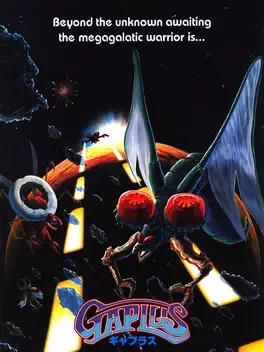
Gaplus is a fixed shooter arcade game that was released by Namco in 1984. It was the only other game to run on Namco Phozon hardware, and in the US, a modification kit was later released to change the name to Galaga 3, possibly to increase recognition among fans of the games even though there was no "Galaga 2". Since Gaplus is a sequel to Galaga, it has similar gameplay. The player controls a spaceship, that can now move vertically (limited to halfway up the screen, much like Atari's Centipede) as well as horizontally, and shoots at swarms of incoming insect-like aliens which fly in formation above it and swoop down to attack it in akamikaze-like dive. In this sequel, the level starts over if the player gets killed before all the enemies have come in. When all enemies are killed, the player moves on to the next level. By obtaining certain powerups, it is possible to shoot sixty bullets per screen, the most any Galaxian-related game has.
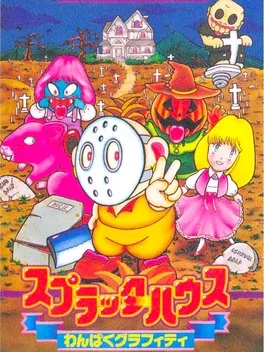
Revived by his girlfriend's grief and a flash of lightning, Rick must chase down the Pumpkin king and save his beloved Jennifer once and for all! A parody of the bloody horror beat-'em-up Splatterhouse, Wanpaku Graffiti assumes a much cuter appearance but retains the same fast-paced action of the original.
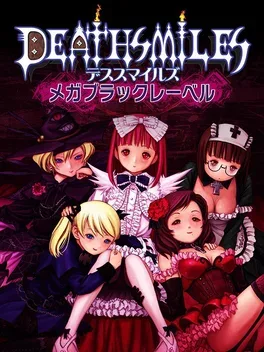
Deathsmiles Mega Black Label is an especial edition of the game released for arcades in Japan. It added Sakura as playable character, as well as the Crystal Shrine stage, and Level 999 difficulty level. There are other scoring changes.