
Xevious



Buy
Part of collection:
Xevious
(last 3 games)
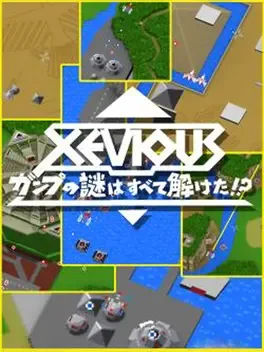
Developed by DreamFactory, an isometric entry to the classic shmup Xevious series, released for mobile phones!
A new game in the Xevious series, only released as part of the Namco Museum Essentials compilation.
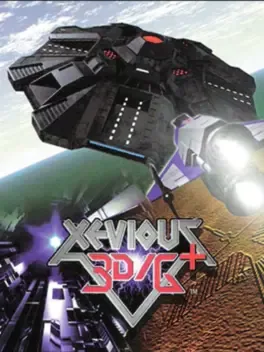
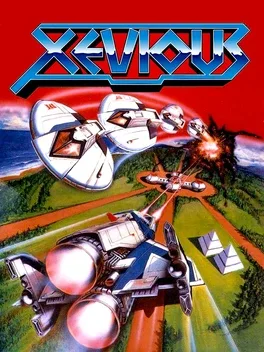
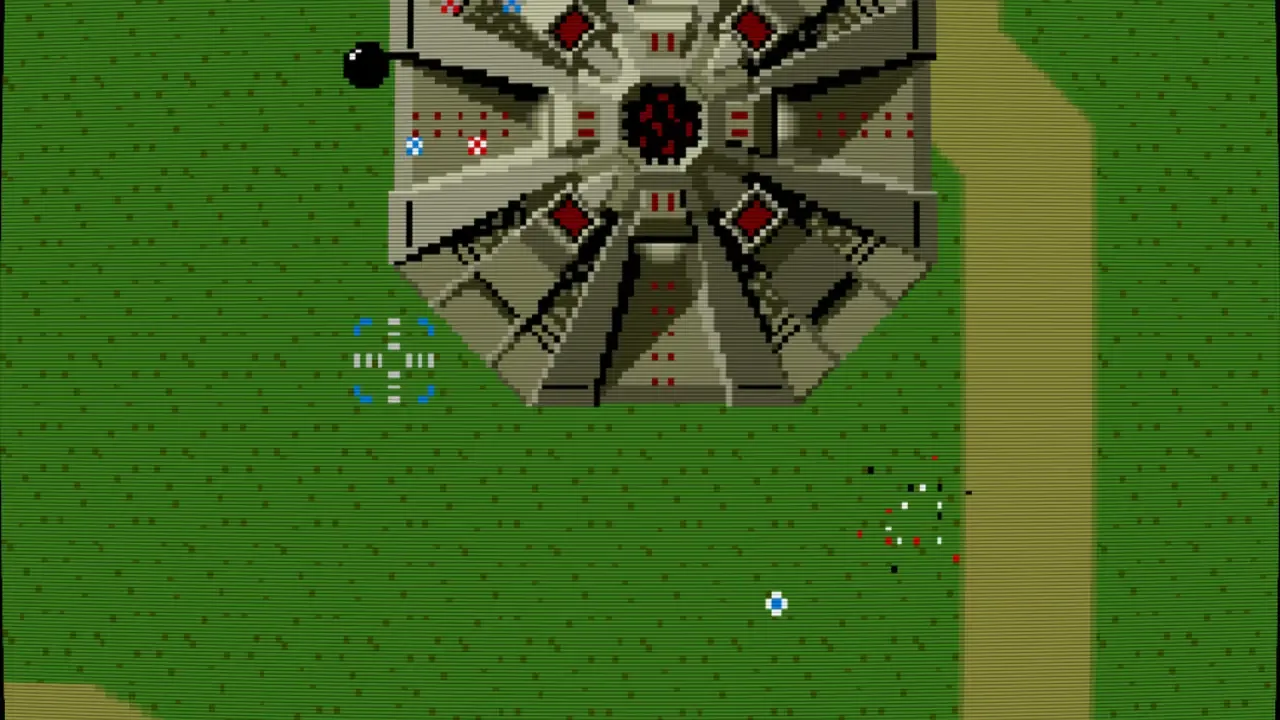
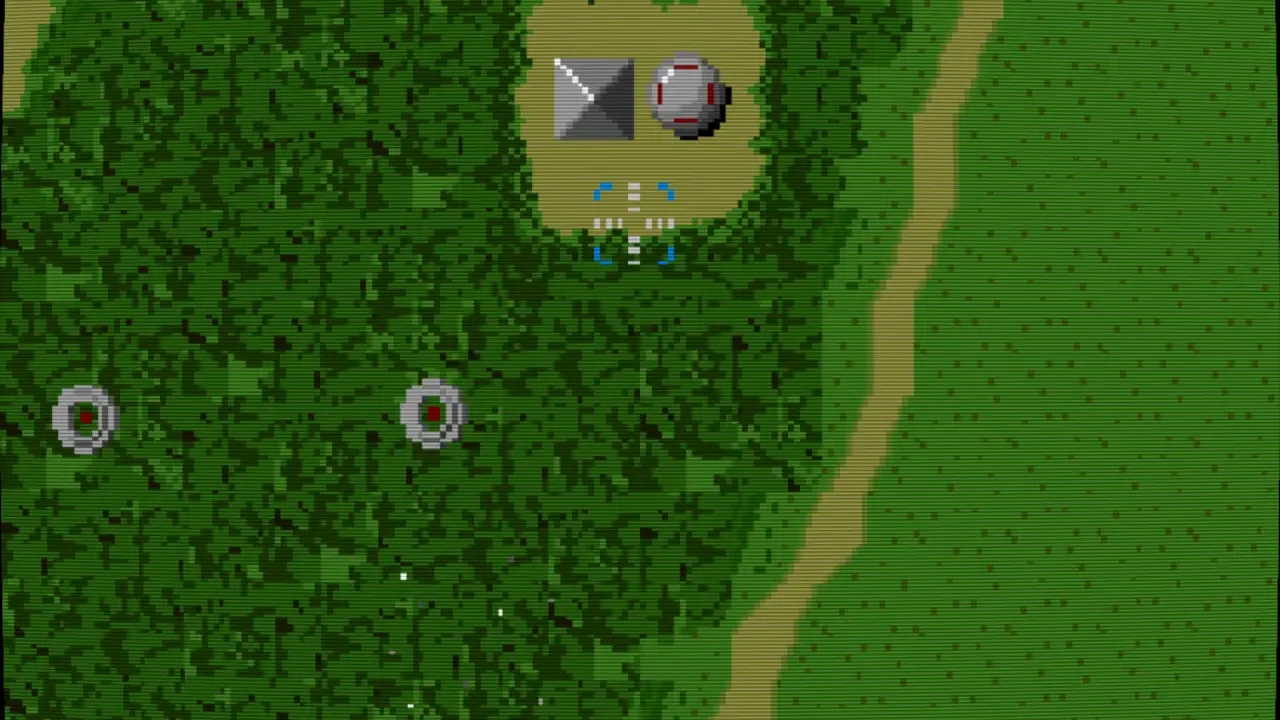
Xevious 3D/G+ is a compilation of four titles: Xevious 3D/G (main game), Xevious (Arcade version), Super Xevious (Arcade version) and Xevious Arrangement. Xevious 3D/G+ puts the classic arcade vertical shoot 'm up Xevious game in a third-person 3D perspective. The game brings some new weapon systems to the player-controlled fighter jet and contains many new enemies, some of which are quite large and pose new challenges to the player. During the game the player can collect three types of power-ups: bullets, lasers and plasma beams.
Could be interesting
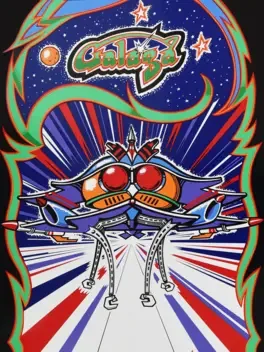
The objective of Galaga is to score as many points as possible by destroying insect-like enemies. The player controls a starfighter that can move left and right along the bottom of the playfield. Enemies swarm in groups in a formation near the top of the screen, and then begin flying down toward the player, firing bombs at the fighter. The game ends when the player's last fighter is lost, either by colliding with an enemy or one of its bullets, or by being captured. Galaga introduces a number of new features over its predecessor, Galaxian. Among these is the ability to fire more than one bullet at a time, a count of the player's "hit/miss ratio" at the end of the game, and a bonus "Challenging Stage" that occurs every few levels, in which a series of enemies fly onto and out of the screen in set patterns without firing at the player's ship or trying to crash into it. These stages award a large point bonus if the player manages to destroy every enemy. Another gameplay feature new to Galaga is the ability for enemies to capture the player's fighter. While the player is in control of just one fighter, a "boss Galaga" (which takes two shots to kill) periodically attempts to capture the fighter using a tractor beam. If successful, the fighter joins the enemy formation. If the player has more lives remaining, play resumes with a new fighter. The captured fighter flies down with the enemy that captured it, firing upon the player just like normal enemies, and can be shot and destroyed. The player can free the fighter by destroying the boss Galaga while in flight, causing the captured fighter to link up with the player's current fighter, doubling his or her firepower but also making a target twice as large. Galaga has an exploitable bug that can cause the attackers to stop firing bullets at the player, due to a coding error. In addition, similar to the famous "Split-Screen bug" in Pac-Man, a bug exists in Galaga in which the game "rolls over" from Level 255 to Level 0. Depending on the difficulty setting of the machine, this can cause the game to stall, requiring that the machine be reset or power-cycled in order to start a new game.
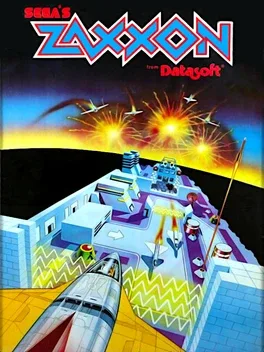
Zaxxon is a 1982 isometric shooter arcade game developed and released by Sega. The game gives the player the experience of flying a fighter craft through a fortress while shooting at enemy entities (missiles, enemy gunfire, etc.) The object of the game is to hit as many targets as possible without being shot down or running out of fuel, which can be replenished paradoxically, by blowing up fuel drums.
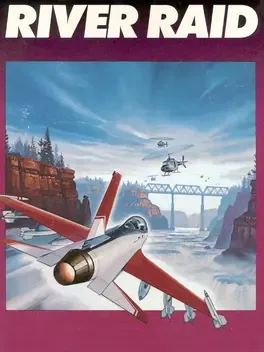
Mission: Code Name River Raid. Jet down the river. Break the enemy blockade and blast the bridges to halt enemy troop advances. Terrain: Code Name River of No Return. An ever-changing, ever-challenging waterway. Expect huge islands, narrow channels and treacherous bays crawling with enemy choppers, tankers and jets. Weaponry: Code Name StratoStrafer. Your B1 StratoWing Assault Jet has been retrofitted with sophisticated, rapid-fire guided missiles. Your craft is super-sensitive to the stick. Accelerate, slow or bank radically with only a touch. Tactics: Jet low to the river to avoid radar. Stop periodically at depots to refuel. A warning claxxon will alert you. Top speed! Best of luck!
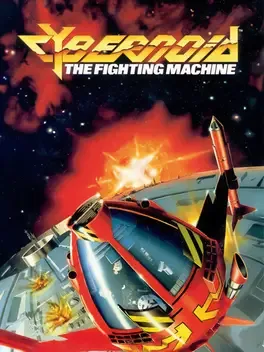
Cybernoid: The Fighting Machine is a shoot 'em up developed and published in 1987 by Hewson Consultants for the ZX Spectrum, and was then ported to the Amstrad CPC, Atari ST, Commodore 64, NES, and Amiga. It was programmed by Raffaele Cecco. The Sinclair ZX Spectrum and Atari ST versions featured a main theme by Dave Rogers, while the Commodore C64 version (later released on the Wii's Virtual Console service) featured a completely different theme by Jeroen Tel.
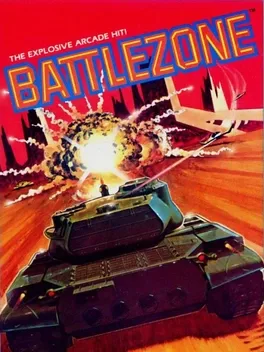
Battlezone is an arcade game from Atari released in November 1980. It displays a wireframe view (using vector graphics rather than raster graphics) on a horizontal black and white (with green and red sectioned color overlay) vector monitor. Due to its novel gameplay and look, this game was very popular for many years. Throughout the 1980s, Battlezone was ported to several home computer systems (usually on the Atarisoft label), including the Apple II, the Commodore 64, the Sinclair ZX Spectrum, and the Atari XEGS. The Atari ST port contains large parts of the original 6502 code which is emulated in real time. An Atari 2600 port was also released, but has colored raster graphics due to limitations and the view is behind the tank rather than inside it.
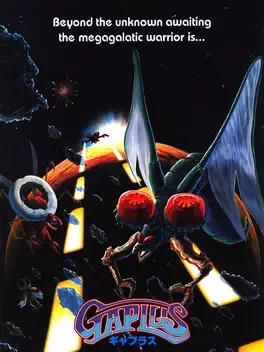
Gaplus is a fixed shooter arcade game that was released by Namco in 1984. It was the only other game to run on Namco Phozon hardware, and in the US, a modification kit was later released to change the name to Galaga 3, possibly to increase recognition among fans of the games even though there was no "Galaga 2". Since Gaplus is a sequel to Galaga, it has similar gameplay. The player controls a spaceship, that can now move vertically (limited to halfway up the screen, much like Atari's Centipede) as well as horizontally, and shoots at swarms of incoming insect-like aliens which fly in formation above it and swoop down to attack it in akamikaze-like dive. In this sequel, the level starts over if the player gets killed before all the enemies have come in. When all enemies are killed, the player moves on to the next level. By obtaining certain powerups, it is possible to shoot sixty bullets per screen, the most any Galaxian-related game has.
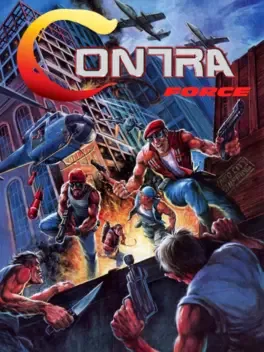
Contra Force is an action shooting game released by Konami for the Nintendo Entertainment System in 1992 in North America. It is a spinoff of the Contra series, being the third game in the series released for the NES following the original Contra and Super Contra, although the game's plot and setting are unrelated to previous entries, as the villains in the game are human terrorists instead of an alien menace

Assault is a top-down shooter from Namco, released in the arcades in 1988.
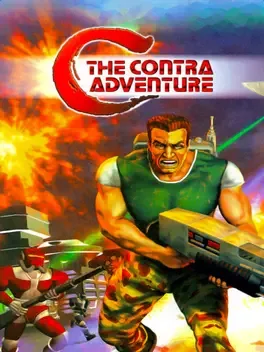
Mission Critical! You control Ray, the only surviving member of the elite Contra Force. Blast your way through 10 levels to stop the alien hordes from infesting the jungles of South America. Although equipped with a huge arsenal of weapons of destruction, including a shatter gun, grenades, rockets, super bombs, and an ever-present machine gun, Ray will have his hands full combating hoards of enemies such as snipers, alien soldiers, tanks, UFOs, and spiked slugs in 9 levels of running, jumping, climbing, and shooting 2D and 3D action.
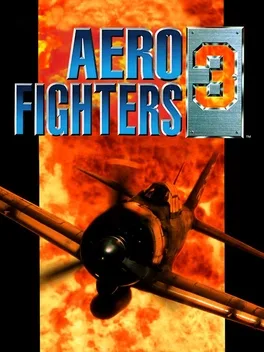
When enemy forces wipe out the jets of the Aero Fighters, they must scramble using heavily-modified World War II warplanes in the third installment of the comical Aero Fighters series.