
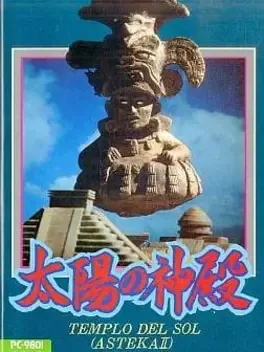
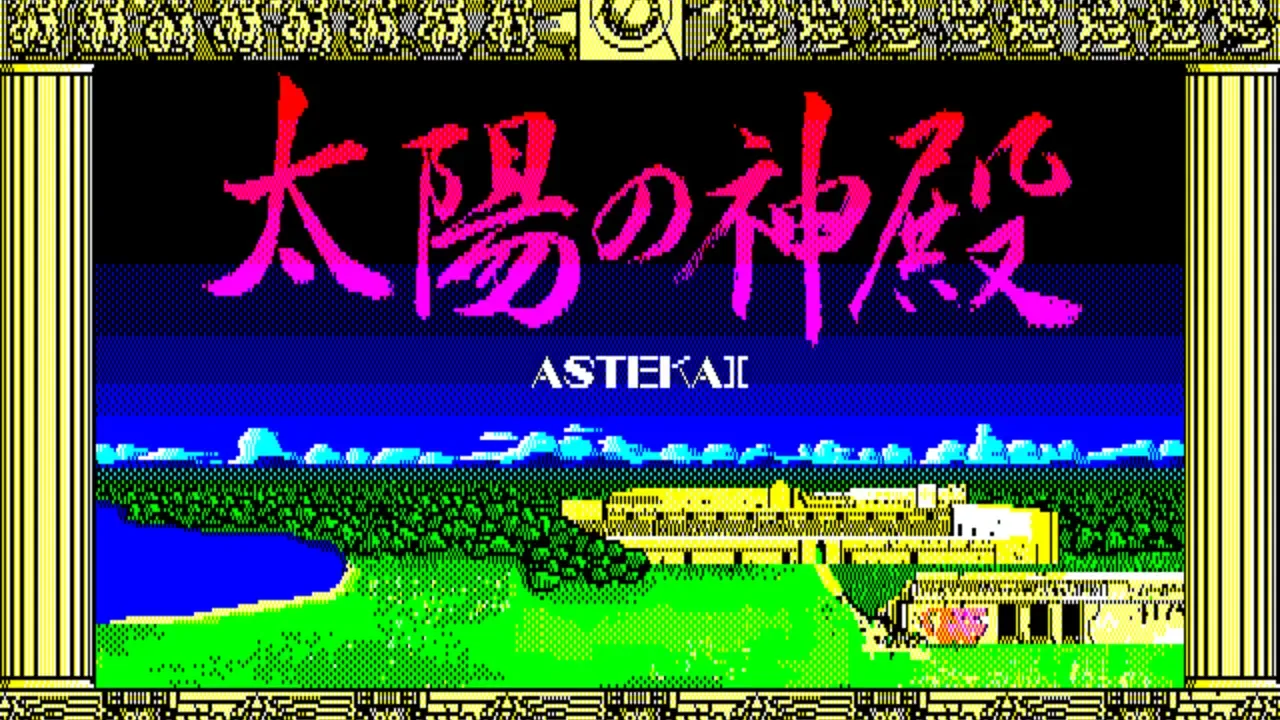
Taiyou no Shinden: Asteka II


Buy
Part of collection:
Asteka

Tombs & Treasure, released in 1988, was altered to be more story-based, and features new music and role-playing elements; an English-language NES version was published by Infocom in 1991.
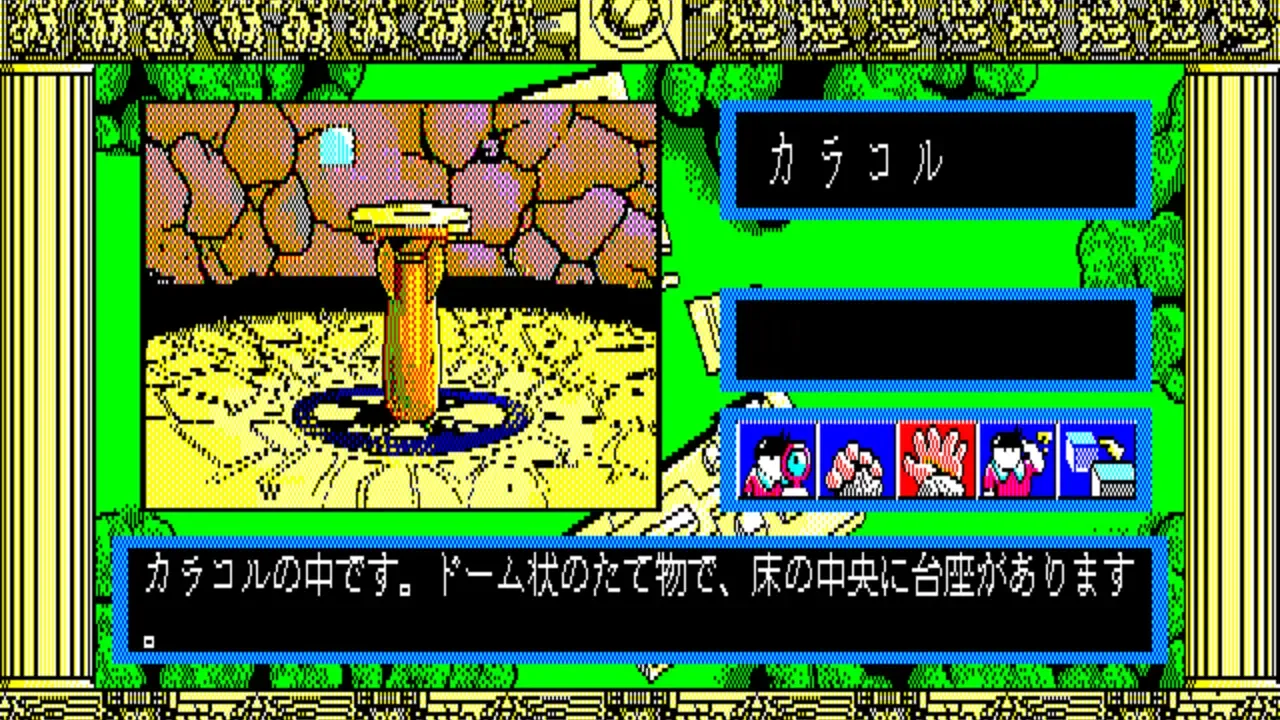
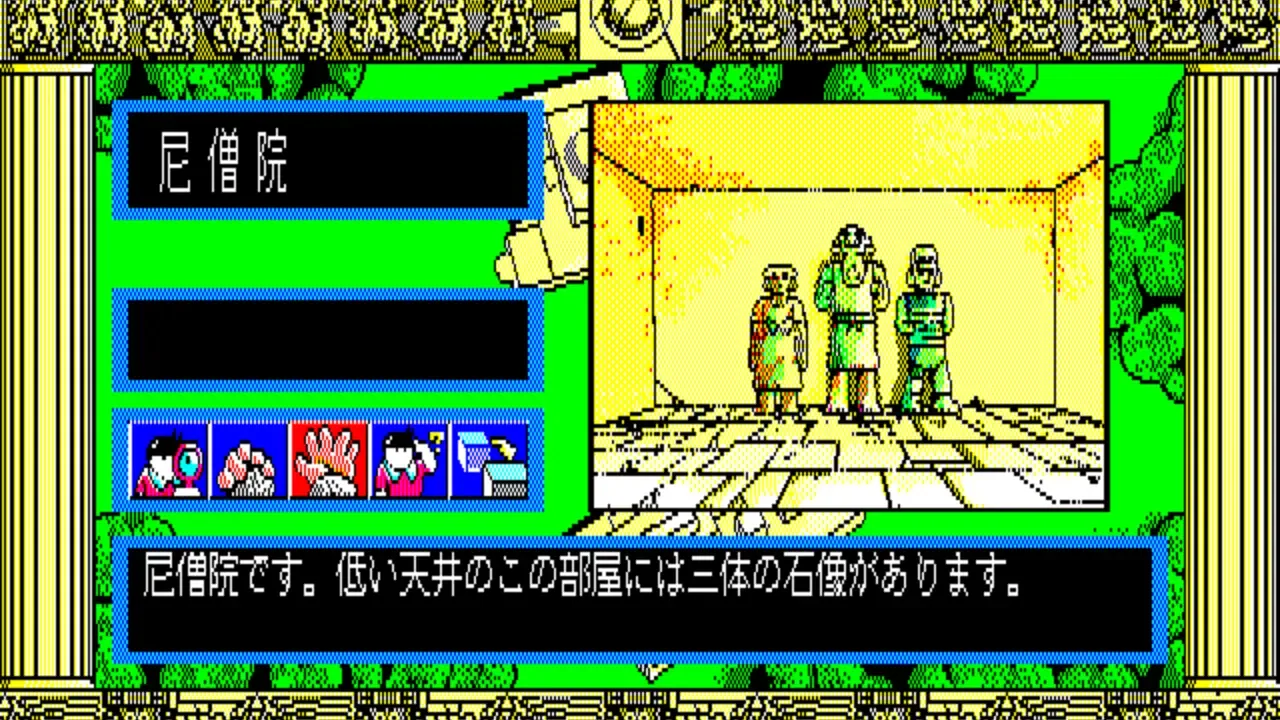
Taiyō no Shinden: Asteka II is an adventure game which takes place in the ruins of the ancient city Chichen Itza on the Yucatan peninsula in Mexico. The player controls a nameless adventurer who searches for the Sun Key, a mysterious ancient artifact which can unlock the secrets of the Mayan civilization. This game's NES port was localized under the name Tombs & Treasure.

Asteka (アステカ) is an early graphical adventure game that was created by Tsuneyuki Miyamoto at Nihon Falcom. The title was initially released for the NEC PC-88 and was later ported to other Japanese computers. While exploring the Palenque ruins in southern Mexico, the player takes the role of an archeologist where they use the game's katakana text parser to interact with the world and solve puzzles. The game was technically impressive for its time due to how quickly it could load new images, similar to Falcom's Demons Ring, and for its use of digitized photographs for some of its graphics. Asteka was most likely released on April 13, 1985 according to early advertisements. However, even Falcom contradicts itself on the title's exact publication date. Falcom's official corporate timeline on their website says Asteka was released in February 1985 while their 2017 pop-up museum, along with the Falcom Chronicle anniversary book, claims it was released on April 10, 1984. A direct sequel to Asteka was released in 1986 called Temple of the Sun: Asteka II, also known as Tombs & Treasure in North America.
Could be interesting
Final Fantasy: Brave Exvius a brand-new FINAL FANTASY experience, will launch for free (with in-app purchases) on iOS and Android devices this summer. The hit title has already drawn in more than six million players in Japan and is an entirely new role-playing adventure for the mobile generation. The title brings the classic FINAL FANTASY lore with legendary heroes from the franchise.

Hero of the Kingdom is casual role-playing game at its best; take to the road and explore a vast and beautiful country full of danger and surprises. Meet and interact with characters to gain knowledge and insight giving you valuable clues. Defend against and attack the enemy, and take it upon yourself to complete quests of varying difficulty. To survive, you must find ways to earn gold by mastering your skills and bartering. You can even collect herbs, hunt for animals, and go fishing.

In Stars and Time is a time-looping RPG adventure. With each loop, Siffrin gains a new perspective on the world around them, opening up new solutions to puzzles and allowing them to make better choices in conversation. Equip memories as armor, pray to the Change God to improve your team’s capabilities each loop, and challenge deadly foes to Rock, Papers, Scissors as Siffrin seeks the truth.
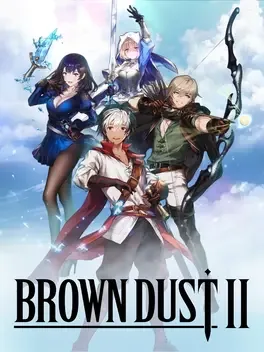
The continent of Svern, which had been under the rule of the Karian Empire a long time ago, became peaceful under the reign of five kingdoms. However, an ominous shadow of dark magic looms, and the fate of the Five Kingdoms is slowly twisted. Tensions rise amid the growing embers of war, and the terrifying fiend of fate heads for the peaceful Lugo village...
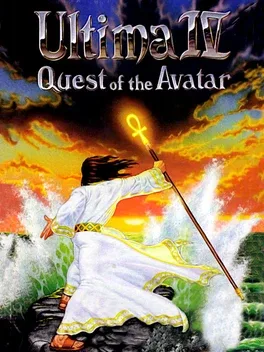
Following the defeat of the evil triad in the previous three Ultima games, the world of Sosaria changed beyond recognition: continents rose and sank, and new cities were built, heralding the advent of a different civilization. Unified by the reign of the benevolent monarch Lord British, the new world was renamed Britannia. Lord British wished to base people's well-being on the ethical principles of Truth, Love, and Courage, proclaiming the Eight Virtues (Honesty, Compassion, Valor, Justice, Sacrifice, Honor, Spirituality, and Humility) as the ideal everyone should strive for. The person who could accomplish full understanding and realization of these virtues would serve as a spiritual leader and a moral example for the inhabitants of Britannia; he alone would be able to obtain holy artifacts, descend into the Stygian Abyss, and access the Codex of Ultimate Wisdom. This person is the Avatar. The fourth game in the Ultima series features an improved game engine, with color graphics and enhanced character interaction: the player can have conversations with non-playable characters by typing names of various topics. However, the main difference between Ultima IV and its predecessors in the series (as well as other role-playing games) lies in the game's objectives and the ways to fulfill them. Instead of building up a character by any means possible in order to face a villain in the end of the game, in Ultima IV the player is trying to become the Avatar, a role model for people. This means upholding the Eight Virtues, basically trying to become a better person. Making morally conscious decisions and helping other people is not done expecting a material reward, but because it is the actual goal of the game and the main focus of its gameplay. The game frowns on behavior typical of most other RPGs, such as backstabbing fleeing enemies or picking up everything that isn't nailed down even if it does not belong to the protagonist. This different approach established the game's reputation as the first "true" Ultima, influencing the design philosophy of later installments and the overall spirit of the series. Character creation is done by choosing responses to morally ambiguous questions. Each of the Eight Virtues corresponds to a character class; by determining the player's personal priorities in the virtues, the game assigns a class and a starting location for the Avatar. After emerging in Britannia, the player is free to explore it in various ways (on foot, moongate teleportation, on horseback, by ship, etc.). Certain items must be collected in any order to enter the Stygian Abyss and complete the game. The Avatar also has to reach the highest level in all virtues. This is achieved by various means: donating blood increases Sacrifice, not fleeing from combat increases Valor, etc. The process, however, is not irreversible: should the Avatar overpay a blind seller, he gains Compassion points; should he, on the other hand, cheat the seller by underpaying, his level in several virtues would decrease. These unorthodox features of the game co-exist with plenty of traditional RPG elements, such as dungeons to explore and hostile monsters to kill. Enemies are encountered on the world map as well as in dungeons; combat takes place on separate top-down screens, allowing player-controlled and enemy parties freely move on them. Characters accumulate experience points and level up, gaining higher amount of hit points and access to stronger magic spells. Like in the previous installments of the series, world map, town exploration and combat are presented from a top-down view, while the dungeons are pseudo-3D and are explored from first-person perspective. Ultima IV also introduces several new gameplay features to the series and role-playing games in general. A number of initially non-playable characters living in various areas of the game world are able to to join the party and fight alongside the hero, replacing traditional player-generated characters or mercenaries and adventurers available only in special locations. Additional new elements include buying and combining reagents in order to cast spells, puzzle rooms in dungeons, and others.

Obsidian Entertainment proudly presents the sequel to our crowdfunded and critically-acclaimed role-playing game, Pillars of Eternity. Welcome to Pillars of Eternity II: Deadfire. With Pillars II, we are revisiting the rich narrative, beautiful environments, and tactical combat that made Pillars of Eternity one of the highest-rated PC games of all time.

Drova is a pixel art role-playing game inspired by classic role-playing games. We want to create a challenging and interesting world and offer a well-rounded and consistent gaming experience.

The universe is in the throes of violent upheaval and change. Vast and mysterious forces are preparing for the final confrontation. A small group of heroes from distant lands must plunge into the heart of the maelstrom, to uncover long-forgotten secrets, and bring about a new era. Should they succeed, they will gain the powers of the gods themselves. If they fail, countless worlds will fall into the grip of darkness. Wizardry 8 raises the standard for fantasy role-playing with a vengeance. Prepare yourself for a new level of excitement, immersiveness and depth that made role-playing games one of the best-selling, best-loved genres of all time. Prepare to experience the culmination of a prestigious RPG series. Enter a vast world of intrigue and wonder. Unravel a gripping, non-linear storyline. Battle your way to victory using your swords, your magic, and your wits. Compete with rivals or align with allies as you struggle to ascend to the Cosmic Circle. Take the battle to the dreaded Dark Savant in Wizardry 8, the phenomenal conclusion to the Dark Savant trilogy, one of the most extensive and challenging stories ever told in classic role-playing games!

This is an Open World Roleplaying game set in a fantastical desert.The world has descended into darkness and chaos after the Battle of the Blood Moon. Take control of different characters and come up with your own strategy to shape the future of your world. The game was updated to support English Language on 22nd September 2020.
The Elder Scrolls VI is an upcoming single-player action RPG from Bethesda Game Studios, serving as the sixth main entry in The Elder Scrolls series and the follow-up to 2011's Skyrim. The game is built on Creation Engine 3 and entered active production in 2023 following the completion of Starfield. Director Todd Howard has described the project as aiming to be the "ultimate fantasy-world simulator."