
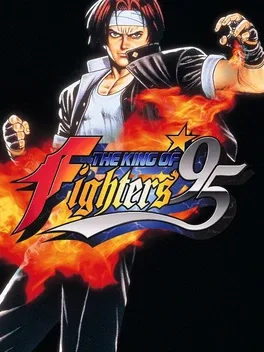
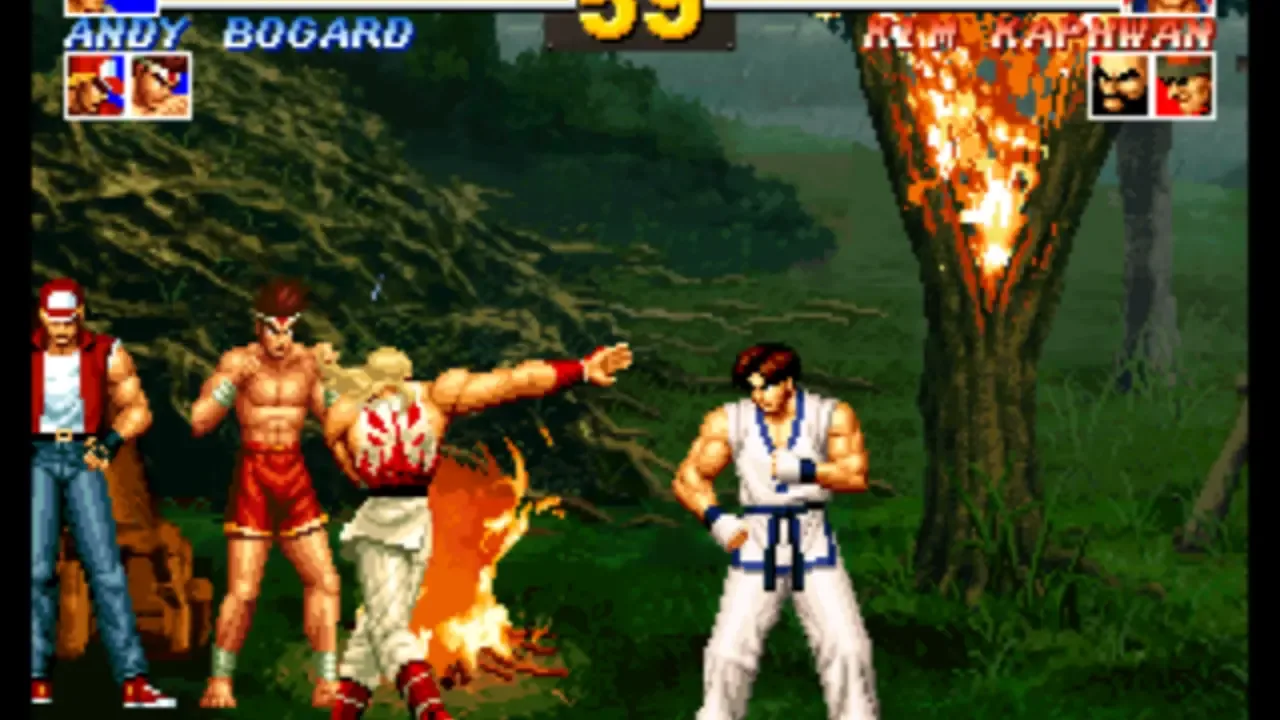
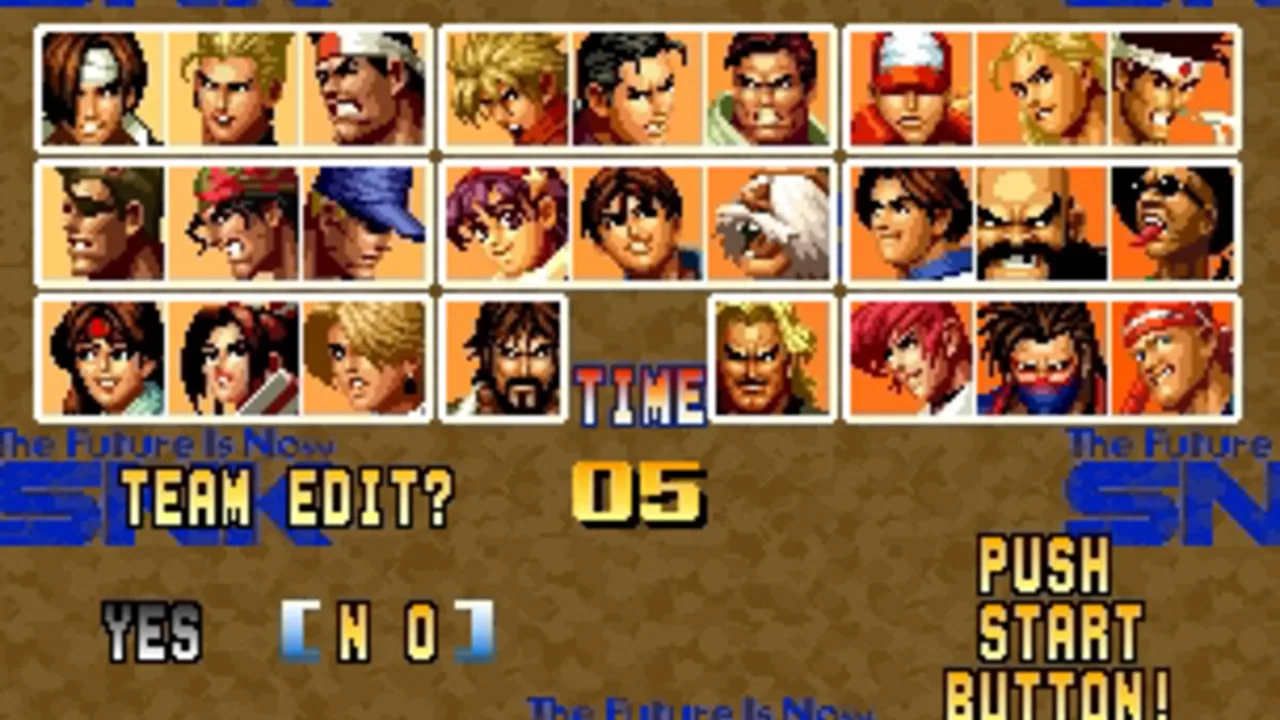
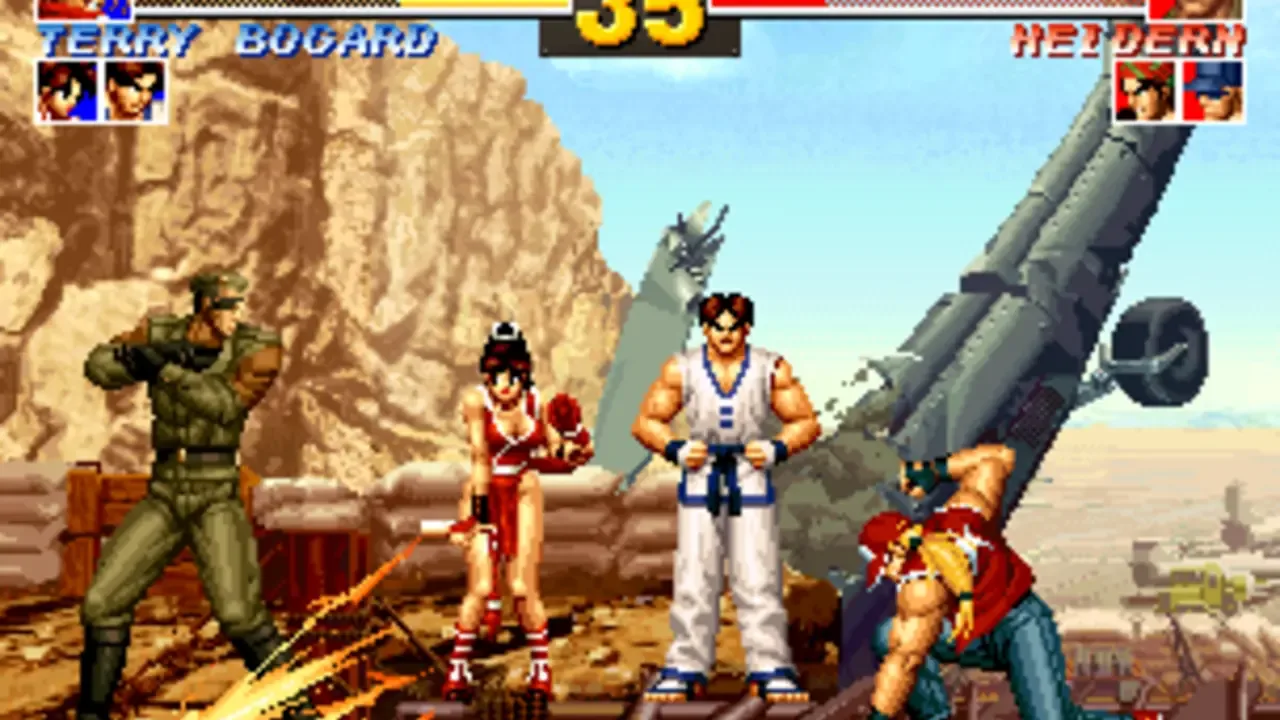
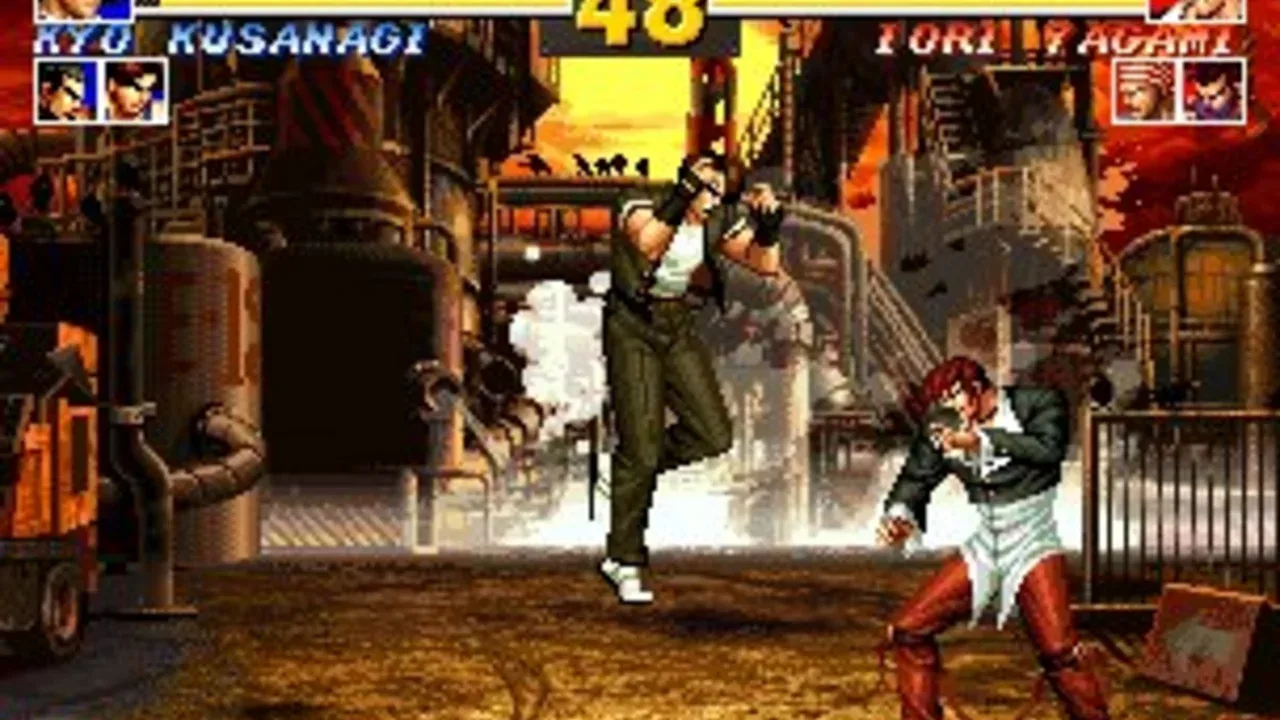
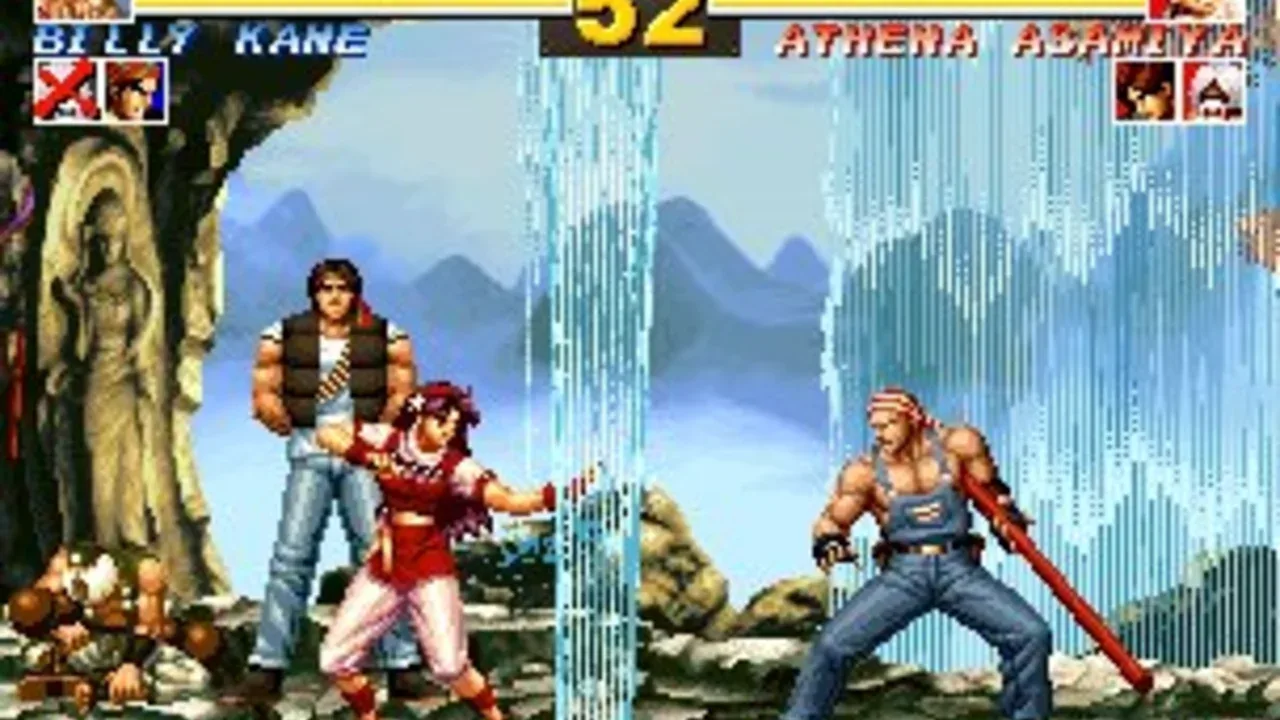
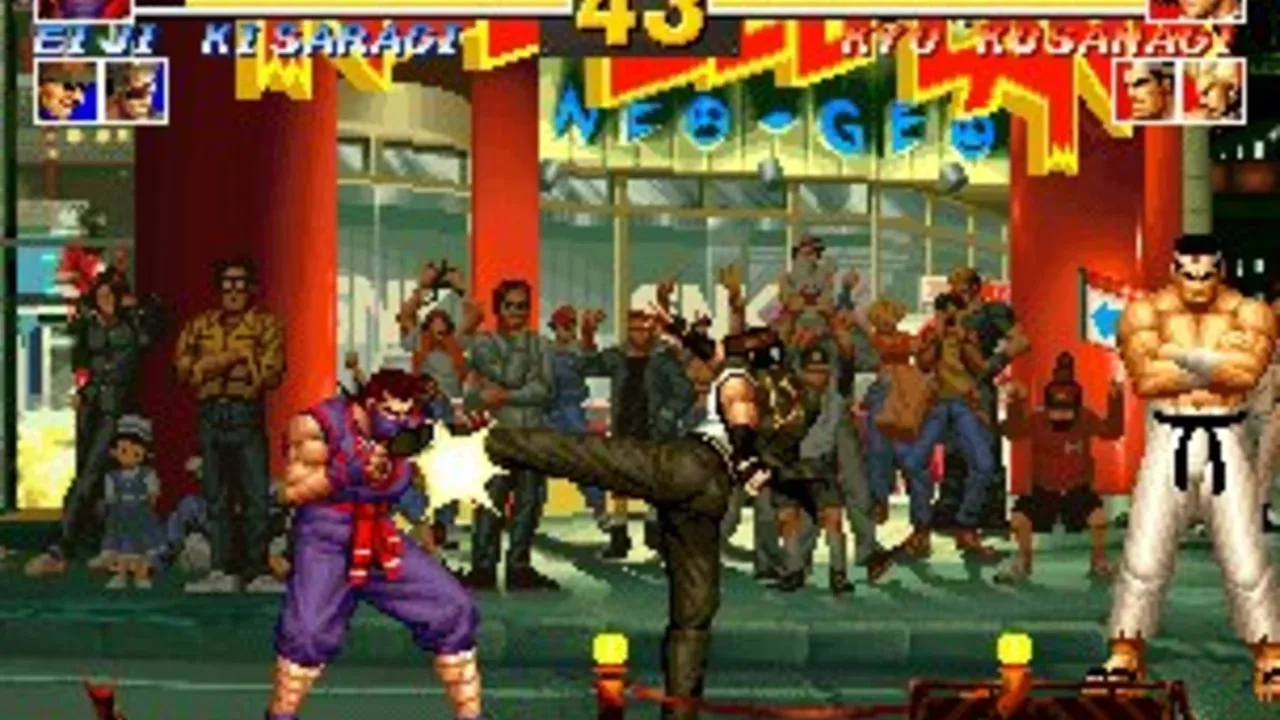
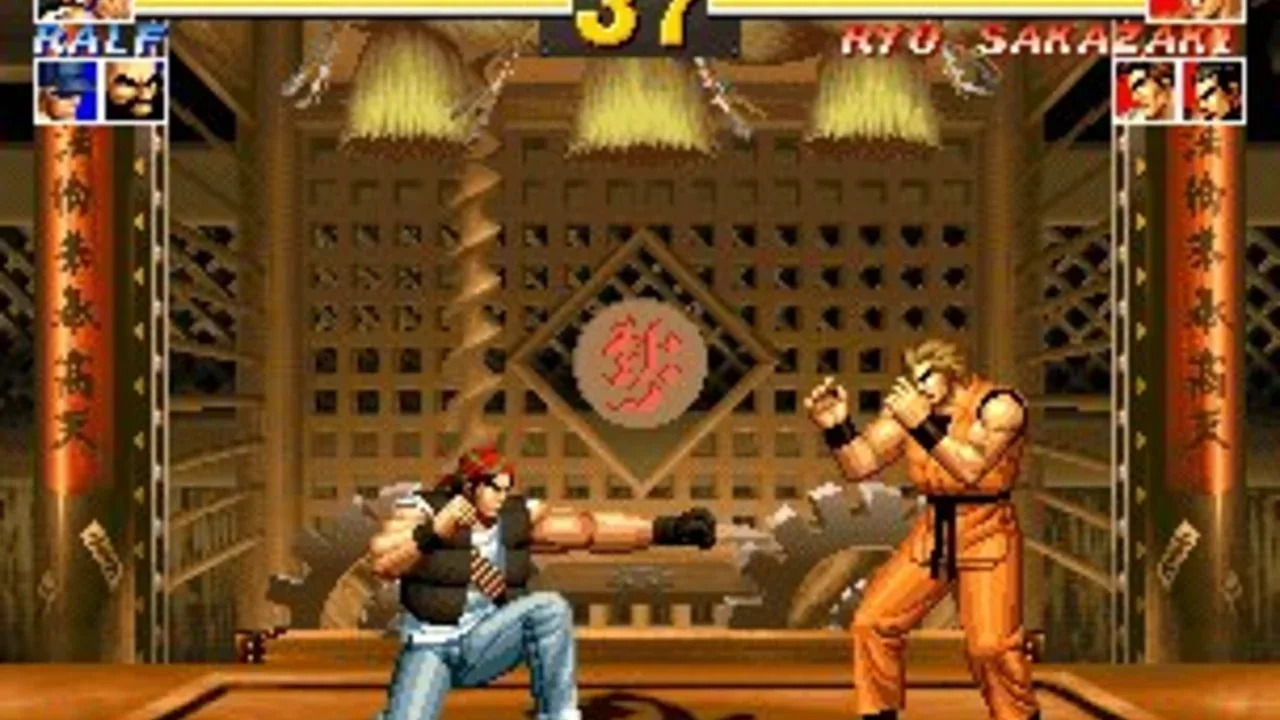
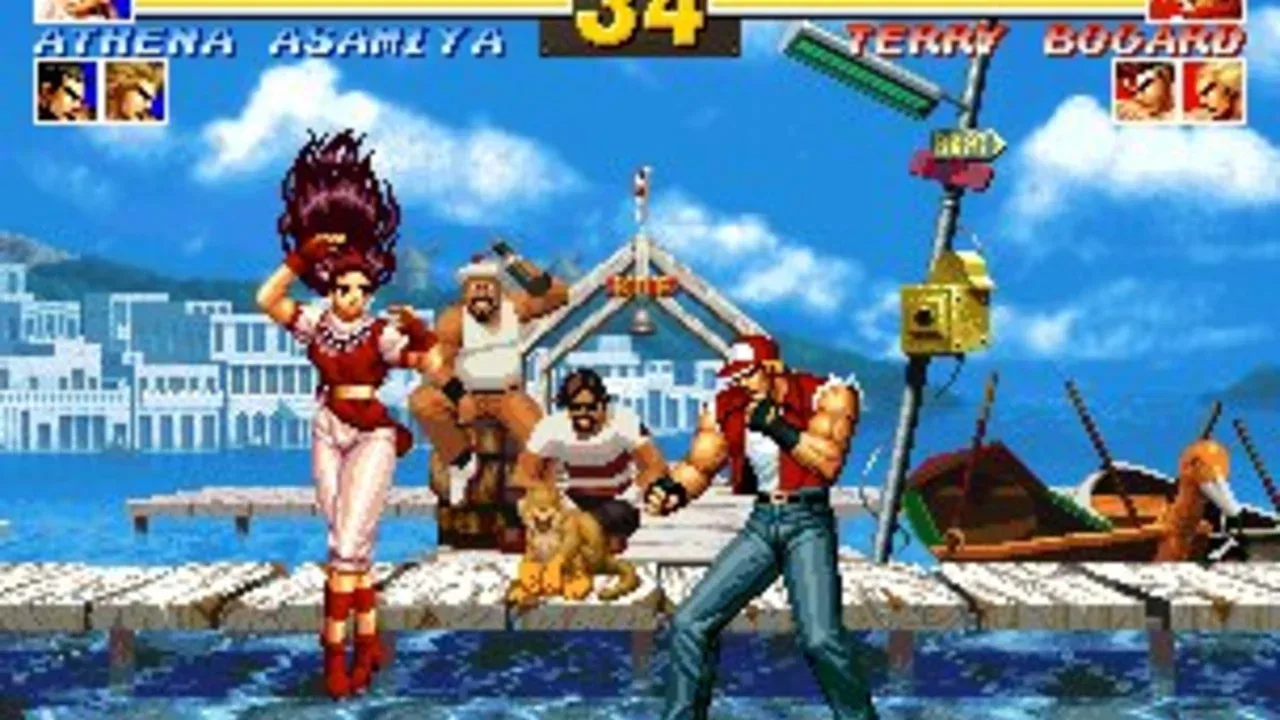
The King of Fighters '95


Buy
Part of collection:
The King of Fighters
(last 3 games)
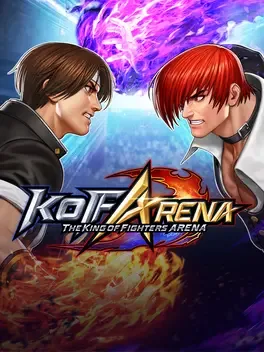
Enjoy the action of KOF anywhere, anytime! Enter KOF Arena and become the strongest fighter in the world in the newest installment of the greatest fighting game series, The King of Fighters!
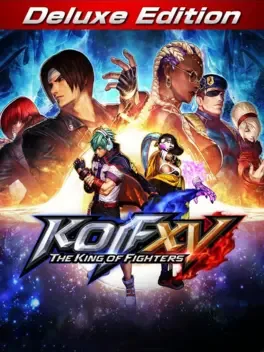
The King of Fighters XV, is the fifteenth installment of The King of Fighters series. Transcend beyond your limits with KOF XV! Classic popular characters, heroes and villains revived from the dead, new challengers, and more! The Deluxe Edition includes: - Base game - KOF XV DLC Characters "Team 1" - KOF XV DLC Characters "Team 2" - KOF XV DLC Costume "Garou: MotW Terry" - Digital Edition Exclusive Bonus - KOF XV DLC Costume "Classic Leona"
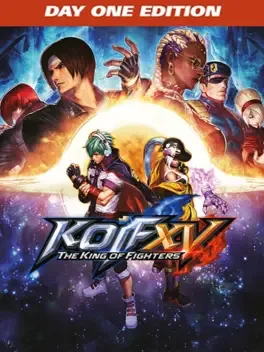
The King of Fighters XV, is the fifteenth installment of The King of Fighters series. Transcend beyond your limits with KOF XV! Classic popular characters, heroes and villains revived from the dead, new challengers, and more! The Day One Edition includes: - Base game - DLC Costume: Terry "Garou: Mark of the Wolves
Part of franchise:
The King of Fighters
(last 3 games)
Enjoy the action of KOF anywhere, anytime! Enter KOF Arena and become the strongest fighter in the world in the newest installment of the greatest fighting game series, The King of Fighters!
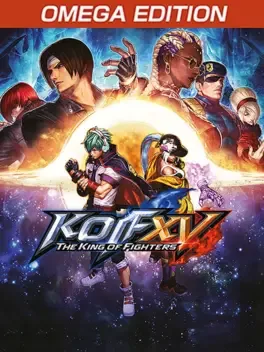
The King of Fighters XV: Omega Edition includes: - Main game - Three lithographs - Soundtrack - 119-page artbook - Special slipcase - Team Pass 1 (Team DLC 1 and Team DLC 2) - Terry "Garou: MotW" DLC costume - Leona "Classic Leona" DLC costume
The King of Fighters XV, is the fifteenth installment of The King of Fighters series. Transcend beyond your limits with KOF XV! Classic popular characters, heroes and villains revived from the dead, new challengers, and more! The Deluxe Edition includes: - Base game - KOF XV DLC Characters "Team 1" - KOF XV DLC Characters "Team 2" - KOF XV DLC Costume "Garou: MotW Terry" - Digital Edition Exclusive Bonus - KOF XV DLC Costume "Classic Leona"
Could be interesting
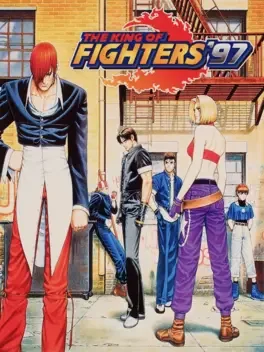
The King of Fighters '97 is a 1997 fighting game produced by SNK for the Neo Geo arcade and home console. It is the fourth game in The King of Fighters series. It was ported to the Neo-Geo CD, as well as the PlayStation and the Sega Saturn in Japan only.
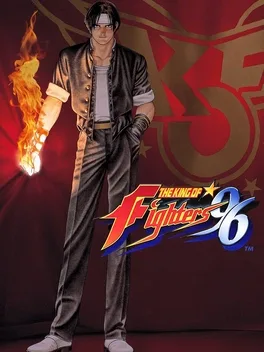
The King of Fighters '96 is a 1996 fighting game. It is the third game in The King of Fighters series, following The King of Fighters '95. SNK's flagship series returns for another year. Many of the changes in this year's KOF release come in the form of improved graphics, sound effects, music and totally redone character sprites. The gameplay of the system has been altered with the addition of "Rush" multi-hit combos and new moves for practically every character. The storyline of the series receives heavy focus in this release with the Orochi Saga swinging into high-gear. The King of Fighters '96 has 27 regular characters plus 2 boss characters (who can be unlocked with the use of a code). Newcomers to the tournament include Mr. Big from the Art of Fighting series, the bosses from Fatal Fury (Wolfgang Krauser and Geese Howard), and completely original characters like Leona Heidern, Mature and Vice. Other features carried over from the previous year include the ability to choose between the default "Team Fighting" mode or the traditional "Single Fighter" style of gameplay, plus the "Versus" and "Survival" gameplay modes.
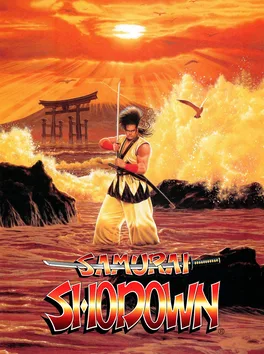
In early Japan, a man named Shiro Tokisada Amakusa preaches a heretic religion. Little does anyone know that Amakusa is really a servant of the evil Ambrosia, who took over Amakusa's body. Ambrosia wishes to shroud the world in darkness. Now, choose between 12 warriors (and 3 bonus characters) to fight for the honor of destroying Amakusa, and fulfilling a mission.
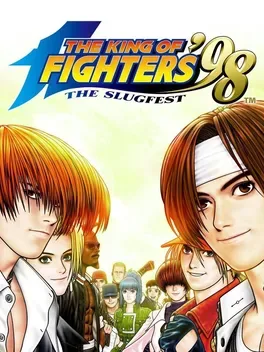
The All-Star dream battle is here at last: It's King of Fighters '98! Here come 38 of your favorite characters from the King of Fighters series. Your favorite characters and teams are back! Filled with new surprises like the Roulette Team Edit and Advantage System, King '98 will pop your cork with unrelenting excitement! The King of Fighters '98 is the fifth game in The King of Fighters series by SNK.
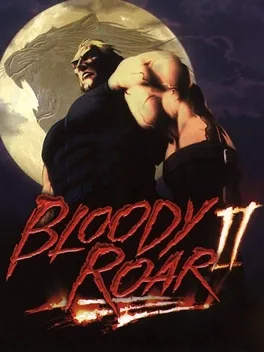
Bloody Roar 2, is a brawler arcade game developed by Eighting/Raizing in 1999. (Also known as Bloody Roar 2: Bringer of the New Age in Japan/Europe and Bloody Roar II: The New Breed in the United States.) Bloody Roar series differs from other fighting games as every character has a beast mode that can be used to use new attacks, recover some of lost health and generally to be faster and/or more powerful with their attacks.
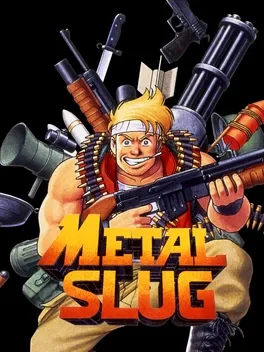
Metal Slug is a 1996 run-and-gun arcade video game originally developed by Nazca Corporation and released by SNK for the Neo Geo MVS. It is the first installment in the eponymous series. Set in 2028, players assume the role of Peregrine Falcon Strike Force soldiers Marco Rossi and Tarma Roving in a fight against the Rebel Army led by Donald Morden and overthrow his coup d'état to prevent a New World Order.
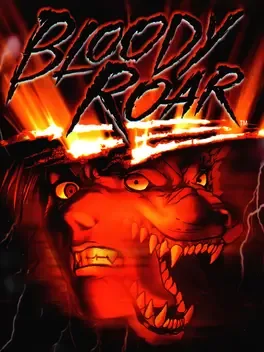
Bloody Roar, known as Bloody Roar: Hyper Beast Duel in Europe and Japan, is a fighting video game originally developed by Raizing (now Eighting) as an arcade game. It was later adapted for the PlayStation by Hudson Soft and published by Sony Computer Entertainment for the PlayStation. The arcade version was released on July 7, 1997 and was titled Beastorizer in North America. The PlayStation version was released in Japan on November 6, 1997, in North America (under the title Bloody Roar) on October 31, 1997 and in Europe on March 1998. Bloody Roar is the first game in the Bloody Roar video game series and was followed by four sequels on multiple platforms. The game's story centers on a group of warriors known as "zoanthropes", who have the power to transform into half-human half-animal "Beasts", and the Tylon Corporation, and underground organization that seeks to use zoanthropes as mind-controlled weapons. The game received generally positive reviews from critics for its originality and graphics, while the audio received mixed opinions. The game's success resulted in its re-release for The Best range on October 14, 1999. The game was re-released on the PlayStation Network in North America on August 20, 2009.
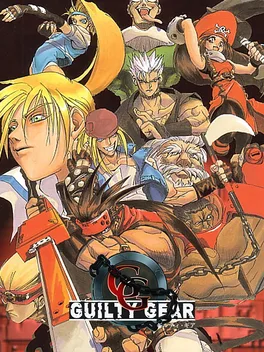
Guilty Gear is a 2D fighting game, in which you can play as one of 10 very different kind of characters. There is a selection of fighters from Holy Order knights, Armed Air Force soldiers, Mafia members and mad scientists. Each character has his/her own storyline that will be fully revealed during the final showdown. In battles, you can charge up for special attacks, as well as perform Deathblow moves, which would kill the opponent instantly. You can either choose to finish the Arcade mode, challenge your friends to a Versus battle, or either train your skills out in the Training mode.
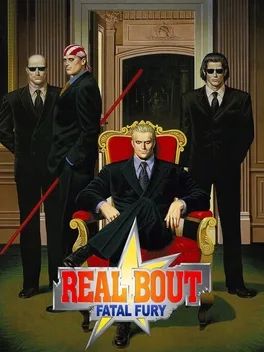
Real Bout changes the play controls from the previous Fatal Fury games, reducing the number of attack buttons from four to three: a standard Punch and Kick button, a "Strong Attack" button which can be either a stronger punch or kick attack, depending on the character. The game retains the three-plane "oversway" system from Fatal Fury 3, which features a main lane for fighting, with foreground and background planes used to avoid attacks or leap towards the opponent. A dedicated button is now used to make an "oversway" (or change plane) towards the background or foreground. Real Bout introduces a Power Gauge, which fills up as the player performs normal or special techniques against their opponent or defend themselves, similar to many super move gauges featured in other fighting games. The Power Gauge allows players to perform one of three types of Special Techniques, depending of the level of the Power Gauge. Real Bout also introduces stages with ring-outs, a gameplay feature previously introduced in 3D fighting games such as Virtua Fighter. If the player performs certain attacks on their opponent while next to the boundaries, the character will eventually destroy the barrier keeping the opponent in the ring and be able to knock them out of the stage for an easy win.
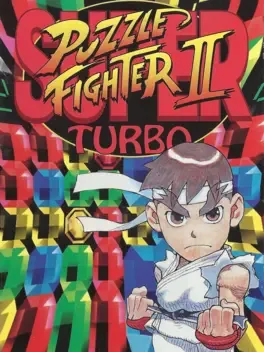
The game's title is a parody of Super Street Fighter II Turbo (or Super Street Fighter II X in Japan), as there are no other Puzzle Fighter games, and the game includes music and interface elements spoofing the Street Fighter Alpha and Darkstalkers games. It was a response to SEGA's popular Puyo Puyo 2 that has been sweeping Japanese arcade. A HD-remake version titled Super Puzzle Fighter II Turbo HD Remix, is available for purchase on Microsoft's Xbox Live Arcade and Sony's PlayStation Network.