
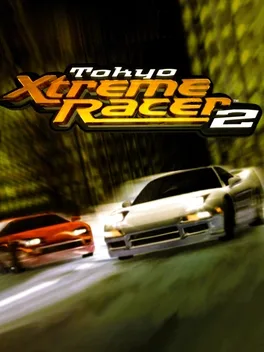
Tokyo Xtreme Racer 2


Buy
Part of collection:
Tokyo Xtreme Racer
(last 3 games)
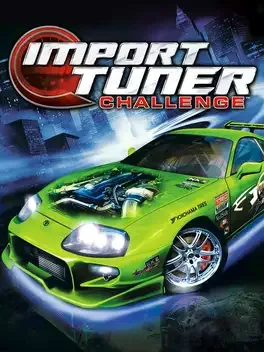
Import Tuner Challenge is set on the Shuto Expressways of Tokyo, Japan. There a total of 415 rivals in the game. It features C1 and Shinkanjo like many other TXR games but unlike TXR3, Import Tuner Challenge does not feature the highways of Nagoya, Osaka, and Yokohama. But two new highway sections of Tokyo are in the game which are Rt.3 Shibuya and Rt.4 Shinjuku.
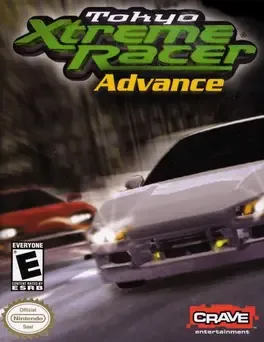
Game Boy Advance adaptation of the popular Japanese Tokyo Xtreme Racing series of games. The GBA game features more than 16 unique user-playable cars to choose from, each with various levels of car tuning options. "Tuner" fans are able to upgrade and customize their cars with plenty of performance and style modifications. Gameplay is similar to the console titles, meaning you explore different metropolitan areas and look for other car fans to challenge them to races. Players race through three cities- Tokyo, London and Los Angeles-on six different tracks. There are more than 60 different rivals to challenge.
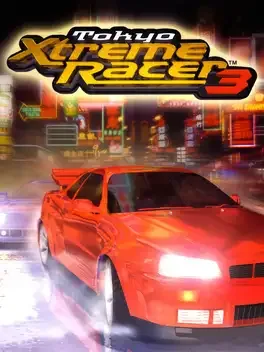
Tokyo Xtreme Racer 3 (or 首都高バトル 01 in the Japanese release) was released for the PlayStation 2 in 2003 as part of Genki's Shutokou Battle series. This entry in the series was released two years after the previous game, Tokyo Xtreme Racer: Zero. Much like other entries in the series, the objective is to become the fastest racer on the highways of Japan, but unlike those before it, TXR3 allows the players to race in Nagoya and Osaka instead of just Tokyo, and the Tokyo map is expanded to include the Yokohama area. In addition, this title adds a weather cycle. TXR3 includes a fully-licensed list of cars from a variety of Japanese, American, and European manufacturers instead of the old car model designation method of "Type-(technical model name)", and furthermore, the car list itself was culled of many repeat models so to simplify and reduce the number of cars. The A, B, and C car designations were also removed. Graphically speaking, Tokyo Xtreme Racer 3 is a definite improvement over previous entries. Car models feature a higher polygon count and are much more extensively detailed and lighting effects were also greatly improved, featuring light streaking effects, road reflections and higher quality car reflections.
Part of franchise:
Tokyo Xtreme Racer
(last 3 games)
Import Tuner Challenge is set on the Shuto Expressways of Tokyo, Japan. There a total of 415 rivals in the game. It features C1 and Shinkanjo like many other TXR games but unlike TXR3, Import Tuner Challenge does not feature the highways of Nagoya, Osaka, and Yokohama. But two new highway sections of Tokyo are in the game which are Rt.3 Shibuya and Rt.4 Shinjuku.
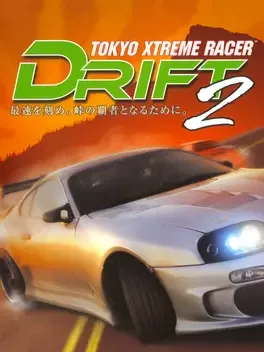
The mountains of Japan are calling - and so are your racing rivals. With the mysterious disappearance of the reigning champion, the tournament crown is suddenly up for grabs. Many will vie, only one can win. Do you have what it takes to race, grind and drift your way to the ultimate racing prize? Race in the dangerous mountains of Japan - Hakone, Niko, Haruna and Akagi - all faithfully recreated using the most advanced laser techniques to maintain every tight twist and turn.
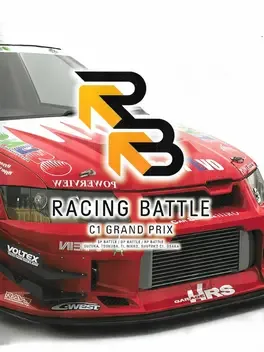
Genki's racing games have typically fallen into the Shutokou Battle series, a collection of late-night racing games that put you on the highways surrounding Tokyo. The company's latest PS2 racer, Racing Battle: C1 Grand Prix, maintains many of the same gameplay mechanics that Genki's other games contain, but this time it takes the cars off of the streets and drops them onto proper racetracks. Racing Battle will contain licensed cars. The version on display only has a handful, including an RX-7, a Supra, an Integra, an Impreza, and an S2000. The car models in the game look decent. They're nice and smooth, but they don't seem to be quite as detailed as the car models in some other comparable racing games. Like most other racing games, Racing Battle has multiple camera angles. But the first-person angle is pretty interesting. From this view, you get indicators that show how hard you're steering, accelerating, or braking. You also get a second, TV-style camera angle in a small window at the top of the screen. This is cool because it gives you a good idea of what's going on near your car. It's easy to see cars coming up behind you with this view and more effective than a standard rearview mirror. The gameplay in Racing Battle is roughly the same as what Genki has done with Shutokou and Kaido Battle series. Each car is associated with a fighting gamelike life meter, and the car in second place constantly loses pieces of its life meter. When one car runs out of "health," the race ends and a winner is declared.
Could be interesting
Tokyo Xtreme Racer is a racing video game released in 1999 as one of the console's launch titles, the game was one of the first mission-based racing games. The gameplay involves the player challenging other drivers on the Shuto Expressway in order to gain money to modify and enhance his or her car. The game features a wide variety of Japanese cars and tuning parts to purchase as the player progresses through rivals. When released in Japan, Shutokō Battle was one of the best selling Dreamcast titles at this time. The game is based on illegal highway racing in Tokyo's Wangan highway with custom tuned cars. A such phenomenon is growing popular in Japan since the 1990s with dedicated manga (Shutokō Battle's biggest inspiration being Wangan Midnight), anime series and video games (C1 Circuit, Wangan Trial, Naniwa Wangan Battle).
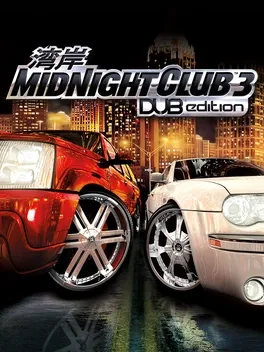
Midnight Club 3: DUB Edition is a racing game, developed by Rockstar San Diego and published by Rockstar Games, and is the third game in the Midnight Club series. Like previous installments in the series, the game is an arcade-style racer and focuses on wild, high-speed racing, rather than realistic physics and driving characteristics. The name derived from a partnership between Rockstar and DUB Magazine, which features heavily in the game in the form of DUB-sponsored races and DUB-customized vehicles as prizes.
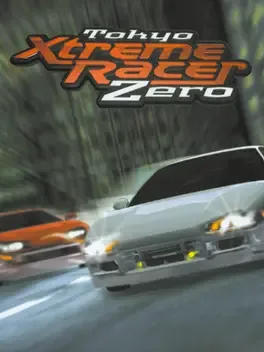
Tokyo Xtreme Racer Zero is a racing game developed by Genki for PlayStation 2. Despite its name, it is set between Tokyo Xtreme Racer 2 and Drift, and has enhanced sound and graphics. The game was released in Japan as Shutokou Battle 0, but was also a release in North America. The game was released in a PAL version in Europe and Australia under the title Tokyo Xtreme Racer (not to be confused with the Dreamcast title of the same name). This is the first game in the series that has been released on a platform other than the Dreamcast. Zero was originally to be released on the Dreamcast but was then canceled and moved to the PlayStation 2. The Tokyo Xtreme Racer series has produced a total of six games, the first four being U.S. localizations of the first four Shutokou Battle series games and the final two being U.S. localizations of the first and third Kaido Battle series games.

Wangan Midnight Maximum Tune is the third and latest arcade installment of the racing video game series.
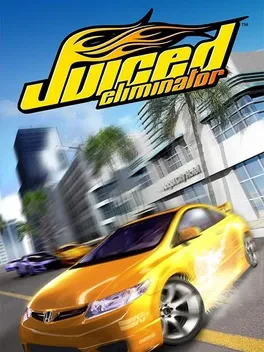
This version of Juiced is built specifically for PSP, with unique multiplayer games and and an expansion on the crew and pink-slip racing features. The game was built from the ground up on PSP, with new cars, tracks, characters and game modes. The built-in wireless connectivity on the PSP lends itself to expanding the multi-player options, including multiplayer crew races, pink slip racing and the all new ‘Eliminator’ mode where the slowest driver per lap is removed from the competition, and the winner is the last one left in the race.

They're called kinetic suits. They represent a total merging of man and machine with one goal in mind: speed. High speed. The "drivers" do more than operate their cycles -- they become cycles for insane velocity and maneuverability in this ultimate futuristic race. Besides acceleration and braking, the kinetic suits allow various antigravity tricks that can be performed for speed boosts, not unlike the system seen in SSX. At breakneck speed, there's no room for error; quick decisions and lightning reflexes are needed to weave your way through the tight tracks. Strap yourself in for one of the fastest rides you'll ever experience with your PS2!

The future of racing is here, and it's called MOTORHEAD. This game allows you to hop in one of 10 streamlined racers and test your skills on eight obstacle-filled courses that wind through urban, desert, and seaside terrain.
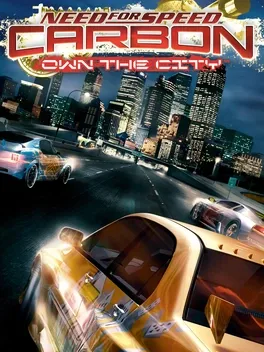
Although this version of Need for Speed: Carbon - Own the City shares its name with its counterparts, the game is completely different. Unlike the other versions there is no canyon racing or drift racing. The goal of the game is to build up a gang of the best racers and take over all the city's territories. The driving is all city-based similar to the open world of Need for Speed: Most Wanted. The tuner culture/car customization features started in Need for Speed Underground are also present. There is a light story, presented as comic book style illustrations, that unfolds as the player take over territories and complete chapters.

Project Gotham Racing (PGR) is a racing game, the first in its series, developed by Bizarre Creations and published by Microsoft for the Xbox gaming console. The first title in the franchise, Project Gotham Racing, is an Xbox launch title that quickly became the second best-selling game for the console after Halo: Combat Evolved. PGR is a spiritual successor to the Sega Dreamcast game Metropolis Street Racer after Sega discontinued the hardware business and became a software based company. PGR is as of July 12, 2010 compatible with the Xbox 360 through a downloadable update.
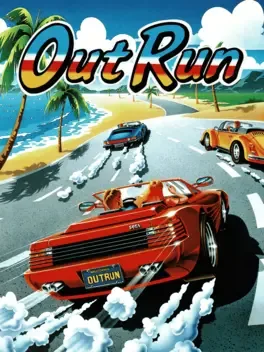
OutRun is a racing game originating in the arcades. The player can race across varied terrain in a readily available Ferrari, complete with a female passenger, over a series of short tracks. Gameplay is viewed form just above and behind the car. The roads are full of sharp bends and hazards, contact with which can cause the car to roll and lose the player's time. On each section of track there is a fork in the road, allowing the player to choose which direction he or she wishes to go in. The player has to to complete five track sections in total, out of the fifteen in the game.