
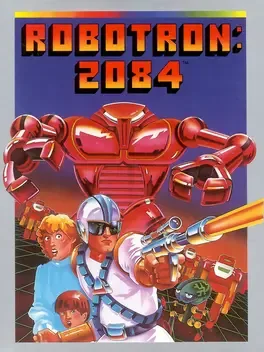
Robotron: 2084


Buy
Part of collection:
Robotron
(last 3 games)
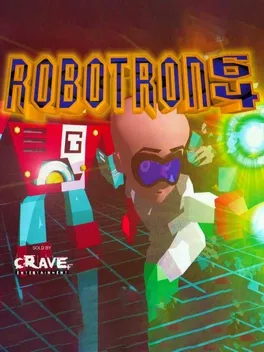
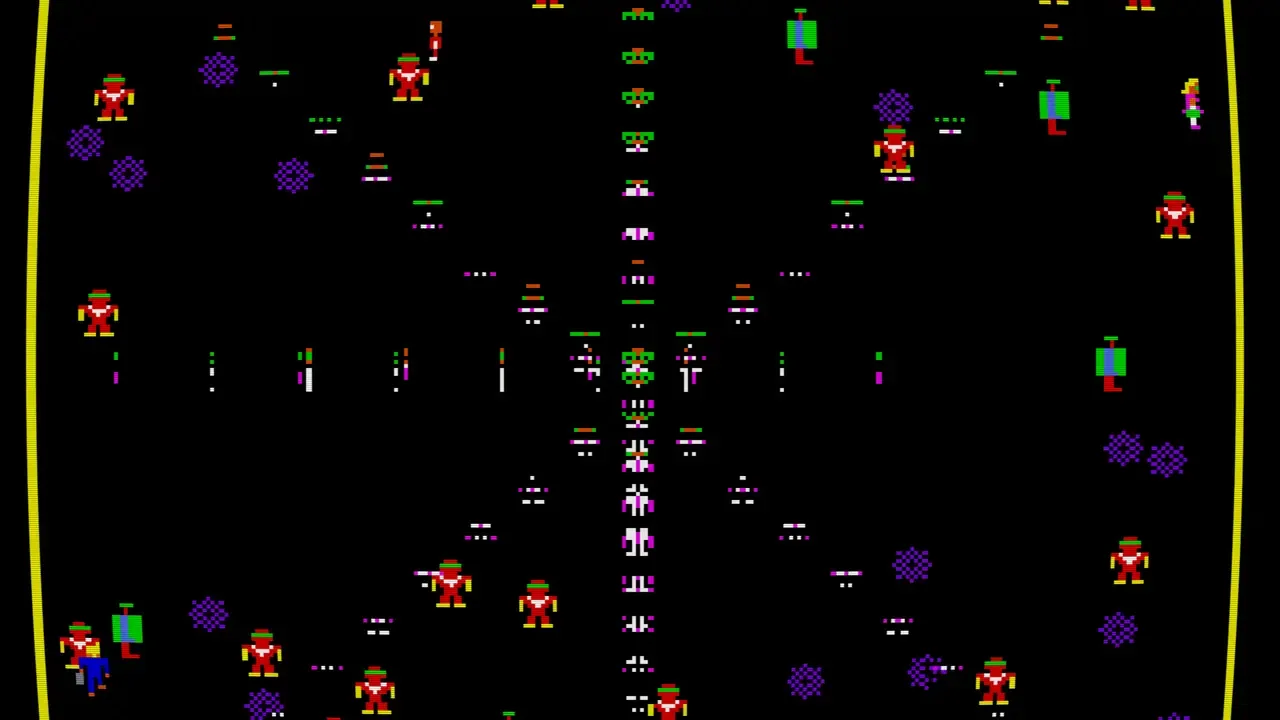
A Nintendo 64 port of Robotron X, an update of the arcade classic Robotron 2084 that was released on PS1 and PC a month earlier.
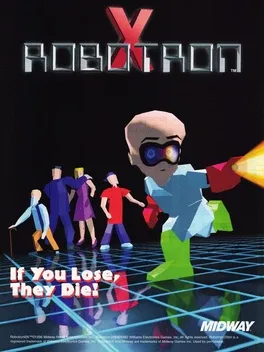
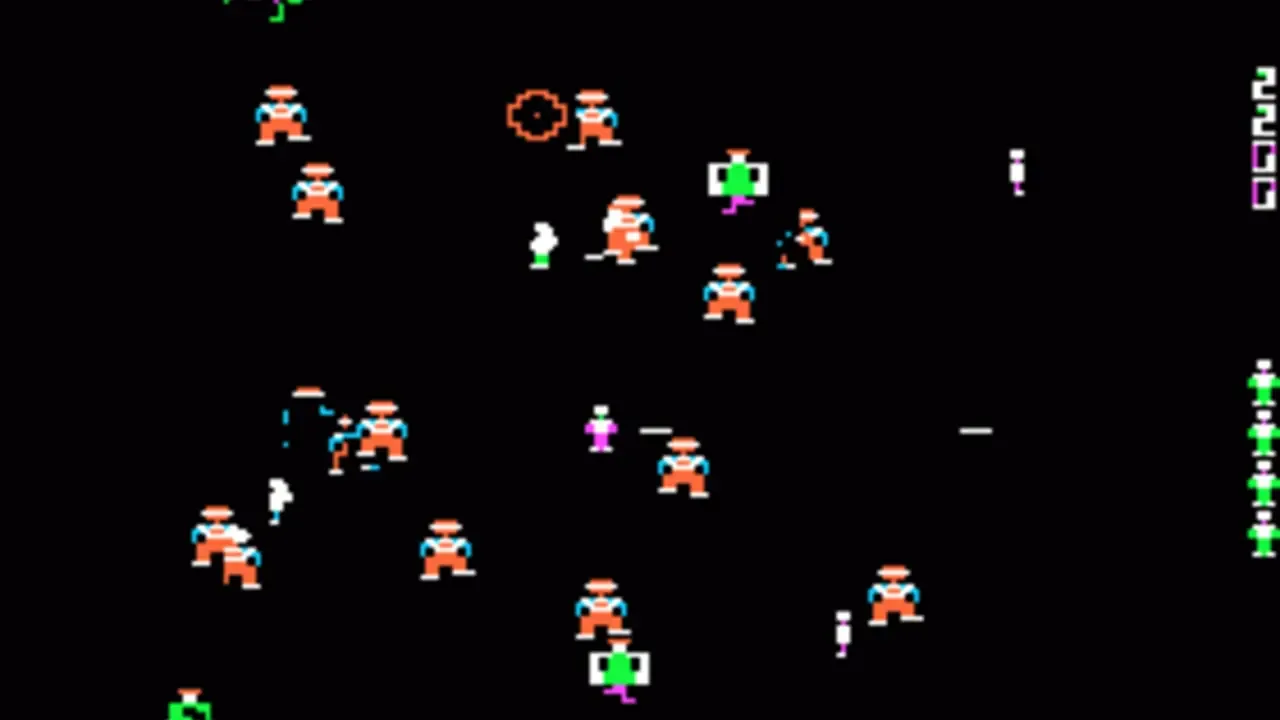
The arcade classic is taken to the next level, this time in 3D. The super-enhanced hero Ugene is once again called into action to save the last human family against the hordes of relentless Robotrons. Battle through 100 different levels, gaining new power-ups and abilities as Ugene survives wave after wave of the unrelenting hordes. While Ugene may face the familiar Robotrons, there will be new additions and tricks that the killer robots will use against the last surviving human family. Ugene must protect them at all cost while racking up the highest possible score!
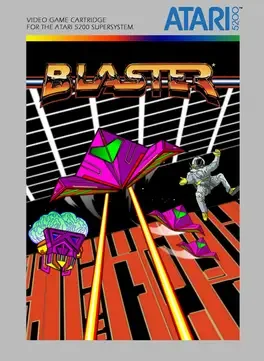
Blaster developed by Vid Kidz for Williams was released for the arcades and is quite obscure. What is interesting however is that the Atari 5200 version that was not released was actually made before the arcade game. An unofficial sequel to Robotron 2084 (As it takes place in 2085) Blaster is a 3d style shooter with impressive graphics for the time. In it the player takes the view from a spaceship cockpit so moving in the different directions shifts the entire screen. There are four levels you will play through avoiding obstacles, saving humans, and defeating alien enemies. Upon beating the four levels the game loops but will be more difficult.
Could be interesting
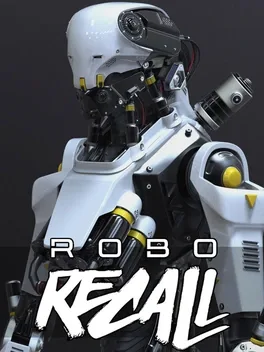
Use creative combat tactics and skill shots to earn high scores as you teleport through city streets and rooftops in an awe-inspiring ballet of bullets. Tear apart your robot foes and use them to fend off the enemy onslaught. Unlock, customize and test weapons before taking on challenges that put your newfound skills to the test!

In this shoot 'em up the player has to fight off four assault waves consisting of different enemy types until he reaches a huge UFO. After destroying the protective plates guarding the UFO's pilot in his cockpit the player can kill the pilot. The game starts anew with harder enemies.
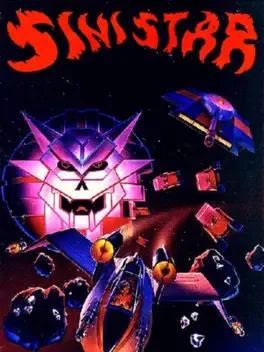
The player pilots a lone spacecraft, and must create "Sinibombs" by shooting at drifting planetoids and catching the crystals that are thereby released. Sinibombs are needed to defeat the game boss, Sinistar, an animated spacecraft with a demonic skull face. Sinistar does not exist at the start of the game, and is continuously under construction by enemy worker ships. Though time is crucial, attempting to mine too quickly will destroy a planetoid without releasing any crystals. Enemy worker ships are also gathering crystals (often stealing them from the player) which they use to construct the Sinistar. Enemy warrior ships can directly attack the player's ship. The player is given a head-start before the enemy ships have enough crystals to begin construction. Game ends when the player's ships are all destroyed. Once the Sinistar is completely formed, a digitized voice makes various threatening pronouncements, including "Beware, I live!," "I hunger, coward!," "I am Sinistar!," "Run! Run! Run!," "Beware, coward!", "I hunger!," "Run, coward!," and a loud roaring sound. The Sinistar has no weapon attacks, but if it contacts the player's ship while it darts about the playfield, the player's ship will be "eaten" and destroyed. A total of 13 Sinibombs are required to destroy a fully built Sinistar, although an incomplete Sinistar can be damaged to slow construction. Each short-range Sinibomb automatically targets the Sinistar when fired, but can be intercepted by a collision with an enemy ship, enemy fire, or a planetoid. The player moves from one zone to the next each time he defeats the Sinistar. A sequence of four zones repeats continuously after the first zone. Each is named for the most numerous feature of that zone: Worker Zone, Warrior Zone, Planetoid Zone, and Void Zone (the Void Zone is especially difficult because it has very few planetoids). Beginning with the first Worker Zone, a completed but damaged Sinistar can be repaired/rebuilt by the enemy ships by gathering more crystals, extending its "lifespan" if the player is unable to kill it quickly.
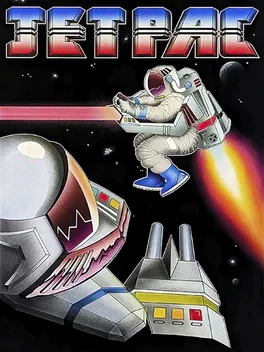
The 'Acme Interstellar Transport Company' is delivering spaceship kits to various planets in the solar system throughout the Galaxy; and as chief test pilot, all you have to do is assemble the Rockets, and thrust on to your next destination. As you don't often get the chance of a free trip across the Galaxy, this is a great opportunity to get rich! Stop off on several planets on your journey, collect the odd sack of precious gems, elements or gold, and take them back with you. Sounds simple doesn't it! But before you make yourself the richest person in the whole Universe, remember to refuel your Spaceship - with 6 fuel pods - every time you land on a planet. Any other goodies you collect are yours to keep. Upon landing, you will find yourself equipped with the very latest Hydrovac Jet Pac, which can automatically air lift almost any rocket stage, fuel pod or valuables that you care to land upon, and release them over the rocket ship base. Don't forget your mega-powerful, Quad Photon Laser Phasers can blast any nasty, mean aliens who might object to your visit.
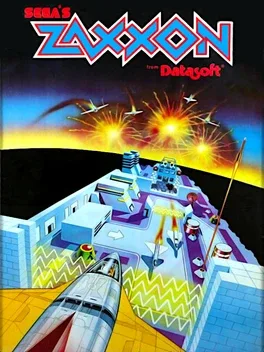
Zaxxon is a 1982 isometric shooter arcade game developed and released by Sega. The game gives the player the experience of flying a fighter craft through a fortress while shooting at enemy entities (missiles, enemy gunfire, etc.) The object of the game is to hit as many targets as possible without being shot down or running out of fuel, which can be replenished paradoxically, by blowing up fuel drums.
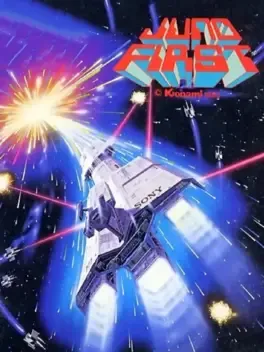
Juno First is a shoot 'em up originally developed and published by Konami Corporation for Arcades. The game was later published by Mylstar Electronics (US arcades), Datasoft Inc. (Atari 8-bit, PC Booter, and Commodore 64), and Sony Computer Entertainment Japan (MSX). Juno First is a top down, vertical scrolling shooter in which there is a limited amount of time to defeat the enemies in each wave. The players spaceship starts out with a laser that has a longer reach than the enemy weapons. The enemies start out firing a few bullets at the ship but the amount enemy fire rapidly increases as players progress through to the next waves. Certain enemies fire tracking missile-like projectiles that can shoot additional bullets.
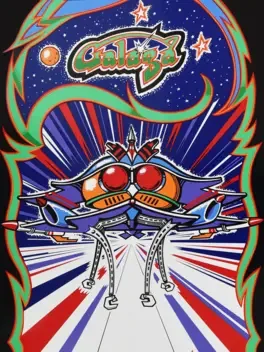
The objective of Galaga is to score as many points as possible by destroying insect-like enemies. The player controls a starfighter that can move left and right along the bottom of the playfield. Enemies swarm in groups in a formation near the top of the screen, and then begin flying down toward the player, firing bombs at the fighter. The game ends when the player's last fighter is lost, either by colliding with an enemy or one of its bullets, or by being captured. Galaga introduces a number of new features over its predecessor, Galaxian. Among these is the ability to fire more than one bullet at a time, a count of the player's "hit/miss ratio" at the end of the game, and a bonus "Challenging Stage" that occurs every few levels, in which a series of enemies fly onto and out of the screen in set patterns without firing at the player's ship or trying to crash into it. These stages award a large point bonus if the player manages to destroy every enemy. Another gameplay feature new to Galaga is the ability for enemies to capture the player's fighter. While the player is in control of just one fighter, a "boss Galaga" (which takes two shots to kill) periodically attempts to capture the fighter using a tractor beam. If successful, the fighter joins the enemy formation. If the player has more lives remaining, play resumes with a new fighter. The captured fighter flies down with the enemy that captured it, firing upon the player just like normal enemies, and can be shot and destroyed. The player can free the fighter by destroying the boss Galaga while in flight, causing the captured fighter to link up with the player's current fighter, doubling his or her firepower but also making a target twice as large. Galaga has an exploitable bug that can cause the attackers to stop firing bullets at the player, due to a coding error. In addition, similar to the famous "Split-Screen bug" in Pac-Man, a bug exists in Galaga in which the game "rolls over" from Level 255 to Level 0. Depending on the difficulty setting of the machine, this can cause the game to stall, requiring that the machine be reset or power-cycled in order to start a new game.
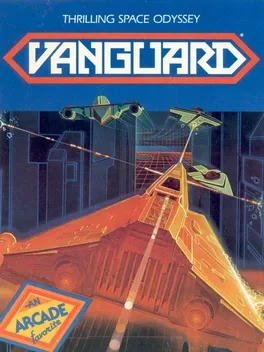
Vanguard is a shoot 'em up game which leads the player through five different zones to the City of Mystery where the creature Gond awaits him which he has to kill. The five zones run horizontally as well as vertically and are filled with different enemies for each zone. Being hit by an enemy, a projectile or the walls results in losing a life. There are, however, collectable items which grant the player a short time of invincibility. Shooting differs somewhat from other shoot 'em ups: The player's ship is able to fire in all four directions depending on the direction the player steers his ship. However, in doing so, the ship flies in that direrction as well which may result in crashing into an obstacle. The ship is constantly running out of fuel which can be replenished by killing enemies. After defeating Gond the game starts anew on a higher difficulty level.
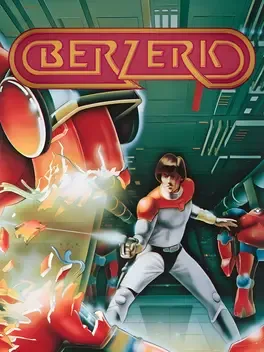
Maneuver your humanoid through the electrified mazes of robot filled rooms. You many kill off the first group of robots but initial success does not mean survival...future groups begin firing at your! Added danger lurks when Evil Otto enters. He can jump the maze walls and squash you if you linger too long!
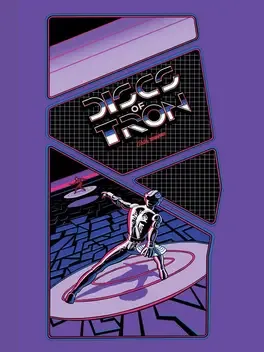
In 1983 Bally midway released the follow up to the original Tron game titled Discs of Tron. In Discs of Tron the game recreates the disc fighting sequence of the movie where you progress through different platforms in a disc battle against the evil enemy Sark. Once again players utilize an 8-way joystick for moving with one button for firing and a rotary dial for controlling the direction of the fire.