
Wizardry: Knight of Diamonds - The Second Scenario


Buy
Part of collection:
Wizardry
(last 3 games)
Announced for the series 40th anniversary, Wizardry Variants: Daphne is a brand-new mobile RPG focused on unforgiving dungeon crawling and party building.
Wizardry: Proving Grounds of the Mad Overlord is a full 3D remake of the first game in the legendary Wizardry series of RPGs. It is built directly on top of the original 1981 game's code. Although it looks all new, underneath the hood is the authentic game. You can even view the original Apple II interface as you play. While the well-known difficulty of the enemies has not been altered, quality-of-life improvements have been added in every area. Party management, navigation, spellcasting, and combat have all been significantly enhanced.
Wizardry Online is a free-to-play massively multiplayer online role-playing game for PC, and a series in Wizardry Renaissance, developed by Gamepot and published by Sony Online Entertainment released on November 14, 2010 in Japan, and January 30 in North America and Europe via Steam. The game services ceased its operation on July 31, 2014 in North America and Europe, and later December 20, 2016 in Japan. An unofficial private server still exists.
Part of franchise:
Wizardry
(last 3 games)
Announced for the series 40th anniversary, Wizardry Variants: Daphne is a brand-new mobile RPG focused on unforgiving dungeon crawling and party building.
Wizardry: Proving Grounds of the Mad Overlord is a full 3D remake of the first game in the legendary Wizardry series of RPGs. It is built directly on top of the original 1981 game's code. Although it looks all new, underneath the hood is the authentic game. You can even view the original Apple II interface as you play. While the well-known difficulty of the enemies has not been altered, quality-of-life improvements have been added in every area. Party management, navigation, spellcasting, and combat have all been significantly enhanced.
This is a sequel to "Wizardry: Seimei no Kusabi", released in November 2009. There are three dungeons available, and the game added quality-of-life features to make it more user-friendly such as save points and fast travel. Existing characters from the previous game have been removed, and players can create their own characters and form an original party from the beginning. The game features various systems designed to enhance the fun of dungeon exploration, such as a real-time dungeon that uses the touch pen to solve various gimmicks, a "FAST mode" that cuts attack and spell effects and speeds up messages, a "cooperative attack" that can be activated by combining spells and active skills used during a turn, encounter monsters and adventure records, and a manual to check "achievements." "Wizardry" is an RPG born in 1981 and is considered the originator of computer RPGs and a globally popular work. This game is a 3D dungeon RPG where players can enjoy labyrinth exploration by delving into deep dungeons. Please enjoy the adventure that follows the world view and system that are characteristic of "Wizardry" while incorporating unique gimmicks that are unique to the Nintendo DS.
Could be interesting
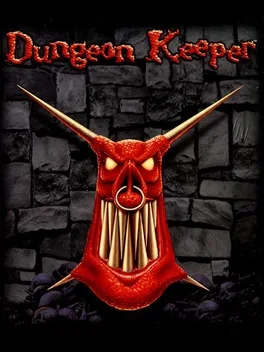
Dungeon Keeper is a strategy video game in which the player attempts to build and manage a dungeon or lair while protecting it from invading 'hero' characters intent on stealing the player's accumulated treasures and killing various monsters. This was Peter Molyneux's final project with Bullfrog before he left the company in August 1997 to form Lionhead Studios. The player uses a mouse, represented in-game as a hand, to interact with a bar on the left-hand side of the screen, allowing them to select which rooms to build and which spells to cast. The player can also use the hand to pick up creatures and objects in the dungeon and carry them around, allowing for tactics such as gathering an assault force and dropping off the creatures en masse once a foothold has been established. The hand also allows the player to "slap" objects and thereby interact with them: creatures will hurry up when slapped, some traps will be triggered and prisoners in the Torture Chamber can be tortured. The main game view is in isometric perspective; this view can be zoomed and rotated. The player also has the option of possessing one of their creatures, and seeing the dungeon from that creature's first-person perspective, as well as using their attacks and abilities. The map is divided into a grid of rectangles, most of which are invisible. A smaller part of the map is shown as a minimap in the top left corner of the screen. A world map is also available, and at the beginning of the game the player is allocated one of the 20 regions of a fictional, idyllic country to destroy. As the player progresses through these regions, each of which represents a level of the game, the areas previously conquered will appear ransacked, twisted, and evil. Before starting a new level, the Mentor will tell the player about the current region and its attributes. After completing a level, the Mentor will talk about the "improvement" of the destroyed region: "The streets run with the blood of the slain. Screams of pain and howls of anguish rip the night air like a vengeful siren's song. This really is somewhere you can take the kids for the weekend." The Dungeon Heart represents the Dungeon Keeper's own link to the world. If it is destroyed, the player loses the level, and must restart. Along with the heart, the player begins with a small number of imps, the generic work force for all dungeon activities: they can dig tunnels into the surrounding soil, capture enemy rooms and Portals, mine gold and gems, set traps, and even attack when desperate or threatened. Slapping creatures forces them to work faster for a while, but removes some of their health and happiness. Once the Imps are busily working, the player must then set up a basic infrastructure: Lairs for monsters, a Hatchery (where chickens, which serve as food for the minions, are bred), and a Treasury for storing gold. After connecting the dungeon to a "Portal", monsters will arrive. As the game progresses, the player moves along a technology tree, unlocking further rooms. The dungeon has a fleshed-out ecology: some creatures are natural enemies. Flies and Spiders are often found at odds with one another, while a Horned Reaper, if it has gone berserk, will attack all creatures in its path. The goals for each level are fairly straightforward: they generally fall along the lines of eliminating the heroic force or destroying all other Dungeon Keepers on the level.
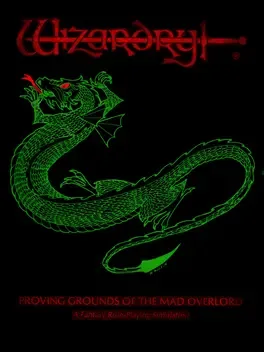
The Mad Overlord Trebor was once only power-mad, but went off the deep end after he acquired a magical amulet of immense power, only to have it stolen from him by his nemesis, the evil archmage Werdna. Werdna, not quite sure how to use the amulet properly, accidentally causes an earthquake which creates a ten-level dungeon beneath Trebor's castle. To avoid looking silly, Werdna declares the dungeon to be the new lair for him and his monster hordes. Trebor, not to be outdone, declares the labyrinth his new Proving Grounds where adventurers must prove themselves for membership in his elite honor guard, and incidentally retrieve his amulet in the process. The first Wizardry was one of the original dungeon-crawling role-playing games, and stands along with Ultima and Might & Magic as one of the defining staples of the genre. The player generates and control a party of up to six different adventurers, choosing from four races (humans, elves, dwarves, gnomes and hobbits), three alignments (good, neutral and evil), and four basic classes (fighter, priest, mage and thief). These can later evolve into elite classes (bishop: priest with mage spells; samurai: fighter with mage spells; lord: fighter with priest spells, and ninja: fighter with thief abilities) if they meet the necessary level requirements. After outfitting the party with basic weapons and armor, the player sends it into a 3D vector maze-like dungeon to fight monsters in turn-based combat and find treasure.
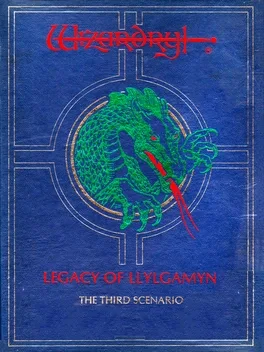
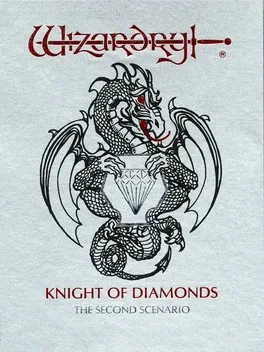
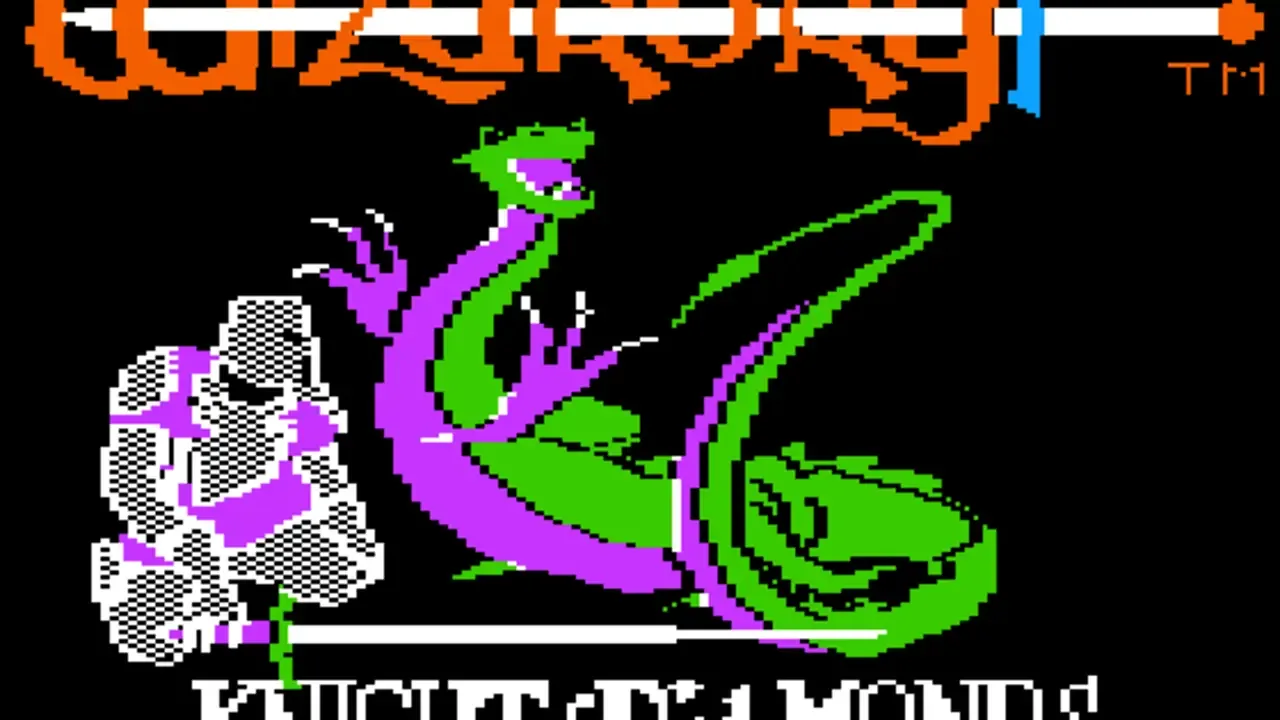
A generation has passed since your band of adventurers reclaimed the Staff of Gnilda and the armor of the Knight of Diamonds, and the land has been at peace. But now nature itself seems to be attacking the land of Llylgamyn, as earthquakes and tidal waves ravage the land. The Sages believe the Orb of Scrying is the city's salvation, but it is guarded by the dragon L'kbreth. A band of explorers must once again venture forth in search of the Orb.
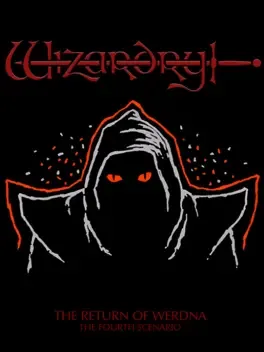
The fourth game in the Wizardry series, The Return of Werdna takes a decidedly different approach from all the games that preceded it. Instead of playing as a party of six player-generated characters, the player controls Werdna himself, the evil Archmage from the first game. It seems that after Werdna was defeated by the party of adventurers who stole his amulet, he was imprisoned at the bottom of his ten-level labyrinth in an eternal slumber to be tortured by nightmares for eternity. Although Werdna was supposed to sleep forever, somehow he has awakened, and now he is out for revenge. At the beginning of the game Werdna finds himself in a situation that is singularly unique for most arch-villains: he is stripped of his powers, trapped within his own former stronghold, and filled with the realization that the same traps and monsters he created to keep adventurers out now act as obstacles to his freedom. Werdna will slowly regain his magical powers as well as have the ability to summon helpful monsters to accompany him on his journey and aid him in combat. Unlike other role-playing games, no experience is awarded for defeating enemies. Instead, Werdna can only become stronger by searching for pentagrams found in the labyrinth. Accessing a new pentagram allows Werdna to summon stronger monsters and restore his health and spellcasting powers. Werdna will have to fight a variety of monsters and guardians, but many of the randomly appearing enemies in the game are parties of adventurers not unlike those who were controlled by the player in the previous three games. In addition, Werdna is being chased by the rather ticked-off ghost of his old enemy Trebor. The game features a somewhat tweaked version of the same engine and graphics used in the earlier installments of the series. The difficulty level has been increased due to the lack of an experience points system, which often leaves the player-controlled party underpowered. The labyrinth contains abundant traps and complex mazes. For obvious reasons it is no longer possible to import characters from the previous games. The game features three different endings: a good ending, an evil ending, and a special Grandmaster ending which is often considered to be the single most difficult task to achieve in the entire series.
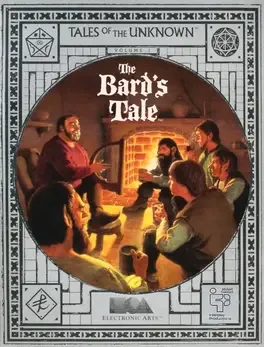
Tales of the Unknown: Volume I, better known as "The Bard's Tale", is an RPG developed by Interplay Productions in 1985 originally for the Apple II. It was quickly ported to numerous other platforms and became widely successful. This was partly because it incorporated unprecedented 3D graphic design, featuring partly animated character portraits and engaging gameplay. It also helped that the game was available on the Commodore 64-the most successful game console at the time, whereas the main competitor-the Ultima series, was not.
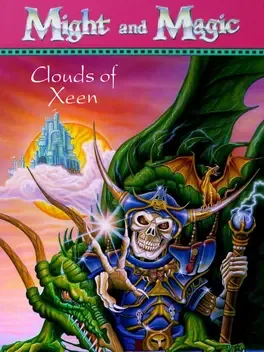
Might and Magic IV: Clouds of Xeen (originally released as Might and Magic: Clouds of Xeen) is the fourth installment in the Might and Magic series by New World Computing.
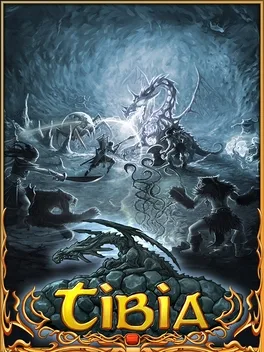
One of the earliest and most successful massively multiplayer online role-playing games (MMORPGs) in history, Tibia is a two-dimensional tile-based game set in a fantasy world with pixel art graphics and a top-down perspective. There are currently 68 game servers online, of which 24 in Europe, 25 in North America, and 19 in South America.
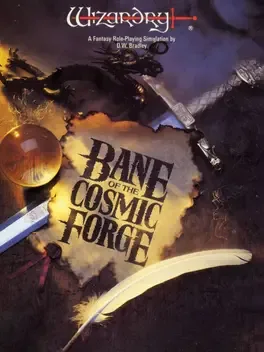
Ten years ago, Wizardry set the standards in Fantasy Role-Playing (FRP). Now after two million copies have been sold and dozens of awards have been won, Bane of the Cosmic Forge raises and redefines those standards. This new Wizardry , the truest simulation ever of Fantasy Role Playing, will push your computer, your mind, and your sense of adventure to their very limits. Only through the power of the latest computer technology could the full dimensions of this new genre in FRP be possible.
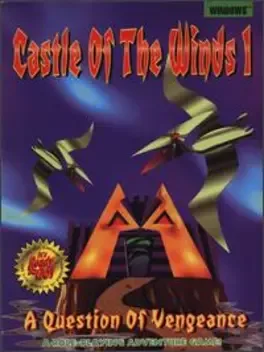
Castle of the Winds is a two part graphical adventure game, loosely based on fantasy role playing games, and drawing much inspiration from Norse mythology. Part two concerns the character's efforts to fulfill his or her destiny. To do this, the character must defeat Surtur and recover the stolen Helm of Storms from his possession. Along the way, of course, he or she will be opposed by deadly monsters and traps, but will find treasure and enchanted objects to aid his or her quest.
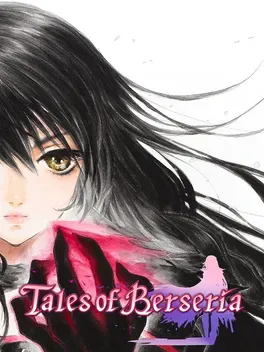
In Tales Of Berseria players embark on a journey as they assume the role of Velvet, a young woman whose once gentle nature has been replaced and overcome with a festering anger and hatred after a traumatic experience three years prior to the events within Tales Of Berseria imbued her left hand with a special ability. Along her journey, Velvet will meet a whole cast of characters, including a young boy named Laphicet. If Velvet is the embodiment of "darkness," then Laphicet is created in the image of "light" and will be an important ally to Velvet.