
Wizardry: The Return of Werdna - The Fourth Scenario


Buy
Part of collection:
Wizardry
(last 3 games)
Announced for the series 40th anniversary, Wizardry Variants: Daphne is a brand-new mobile RPG focused on unforgiving dungeon crawling and party building.
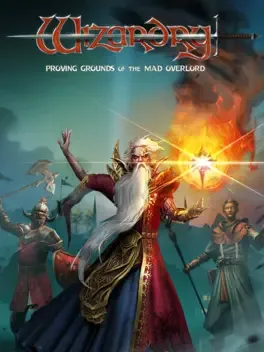
Wizardry: Proving Grounds of the Mad Overlord is a full 3D remake of the first game in the legendary Wizardry series of RPGs. It is built directly on top of the original 1981 game's code. Although it looks all new, underneath the hood is the authentic game. You can even view the original Apple II interface as you play. While the well-known difficulty of the enemies has not been altered, quality-of-life improvements have been added in every area. Party management, navigation, spellcasting, and combat have all been significantly enhanced.
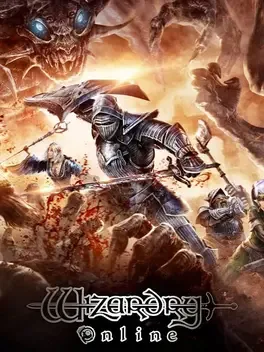
Wizardry Online is a free-to-play massively multiplayer online role-playing game for PC, and a series in Wizardry Renaissance, developed by Gamepot and published by Sony Online Entertainment released on November 14, 2010 in Japan, and January 30 in North America and Europe via Steam. The game services ceased its operation on July 31, 2014 in North America and Europe, and later December 20, 2016 in Japan. An unofficial private server still exists.
Part of franchise:
Wizardry
(last 3 games)
Announced for the series 40th anniversary, Wizardry Variants: Daphne is a brand-new mobile RPG focused on unforgiving dungeon crawling and party building.
Wizardry: Proving Grounds of the Mad Overlord is a full 3D remake of the first game in the legendary Wizardry series of RPGs. It is built directly on top of the original 1981 game's code. Although it looks all new, underneath the hood is the authentic game. You can even view the original Apple II interface as you play. While the well-known difficulty of the enemies has not been altered, quality-of-life improvements have been added in every area. Party management, navigation, spellcasting, and combat have all been significantly enhanced.
This is a sequel to "Wizardry: Seimei no Kusabi", released in November 2009. There are three dungeons available, and the game added quality-of-life features to make it more user-friendly such as save points and fast travel. Existing characters from the previous game have been removed, and players can create their own characters and form an original party from the beginning. The game features various systems designed to enhance the fun of dungeon exploration, such as a real-time dungeon that uses the touch pen to solve various gimmicks, a "FAST mode" that cuts attack and spell effects and speeds up messages, a "cooperative attack" that can be activated by combining spells and active skills used during a turn, encounter monsters and adventure records, and a manual to check "achievements." "Wizardry" is an RPG born in 1981 and is considered the originator of computer RPGs and a globally popular work. This game is a 3D dungeon RPG where players can enjoy labyrinth exploration by delving into deep dungeons. Please enjoy the adventure that follows the world view and system that are characteristic of "Wizardry" while incorporating unique gimmicks that are unique to the Nintendo DS.
Could be interesting
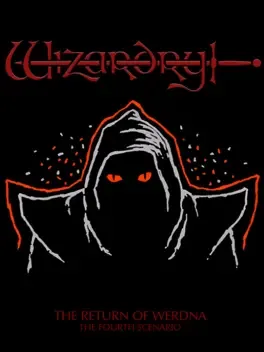
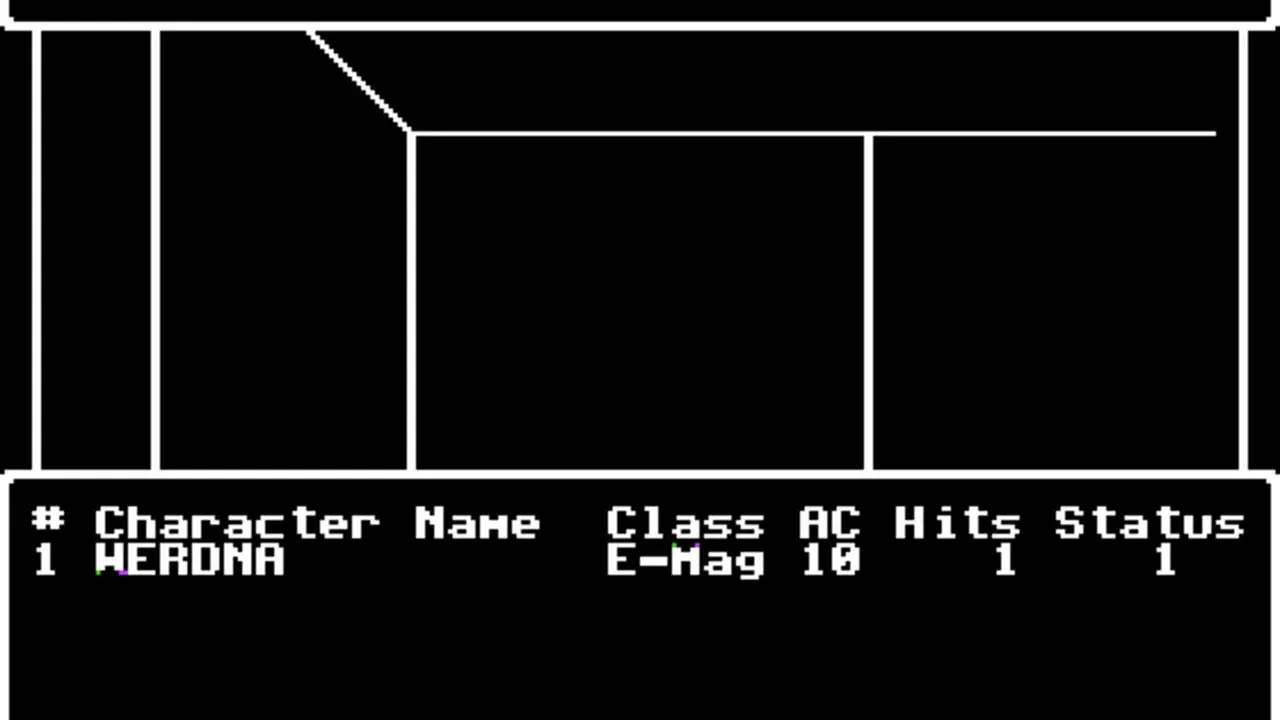
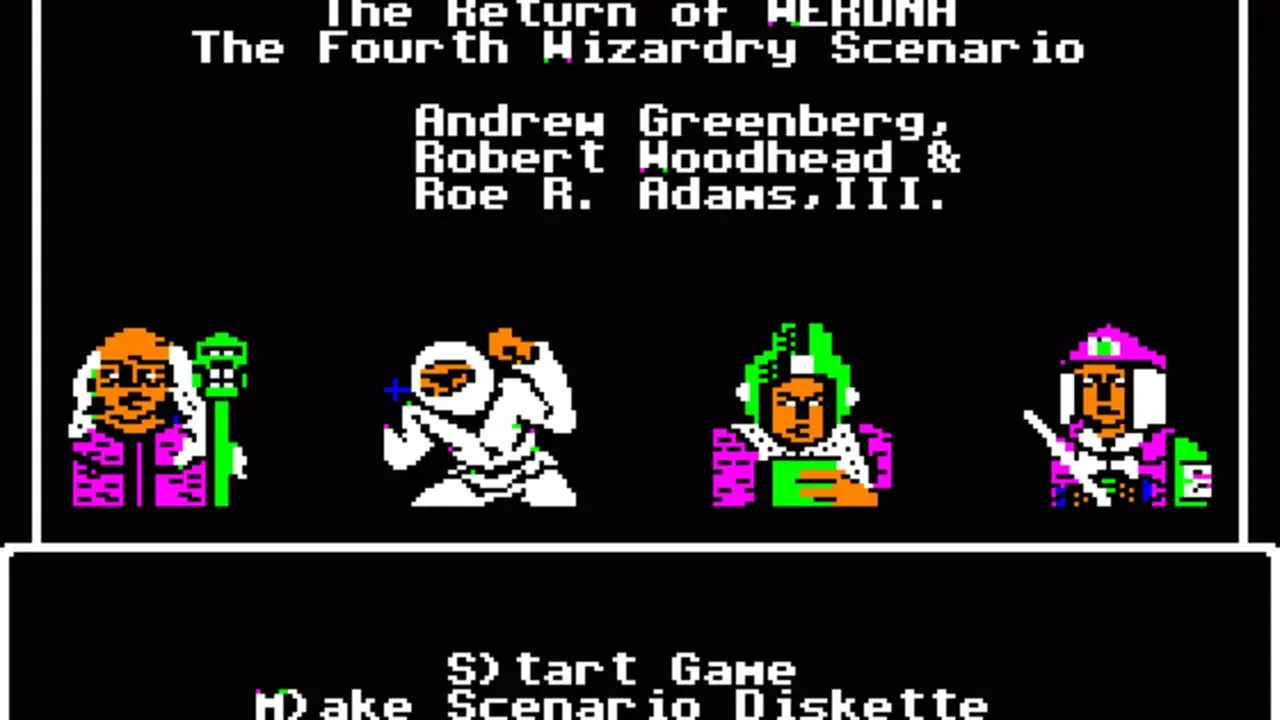
A generation has passed since your band of adventurers reclaimed the Staff of Gnilda and the armor of the Knight of Diamonds, and the land has been at peace. But now nature itself seems to be attacking the land of Llylgamyn, as earthquakes and tidal waves ravage the land. The Sages believe the Orb of Scrying is the city's salvation, but it is guarded by the dragon L'kbreth. A band of explorers must once again venture forth in search of the Orb.
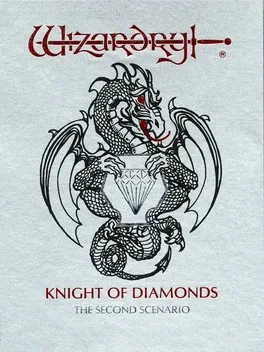
Are you ready to take the next step into the world of Wizardry? A step so dangerous, the mere utterance of a spell can decimate the entire city of Llylgamyn. Knight of Diamonds is the Second Scenario in the Wizardry Master Series, the fantasy role-playing simulation for the Nintendo Entertainment System. In Wizardr Knight of Diamonds, only the bravest may venture through murky dungeons more dangerous than any ever encountered by earthly mortals. Only the most cunning may recover the magical Staff of Gailda and save the city of Llylgamyn.
Despite the defeat of Trebor, Werdna, and L'kbreth, dark times once again threaten the kingdom of Llylgamyn. So once again a party of adventurers must venture forth to vanquish the evil. Wizardry V represents a complete revision of the gaming system used in the first four installments, with larger mazes, new spells and character classes, and an expanded system for combatting and interacting with creatures. It is also the first game in the series that allows, but does not require characters imported from a previous scenario.

The Mad Overlord Trebor was once only power-mad, but went off the deep end after he acquired a magical amulet of immense power, only to have it stolen from him by his nemesis, the evil archmage Werdna. Werdna, not quite sure how to use the amulet properly, accidentally causes an earthquake which creates a ten-level dungeon beneath Trebor's castle. To avoid looking silly, Werdna declares the dungeon to be the new lair for him and his monster hordes. Trebor, not to be outdone, declares the labyrinth his new Proving Grounds where adventurers must prove themselves for membership in his elite honor guard, and incidentally retrieve his amulet in the process. The first Wizardry was one of the original dungeon-crawling role-playing games, and stands along with Ultima and Might & Magic as one of the defining staples of the genre. The player generates and control a party of up to six different adventurers, choosing from four races (humans, elves, dwarves, gnomes and hobbits), three alignments (good, neutral and evil), and four basic classes (fighter, priest, mage and thief). These can later evolve into elite classes (bishop: priest with mage spells; samurai: fighter with mage spells; lord: fighter with priest spells, and ninja: fighter with thief abilities) if they meet the necessary level requirements. After outfitting the party with basic weapons and armor, the player sends it into a 3D vector maze-like dungeon to fight monsters in turn-based combat and find treasure.
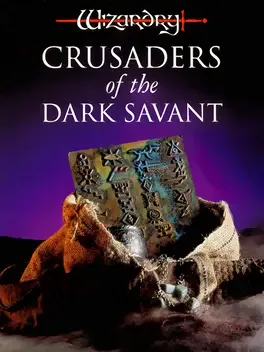
Begin your adventure in Crusaders of the Dark Savant. Import your characters from Bane of the Cosmic Forge or create a new party capable of surviving the rigors of a strange alien world. Both friends and foes you'll discover as you search for the forgotten secret of a once madman - the secret of the very universe itself. And you won't be alone in your search. Others as enterprising as you have also entered this dimension. Only your actions - both past and present - will determine just how well you fare. From the depths of a dungeon to the blue and limitless skies, you'll see it all - you'll hear it all - in this latest Wizardry adventure.
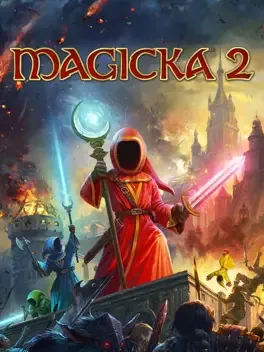
The world’s most irreverent co-op action adventure returns! To rid the world of evil, again, up to four Wizards, and their guide Vlad, will traverse Midgård armed with the next iteration of the famous Magicka dynamic spellcasting system, as players reprise their roles as the most overpowered, unpredictably funny Wizards ever known to fantasy!
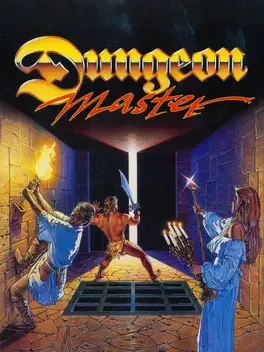
Dungeon Master established several new standards for role playing and computer games in general. Dungeon Master was a realtime game instead of the traditional turn-based approach that was prevalent until then. Instead of using text-based commands to interact with the environment, players directly manipulated objects and the environment by clicking the mouse in the enlarged first-person view. Abstract Dungeons and Dragons style experience points and levels were eschewed in favor of a system where the characters' skills were improved directly via using them. It also introduced some novel control methods including the spell casting system, which involved learning sequences of runes which represented the form and function of a spell's effect. For example, a fireball spell was created by mixing the fire symbol with the wing symbol. This kind of attention to detail and focus on the user interface was typical of the game and helped create an often captivating sense of craft and ingenuity. Other factors in immersiveness were the then-revolutionary use of sound effects to indicate when a creature was nearby, and (primitive) dynamic lighting.
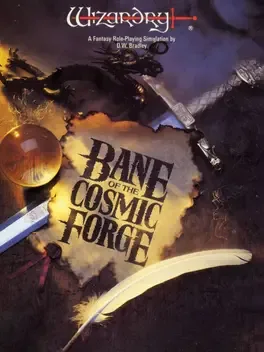
Ten years ago, Wizardry set the standards in Fantasy Role-Playing (FRP). Now after two million copies have been sold and dozens of awards have been won, Bane of the Cosmic Forge raises and redefines those standards. This new Wizardry , the truest simulation ever of Fantasy Role Playing, will push your computer, your mind, and your sense of adventure to their very limits. Only through the power of the latest computer technology could the full dimensions of this new genre in FRP be possible.
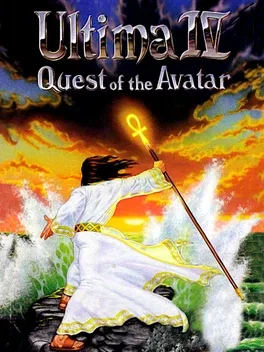
Following the defeat of the evil triad in the previous three Ultima games, the world of Sosaria changed beyond recognition: continents rose and sank, and new cities were built, heralding the advent of a different civilization. Unified by the reign of the benevolent monarch Lord British, the new world was renamed Britannia. Lord British wished to base people's well-being on the ethical principles of Truth, Love, and Courage, proclaiming the Eight Virtues (Honesty, Compassion, Valor, Justice, Sacrifice, Honor, Spirituality, and Humility) as the ideal everyone should strive for. The person who could accomplish full understanding and realization of these virtues would serve as a spiritual leader and a moral example for the inhabitants of Britannia; he alone would be able to obtain holy artifacts, descend into the Stygian Abyss, and access the Codex of Ultimate Wisdom. This person is the Avatar. The fourth game in the Ultima series features an improved game engine, with color graphics and enhanced character interaction: the player can have conversations with non-playable characters by typing names of various topics. However, the main difference between Ultima IV and its predecessors in the series (as well as other role-playing games) lies in the game's objectives and the ways to fulfill them. Instead of building up a character by any means possible in order to face a villain in the end of the game, in Ultima IV the player is trying to become the Avatar, a role model for people. This means upholding the Eight Virtues, basically trying to become a better person. Making morally conscious decisions and helping other people is not done expecting a material reward, but because it is the actual goal of the game and the main focus of its gameplay. The game frowns on behavior typical of most other RPGs, such as backstabbing fleeing enemies or picking up everything that isn't nailed down even if it does not belong to the protagonist. This different approach established the game's reputation as the first "true" Ultima, influencing the design philosophy of later installments and the overall spirit of the series. Character creation is done by choosing responses to morally ambiguous questions. Each of the Eight Virtues corresponds to a character class; by determining the player's personal priorities in the virtues, the game assigns a class and a starting location for the Avatar. After emerging in Britannia, the player is free to explore it in various ways (on foot, moongate teleportation, on horseback, by ship, etc.). Certain items must be collected in any order to enter the Stygian Abyss and complete the game. The Avatar also has to reach the highest level in all virtues. This is achieved by various means: donating blood increases Sacrifice, not fleeing from combat increases Valor, etc. The process, however, is not irreversible: should the Avatar overpay a blind seller, he gains Compassion points; should he, on the other hand, cheat the seller by underpaying, his level in several virtues would decrease. These unorthodox features of the game co-exist with plenty of traditional RPG elements, such as dungeons to explore and hostile monsters to kill. Enemies are encountered on the world map as well as in dungeons; combat takes place on separate top-down screens, allowing player-controlled and enemy parties freely move on them. Characters accumulate experience points and level up, gaining higher amount of hit points and access to stronger magic spells. Like in the previous installments of the series, world map, town exploration and combat are presented from a top-down view, while the dungeons are pseudo-3D and are explored from first-person perspective. Ultima IV also introduces several new gameplay features to the series and role-playing games in general. A number of initially non-playable characters living in various areas of the game world are able to to join the party and fight alongside the hero, replacing traditional player-generated characters or mercenaries and adventurers available only in special locations. Additional new elements include buying and combining reagents in order to cast spells, puzzle rooms in dungeons, and others.
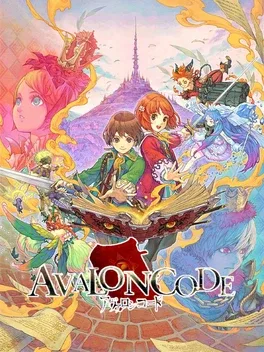
Avalon Code plot, as well as the gameplay, revolves around the Book of Prophecy situated on the touch-sensitive lower screen of the Nintendo DS. In order to record a person, monster, plant, or weapon in its pages, the player performs a “Code Scan”, which is done by striking the target to be recorded with the Book itself (mapped to the B button at all times). The story centers on a young peasant who has been plagued with prophetic nightmares for weeks prior to the beginning of the story. His or her latest dream, shown in the opening cinematic, features a mysterious voice which reveals not only that the protagonist's world has undergone countless reincarnations in the past and is fated to continue the cycle of correction, destruction, and rebirth until “true enlightenment” is achieved, but also that the main character him- or herself has been tasked by the Powers-That-Be to deem the people, places, and things of the current world worthy (or unworthy) of being carried over into the next after the fiery purge.